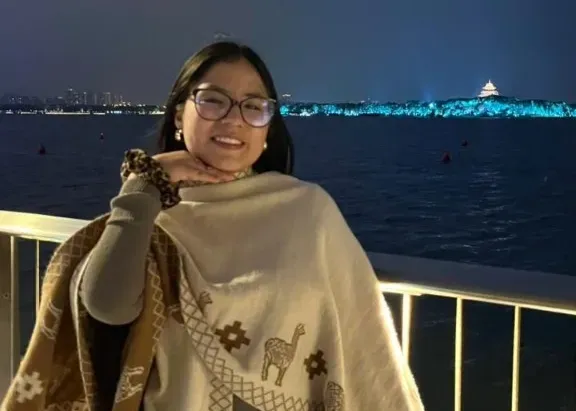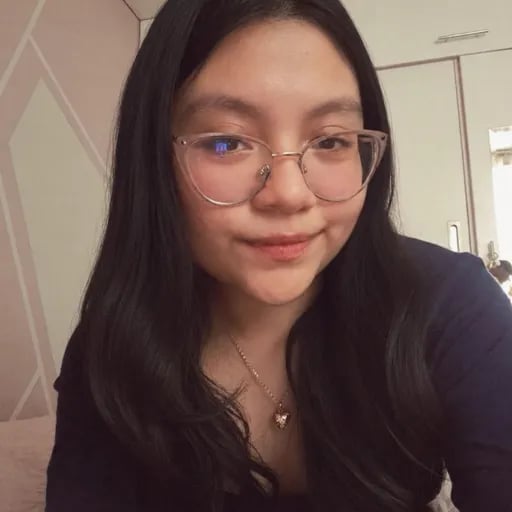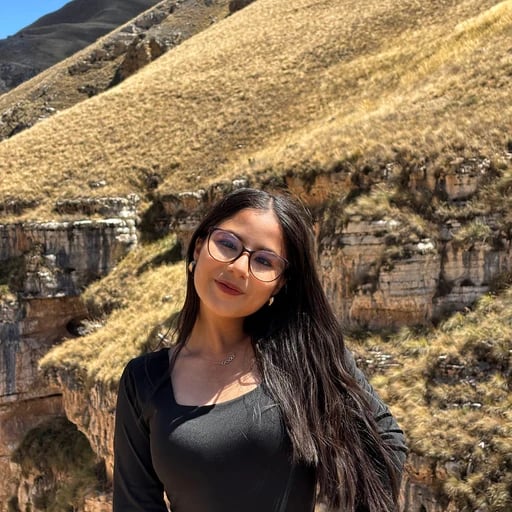
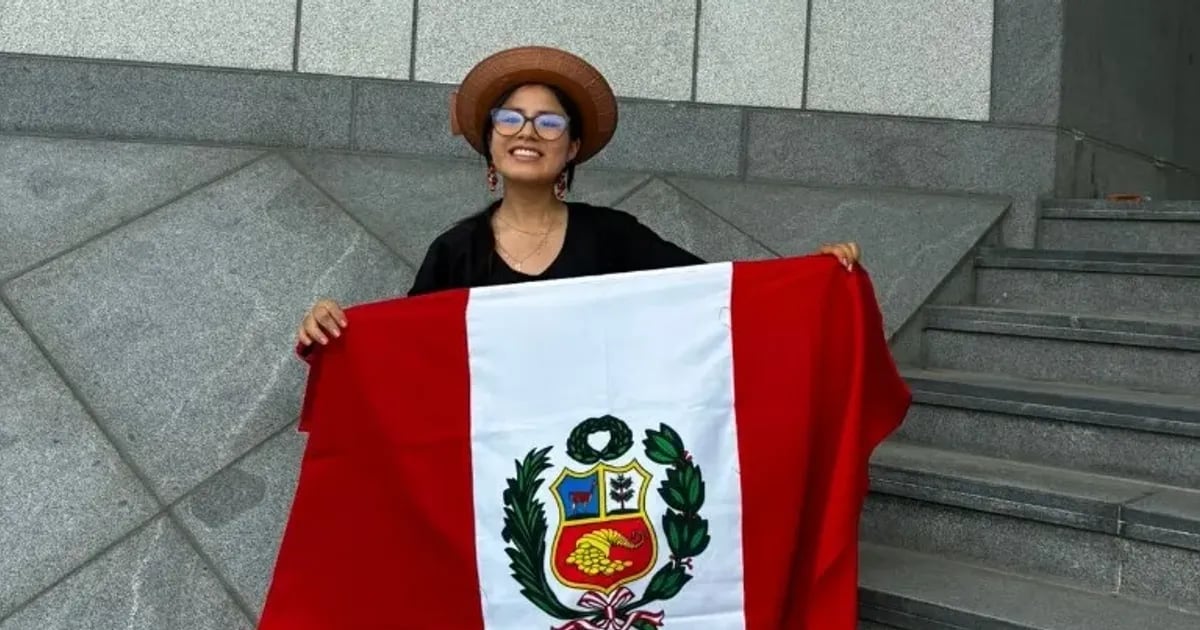
Gabriela Olinda Pizarro Arteaga is a young Peruvian leader currently pursuing the International Baccalaureate at UWC Changshu China. Driven by her passion for education, sustainability, and social equity, she has dedicated recent years to fostering youth leadership and women’s empowerment in rural communities. Through her involvement with Integra Joven and RENAJE, as well as her recognition in programs like the U.S. Department of State’s Youth Ambassadors and IEI Global Leadership Challenge, Gabriela represents a new generation of changemakers shaping Peru’s future.
How I First Found UWC
Getting into a UWC had been a goal I set for myself for more than three years. After the disappointment of not being accepted into a Colegio de Alto Rendimiento (COAR) in 2023. I still carried the dream of studying at a school that offered a holistic education, one that blended academic excellence with CAS, leadership, and personal growth.
I’ve always been the kind of person who keeps moving forward, who looks for the next door even when one closes. That mindset is what led me to UWC. I first heard about it through my brother, who had experience with exchange programs. At the time, I was only in the third year of secondary school, but I remembered how he had mentioned UWC years earlier when I was still in primary school. I used to visit the UWC website and wonder, “When will it finally be my turn to apply?” And eventually, that moment arrived — 2024 became the year I had been waiting for.
Applying to UWC isn’t something you decide on from one day to the next. It requires a journey — one shaped by leadership, service, and a genuine commitment to growth. I had built that road through volunteering, exchanging experiences, and my desire to create a meaningful impact. So when I was finally selected, everything made sense. Every challenge, every setback, every small step had been preparing me for this opportunity.
What inspired me most about UWC was understanding that it isn’t just a scholarship, it’s a movement. A place where students from more than 150 countries come together, living independently, sharing cultures, and learning from one another. It’s where you stop seeing the world through headlines and start seeing it through people — through their stories, their struggles, their hopes.

The Best Moment of My Journey: Being Accepted into UWC Changshu China
It was February 24th, 2025. After completing five stages of selection — from the application form and written exam to group dynamics and interviews — there were moments when my confidence started to fade. But every time I looked back, I felt proud of the dedication, resilience, and heart I had poured into each step.
I remember reaching out to a student named Milagros, who was studying at UWC Atlantic, hoping she could tell me how long the results usually took. I expected an email. What I didn’t expect was a phone call — late at night, just two days before my birthday. They added me to a group called “UWC Peru” and told me there was an issue with one of my documents. My mom was beside me, and we both started to worry. Then the questions came: “Have you ever traveled to Asia?” and “What do you think about China?” I was confused, but I answered honestly, telling them how much I admired China for its discipline, technology, and strong sense of punctuality.
And then came the words that changed everything:
“You have six months to get ready, we’re sending you to UWC Changshu China.”
I broke down in tears. Not out of fear, but out of pure gratitude. Those tears carried the weight of every challenge, every doubt, every late night I spent dreaming of an opportunity like this.
Receiving a full scholarship felt unreal. I had just been awarded the Dare to Dream Scholarship, which covers the full two years of study at UWC — a life-changing opportunity usually granted to only two students out of the nine selected nationwide. The only thing I needed to cover was the flight — a small detail compared to everything this meant. From that moment on, I began preparing: improving my English, collecting school documents, completing medical exams, gathering signatures. It was a long process, but every effort was worth it.
And then, on August 24th, I boarded a plane to China.
Even now, it feels surreal. I had imagined studying somewhere closer, maybe in Latin America — never across the world, in Asia. But arriving here showed me that dreams take you exactly where you’re meant to grow, even if it’s farther than you ever imagined.

A Glimpse Into Everyday Life at UWC Changshu, China
A typical day here is full of balance, structure, and discovery. Classes run from Monday to Friday, and I usually wake up between 5:00 and 6:00 a.m. I like starting my mornings early — taking a shower, having breakfast, and reviewing what I’ll study that day. The canteen opens from 7:30 to 8:30 a.m., and you can go anytime within that window. It’s like an open cafeteria where you can choose whatever you want to eat and how much.
Our schedule depends on the blocks we select. For example, on Mondays I only have two classes, and then I have free time — although I still go to lunch. Once classes are done, most of us attend CAS sessions (Creativity, Activity, and Service), which are an essential part of the IB program. There are more than 100 clubs to join, and you can choose one for each CAS category. If your club holds meetings after classes, you’re expected to attend.
My schedule is a mix of classes, CAS activities, and DP1–DP2 meetings, where both year groups share announcements, projects, and competitions. On Wednesdays, we have cohort meetings led by our teachers, while Mondays are busier because, after 1:20 p.m., I meet with my general cohort and my advisor group. These mentoring sessions are spaces for support, reflection, and guidance — something that makes UWC feel like a community. The teachers here aren’t just educators; they’re mentors and friends who care about our personal and academic growth, including university counseling.
Dinner runs from 5:30 to 7:00 p.m., and after that, the time is yours to manage. I often spend my evenings in the library. By 9:30 p.m., everyone must return to their residences for the nightly check-in. The residences are divided into three blocks — A, B, and C — each with four houses. It’s important to be inside on time; if not, you might receive a sanction. After midnight, students must stay in their rooms, and the internet shuts down at 1:00 a.m.

Overcoming the Major Challenges of Life in a Multicultural Community
One of my biggest concerns before arriving was that my English wouldn’t be strong enough. Surprisingly, I discovered that over 80% of the students speak a first language other than English, yet there were also native English speakers in many of my classes. I initially chose Language and Literature in English, but due to the language barrier, I eventually had to switch to the Spanish class. It was a difficult adjustment at first, but I accepted it and learned to move forward.
Another major challenge has been the academic pressure. Unlike other UWCs, my school places a strong emphasis on academics, which becomes evident from the very first lessons — teachers speak quickly, expectations are high, and the pace can feel overwhelming, especially when English isn’t your native language. My first days were tough, but I gradually built a routine, managed my time better, and adapted to the rhythm. The academic system in Peru is very different from the one in China, and knowing that many of my classmates grew up with this level of rigor while I didn’t was intimidating. Still, over time, I learned to face it with resilience.
Living with roommates has been another challenge, as everyone comes with different personalities and habits. Some prefer to study late, keep the lights on, or make noise, and naturally, that can lead to disagreements. Fortunately, I haven’t experienced any major conflicts so far, and I see the experience as an ongoing process of learning and understanding others.
Even though I’m far from home and living independently for the first time, I’ve found comfort in connecting with the Peruvian and Latin American community here. It’s reassuring to know I’m not alone, and sharing my culture and language with others has made this journey even more meaningful.

A New Lens on the World: How UWC Transformed My Perspective
My worldview has changed since joining a UWC. Before arriving, I saw the world through a very narrow and mostly national lens. Over time, I realized that while the challenges we face in Peru are important, they are not always the most urgent when viewed from a global perspective. For instance, the low quality of education in Peru — something I believed was unique to my country — also appears in rural areas here in China. Discovering this opened my eyes in unexpected ways.
Building relationships with students from diverse backgrounds has also expanded the way I think and create. Hearing their stories, learning about their cultures, and understanding their realities have pushed me to refine my projects and make them more meaningful. My school offers a variety of programs and volunteer initiatives, such as teaching English to children and supporting community-led projects. Seeing so many opportunities around me has motivated me to get involved and apply without fear.
I’ve found a community where everyone is eager to help. Students share a spark — a natural drive to make a difference — and that energy has encouraged me to believe more in collaboration, in possibility, and in myself.

Dare to Try!
If I could speak directly to a student who dreams of applying to UWC but feels “not good enough,” I would start with my own experience. Every time I apply for an opportunity or scholarship, I face the same doubts. When I applied for my first exchange program, I wondered why they would choose me. I didn’t come from a private school, I didn’t think I had the right skills, and I convinced myself that others were more qualified. It’s easy to focus on our weaknesses before our strengths — we often overlook the leadership we’ve shown, the perspectives we bring, or the unique stories that shape us.
During my UWC application, I was scared too. But what motivated me was realizing that you never know what could happen unless you try. Even if I was rejected, I would still gain experience. But if I closed the door before even applying, I would never win, never grow, never take a risk. So my advice is this: don’t fixate on your weaknesses — work on them. If you don’t speak English yet, there are online courses you can take. If you feel you don’t have leadership experience, you can build it through school activities or by connecting with student leaders. Being ambitious means identifying what you lack and turning it into something you can master.
Another barrier is that many students don’t believe UWC is real — that receiving a full scholarship to study your International Baccalaureate in another country is too good to be true. But there are countless students who prove that the opportunity is real. Yes, the UWC selection process can be challenging and emotionally intense, but it also feels like a family. You meet applicants from different regions, learn about the realities of urban and rural areas, and get a glimpse of what UWC life will be like.