
Background and Profile
Hey everyone! I'm Brent Montclair, a 20-year-old Filipino student currently building a life for myself in Spain.
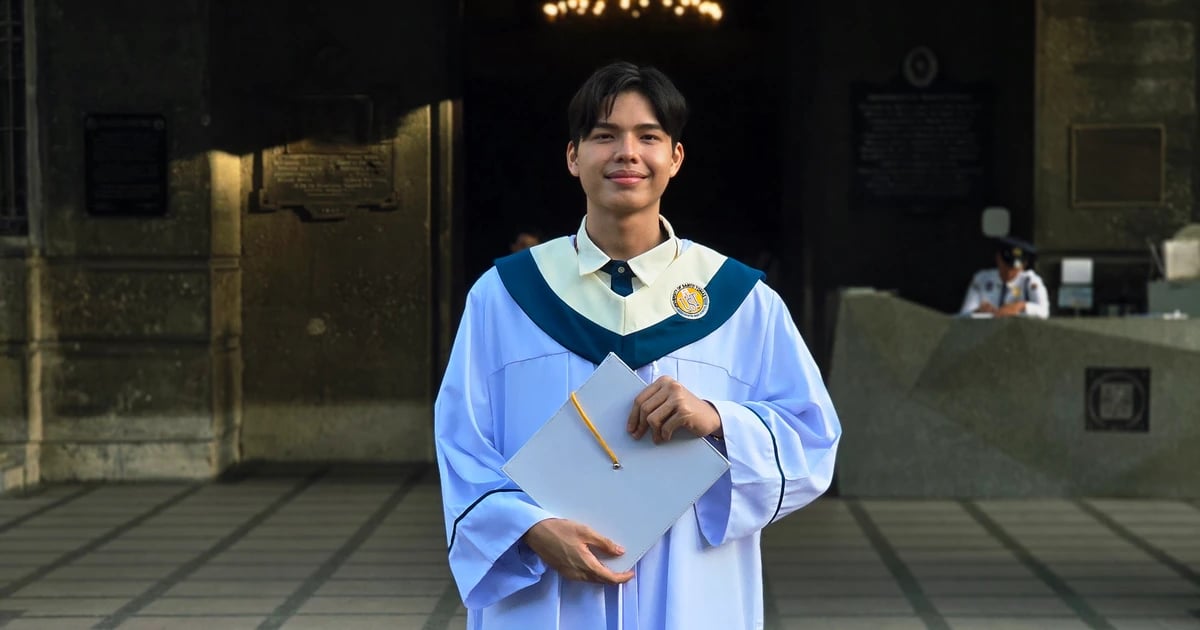
I was born and raised in the Philippines, where I graduated from the University of Santo Tomas Senior High School under the K-12 Curriculum, through the Accountancy and Business Management strand. After graduating, I took a semester of Accountancy at UST before switching paths and moving to Spain. I now study Business Management at C3S Business School in Barcelona as an international student.
Being an international student is only a fraction of my story. I'm also a content creator, and a lot of what I create comes from the life I'm building here. Across Facebook, Instagram, YouTube, and Bigo, I document my studies, work, adventures, and the everyday realities of being a Filipino student in Spain.
I also share tips and information for students considering studying abroad, including what isn’t always obvious before you leave home.
In many ways, I create the kind of content I once searched for myself, as I know what it feels like to be sitting, contemplating, and wondering what studying abroad might actually look like and whether it’s even possible.
You can access my content through this link: https://linktr.ee/brentmontclair.

The American Dream
My dream of becoming an international student started when I was in the 11th grade. Back then, I first caught glimpses of what that life could look like through social media. Seeing students study in other countries made the idea feel real to me. As a Filipino, the opportunity to earn an international education on my own merit meant a lot.
So, I decided to aim for the United States.
Through the Common Application, I applied to several universities in the U.S. and received acceptances and scholarship offers from five universities. At first, it felt like all the pieces were falling into place. I had gotten into the universities I wanted, and I had the scholarships to help make the dream possible.
What could possibly go wrong?
I quickly learned that acceptances were only half of the needed equation. Even with the scholarship offers I received, the remaining cost was still more than my family could reasonably sustain. It was difficult to accept that because I had already done what I needed to do and built that idea in my head.
I had applied rigorously, gotten accepted, received additional scholarship offers, and yet somehow, studying abroad still wasn't financially possible. For a while, I had to let go of my dream of becoming an international student.
As a backup plan, I thankfully passed the University of Santo Tomas Entrance Test with flying colors. Coming from UST Senior High School was also a factor that weighed on my application, so I enrolled in Accountancy and spent a semester at UST.
I was grateful to have a place to continue my education, though a part of me was still thinking about the opportunities I had left behind. Knowing that I had received scholarship offers from universities in the U.S. made it especially difficult to accept that my original plan might not work out in the end.
Eventually, I learned something that would change the trajectory for this story. That just because one path doesn't forge itself along the way, it doesn't mean that the entire dream has to end.
Road to Spain
My determination to become an international student never really disappeared. My family and I started looking for other possibilities, including working with an educational consultancy.
My parents attended a seminar hosted by L&T Intercontinental Agency, an educational consultancy in the Philippines. They presented different pathways for students interested in studying abroad, including the United States, United Kingdom, Australia, Spain, and Canada.
We started comparing each option based on factors that actually mattered the most to us. How far was the country from the Philippines? What could my family realistically afford? What universities offered the course I wanted? How difficult would the application and visa process be?
After looking into those different pathways, Spain stood out to us.
From there, I worked with the agency throughout the application process. They provided me with potential school options, provided me with different pathways, helped process my visa and travel documents, and assisted me in preparing for my application interview conducted by the universities.
There were several universities I initially considered, but some didn't offer the business-related programs I was looking for. Finally, I found C3S Business School, which offered a Business Management program that aligned more closely with what I wanted to study.
Working with an agency also taught me that becoming an international student involves more meticulous work. You don't simply choose a country and apply. You have to prepare documents, practice for interview questions, understand visa and travel requirements, and consider financial feasibility to weigh in on life-changing decisions.
For anyone considering studying abroad, I would highly recommend understanding what an agency will and won't do for you. Having people guide you through this process can lift burdens and make things easier, but you will still need to understand your own application and requirements to know what you're getting yourself into.
Why Spain? Why C3S?
Spain became an option for me because it offered a more financially manageable pathway for my family compared with the options I had originally considered in the U.S.
In selecting a school, I chose C3S Business School for several reasons. The school offers a Business Management degree with a UK-recognized academic framework by OTHM, NCC Education, and Qualifi. I also admired that the school provides extensive student support services, Spanish language classes for international students, and assistance with internships related to our respective courses.
Another major factor was the flow and structure of my schedule.
I currently study only four days a week, with a relatively small number of subjects and longer class periods. Compared with my previous school experiences in the Philippines, the schedule gives me more flexibility to maintain other aspects of my life.
This flexibility seriously matters to me because I don’t get to spend all of my time studying. I can easily work part-time for extra income, create content for my growing platforms, exercise at the gym, explore Barcelona, learn the languages here, and meet new people while balancing my academics.
Academic and Extracurricular Profile
Through the ABM strand in Senior High School, I maintained grades above 90 and didn't receive any grades below 8. Sustaining strong academics established a standard for myself and my academic rigor.
Another factor of my application was the interview.
I gave it my 100% because I knew that the school wanted to understand more than what was written on my application. They asked me questions such as: Why Spain? Why C3S? What led you to pursue studying here?Studying abroad is a major commitment, so being able to explain why you chose a particular country, school, program, or course is something I believe students should prepare for.
Outside of academics, I was involved in several extracurricular activities.
I played for the badminton team in high school and joined the COMELEC student organization, where we were responsible for tallying votes and managing student elections. Our role was to ensure the impartiality and objectivity of student council elections.
I was also part of the operational committee for school events. We handled logistics operations, on-the-ground operations, stage decoration, guest direction, technical control, and program orders.
At the time, I didn't necessarily think every one of these experiences would help me become an international student. However, these experiences taught me how to communicate with different people, how to work under pressure, contribute to a team, and take responsibility when things need to be done.
These skills became just as important as my academic preparation once I moved abroad.


Two Ways to Learn
My education at UST was a completely different experience from what I'm experiencing now.
One of the biggest differences was the workload. I took major subjects related to Accountancy, but I also had to take several arguably irrelevant minor subjects alongside them.
Here in Spain, my schedule is much more flexible. I study four days a week, with two classes that can last around two hours per subject. A typical day for me might start with going to school, followed by lunch, a trip to the gym, and part-time work, and making content.
Sometimes, after work, I stream on Bigo before going home to edit videos for my other social media platforms. If I have quizzes or exams coming up, I'd spend part of my day reviewing my lessons and attending my Spanish classes.
When I don't have as much academic work, I use the extra time to explore Barcelona, meet new people, gain new experiences, and relish the city I'm calling home.
In a way, creating content keeps me grounded. I'm building a new life for myself in Spain, but it doesn't mean I have to leave my Filipino identity and roots behind to carry that out.
The Rain in España
I honestly experienced culture shock when I first arrived.
For one, I wasn't prepared for how cold it could feel. I arrived in April, and the weather was very different from what I was used to in the Philippines.
Back home, it was normal to eat breakfast at 8 to 9 AM, lunch at around 11 AM to noon, and dinner at 6 to 7 PM. But here, breakfast is at 10 AM, lunch at 3 PM, and dinner at 9 PM. Even the sunsets stay around differently. Depending on the season, the sun can stay out much later than what I'm used to in the Philippines.
Transportation was another major adjustment, although it's something I've come to appreciate now.
There's considerably less traffic where I am, and the transportation system here is much more developed. There are designated bus and train stations, and I can generally rely on public transportation and Google Maps to get where I need to go. At the same time, I sometimes miss the convenience of motorcycle taxis back home.
And when it comes to food, don't even get me started.
One of the first things I noticed was how different the food culture is. There aren't many equivalents to the street food I'm used to seeing back home, although some stands appear on certain days. Even familiar chains such as McDonald's and Jollibee can be more expensive, and groceries can cost more than what I'm used to.
There is significantly less rice. I genuinely see bread everywhere.
Thankfully, there are Filipino restaurants and communities that make it easier to find a little piece of home. The prices can be different from what we'd normally pay in the Philippines, but having access to Filipino food still means a lot when you're away from home.
There are also rules and habits here that took some getting used to. Waste segregation is taken seriously, jaywalking can be enforced, and there are security cameras throughout many streets and public areas.
These might seem like the littlest things, but that's what culture shock can look like in its purest form. It's not always one huge moment. Eventually, you'll realize that you're eating breakfast two hours later, you're looking for rice 10 miles away, or you're trying to figure out an unfamiliar transport system.
Living abroad means learning how to adjust to those little differences.
Keeping the Door Open
Since I'm studying Business Management, I'm keeping an open mind about the opportunities that might come my way. As much as possible, I'd love to stay here and work in Spain after graduation. I've started building a life here, and I genuinely enjoy the environment around me.
My original goal when I arrived was to simply become an international student. Now that I'm actually here, my goal has evolved into figuring out what kind of life I'd want to build for myself.
Whatever the future has in store for me, I'll go for it.

There Is Always a Way
My journey to Spain wasn't the path I first thought of.
I was fixated on getting into American universities, earned my acceptances and scholarship letters, and thought I had finally found my way in. One factor weighed in, and suddenly that dream closed down. But all you have to do is find another door.
To the student considering studying abroad but who is already halfway to giving up on that dream, I want you to know that your first plan doesn’t have to be your only plan.
Of course, you have to be realistic about your finances. Studying abroad is a major financial commitment, and getting accepted doesn’t automatically mean that you can afford to attend. Look carefully at tuition, living expenses, scholarships, visa requirements, transportation, and overall cost of living before you make a decision.
At the same time, don't assume that the most obvious destinations are your only options. There are scholarships, organizations, universities, and alternate pathways that many students don't know about.
I also believe that one of the most underrated assets you can have as a student is a strong academic record. Different countries and universities have different application processes, but strong grades can demonstrate that you are prepared to handle academic rigor.
Most importantly, don't be afraid to take the risk.
I didn't end up studying in the United States. I didn't take those acceptance and scholarship offers. I didn't achieve my initial version of my dreams of being an international student. But I ended up here instead, now living a life I couldn't have imagined when I was still in the Philippines.
A closed door is not the end of the road. You have to look around and find another way through.