I didn’t grow up thinking I would study abroad.
In fact, for most of my early education, studying outside Uzbekistan wasn’t even part of the conversation. I come from a rural area, where access to international opportunities—especially something as complex as global university admissions—is limited. There weren’t people around me applying to the US or Europe, and there wasn’t a clear roadmap to follow.
What I did have, however, was a strong academic environment.

Growing Up in a System of Rigor
I attended a specialized school within Uzbekistan’s presidential system. While we followed the national curriculum, the system allowed us to choose academic tracks. I was in the “exact sciences” track, which meant a heavier focus on physics, algebra, geometry, and trigonometry.
That structure shaped how I think. It pushed me toward analytical problem-solving early on, and I found myself naturally drawn to subjects that required precision and logic.
Over time, this translated into measurable outcomes.
- I scored a 1510 on the SAT, with a perfect 800 in Math and 710 in English.
- My IELTS score was a 7.0
- I maintained a near-perfect GPA throughout school.
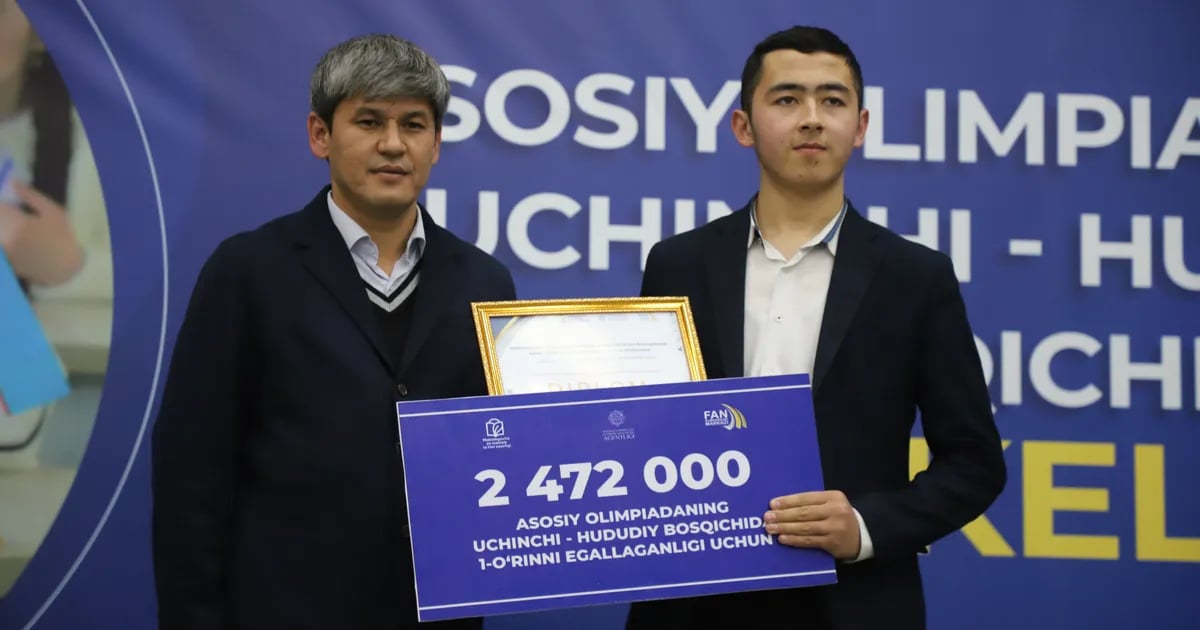
But more than standardized tests and school academics, Olympiads were a big part of my journey. I placed fifth in the national physics Olympiad, competing against around 50,000 students. I also secured first place in the state English Olympiad and ranked first in the district stage of the National Mathematics Olympiad.
Despite all of this, I still didn’t initially see a pathway beyond my immediate environment.
Discovering the Idea of Studying Abroad
That changed because of one moment.
Our school counselor once showed us a video about a student who had received a $100,000 scholarship to study abroad. It wasn’t even a full scholarship, but it didn’t matter. What mattered was the realization that this was possible—that someone from a background not so different from mine had done it.
That idea stayed with me.
At the time, I was already planning to take the IELTS because it was relevant for local admissions as well. But after that moment, I started thinking differently. I began exploring international applications—first IELTS, then SAT, and then everything that comes with it: projects, extracurriculars, essays.
I didn’t have a structured plan or professional guidance. Most of what I did came from researching online, experimenting, and sometimes making mistakes.
Creating Opportunities Instead of Waiting for Them
Because I didn’t have access to many structured extracurricular opportunities, I decided to build my own.
I founded Engineering Pioneers, a project focused on research, hands-on building, and robotics. As far as I know, it was one of the first initiatives of its kind at a wider scale in my country. It allowed students to engage with engineering beyond textbooks, which was something I personally felt was missing.
I also led the Altinsay District Student Union, which operated on a much larger scale than a typical school student council. We worked across multiple schools, organizing events and initiatives that impacted thousands of students in the district.
Additionally, I initiated an educational program—a type of tutoring initiative. We taught around 100 students, many from underprivileged backgrounds. While the program generated around $5,000 in revenue, the focus was always on accessibility. We either taught students for free or kept costs significantly lower than market rates.
Looking back, these weren’t just extracurriculars. I observed various ways of solving problems around me.

Applying Without a Safety Net
When it came time to apply, I approached the process with one strategy: maximize my chances.
I applied to around 20 universities in the United States, including highly competitive ones like Harvard, Columbia, Duke, and NYU. I also applied across Asia—to Hong Kong, Korea, and Japan—and to several European universities.
The results were mixed, as expected.
I have a couple of US university acceptances, along with offers from universities like Constructor University and the University of Birmingham. I was waitlisted at Duke and NYU (I knew I needed a lot of financial aid to study abroad, which reduced my chances of getting in).
But the most significant outcome came from Hong Kong.
Choosing the Hong Kong University of Science and Technology
I was admitted to Hong Kong University of Science and Technology (HKUST) with the Future Leaders Award, one of their top scholarships.
The award covers almost full tuition, along with an additional HKD 60,000 stipend. After speaking with current students, I realized that this effectively makes the cost of studying there very manageable—almost like a full-ride scholarship.
But the decision wasn’t just financial.
HKUST is known for being academically intense, especially in engineering. I’ve heard from seniors that the workload is heavy, and the environment is demanding. But that’s exactly what attracted me.
The university is highly specialized in science and technology. Unlike larger institutions like The University of Hong Kong, it creates a concentrated ecosystem of students who are deeply invested in technical fields. Being surrounded by people who are equally driven—and often more experienced—was something I actively wanted.
There’s also a strong outcomes-based advantage. The university has very high employment rates, and top companies like NVIDIA recruit directly from there. That kind of ecosystem matters.
On a practical level, Hong Kong also offered fewer barriers (especially due to the current political landscape for international students in countries like the U.S). The university also operates entirely in English, and almost everyone in the city speak in English, hence the language barrier is not something I needed to worry about. The visa process is relatively straightforward compared to countries like the United States that require a lot of prep.

Why Engineering?
My decision to pursue engineering—specifically mechanical engineering—comes from my long-standing curiosity about how things work. I curated my profile to reflect this interest through my extracurriculars that helped me further solidify my keenness in pursuing this field, and my educational concentration in a science-focused curriculum also had a huge role to play in this.
But beyond curiosity, it’s about leverage.
I see engineering as a way to build real, tangible solutions. It gives you technical independence—the ability to create rather than just conceptualize. In the status quo, many people have begun relying on AI to create, but engineering equips you with the skills to be able to do that on your own, which I deeply value.
While I’m starting in mechanical engineering, I’m open to exploring related fields like materials or aerospace engineering after my first year, which is a unique option that HKUST gives you.
My long-term goal isn’t necessarily to work at a large corporation. Instead, I want to build something of my own. For that, I need strong technical skills, the right network, and exposure to high-level problem-solving environments. Engineering to me provides that foundation.
What I Learned About the Application Process
One thing I realized quickly is that different regions value different things.
For example, the application process at HKUST is quite different from US admissions. While there are essays and recommendations, the focus is more direct to your academic trajectory.
If I had to break it down, I would say your application should clearly answer three things:
- Why this major
- What you’ve done that shows you’re prepared for it
- Why this university
Interviews are also a critical component. They’re usually short—sometimes just 15 minutes—and very structured. You don’t have time to be vague. You need to think quickly, structure your answers clearly, and respond with precision.
Another important factor is timing. Hong Kong universities often operate on a rolling basis, so applying early—sometimes as early as November—can significantly improve your chances. There are some majors I know, such as environmental science, that conduct group interviews, which generally take longer.

Navigating Logistics
The visa process for Hong Kong is relatively straightforward. The university provides a portal, lists the required documents, and handles most of the coordination with immigration authorities. You just need to submit physical copies of your documents and pay a small processing fee.
There are also multiple scholarship programs available, each with separate deadlines. Keeping track of these—and applying strategically—can make a significant difference.
The Role of Information: Using the Borderless Platform
One of the biggest challenges I faced was the lack of accessible guidance.
Platforms like Borderless helped bridge that gap. Reading stories of students from countries like Nigeria, Kazakhstan, and Uzbekistan made the process feel more real. It gave me ideas—not just for applications, but for projects and positioning myself better. I was able to frame my personal background to solve problems in my community because of the inspiration I got from others who wrote articles on the Borderless Platform.
Sometimes, seeing someone else succeed is enough to change your own trajectory. Because it makes success feel more tangible and achievable, especially when its people are from a similar background as yours.
What I Would Tell Future Applicants
If I had to give advice, it would be simple but practical.
Apply broadly. Don’t limit yourself to one country or one system. There are excellent universities in Asia, Europe, and other regions that are often overlooked.
Start early. The more universities you apply to, the more time you’ll need—for essays, interviews, and preparation.
And most importantly, find guidance wherever you can. If you don’t have access locally, reach out online. Talk to people who have gone through the process. Learn from their experiences. Here, platforms like Borderless help you a lot.
Because if there’s one thing I’ve learned, it’s this:
You don’t need a perfect system to succeed.You just need to be willing to build your own.