”Science, to me, has never been about having the right answer. It’s about asking the right questions and daring to pursue them, even when the path ahead is uncertain.”
Beginnings in Curiosity
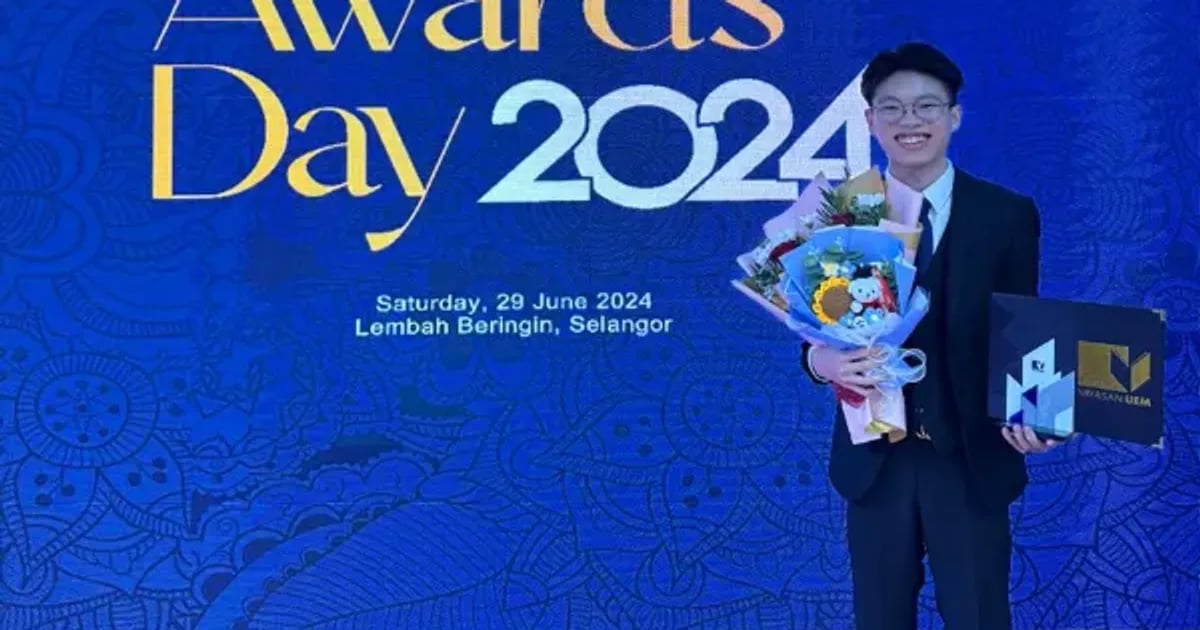
If I had to distil my story into a single word, it would be curiosity. Growing up in Malaysia, I was the kind of student who found comfort in the endless whys that could not fully be answered. I worked hard, yes, but work was never separated from wonder. By the time I sat for my Sijil Pelajaran Malaysia (SPM), curiosity had carried me to 9 A+ and 1 A. That momentum extended into my A-Levels, where I earned 4 A* in Physics, Chemistry, Mathematics, and Further Mathematics, along with an IELTS score of 8.0 and an SAT score of 1540. Yet these grades, while anchors, were never the destination. They were proof that discipline could coexist with passion, and that learning was a lifelong pursuit, not a line to cross.

Building Community: AMISO and the Youth STEM Experiment Camp
For many, Olympiads are a personal test of endurance. For me, they became a platform for collaboration. Competing opened my eyes, but coordinating the Malaysian Alumni of the International Science Olympiads (AMISO) changed the way I thought about science entirely. Organising events wasn’t just about logistics; it was about shaping a community that could think critically and dream ambitiously.
One of the projects I am most proud of is the Youth STEM Experiment Camp. We designed hands-on sessions that gave younger students a glimpse into how scientists think: not just absorbing knowledge but testing it, questioning it, sometimes even breaking it. Science, I learned, isn’t a solitary climb up a mountain; it is a collective expedition, where each person’s insight can illuminate the path for others.
Research: Where Theory Meets Impact
Curiosity, however, demands practice. My research experiences at Universiti Teknologi MARA, Multimedia University, and Sarawak Energy gave me a grounding that classrooms alone could not. In each of these institutions, I found myself at the delicate intersection between theory and application.
At Universiti Teknologi MARA, I immersed myself in the study of polymers, where the lab became a training ground for discipline and patience. At Multimedia University, I shifted gears to synthesising nanodiamonds with femtosecond lasers. And at Sarawak Energy, my work on hydropower optimisation and energy sustainability reminded me that energy isn’t just about efficiency, but about sustainability, accessibility, and ethics. Collectively, these experiences shaped my conviction that research is not an ivory tower pursuit but a responsibility. It asks not, “Can we?” but, “Should we, and how responsibly?”
Choosing Shell: A Scholarship Beyond Finances
I was also offered scholarships from Petronas, JPA, and Sarawak Energy. Each of these represented extraordinary opportunities, but Shell resonated with me most deeply. It stood at the crossroads of science, society, and sustainability. The offering itself was generous: Shell scholarshipcovers 100% of tuition fees for both A-levels and undergraduate studies at prestigious institutions overseas.
For me, however, the choice went beyond funding. Shell offered not just education, but a platform to test my abilities against global challenges: energy transitions, sustainability, and equitable access. The scholarship symbolised assurance that the long hours of study, competitions, and research had carved a path others believed in enough to invest in. Yet it also came with humility. I often remind myself: a scholarship is not a medal. It is a mandate to use opportunity wisely, to open doors for others, and to think beyond myself.
Why Caltech: The Allure of Uncompromising Rigour
People often ask me, “Why Caltech?” After all, I was fortunate to receive offers from some of the world’s most prestigious institutions — Cambridge, University of Pennsylvania, Columbia University, Imperial College London, and University College London. Each of these universities represented incredible opportunities, each with its own unique strengths and traditions. But Caltech stood apart. Its small size promised a rigorously close-knit intellectual community, where collaboration is not just encouraged but inevitable. That challenge is precisely why I came. It was never about proving that I could succeed, but about learning how to fail well and transform those failures into new frameworks of understanding.

Redefining Success Abroad
Studying abroad forces you to confront not just new syllabi but new versions of yourself. At Caltech, I was no longer the student with the highest grades in the room. I was one of many who had aced Olympiads, broken academic records, or pioneered research. Initially, this was daunting. But slowly, it reshaped my definition of what success meant.
Success, I realised, isn’t being the best in comparison to others; it is becoming the fullest version of yourself. It is the willingness to chase an equation that won’t resolve. It is the courage to admit when you’re wrong, and the openness to learn from those around you. Above all, it is the humility to know that science, like life, is less about having all the answers and more about refining the questions.
Advice to My Younger Self
If I could speak to my younger self, I would say this: “Do not mistake certainty for strength.” The world is too vast for any one person to hold all the answers. What will carry you forward is not perfection but persistence, not brilliance but balance, not achievement but adaptability.
Every competition, every exam, every lab session was never about the result; it was about preparing me to ask better questions tomorrow. That is the advice I would pass on: stay curious, stay humble, and never stop asking why.