
Why UCL and London?
I'm from Astana, Kazakhstan, and I have been studying at Spectrum International School.
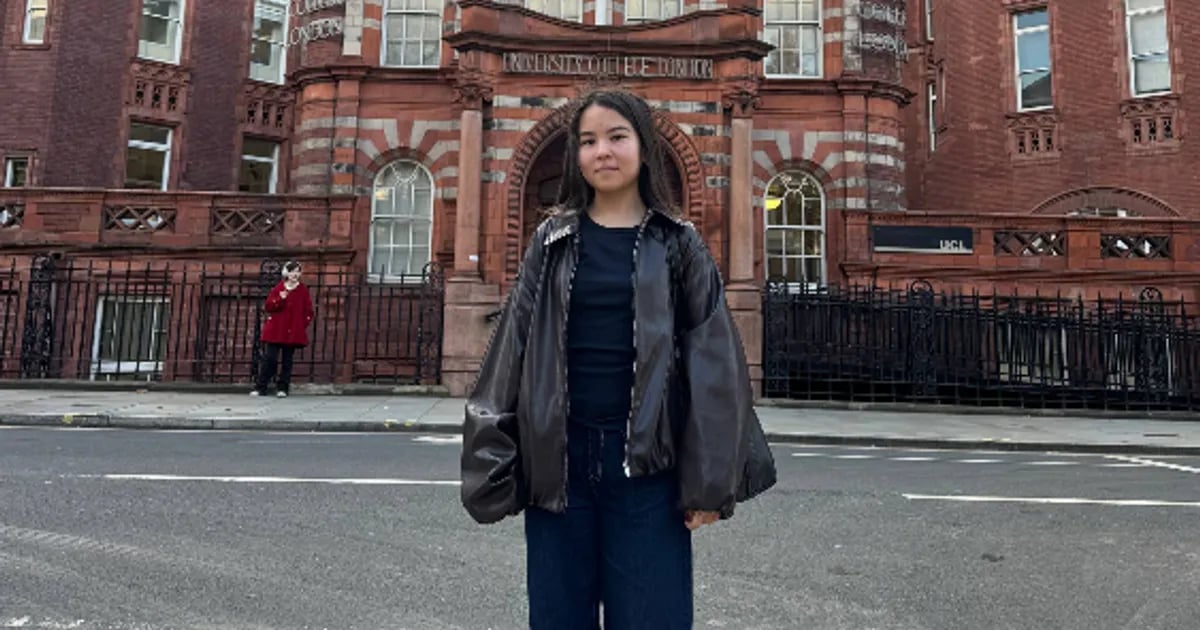
I chose UCL because it is one of the top universities in the world; it is especially strong in my field of study. This university provides many different opportunities to develop yourself personally, as it has over 400 different societies and clubs that you can join. There are also many different ways to develop yourself professionally, as UCL provides extensive support for career development and various networking events with industry experts.
Additionally, I chose London because I attended a summer program last year in the city, and I really enjoyed the atmosphere of the city. I like how busy life can get here; there are many different parks, museums, and ways to entertain yourself, but it's also a very comfortable city for living as a student.
Experience at UCL
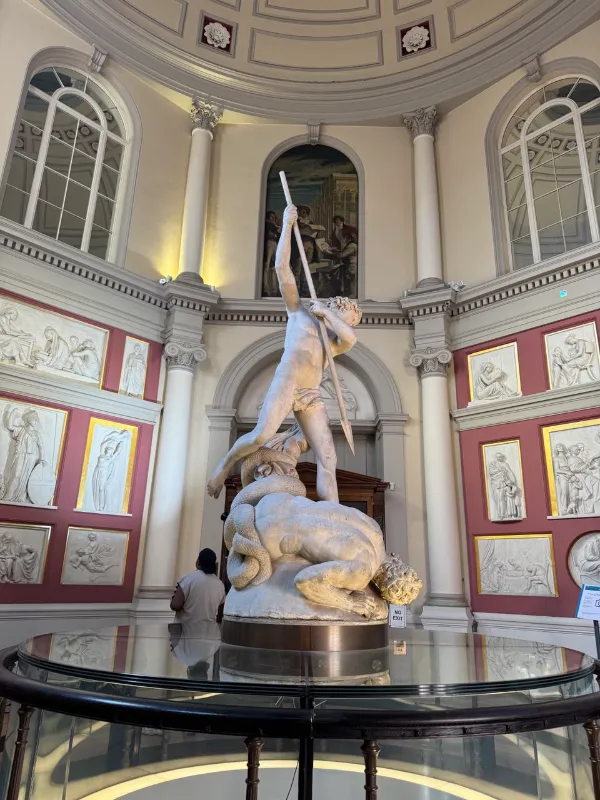
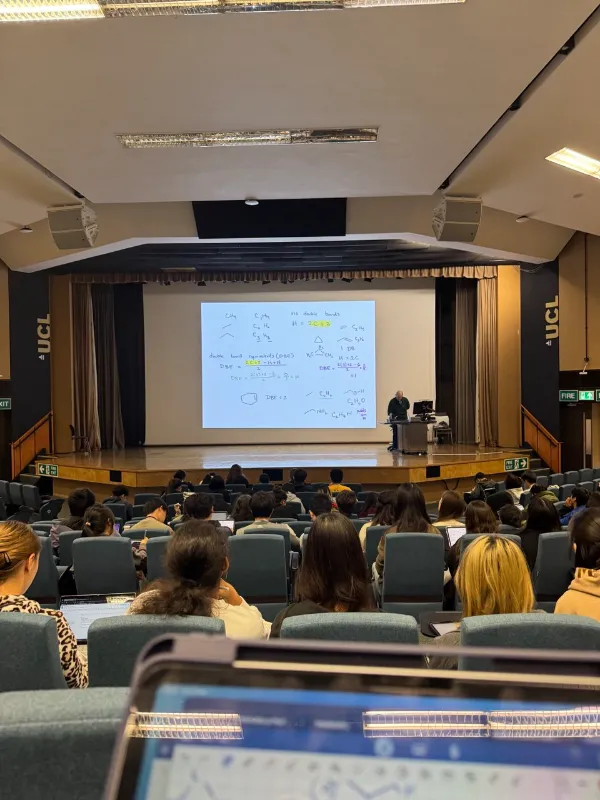
It's been a month since I started university. It has been a really great experience so far, although at first I did find it quite challenging to settle in and get used to a new way of living and adapt to a new environment. The lectures are really entertaining and fascinating, and the people here are really open and kind. Likewise, there are many different ways to find friends and feel like a part of the community.
The cultural shock that I found is that the way of living is very sustainable here, and all of the companies are trying to minimise their waste and their impact on the environment, which I think is really nice.
Academics – A-Level, IELTS
Besides the UK, I also considered applying to the USA, but I did not end up applying there because I did not have the time to prepare for the SAT. I chose to focus all of my efforts and time on studying for my A-level exams. I also applied to Hong Kong, and I got accepted to the Hong Kong University of Science and Technology.
I have a band score of 8.0 in IELTS. Moreover, I received an A* in biology, an A in chemistry, and an A in maths for my A-levels.
To prepare for my IELTS and achieve a good score, I watched a channel called IELTS Advantage to familiarise myself with the style of questions in speaking. Similarly, I wanted to develop my writing skills. I used the website called IELTS with Liz. Still, for the most part, I tried to do as many practice tests. Especially in reading and listening, it is very easy to score and to receive a maximum score if you practice consistently. After completing every test and writing essays, I tried to compare them to the marking scheme to work on my weak points.
About the A-level, my school provided a variety of different subjects that we could choose from. The school also organised mock exams for every subject that we take to simulate exam conditions and show us where we stand in our level of understanding in our subjects. To achieve good scores in my A-level exams, I used a method called active recall. For example, instead of rewriting my notes and possibly underlining information in the textbook, I tried to solve as many past papers and past paper questions as possible before the actual exams. I also tried to teach the content to someone else to activate my long-term memory. During the exam, I did not feel any stress. Therefore, I actually felt relieved to finally write the exam that I've been studying for so many months and get it over with.
Why Biomedical Science?
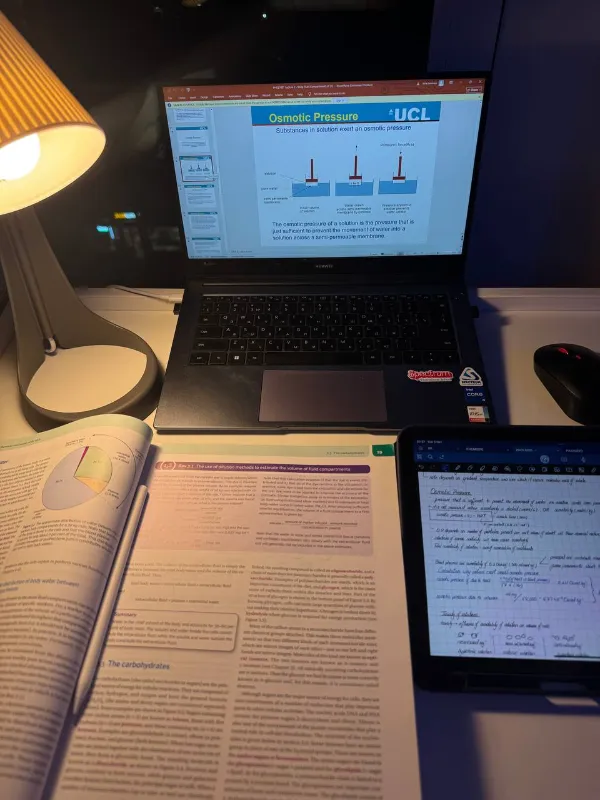
I chose to study biomedical science because it is a very extensive field that covers subjects from anatomy to pharmacology and biochemistry. By studying this degree, I will have the opportunity to understand how the human body works. Furthermore, I want to contribute to the advancement of medical knowledge and practice by working on research projects later on in my professional career. I think the human body is fascinating, and despite the vast abundance of knowledge that we have about it now, there are still many mysteries that are waiting to be uncovered through research. Another reason is that biomedical science provides many different career opportunities, from work placements in industry to research and academia.
Extracurricular activities – Internships, RISE Competition
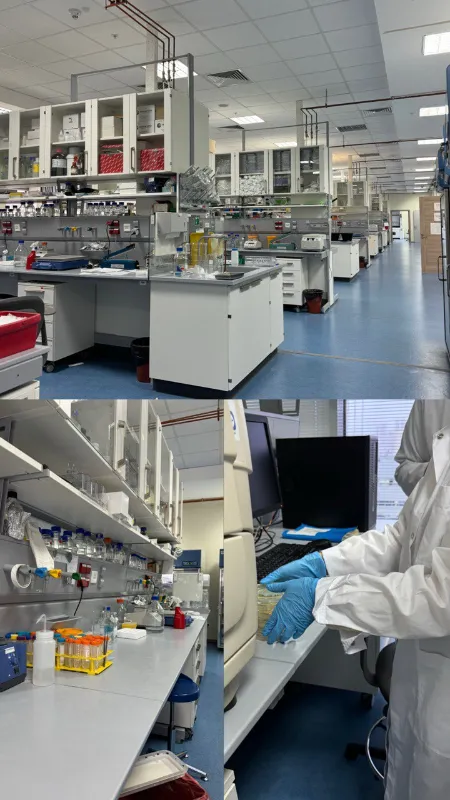
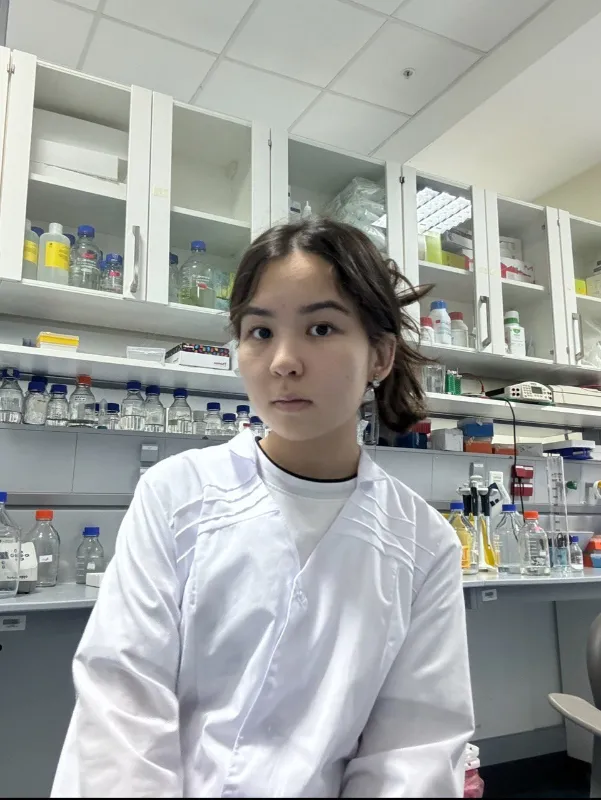
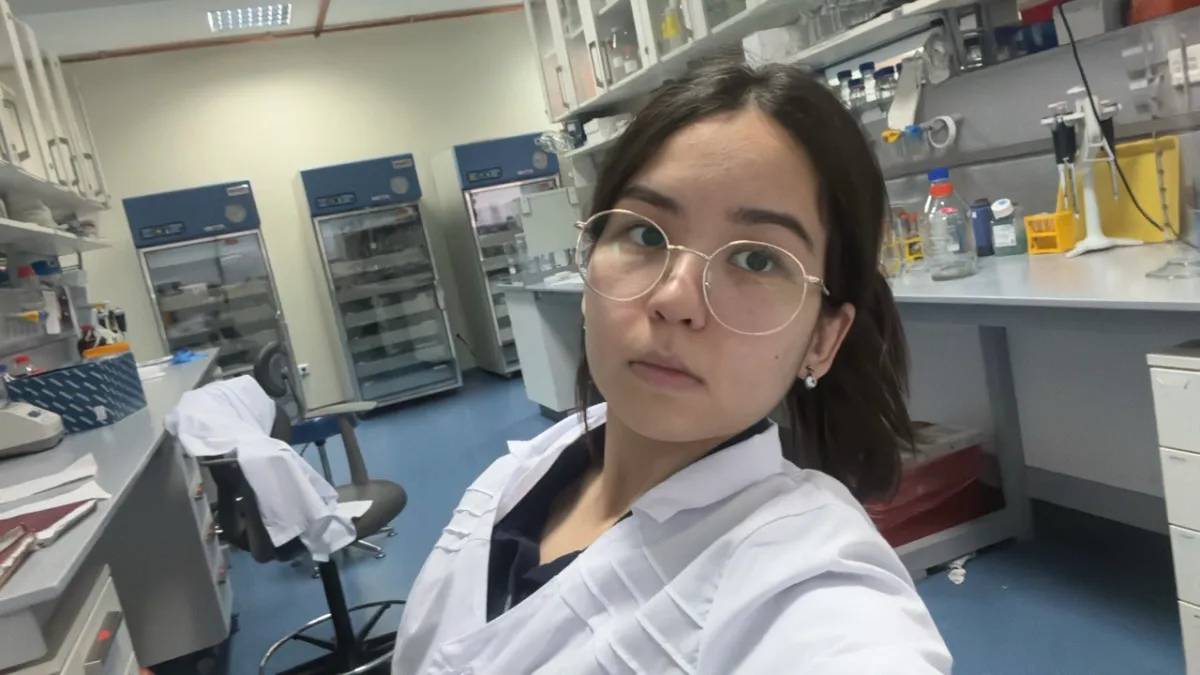
For my extracurricular activities, I decided to focus on those activities that are related to my chosen field of biomedical science. They're also known as supercurricular activities. I did an internship at Nazarbayev University; I worked under the guidance of the program director of biomedicine, and I worked on her research project. Among my other extracurricular activities, I also did a short internship at the National Centre of Biotechnology, where I worked. I focused on the area of stem cell research. Moreover, I worked as a medical assistant at the National Centre for Traumatology, and I helped patients alongside doctors and professionals in the medical field.
RISE is a really wonderful project that lets you develop a solution to a social problem. I personally started my project three days before the deadline. Still, I passed to the finals of the competition, so always have faith in yourself and in your abilities to make a good project. If you have an idea, you have to make it come to life because other people who are competing against you are in the same boat. You've got what it takes - don't be afraid to try and see where it takes you.


The application process
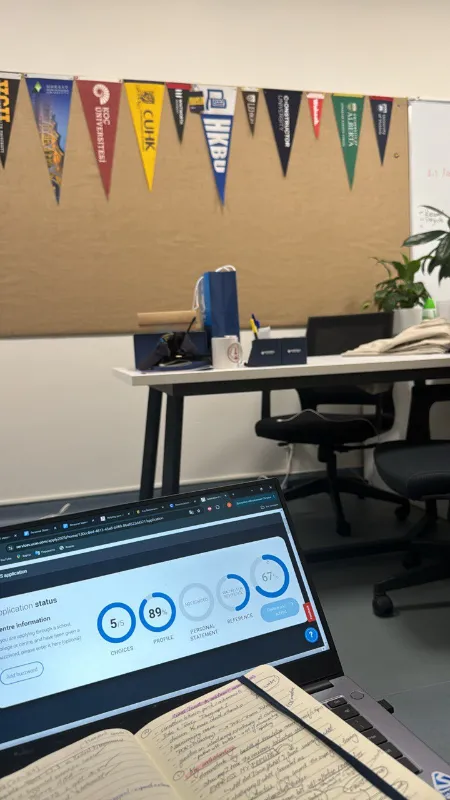
My school helped us (me and other students) to develop our extracurricular activities as they thought that we didn't have a sufficient number of activities to get accepted. And they also helped us with the application process itself, which made it a lot easier and less stressful.
I think my application process started at the start of the summer in 2024 (the graduation was in the summer of 2025). As I already said, I attended the summer program in London, which helped me decide on my field and gave me confidence that biomedical science is what I really want to do. Throughout the summer, I researched different universities and came up with a list that I would like to apply to. I also prepared my documents, but at the start of my 12th grade, I realised that I didn't have a good amount of extracurricular activities to make me a strong candidate. Hence, I worked on it and took some internships that I've mentioned before. I started writing my personal statement at the start of September, so that I would have applied by October, which is the deadline for applications to universities in the UK.
During my application process, I did not really rely on many resources, but instead, I watched YouTube videos of people who already got accepted into my dream universities; I listened to their tips on how to get in, and I read many different personal statements to learn how to write personal statements.
What problems did I face during my application process? I did not know how to write a good personal statement that would get me into my dream universities. It wasn't very clear what structure I should go for and what I should mention in my essay. Another uncertainty that I had when applying to universities in the UK is that I did not know how much extracurricular activities play a role in your application, and how much they contribute to your selection by the university.
To solve this problem, I seeked guidance from my college counselor and I watched videos on the internet of people discussing their personal statements that got them into my chosen universities; I also made many drafts of my personal statement and showed them to my teachers and my college counselor to gain feedback, coming up with the personal statement that shows my potential as a student.
For my personal statement, I wanted to demonstrate how passionate I feel about studying biomedical science: what skills I have to showcase myself in this field, and what prior experience I have that shows my interest in biomedical science. A personal statement is like a mini trailer where you show your personality and also your interest in your chosen field to make you stand out among other applicants.
Advice from Taira
My advice would be to be proactive. If you find an area that you're really interested in, and you want to gain some extra experience to develop your profile, just go for it. You can always email a professor by searching them up online, or you can always ask your teachers or college counselors to find a good internship or work experience for you so that you not only develop your experience, build up your experience, while finding something that you enjoy.
For the application, I would recommend that the readers start their application process early so that when the deadline for the application approaches, they don't feel stressed out and lost. It's good to start researching universities and countries where you see yourself living and studying. Also, if you feel like your profile is not strong enough, there's always time to develop it. There are many opportunities for you as long as you have the drive and you push yourself to achieve your goals and make your dreams come true.