I first heard about the Asia Kakehashi Project Plus from my cousin, who had done the older six-month version of the programme back around 2021. She came home from Japan as a different person. She came home from Japan a different person, not in a loud and obvious way, but in the way where you just notice that she seemed more sure of herself and more settled, like someone who had figured out something about the world that I had not yet. I wanted that.
The programme's entire reason for existing comes from a very direct observation about history.
We all know what happened to Japan at the end of World War II. In many ways, it reminds us that conflict often begins much earlier, in insecurity, in divisions between people, and in the fear of difference. Over time, these tensions grew stronger, eventually leading to a devastating war that cost countless lives.
So Japan started a programme whose name was its own answer: Kakehashi. In Japanese, it means bridge. My school, Sunbeam Lahartara (the top CBSE school in Varanasi), is a partner of the program. But this connection is not a prerequisite for applying, and I want to make that clear before anything else. I applied, I got through, and four months later, I was on a bullet train at 4:30 in the morning, travelling alone through a country I had only ever imagined.

The Application: Three Stages of Becoming Ready
Let me start with the question that fills my DMs on a regular basis: do you have to be from an AFS partner school to apply?
No, no. This is like a misconception. Because you know these days we are posting so much on LinkedIn, so we have so many students who are trying to get into our DMs and asking us that my school is not a partner of AFS, can I still volunteer or join or apply to this? And of course you can.
The advantage of being from a partner school is access to a better alumni network, that is it. If you are not from one, you reach out to people like me directly, and we will get back to you. I am currently helping two or three students from non-partner schools navigate their applications right now.
The application itself has three stages, and each one asks you to show a little more of who you actually are.
The first stage is a Google Form. It sounds simple, and in format it is, but the content it asks for is real: one or two essays, a full list of your achievements and volunteering activities, your academic transcripts, your parents' income tax records, and basic personal details, including whether you have a passport. On the passport question, my advice is simple:
I don't have a passport, can I still apply? Yes, you can still apply, but ideally you should apply for it as soon as possible.
The second stage is more layered. AFS sends a PDF form that you fill out and mail back. Here, they want to know more than your CV. They want to hear from the people around you. There is an essay from you, yes, but also a letter you write to your potential host family (your first real attempt at introducing yourself across a cultural gap you cannot yet measure), and a letter from one of your parents asking them to describe you as a child. What has shaped your growth? How do they see you? What are they proud of? It is an unusual ask, but a meaningful one.
They also ask for detailed medical records: all vaccination certificates stamped and signed by a doctor, blood reports, and prior immunisation history. Japan takes the responsibility of hosting foreign students seriously, and the paperwork reflects that.
When a child is born in the hospital, they give you this card in which you keep a track of all of those. So ideally, the doctor will fill up the form according to that track and he will put his seal on that form, which ensures that vaccination is done and the doctor is vouching for it.
The third stage is the interview. Representatives from the Japanese Embassy in India are present, along with AFS chapter heads (these are typically parents, teachers, or educators who volunteer with the organisation), and sometimes an alumnus of the same programme.

They'll ask you about what your day is like, why you feel you should be sitting, all the generic questions that you can expect when you're applying for a college. Why us? Why do you want to go here? Why do you feel we should choose you? What is your routine like? Why did you apply to this programme?
If you have a very rigid daily routine, be prepared for a follow-up: Are you genuinely okay with that changing? Because it will. My advice on the interview comes down to one principle:
The idea is not that you go to Japan and become Japanese. The idea is that you get a better understanding of their culture. How you understand that Japan is not all about anime and sushi. And how we explain to them that India is not all about butter chicken and naan.
And on honesty: Do not lie in your application, please. That is not a moral lecture. The whole point of Kakehashi is honest exchange, and that foundation has to be laid before you even get on the plane.
Before Japan came to Indonesia, and Before That, Ashoka
Japan was not my first time travelling internationally for a programme, and understanding the full sequence helps explain how I arrived in Japan as prepared as I was. The first experience was Ashoka University's Lodha Genius Programme (LGP), a STEM-focused residential programme held on Ashoka's campus in Sonipat for a month, mid-May to mid-June, the year before Japan. It is completely scholarship-funded: travel, accommodation, everything. I went without my school teachers, without any accompanying adult, essentially alone on a university campus for the first time.
My mom told me that this is just your prep course for the Japan thing because the other international exchange that I did, teachers went with me. So when you have an adult who is standing with you the whole time, it is a different story. And when you don't have anyone who is there with you the whole time, it is a different story.
That experience taught me something that sounds simple but is not:
How do I survive when I know nobody over there?
Figuring that out at sixteen is not a small thing.
The second experience was an international exchange programme organised through my school, a paid programme (the school arranged and charged for it, unlike my fully-funded Japan scholarship), eleven days in Indonesia in 2024, when I was in Class X. The programme was called Harmony and Diversity. We stayed at a government school with a madrasa component in Tasikmalaya (a rural area, not the tourist spots of Bali or central Jakarta), living in dorms with students from Japan, Thailand, and Indonesia. Rooms were arranged deliberately across nationalities so that nobody from the same country was roomed together.
The food was a genuine struggle.
We are Indians, we in general have a habit of having a lot of spices in our food. But it wasn't like that there. And even if we had kids who would eat chicken, they didn't like the chicken there. Because obviously they don't cook it the way we do.
We survived for about two and a half days largely on bread and jam.
But here is what made it worth it:
We made friends. Now I have friends from Thailand, now I have friends in Indonesia, now I have friends from Japan. As a matter of fact, the Japanese friends that I made, I even met them when I went to Japan this time. So you obviously build a lot of connections.
I also ran a small cultural exchange during that trip. I gave them the handouts for Ludo and Snakes and Ladders, and we all played groups of Snakes and Ladders in recess. It gives the feeling that the whole world is one family.
I ran mandala drawing sessions too, distributing around sixty sheets to the students. Unlike what sometimes happens in India, where homework comes back incomplete, they actually took it very seriously... I told them that next week I want to take this from you; please get this done by then. And we had all of the mandala drawings. It was as if I distributed around 60 pages, I got all of those 60 pages back.
Arrival in Japan: When Stereotypes Start Dissolving
I arrived in Japan with a full set of assumptions. Some were the ones everyone carries. Some were specific to growing up in India and absorbing the way India talks about Japan (mostly anime references and precision engineering). I have since dismantled most of them. The first and most persistent stereotype was that Japanese people are deeply introverted and nearly impossible to befriend.
Since the very first day when I actually stepped into their school I was the one who was acting awkward and sitting in the corner while they were kind enough to actually ask me to get up and have lunch with them and we sat there and we watched Indian music and all of that.
My local guardian (AFS assigns a local Japanese adult to each student as a point of contact for anything the student needs on the ground) turned out to know about Sai Baba.
I have zero idea how.
My host mother had been to Calcutta and Varanasi. She knew butter chicken, golgappa, and dosa. Another AFS coordinator had a sister living in Delhi.
They genuinely did not care about the things that dominate Indian school conversations about global politics.
They don't care. They genuinely don't care. But as long as it is not affecting Japan directly, they won't really talk about Trump, for example.
The Japanese students were also widely well-travelled in a way that surprised me. Most people there, like me, travel a lot. They are always very interested when it comes to travelling abroad. In my section at school, the whole class had come from Singapore. In contrast to what I was used to in India, where international travel is often restricted to a small group of students, whole classrooms in my Japanese school had gone abroad together.
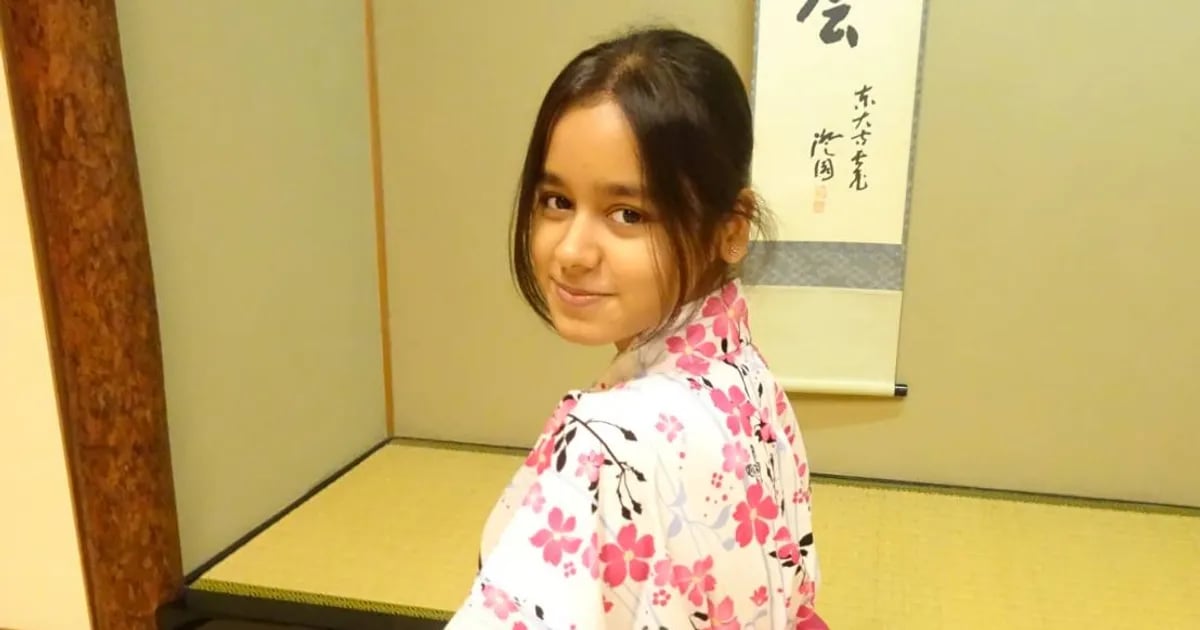
Then there was the kimono. I had assumed, as most people do, that every Japanese household owns at least one.
When I went there, I realised that maximum people don't have kimono because it is so expensive that so many people can't even afford it. And even if they can, they are so irritated by it... that maximum people don't have it. They have to go to professionals just to wear it.
The spice myth also collapsed completely. My host mom used to love spicy food. So I gifted her all of my extra Maggi Masala and Peri-Peri Masala pouches. I gifted her Indian pickles.
And then there was the ice cream. This one deserves its own paragraph.
We have been idealising the wrong ice cream all this time. Japanese ice cream is so good. I swear to God. It is so good that I can cry that I don't get to have Japanese ice cream.
One of the most striking moments came when I sat down with my Japanese classmates and showed them both sides of India. Their school was teaching about Indian slums, which is a common representation in international media, rooted in the Slumdog Millionaire image of the country. Rather than getting defensive, I engaged with it. The point was not to present a sanitised version of India. The point was to present a complete one.
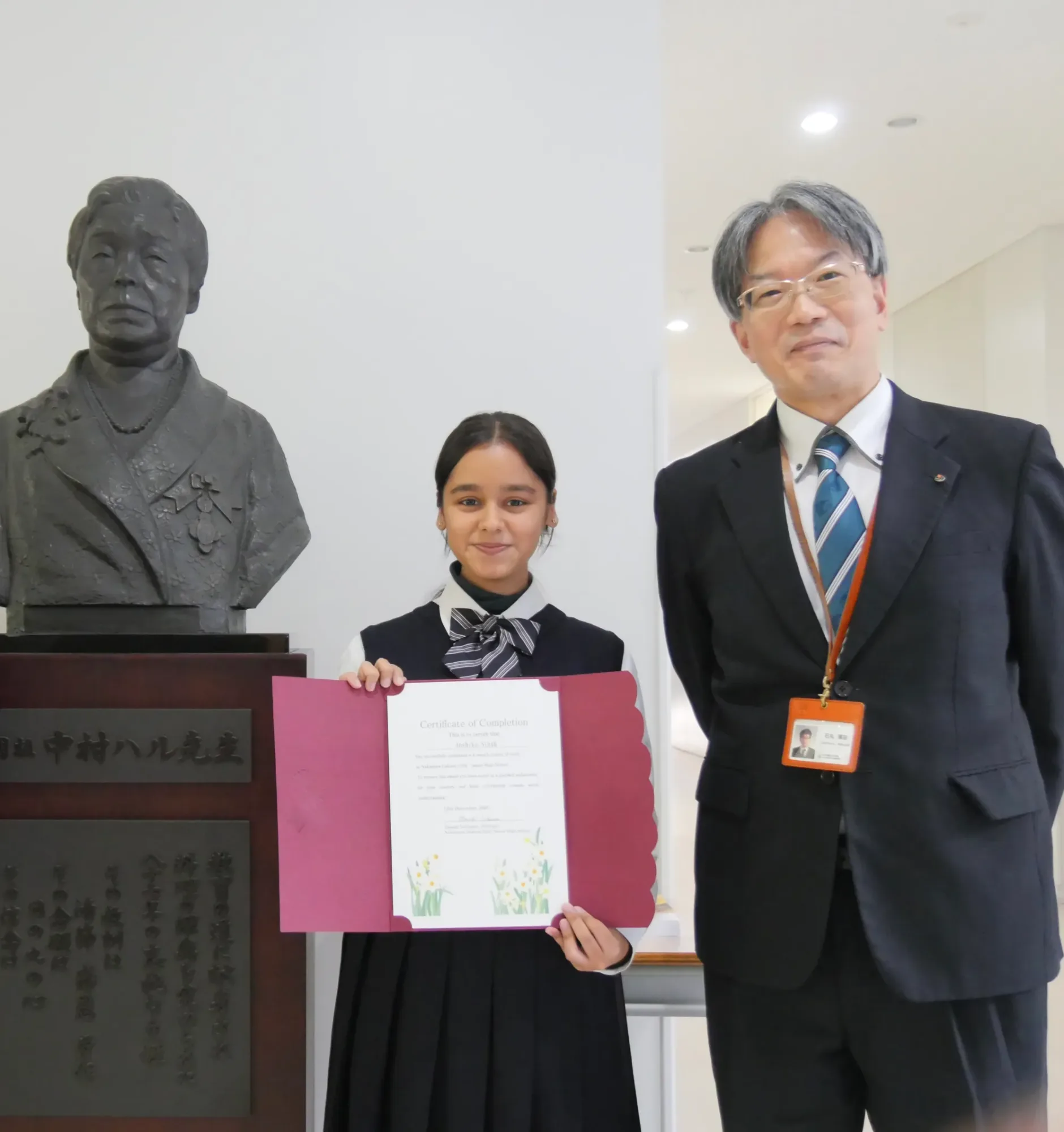
Japanese schools allow iPads in class, which genuinely surprised me given the reputation for rigid academic discipline, and the atmosphere was lighter than I had expected.
The Tea Ceremony, Learning to Move at a Different Speed
Among everything I experienced in Japan, the tea ceremony is what I return to the most often. It changed something in my relationship with time and attention.The room is specific. The floor is tatami (woven rush mat panels, like a more formal version of what we in India might call chattai), divided by black seams.
The tea is matcha, but not the kind available in cafes. Alongside the matcha, you are served wagashi (Japanese sweets). They are not too sweet, they are not less sweet. So it just hits the right spot.
Ceremonial matcha is much different from the matcha we generally drink. I feel a lot of people who don't like matcha is also because they've just had bad quality matcha.
The process of making the matcha is its own choreography. The host brings a tray with a matcha powder box, a special measuring spoon, a bamboo whisk, a cup, and hot water. Every step has a correct sequence.
You have to pick up the spoon like this and you need to open the box like this and keep it. Take the spoon, do it like this so that you get the excess off. And then you pour it into your cup. You close the matcha cup first, then you pour the hot water. Then you take the whisk.
The whisking motion is specific too, not like an electric whisk.
They have a bamboo whisk which has to be whisked in a circular motion very fast. And then it oscillates from one end of the cup to the other end. And then you have to just circle it for once so that the excess comes out of the whisk and then keep it back and your matcha is ready.
Drinking it is equally detailed. The cup itself may be expensive, hand-painted, and signed by its maker.
There will be a small painting on one side and a big painting on the other side. First, the big painting should face outwards. Then you have to twist it 90 degrees twice so that the big painting faces you and the smaller one faces the other side. Then you drink, then you keep it down again. Then you take the cup and you tilt it a little so that you can see what is a drawing and you can appreciate the art. And then you keep it on the tray again and then you twist it by 90 degrees.
When I first encountered all these rules, I found them a lot to process. But then I stepped back and thought about it differently. If you think of it, it is just a well preserved culture for them. Because in our Indian traditions, too, in some places, it happens. There is a specific way that food has to be eaten. But we haven't preserved it that much. They have preserved their culture very well. That is the only thing. And they are very proud of it. And it is very relaxing once you get to know it well enough.

Being a Girl From a Tier-Two City
I want to talk about safety. Not as a disclaimer, but as a serious conversation, one that I have had repeatedly with parents considering whether to let their daughters apply for programmes like this. I come from Varanasi, from what I call, without any embarrassment, the East Uttar Pradesh and Bihar belt. A region that carries a particular weight in conversations about the safety of young women. My parents are proud feminists: my mother was a teacher for over twelve years, and my father manages a committee overseeing multiple colleges. I have never had to argue for my right to pursue opportunities. But even for parents like mine, the question of safety abroad does not just disappear because they have progressive values. The concern is genuine. Here is my honest account of safety in Japan.
Japan is very safe. I have stayed out until 9 in the night alone. I have travelled at 4.30 to 5 in the morning alone. In my head, I did have a little bit of fear because I wasn't used to it very much. I am the sort of person who will possibly not even leave my colony unless I have a staff or my parents accompanying me.
When I stepped back into Varanasi, sitting in my parents' car on the way home, I started crying. They had absolutely no idea why. Were they happy tears? Overwhelm? Had Japan broken something in me? I had to explain.

Sometimes you just acknowledge the fact that the amount of freedom that you were getting therein, not because you didn't have your parents around, but because you know that it was much safer for you to get out of your dorm at 4 in the morning when it is completely dark or at 8 in the evening when again it is completely dark and even when you are surrounded by a bunch of men, you know that you are safer than compared to even if I am travelling with three other women at like 4 in the evening in India.
Safer alone in Japan at 4 AM than with three companions in India at 4 PM. That gap is real, and I refuse to soften it.
My advice to parents considering these programmes for their daughters:
One thing which I would like to tell in general to all parents, even while I'm talking to parents whose kids are applying for the same programme, I always tell them that your kid is in general hopefully going to be safer than they possibly were even inside their own school. You know, like they're going to be safer on the roads of Japan than they possibly were even inside the walls of their own school.
I also want to say something direct: your concern as a parent is not anti-feminist. It is love. What differs between countries is not the love; it is what society builds on top of that concern. Whether it creates infrastructure for safety or whether it simply restricts movement. Japan has done the harder work. India is still early in that project. Both things are true.
On why Japan specifically is different:
There the rules are so strict that the deterrence is already there. So they won't even think of it.
That is not a culture question in some deep essential sense. That is a policy question. And it is one that India has not yet answered in the same way.
On Dreaming Seriously, PPE, STEM, and the Shape of an Ambition
I will open with a disclosure that I flag as potentially controversial. One of the people whom I look up to the most includes Veer Das and Mehdi Hasan. Veer Das does stand-up comedy but political stand-up comedy. Mehdi Hasan is also like a journalist kind of person. He comes on TV, the Western media.
The principle behind those choices is one I live by. I live with the idea that if I am questioning something, I am not criticising it. I am questioning it because I want clearer answers, and I do not want to exist in a place where my mind is a void, and I don't have any idea about my future. We as humans, we value stability as much as we enjoy drama.
For a long time, my academic dream was PPE (Politics, Philosophy, and Economics) at Oxford. It remains a genuine interest.
Initially, obviously my idea was to do PPE from Oxford because I am very interested in politics, philosophy and economics. Although I am pretty sure that if I would have applied for it, I hopefully would have gotten in, but I was expecting a full ride and I am not very confident about that as of now.
But my thinking has shifted. I have come to believe that right now, in this particular historical moment, STEM is where I can do the most. The argument for why is one I want you to follow closely.If you think of it, one aspect of the entire globalization today is obviously geopolitics, philosophy, and economics, like the financial aspects of it and how systems work. But another aspect of it is also technology. Countries that are most prosperous are mostly countries, not necessarily those that have the best resources, but countries that have utilized the resources the best way because of access to technology.
India is my specific case study. India is one of the countries that has the most abundance when it comes to resources, but if we look at it, it is not necessarily the most tech-savvy. All the superchips we are making are made in China and the US. I am talking about advanced semiconductors, the kind that run defence systems and determine economic competitiveness, not the generic chips in everyday electronics. India is not producing these. The downstream consequences of that gap are significant.The sustainability question is where technology and politics meet for me.
Although GDP is rising, but there is a big question mark when it comes to sustainability and the livelihoods of people from indigenous communities, which I feel can be solved if we come up with the right solutions when it comes to technology. And because obviously sustainability is very deeply linked to technology and STEM in general.
My current position on PPE versus STEM is not a permanent verdict. It is a sequencing decision.I feel that PPE is still something that can be developed by just reading and talking to likeminded people, while talking to professionals, but a lot of things when it comes to STEM requires a different aspect of understanding. Formal education at times is very important, which is why I prefer STEM over PPE right now.
As for where I want to study, I am looking at universities in Hong Kong, Singapore, and similar institutions for my undergraduate degree, and I want a full ride. Not because I cannot pay, but because of what earning one means.
There is a different thrill to it when you're going for a full ride thing.
For Future Applicants, What the Brochure Does Not Say
I now regularly help students apply to Kakehashi and other AFS programmes. I work with students from non-partner schools, I answer DMs on LinkedIn, and I think seriously about widening the pipeline for students from tier-two cities. Here is what I want future applicants to know.
On what you are actually being selected for:
They will expect you to acknowledge differences, to respect differences. And you should be keen to understand their culture. The main idea of the programme is that I need to tell them what India is actually like and I need to understand what Japan is actually about. That is the idea that you should carry with yourself at all times.
The expectation of eating good or bad food, it keeps on changing with time. One day, you eat sushi, you're like, wow, oh God, this feels bland. You go to another restaurant, you eat sushi, you're like, no, this is different. Then you go and have ramen, you're like, this is bland. And then you have ramen from another place, which is going to taste different. Come with an open palate and low fixed expectations. The good food reveals itself over time.
On what the experience does to your understanding of your own country: you will come back with a sharper, more honest picture of India. Not rosier, not harsher. Just more complete.
By the end of the programme we were all crying when you know while we were about to board our flights. That is the real measure of whether the bridge worked.
Epilogue
I am seventeen years old. I am about to begin Class XII. I have been to Indonesia, lived on a university campus alone, and spent four months as a student in Japan on a full government scholarship. I have friends I can now visit on the other side of the world. I have learned how to whisk matcha correctly. I have cried in a car going home because a country felt safer than my own.I talk about my future with what I hope is a combination of ambition and openness. I know what I want (a full-ride undergraduate degree in STEM, probably in Asia, probably Singapore or Hong Kong), I know why (because technology is the most urgent lever for the problems I care about), and I know it may change (because I am honest enough to hold my own plans lightly).Kakehashi means bridge. And the best thing about a bridge is not what it is made of. It is the distance it spans. I am from the eastern UP-Bihar belt, from a city that has been building bridges between worlds for longer than most nations have existed. I crossed one more. And I came back ready to help the next person find the crossing point.
If you are thinking about applying, here is the last thing I will say:
Please be very very sure with the fact that everything will not be as per your expectations.
And then go anyway. Especially then.