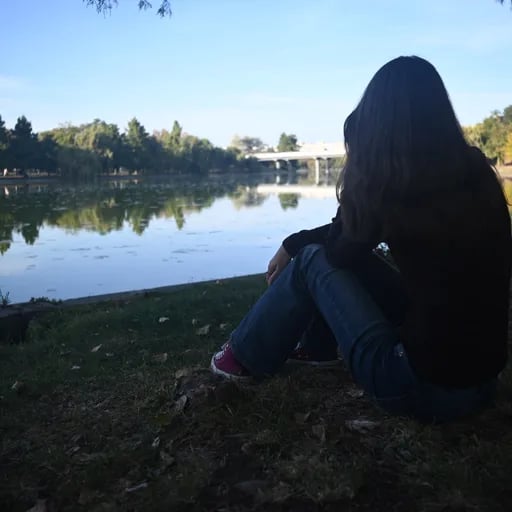


A new chapter begins
Hello! My name is Isabela Zybaczynski, and I’m a Romanian student, about to begin my three-year bachelor’s degree in Communication Science at the University of Amsterdam. In high school, I studied at the National College Ion Luca Caragiale in Bucharest, and I was part of the math-informatics class. However, I quickly realized that my interests extended beyond physics, chemistry, and math. I spent a lot of time exploring extracurricular activities focused on speaking and communication, which eventually helped me realize what I wanted to study at university. Outside of academics, I like puzzles; I’m an avid Wii player, and I have 6 cats.
When Studying Abroad Became Real
For as long as I can remember, studying abroad was something my family encouraged. My older sister had already gone to university in the Netherlands, following the family tradition of each generation seeking better opportunities for the next. However, for me, the idea of actually leaving Romania didn’t feel real up until 9th grade, when I watched my sister go through the process of applying to university and looking for housing.
I think I had a pretty romanticized image about what studying abroad was like. I imagined the excitement of meeting new people and discovering new places, but it all suddenly became real when I received my university acceptance letter. And it took me a while to get used to the fact that I’m actually going to leave, and that this is really happening. At the same time, staying in Romania was not worth it, as the programs available here didn’t offer the opportunities I was looking for in communication and media. Once I understood that, studying abroad stopped feeling like an exciting possibility and became the path that made the most sense for the future I wanted.

Learning to trust myself
Honestly, one thing that I was afraid of when I applied was that I wouldn’t be good enough. I was joining a competitive program at a university that is among the best in the world in its field, so even after I was accepted, I still wondered whether I would be able to keep up. I know it’s an irrational fear, but I think it’s a normal experience, as I’m starting a new chapter of my life.
It never occurred to me that I’d be missing out on anything back here, though, as I’ve always believed that what is meant for you will find its way to you. Of course, I’ll miss my friends and family, but I’ve realized that the relationships I’ve built in Romania don’t depend only on me physically being there all the time.
Choosing the Netherlands and My University
Why the Netherlands Felt Like Home
The Netherlands has been close to my heart ever since I was little. The first time I visited was on a family vacation when I was around 8 or 9, and for some reason, it immediately felt like home. It felt familiar and welcoming. As I grew up, I visited the Netherlands several more times, and yet that feeling never changed. I loved the atmosphere, the society, and the overall energy of the country. The Netherlands also offered many more specific programs and opportunities in the area of communication that interested me. In the end, my family encouraged both my sister and me to choose the path that felt right for us, and for me, it was the Netherlands.
At first, I also considered Spain or Italy, but after taking into consideration both the cost and the programs available, I figured they weren’t suitable for me, as the tuition fees were much higher and the programs focused more on areas like marketing or journalism rather than the specific field of communication that I wanted to study.
What Made University of Amsterdam the Right Choice
What really stood out to me was the guaranteed internship starting in the second year. The courses were similar to what I had seen at other universities, but having the opportunity to gain real work experience while studying felt like a huge advantage to me, especially since in fields like marketing and advertising, entering the job market can be intimidating. So knowing that the university would help me with my first experience and the fact that the internships are with established companies in the field was one of the main reasons I chose Amsterdam.
I also really liked the networking opportunities. There are events organized by the university where you could meet alumni who are already working in the specific field. Being able to talk to people who followed the same program as you and see where they ended up can definitely encourage you and give you inspiration, advice, and connections for your own career path.
Exploring My Other University Options
I ended up applying to universities only in the Netherlands, including Amsterdam, Groningen, and Utrecht, and I was accepted to all three. Amsterdam was always my top choice, and as a backup, I could’ve applied to Rotterdam for a fixed-number program, but there was no need to, as I had already been accepted to Amsterdam. I ranked Amsterdam and Rotterdam higher mainly because they offered a Bachelor of Science. I felt like that would give me more practical experience, as well as more flexibility for a future master’s degree.
From Application to Acceptance
What I needed to apply
The application process was actually more straightforward than I expected. For all three universities, I had to submit my high school grades from 9th to 11th grade and my English qualification. Throughout those three years, I had only one average below 10: a 9 in ninth grade. Besides that, my other yearly averages were 10. I was also lucky to have already taken the Cambridge CAE exam, where I scored 208/210, earning a C2 diploma. For my program, I was required to have C-level proficiency. University of Amsterdam was the only one that also asked for a CV, in which I included the activities and experiences I had built up throughout high school, obviously related to the course I was applying to.
In order to apply to all three universities, I used Studielink(https://www.studielink.nl/), the platform used to apply to universities in the Netherlands. It took me about a week to gather and upload everything, including identification documents, such as my passport and ID card. I submitted my application in October, when the application portal opened, and I was lucky enough to get the decisions quickly. The normal deadline is up until March-May, depending on your course and the university that you’re applying to; however, since my program was a rolling admission one, I had higher chances of getting in if I applied as soon as possible. Utrecht accepted me the day after I applied. Amsterdam initially told me to expect a four- to six-week wait; however, I received my Amsterdam acceptance about a week later, in an email around 1 a.m.! Groningen followed shortly after. Once I was accepted, I had to complete the Romanian BAC, in which I had to at least pass, as they didn’t care about the grade, and then the universities would check my final 12th-grade results.
Admissions counselors can make the application process more manageable
For me, working with an admissions counselor made the whole process of applying abroad feel much easier. I found this association called “Vreau sa studiez in Europa” (VSSIE for short, “I want to study in Europe” in English), and after submitting my application, I was matched with an advisor who was familiar with the field I was interested in. We started preparing months before applications opened, around March in my 11th grade. We worked on my CV, and she told me exactly what documents I needed to gather. I could also reach out to her whenever I had questions, which made me feel like I wasn’t going through the process alone. The most important part of my application process was definitely the CV for Amsterdam, so having someone experienced constantly review it really helped. It took me around 2 months to finish my CV. My advisor and I went through countless drafts: from a simple list on Google Docs to a formal CV. My Netherlands package came to a total of €450. There was flexibility with the payments, and the personalized guidance and support were definitely worth the investment. The team was really friendly and open to talking about anything related to studying abroad!
Cost
A year in my program costs €2700, which, compared to other universities I’ve looked into, seemed really good to me. Personally, I haven’t applied for any scholarships, as luckily my parents can manage the costs. I’m also not planning on working in my first year, as I want to get used to this new lifestyle first.
List of Extracurriculars
From my experience, there were three things that Dutch universities seemed to appreciate when it comes to the CV: be interested in sustainability and volunteering, but also make sure you manage to show a clear connection to your chosen field of study. Besides that, try asking yourself, “What would a recruiter want to see?” not a general recruiter, but one from this specific university, this specific program.
Debate(School debate team):
- Joined in 10th grade
- I participated in the Debate Olympiad, where my team achieved 6th place nationally. I also received individual awards, including 2nd place at the county level.
- In my second year, I won 1st place individually at the county-level Olympiad.
- In 12th grade, I became a debate trainer, mentoring both younger students and the high-school beginner team. I organized and led training sessions focused on practical argumentation.
- Took students to multiple competitions and helped prepare them for the Olympiad, where they achieved strong results
Volunteering — ARDOR / Debate Association
- I started by helping with refurbishing their website and posting content on social media.
- I also participated in trainings organized by ARDOR Muntenia on topics like journalism, feminism, and ecology. I mostly used these activities as opportunities to network with activists and other people involved in different fields.
Volunteering — Ora de Net / Salvați Copiii
- At first, I had to complete training on internet safety topics such as cyberbullying, phishing, and online safety.
- Then, in order to become an Ora de Net ambassador/volunteer, I had to pass practical training where I had to simulate teaching these topics to children.
- Once I became a volunteer, I held informative sessions for groups of children about internet safety, participated in focus groups, conferences, networking events, and educational sessions.
- Over time, I became a more experienced volunteer, and coordinators relied on me. I was also invited to speak at conferences.
Summer School — La Salle Campus Barcelona
- I attended a paid two-week summer school in Barcelona at La Salle Campus Barcelona. There I studied philosophy, politics, and argumentation. We explored topics such as the American Constitution, the Second Amendment, and political philosophy about the ideas behind constitutional systems.
- I took part in discussions, presentations, and activities, alongside students from different backgrounds. My team also won the “Best project” award at the end.
- There were also cultural activities and excursions around Barcelona to museums and theatres.
Work Experience — Filamente 3D
- I got employed part-time in 11th grade, and I started working as a Social Media Junior, responsible for social media posts, campaigns, and online communication.
- I came up with a sustainability campaign encouraging customers to return leftover materials from 3D printing.
- The campaign ultimately resulted in almost one ton of plastic being collected for recycling.
Charity Project — 9th Grade
- My Romanian teacher organized a project in which students periodically contributed with around €2. The money was then used to support children living with HIV/AIDS by buying clothes, food, and other necessities.


Finding Housing
Honestly, finding housing in Amsterdam was a nightmare. I started creating accounts on 5 different housing platforms(such as Pararius and Kamernet) in September, so even before I actually applied to university, just to raise my chances of finding a good place. Prices varied a lot, from €800-€900 for cheaper, shared apartments to €1,300-€1,600 for single, more expensive apartments. There is also a special site for students called Student Experience; the only disadvantage is that it’s a pure lottery system.
After my BAC simulations, in early April, I found out that the University of Amsterdam also has a housing lottery for international students that ends in May. I applied, and I was lucky enough to get a place! I currently stay in an apartment by myself in South-West Amsterdam, and I pay around €1,025 per month. It might seem like a lot, but it’s honestly a great deal as it’s close to both the subway (15 min) and the tram (5 min), and you can get pretty much anywhere with your bicycle in 30 minutes. We also have a common room, common kitchen, courtyard, movie nights, and other activities and hangouts organized by the team. The apartment itself is also very well furnished and pretty spacious too! It’s in a lively student area; however, the contract is limited to only one year.
Advice
When they hear about going to university abroad, a lot of people say that they’re very scared because it feels as if they need to know exactly what they want to do with their whole life afterward. But the truth is, you don’t have to have it all figured out. This whole thing starts with an idea, a wish. You don’t have to know from now on what you’re going to do in 10 years; don’t get caught up in some details that, honestly, you can’t even control. Applying is just the first step, and you don’t even know in which direction that can go. It’s one step that you take along the path called your future. This path differs for everyone. The story that I told you applies only to me. I hope it inspired and encouraged others, but it doesn’t mean my experience reflects how it should happen to everyone. It’s just one case out of a bunch of people who apply for university abroad, and there’s nothing to be afraid of. Nobody’s out to get you in the Netherlands; nobody’s out to get you anywhere else in the world, so it shouldn’t feel scary at all. Trust me, there will always be someone on your side to support you, no matter where you choose to study.
PS: If you apply to a rolling admissions program, apply as soon as possible to raise your chances of getting in!