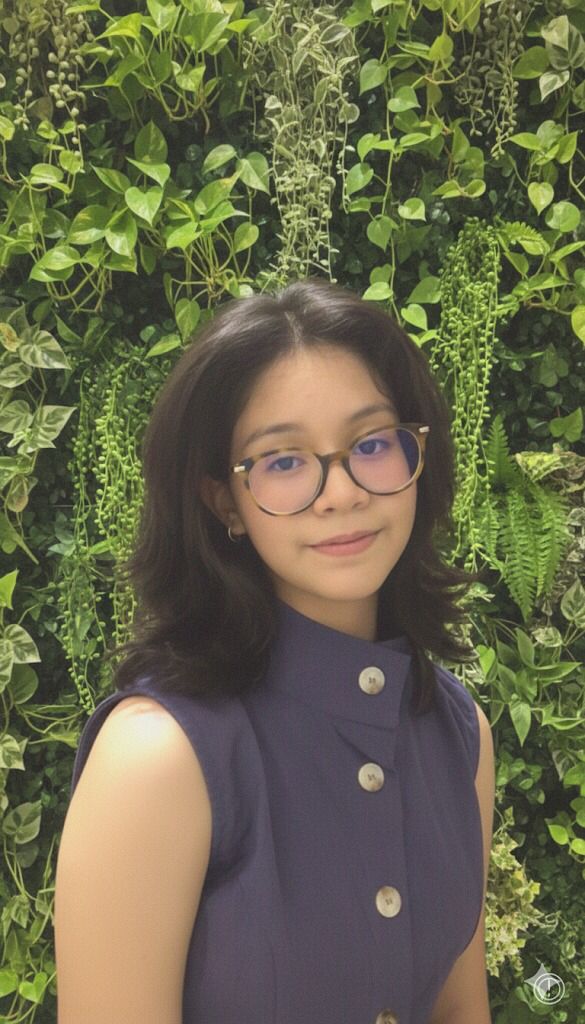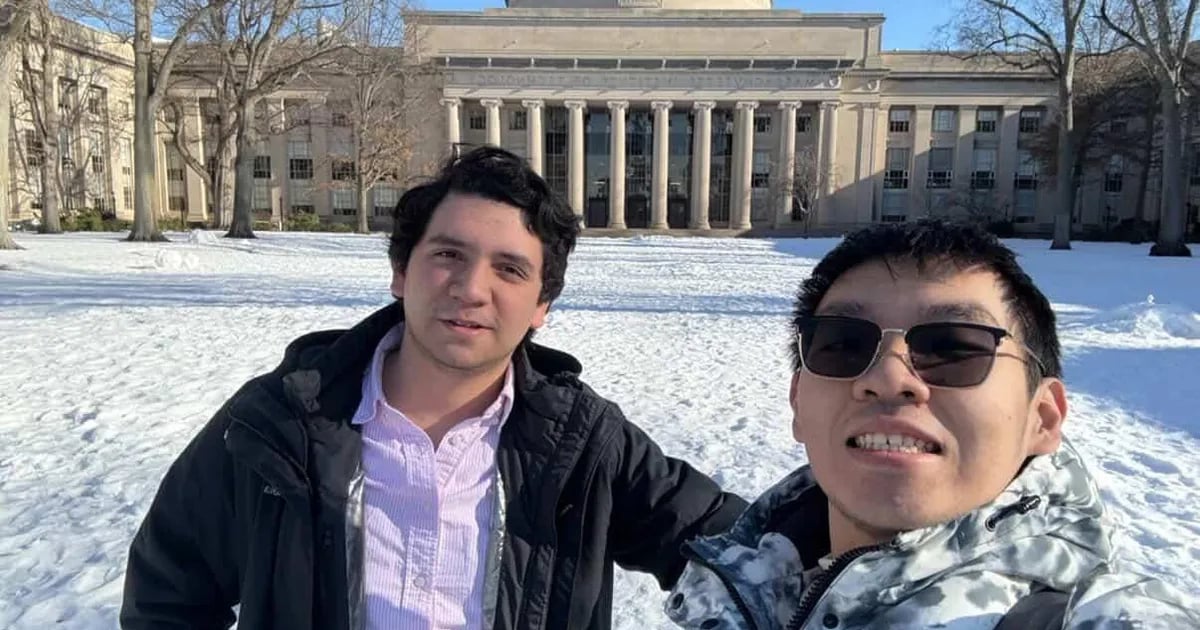
Hello everyone! My name is Carlos Andrés Sequeira Alvarez, and I’m currently a freshman and the only Nicaraguan undergraduate at the Massachusetts Institute of Technology (MIT). I grew up in El Viejo Chinandega, Nicaragua, where I also attended high school at Centro Educacional Mantica Berio. At college, I’m planning on pursuing both Computer Science and Mathematical Economics.
It is often believed that deferrals are a soft rejection, but guess what? I didn’t encounter a rejection on Pi Day almost a year ago. I might know the reason why for such a plot twist, but it wouldn’t be fun to tell you the answer right away, so stay around to Beaver through it!
Why the U.S?
Choosing the U.S comes hand-in-hand with the college I had first in mind. Most of the largest U.S colleges have excellent programs in engineering, science, and everything related to technology and mathematics; I didn't see any other destination that offered anything similar. So, that was one of the reasons I chose to chase the U.S.'s most well-known math powerhouse: MIT
Why MIT?
The first time I heard ‘MIT’ was probably during a conversation among my social circle. MIT was particularly well known among students with similar interests to mine, so many decided to apply, some were rejected, and others were accepted.
I was quite drawn to the school, not for the name but for the type of students who make the school the institution it is and the environment those students create. Once I got my acceptance letter, I never doubted for a second to say yes to them. I love their social scene, and it was the college I liked the most, and the place I most clearly pictured myself at.

Academics
At my high school located at the outskirts of Chinandega, we followed the Nicaraguan curriculum, where all classes are taught in Spanish. Although it wasn’t an international school, it had a strong foundation in English with classes such as English Literature, Reading and Writing, and the rest of the disciplines found in the Nicaraguan National Curriculum. When it comes to math, physics, chemistry, and biology, the rigor of such classes helped me build a solid foundation that later served as a ladder to enter the Olympic Math Team and eventually MIT. I finished high school with a GPA of 98.5/100. Personally, the class I found myself paying closer attention to was English Literature. My teacher was quite meticulous when it came to details and the overall writing of their students. It was tough, but I’m glad it was, because I improved my writing and rhetorical voice, which helped me in the long run to draft my essays.
My (Square) Roots in CS and Mathematical Economics
I believe my educational background in mathematics reinforced my calling to study something related to it, but not the pure study of it, rather in something more practical and applied. That’s when I encountered MIT’s program in Mathematical Economics, which blends the best of both worlds, and for me, the best way to use my passion to solve and analyze real-world problems, especially in such an important matter as economics.
When I was studying for the Math Olympiads, I came across a distinct type of As for Computer Science, which involves a lot of discrete types of math: Combinatorics. I wasn’t so good at it when the Olympics took place, but questions arose, and I wanted to dive deeper into it, and what better way to do it than studying Computer Science? Likewise, the expanding field of technology appeals greatly to me, and CS is the closest to match my curiosity, passion, and desire to leave a mark wherever I go.
Math’s Biggest Leagues: The Olympics
At school, I was a contributor to the school’s newspaper (which seemed more like a magazine than a newspaper, though). There, the most important events, such as celebrations and special activities from the Chinandega area, were published every month.
Outside the classroom, I was an active participant in the Math Olympics through Academia Sabatina Jovenes Talento. When I first joined the academy, I entered level two. By that time, I was still in sixth grade. The program had to pause for a time, and then rejoin them when I was in seventh grade and placed in level three. From there on, I skipped level four, and I was placed in level five, which implied I had to change location. The Academy currently operates in two different cities in the country: Managua and Leon. I started in Leon, but after moving up some levels, I started taking classes and training in Managua.After studying there for a year and a half, I reached the pre-Olympic level, where students were trained specifically to go compete at several Olympics. There, I had the opportunity to take qualifying exams to compete against many other talented students in the country and abroad.Taking part in the activities the academy offered left me with huge lessons, both in the matter of math and my personal life. Thanks to math, I acknowledged a new way to think: rather than asking myself the logic, I search for the why of things. Think to Learn! Competing with such skilled students made me reflect on the way I learned. While you are competing, you can realize not everyone has the same study method or technique as you, so I took a closer look at how the other, unknown but very talented, students studied when we were put into study groups at an international setting. I learned a lot from them, and it made me realize I wasn’t alone in this journey because everybody is learning something new, either from math itself, discovering their hidden skills, or learning from others.
Connecting with such a broad network of students opened my mind to search for untraditional ways to learn, such as math brochures on a niche theme, even in a different language than the one I used to when studying.
The Deadliest Killer: The Wait
At the very beginning of my application, I didn’t have an idea that colleges required their students to write essays. Thankfully, people in my life were pretty helpfully guiding me and giving me advice on how to write my essays in the best way possible. I submitted all my grades, test scores, financial documentation, and essays. I hit the submit button to MIT under Early Action (EA). December came, and… I got deferred.
Just thinking that my app was still in their review desk and I’ll have to wait for three more months was killing me. Knowing that my app was still under review, competing with a big Regular Decision pool didn’t let me concentrate on my other applications. At home, I tried to stay sane, forcing myself to be strong. In the very deep, my parents were worried, but they forced themselves to be strong for me. In the very depths of my being, I was extremely worried, repeating to myself:‘What am I going to do if things don’t work out?’
Day and Night. When I woke up, when I was having breakfast, lunch, and dinner, and before I closed my eyes at night. That question haunted me for months, and now in college, I doubt I could ever forget that feeling, and I hope to learn to manage similar situations better in the future.March arrived. Pi Day followed. I opened my portal, and I gazed at my screen when the first sentence said: On behalf of the Admissions Team, it is my pleasure to offer you admission to the MIT Class of 2029!
I believe what made my app get to the ‘admitted student’ pile was my maturity. The way I transitioned from school to college, the action of applying abroad, seeing most of my classmates already in their freshman year at college, and I was there, gave me a lot of maturity, and I believe Admission Officers were able to see it through my application as a whole.
Life Under the ‘Great Dome’
It's not different from what I imagined; I think it actually surprised me a lot when I arrived. I love the city, I love the faculty, and the kind of students who come in.
You have time to appreciate all of that in the very beginning of the first week, because you see all the students gathered together talking, but that feeling goes away very quickly when classes start. But the difficulty of the classes gives me strength to say, "I am an MIT student. I fought to be here. I love being here." And it's like the classes, the difficulty, and seeing people who work just as hard or even harder than you—that gives you a great sense of comfort and unity, making you feel like you belong here.
The Harder It Is, The Better It Gets
My college journey had countless ups and downs, and one might think we’re dealing with all by ourselves, but in reality, we are never alone; you just need to look much closer, and you’ll find people in your daily life who are supporting you. Even with the smallest support, the sum of all that help is the fuel that gives us strength to keep going, keep waiting, and to keep fighting for our goals. I wasn’t alone during the process. As I immersed myself in this journey, I found incredible people who helped me along the way. When I most needed it, they were there to give advice and support me.
If you think you can find everything on the website and that you know all the requirements, there's always something you're missing. So, never stay alone. Keep digging and digging until you find something or someone that gives you strength.
If I had the chance to talk face-to-face to Carlos, who was applying almost a year ago, I would tell him to stop worrying so much. If it doesn't work out, it's because God willed it so. I have faith, and I'm used to saying that I give the best I can, but God also has a big part in that. And if God doesn’t want it that way, then it’s ok, but I gave my best, so what? He has some other plans prepared for us. The only thing I would tell you is to stay strong, to keep fighting, that somehow, whether in a place like this or somewhere else, everything will turn out well for you.