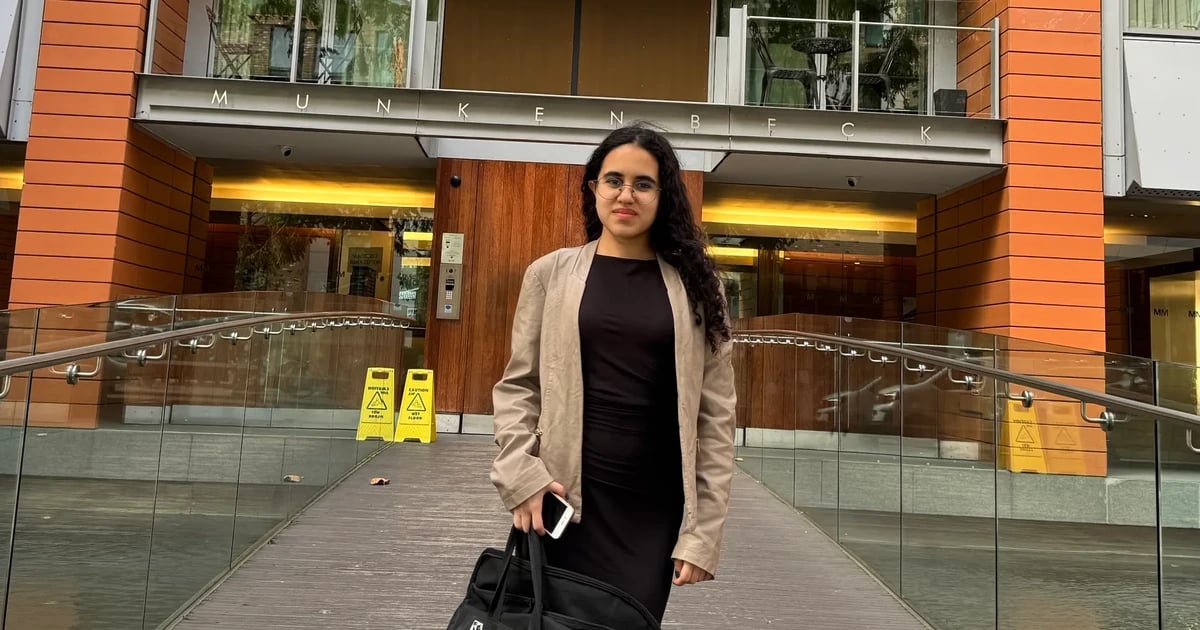

Background and Profile
Hi! I’m Nivedita Gulia, originally from Delhi, India, and I’ve lived in the Middle East my whole life. I spent around five years of my childhood in the UAE before spending the rest of my teenage years in Qatar.
I graduated from Delhi Public School Modern Indian School (DPS-MIS) in Qatar in 2026. Today, I'm studying Computer Engineering at the University of Waterloo in Canada.
The Pressure to Have a Plan
Throughout high school, I was enrolled in the FIITJEE program, which came with a demanding workload. I'd usually return home from school at around 5 PM, and I also had additional classes on Saturdays. Balancing everything was hectic, especially as a high school student.
At the same time, I participated in various extracurricular activities, including debate competitions, Model United Nations, cricket, and chess. I'd been involved in many of these activities for around four to six years, which taught me the importance of consistency and time management. Managing a demanding academic schedule alongside these commitments wasn't always easy, but it helped me learn how to divide my time between different priorities.
Looking back, I wouldn't say I had no idea what I was doing. I simply don't think you need to have everything figured out during your adolescent years. You don't need to map out every direction your life could take or know exactly where you'll end up.
There's a lot of pressure on young people to make decisions about their futures before they've had the chance to explore all their options. But I don't think uncertainty means you're doing something wrong. Sometimes, you can have a general direction without knowing every step you'll take to get there.
Choosing the Unknown
In high school, I took advanced subjects such as physics, chemistry, mathematics, and biology. Although these subjects gave me a science-oriented academic background, computer engineering was still a different field from what I'd studied before.
I'd worked on projects involving technology, including building apps and websites, but I hadn't received a formal foundation in computer engineering. Much of what I'm learning now is new to me.
That can be intimidating when you're entering a demanding university program, especially when you feel like other students might already have more experience. However, I believe learning is part of the process. You don't have to know everything before you begin.
There's no harm in pursuing something you think is right for you, even when you're uncertain about how it'll turn out. We're often expected to figure out our futures at a relatively young age, but exploring a field is one way to discover whether it's actually right for you.
You can learn a lot along the way, and you don't have to let the fear of not knowing enough stop you from trying.
Academic & Extracurricular Profile
When applying to universities, I took the SAT and IELTS. My SAT score was average, and I had the option of leaving it out of my applications because the Canadian universities I considered did not require or heavily emphasize the SAT in their college admissions processes. My IELTS score was 7.5, which I considered a strength in demonstrating my English proficiency.
Academically, I maintained grades of around 90% from Grades 10-12. During Grade 12, I was also preparing for interviews and waiting for my final grades to be released so I could submit them as part of my applications.
Based on my understanding of the admissions process, academic requirements vary between universities and programs, so it's important to research the specific requirements of the courses you're interested in rather than relying on one general standard.
Outside of the classroom, I was the director of my school's science club, where I helped organize science exhibitions, mentor younger students, and coordinate initiatives focused on STEM engagement and accessibility.
I was also involved in Model United Nations for two years before progressing to chairing several committees during my later high school years. Throughout MUN, I gained experience participating in discussions and taking on responsibilities beyond being a delegate.
Sports were another significant part of my high school experience, particularly cricket. I played on my school's team for three years, during which we consistently achieved podium finishes. For the following two years, I served as team captain. We worked together through regular practice sessions and strategic decisions, including field placements, to improve as a team.
Chess was equally important to me. I represented my school in interschool and national competitions and was selected for the Qatar U-17 Chess National Team. I also founded a chess club in my local community, where I could mentor beginners, practice with other players, and organize activities and competitions.
Building my university applications wasn't without its challenges. Finding paid work, volunteering opportunities, and internships in Qatar could be difficult because of age-related restrictions and eligibility requirements. As a student under 18, I found that some opportunities available to older applicants were less accessible to me.
I understand the importance of protecting young people from exploitative working conditions. At the same time, when you're trying to gain experience and strengthen your university applications, having fewer opportunities can make the process more challenging.
However, there are alternatives. Students can look for youth-led volunteering initiatives, school-based opportunities, and other experiences that are accessible to them. Sometimes, you have to take the initiative to find opportunities rather than wait for them to come to you.


Why Waterloo?
When considering university, I was weighing two main options: studying in India or pursuing an education abroad.
From my perspective, studying at a leading university in India can offer an education comparable to studying abroad. The quality of education matters regardless of where you choose to study.
However, studying abroad offers experiences beyond the classroom. You become part of a diverse community while learning to live independently and navigate an unfamiliar environment. You also have to manage the practical aspects of everyday life, from organizing your responsibilities to making decisions for yourself.
Those were the experiences I wanted to challenge myself with, which made studying abroad my preferred option.
I applied to four other universities in Canada and received offers from McMaster University and Queen's University. Both presented compelling options, including scholarship offers, so choosing Waterloo wasn't an easy decision.
Because studying abroad comes with significant expenses, I spoke with several college counselors to help me evaluate my options. Without a scholarship or other financial support, I estimated that the cost would reach around $77,000 per year.
Ultimately, Waterloo appealed to me because of its engineering program, academic reputation, and standing in the field. Financial considerations were also a major part of my decision.
Although the other universities offered attractive scholarship opportunities, financial aid made Waterloo a more realistic option for me. For my first year, I received $17,000 in tuition support.
Learning to Live Alone
My transition to Canada has been peaceful, and overall, pretty chill.
One thing I've appreciated is how friendly and helpful the people are. They're often willing to offer assistance or advice without even being asked, which makes adjusting to a new environment much easier.
However, coming from Qatar, where many everyday tasks can be convenient and accessible, I had to adjust to a different way of living.
Moving abroad means taking responsibility for more aspects of your daily life. You have to manage your meals, do your laundry, organize your schedule, and balance your academic responsibilities with everything else you want to do.
When I first arrived, I didn't think the transition would be particularly difficult. It wasn't necessarily a major struggle, but I gradually realized how much effort goes into managing your own life while keeping up with everyone else.
Having the right people by your side makes everything so much better.
I found my people through university orientation. Although the fee was around $140, I found the activities and opportunities to meet others worthwhile. Orientation is one of those rare periods when everyone is looking to make friends, so starting conversations feels more natural.
Everyone is adjusting to a new environment at the same time. You don't have to be the most outgoing person in the room to meet people or find a community where you belong. The friendships you build during orientation can make university life feel much lighter, especially when you're starting from scratch in a new country.
After about a month, settling in becomes easier. You begin to understand your surroundings, establish routines, and find your place in the community. Living independently comes with enormous responsibilities, but having people you can turn to makes the experience much more manageable.
The Waterloo Effect
Finding my footing outside the classroom was only one part of the adjustment. I also had to get used to the academic demands of university.
As a Computer Engineering student, my schedule can be pretty hectic.
In some ways, the environment reminds me of DPS, particularly in how structured the academic routine is. I usually wake up at around 7 AM, with classes beginning at 8:30 AM. It takes me approximately 20 minutes to walk from where I live to campus, and I generally return home between 4 PM and 5 PM after my classes.
Computer engineering is a demanding program, and the coursework can be difficult. At this stage, we're covering material that may resemble what I studied in Grade 12, but the examination questions are much more challenging. Familiar concepts can become considerably more complex when you're expected to apply them at a university level.
As for food, fortunately, there are plenty of options on campus, and I have a meal plan with a set balance that I can use to purchase meals. With my schedule, having access to ready-made meals is convenient because I don't always have the time to cook.
As for the so-called Waterloo Effect, I can already see how the environment encourages students to stay focused. The workload demands a lot of commitment, and keeping up with everything requires you to be disciplined.
There are days when I can barely make time to meet my friends. Everyone has their own responsibilities, and sometimes academics have to take priority. However, we still find opportunities to spend time together and enjoy ourselves.
The Waterloo Effect is real, but I don't think it means you have to sacrifice everything else in your life. Finding ways to manage the workload, maintain friendships, and make time for yourself can help you navigate the experiences.
A Career Still in Progress
When I think about the next chapters of my life, I'm still figuring out what's best for me. Even though I'm studying Computer Engineering, I've also been applying for marketing positions.
I don't think choosing a degree means signing a permanent contract to pursue the same career for the rest of your life. Your interests can change, and you can discover new opportunities as you gain experience. I'm still learning what I enjoy and what direction I might want to take.
I think it's important to remember that your university major doesn't have to dictate every aspect of your future. You can explore different interests, consider alternative paths, and make the needed changes as you go on learning more about yourself.
You don't need to know exactly what you're doing at every stage. What matters is that you're taking steps toward something, even if you don't know what that may be. If you eventually realize that a particular path isn't right for you, that doesn't mean the time you spent pursuing it was wasted. You've learned something critical about yourself, and you can use that knowledge to make a more informed decision about what will come next.
Give Yourself A Shot
If there's one thing I'd want readers to take away from my experience, it's that they should put themselves out there. Try new things and don't be so afraid to take risks in doing something.
If you're scared, then do it scared.
When you're nervous about trying something new, you might start thinking, What if I don't get it? What if I fail? What if someone judges me? Those questions can suddenly become overwhelming enough to stop you from trying in the first place.
But think about how much you could miss out on if you let those fears make every decision for you.
Sometimes, the people you're worried about impressing or disappointing won't even remember the moment as clearly as you do. And even when things don't go the way you hoped, it doesn't mean the experience was pointless.
If you succeed, you gain an opportunity and an experience to be proud of. If you don't, you still learn something that can help you the next time you try. You won't get every opportunity again in exactly the same way, and you can't predict every outcome before you begin. You can spend so much time overthinking a decision that you never give yourself the chance to find out what might happen.
Take that chance. Try the activity, pursue the opportunity, explore the path you've been thinking about. You don't have to be completely confident before you begin.
If it doesn't happen the way you wanted, it doesn't happen. But if it does, then you've made your way through it.