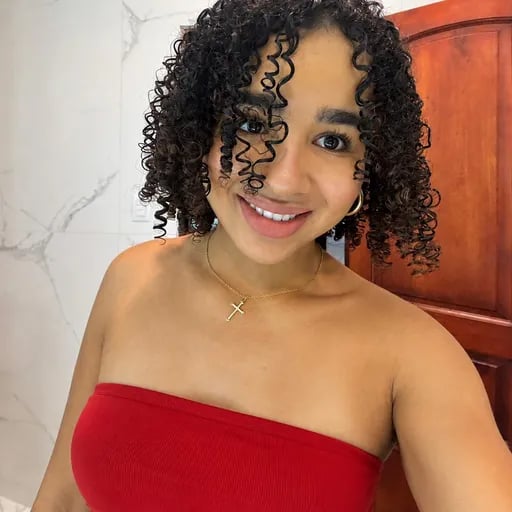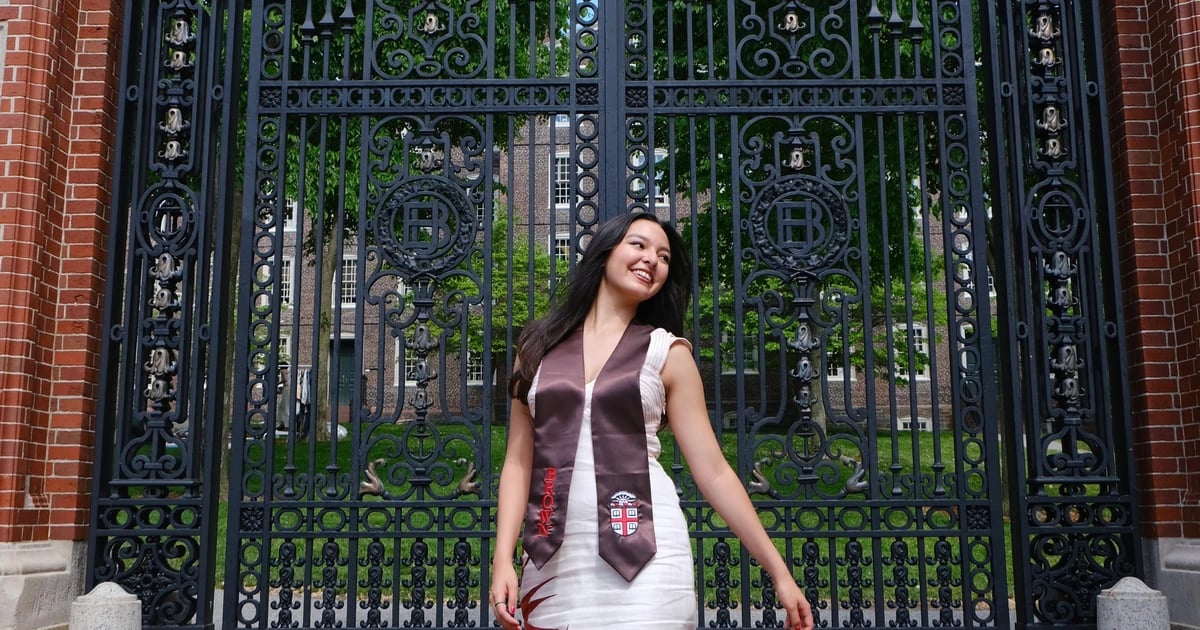
Camila Murillo is 23 years old, and she grew up in San José, Costa Rica. At 17, she moved across the city to attend UWC Costa Rica, a 2-year international boarding school where she completed the International Baccalaureate. After that, she moved abroad for the first time to complete her undergraduate degree in International and Public Affairs and Latin American and Caribbean Studies at Brown University, an Ivy League school located in the state of Rhode Island. She is currently living in Paris, where she’s pursuing a Master’s in Public Policy at Sciences Po Paris. A fun fact about her is that she loves to dance. She’s been dancing since she was 2 years old, and she’s trained in ballet, contemporary, hip hop, and Latin dance!
The Beginning
Some people yearn to go to a specific college, get a specific job, or build a specific kind of family; but for me, the dream was always UWC.
I first learned about United World Colleges when I was 9, thanks to a family friend who had graduated from the local school, UWC Costa Rica in 2012. From that moment on, it became my lifelong aspiration. Back then, I kept a journal and portfolio where I wrote down everything about each school — its history, values, and environment. Although I could’ve applied at the end of 9th grade, I didn’t feel ready, so I waited a year until 10th grade. By then, I knew everything about each school.
A week before the application opened in July of 2019, my dad passed away. This shook my life up in so many ways, yet my mom still supported my decision to move forward with my application.
The submission structure has evolved a bit since then; I can attest to this, as I am part of the Costa Rican National Committee, but the main concepts remain the same.
Application stages:
- registration form was due in August
- essays were due in September
- selection camp was in October
- interviews and diagnostic test were in December

The Plan Changed
My heart was set on leaving Costa Rica. I really wanted to attend UWC Dilijan in Armenia, given its work on post-Soviet history and emphasis on conflict resolution — which was totally in line with my future academic interests at the time. But life doesn’t always lead us where we plan…
Fast forward to January 2020, my national committee tells me I was offered a spot in three colleges: UWC Maastricht in the Netherlands, UWC Costa Rica, and UWC Dilijan — I have 24 hours to decide.
I immediately discarded the first option because it didn’t come with a scholarship, but then I had to choose between my dream college and staying close to home.
Because my family had changed so much over the past months, I decided to enroll in UWC Costa Rica. At a time when the world shut down and was full of uncertainty, UWC was a little bubble full of life, where not being able to go out made us all incredibly close and supportive of each other, even if, just like everything in life, there were moments of stress and conflict too.

Life Outside of Academics
Before UWC, I did many activities. I have been dancing since I was 2, which has always been vital to who I am; I played the electric bass in a band with my friends, did a lot of creative writing — one of my stories was published in a book for children from UNESCO during a national competition; I was also part of Fundación Gaia, an organization that works to help the environment from a governmental standpoint, where I organized a chapter in my school. I was also given the opportunity to meet the former in-office president, Guillermo Solis, who signed a letter committing to reach a certain level of carbon neutrality.
During UWC, I had a diverse extracurricular background. Something important to highlight is that:
I did everything that I did because I enjoyed doing it, not because I thought it would look appealing to admissions advisors.
I led the Write for Right club, which worked under Amnesty International; we searched for political prisoners or incarcerated activists, and then we would write and send letters to the government regarding them. I was also part of an activity called Agents of Change, where we would travel to schools in the area and teach the local Costa Rican students how to develop projects that would bring positive change to their communities.
Still, it was Empowerment Through Experience that remained closest to my heart. This was a CAS that I led in which we organized workshops and activities every week related to feminism, self-love, and dismantling gender roles. We did art sessions, writing, talking, reading, and even watching movies about these topics and discussed them together. This work was particularly important to me because, during my application period, I was interested in pursuing sociology or gender and sexuality studies. So, feminism became the common thread throughout the different areas of my application.
Regarding advice, it’s important to remember that part of your application is literally convincing the admissions officer why it makes sense for you to study a certain subject and how your life has guided you to that area. At the same time, though, you have to try to stand out from others who want to study the same thing and, like, do something unexpected! They also want to see that you have a life and other kinds of interests. Personally, I really focused on emphasizing the things I did solely out of passion and enjoyment, because I feel like that makes you seem more human and relatable. I mean, at the end of the day, why would we frame ourselves as the “perfect” candidate or make ourselves look “superhuman” when we truly aren’t? We are all just regular people, applicants and admissions officers alike.
Journey to American Colleges
I was super set on going to Europe. I had no interest whatsoever in going to college in the United States, even knowing it gave me access to the UWC Davis scholarship. But when I reached out to my in-school college counselor, he sat me down to talk about this perspective. This reasoning was built upon the fact that I’ve always been a seriously competitive individual, but UWC changed me. It made me want to be a “better person,” so to speak. It taught me to let myself be free and not be on full throttle all the time. It showed me that I don’t always have to feel like I must come out on top, which is why I wanted to avoid American colleges, and the Ivies in particular. Given that they have a reputation for fomenting academically competitive environments. Understanding my perspective, my college counselor told me about Brown and their holistic approach to academics, which has a strong focus on mental health; this piqued my interest.
In my essays, I continued building my common narrative concerning feminism, gender studies, and sociology; I also included very personal and vulnerable elements. I look at it like a balance between sharing some of the most difficult events of your life and simply recounting things that your profile wouldn’t be complete without. As if they wouldn’t entirely understand who you are if you didn’t mention xyz experience/person/place, etc.
In the end, I applied to Middlebury College, Vassar College, Skidmore College, Sarah Lawrence (because of 10 Things I Hate About You, of course), Barnard College, Brown University, and a couple of others. I remember that my first result came back as a rejection, which really put me down. I went to my college counselor, who gave me very interesting insight by telling me that universities sometimes see you as overqualified for their institution and that you will likely study somewhere else. So they can reject really good students, since if they don’t accept the offer, it affects their rankings of accepted students vs. attending students.
My friend group also made sure not to tell each other where we were applying. Which helped me a lot when it came to writing and sending the applications because I didn’t know whether I was competing with another person for the spot, and I didn’t know how high or low my grades were in comparison to others; which helped reduced our levels of stress.
I did not apply to universities with an SAT given that we were in the middle of the pandemic, but I probably would have gone test-optional either way.
The Dreaded IB
It’s true that some people slave away day and night trying to achieve the perfect IB grade, but I felt very fulfilled socially and extracurricularly, which I honestly felt made me stand out. 4/6 IB classes were heavy on writing, so the exams were usually essays. I also had strong public speaking foundations, which helped with the Individual Oral (IO).
I took Global Politics, Anthropology and English Language and Literature (Higher Level), and Biology, Math AA and Spanish Language and Literature (Standard Level). I applied to universities with a 40/42 without counting the Extended Essay, and my final IB grade was between a 36-38 but I genuinely don’t remember it.
I made sure I truly understood the mark scheme and frequently reviewed past papers. Ultimately though, IB isn’t so much what you say but the way you say it. In the languages and social sciences in particular, the difference between a 6 and a 7 can be the structuring and checklists rather than the content and reasoning. So once I understood that, it became much easier, and I didn’t have to worry about those subjects as much.
Why Brown?
Brown’s open curriculum is a flexible academic system that lets students have academic freedom. There are no general requirements, so there are no mandatory classes across the sciences, humanities, and social sciences. This basically means that half of my classes had to do with the degree I intended to graduate with, and the other half were “fun classes.” Or subjects that I had an interest in previously. As a person who has always had a variety of passions across different disciplines, this was immediately calling to me.
Brown does not use a mandatory grading curve, which means that we are marked based on individual performance rather than by being ranked against other students. This again creates an environment without much competition, because there is simply no reason for it to be competitive. Additionally, we weren’t given GPA’s; instead, it was based on the average grading scale of A, B, and C. Not to mention that if you failed a course, it would not be written on your transcript, only on internal records. Safe to say that Brown was the perfect fit for me.
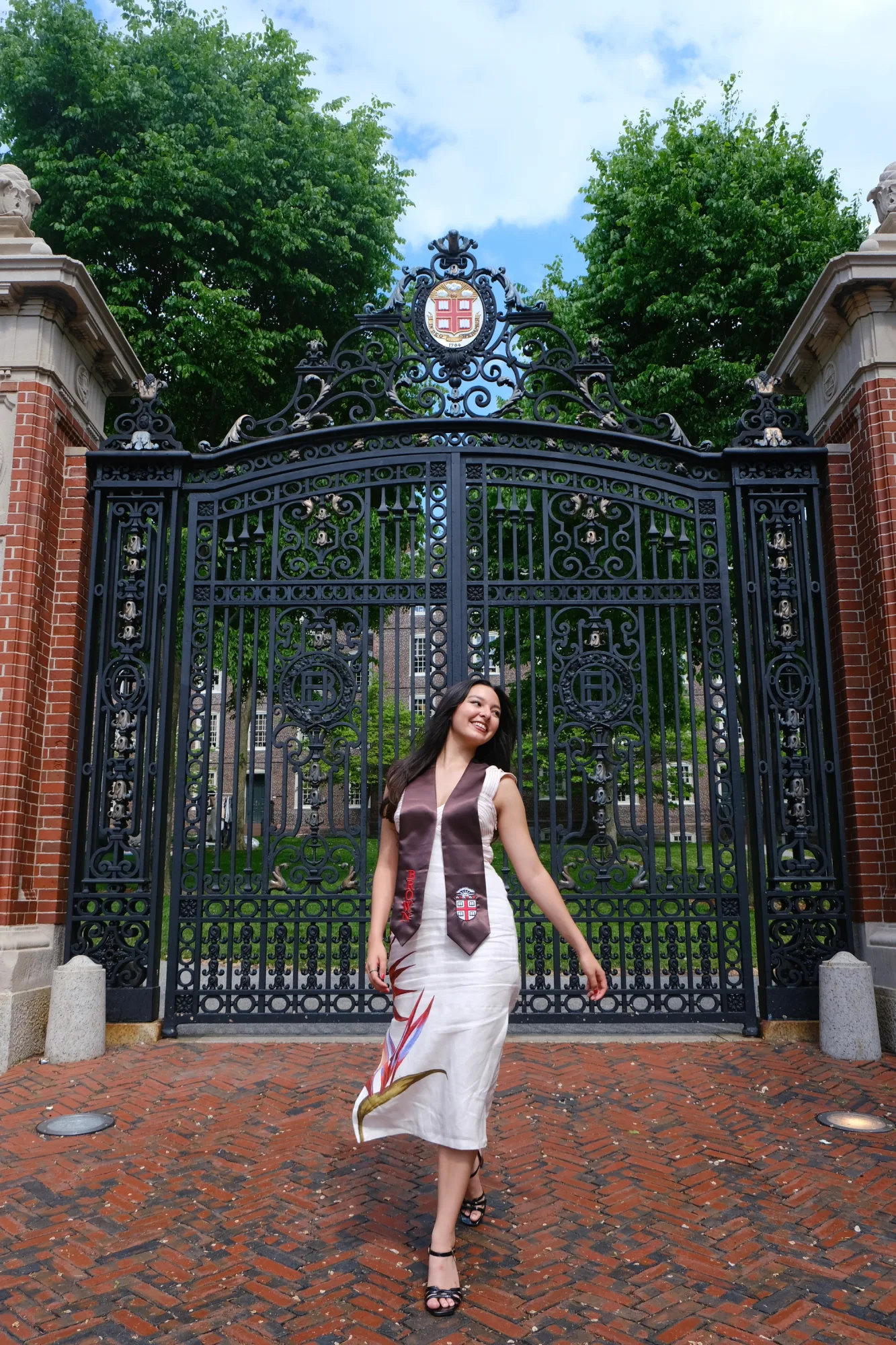
I finished my years there with a double bachelor’s degree in both International and Public Affairs and Latin American and Caribbean Studies. Brown’s open curriculum is actually the reason I ended up studying the latter degree. Every semester, I consistently enrolled in “fun courses” that had to do with Latin America because it was a field where I could see myself and my culture reflected. Soon enough, I realized I had almost enough credits to receive that degree, so I just did.
From Bruno the Bear to the Eiffel Tower
Live and experience the stage of life that you are in.
When I was in UWC, I made sure to just live within the UWC experience. When I was in Brown, I wanted to live the Brown experience. It wasn't until my final year of college that I decided I wanted to pursue a master’s degree. But I wanted to build on top of International Relations because the skills I learned within my bachelor’s don’t necessarily lead to a specific job.
I knew I wanted to go to Europe as I liked their academic structure for public policy over the ones in the American continent, and frankly, life as an international student also became much more difficult with the changing of governments — like we always had to keep an eye out. In December of last year, there was a shooting at my university; this finished convincing me that my future academic growth wouldn’t continue in the United States. I don’t mention this to generate fear, but simply because these were experiences that really marked me and helped me understand where I wanted to go in the future.
I graduated from Brown this summer, and I’m currently at Sciences Po Paris’ School of Public Affairs. Getting a master’s in Public Policy with a focus on Social Policy and Social Innovation. There, I focus on working with branches of government, NGOs, and UN-like organfizations that aim to raise quality-of-life standards. I’ve always known that I wouldn’t go the traditional diplomatic route. Groundwork and hands-on roles are much more my style. At Sciences Po, I’m creating concrete projects and initiatives that these institutions can actually apply, particularly when it comes to healthcare, education, housing, and other basic services people need to live.
Although the time it takes to finish a master’s degree varies by university, the program I am enrolled in takes two years. Many European masters have a length between nine months and a year, and I didn’t just want a title for the sake of it. So this program caught my attention, as an in-depth learning period that also enables me to really live and learn in the city. During the last semester at Sciences Po, instead of writing a thesis, you work in a co-op. This will help me gain work experience (that I really didn’t seek out at Brown University) and help push me into the job market.