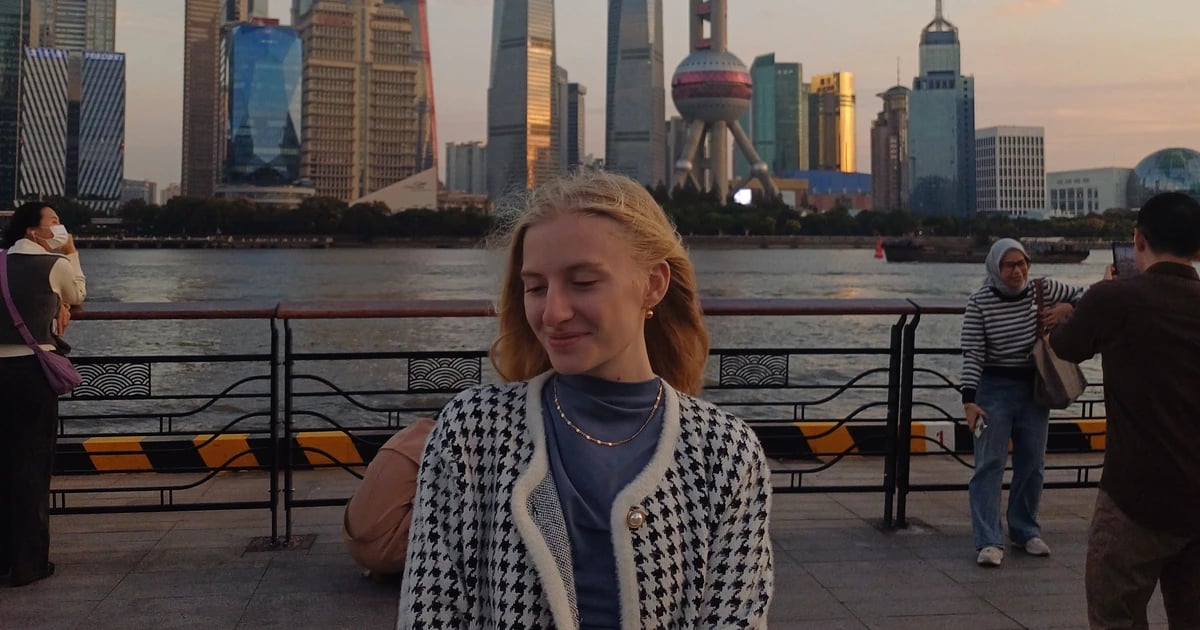
Kitti is a recent graduate of UWC Changshu, China, from Debrecen, Hungary’s second-largest city. She is now looking forward to many more successes in Florence, at Marist University.

The click - where it all began
Debrecen, my hometown, is the second-largest city in Hungary. It’s where I spent my childhood and first years of school, and where I got this click at fifteen years old: I need to study abroad.
The thing about Hungary’s study abroad culture is that it barely exists. I knew I wanted to go to school in a different country, even if just for a year, so I had to be very dedicated to finding resources on my own. I attended courses and meetings, particularly with StudyGuide, a company that helps students apply to universities abroad. Universities abroad seemed plausible but too far for my taste.
I went to a bilingual school in Debrecen, where I even had an extra year before high school to develop my English. People think more about foreign exchange there than at regular Hungarian schools, and the teachers were quite supportive of these ideas, too, helping a lot in showing us what options we had. My second year there, I heard about a boy at my school who applied to UWC and got in. UWC stands for United World Colleges, a two-year program where students from all over the world connect through education and a shared mindset. He went to Canada, then to a university in the USA, and this gave me so much motivation, seeing that someone from the same city, even the same school, could make it.
I didn’t yet know how significant this pebble of exposure would become in my life.
Can you sign this, please? - Applying to UWC
Throughout the process, I was really convinced I wasn’t going to make it anywhere. I wasn’t a great musical talent; I had a very normal background; I wasn’t anything special in my head. Even more, I did not see the opportunities to become ‘more’. I felt like I was running in circles, as it seemed as if there were no resources to help me self-actualise. I had to learn that if you seek, you find.
That same year, at 16-17 years old, I dedicated myself to a long journey of getting to know and bettering myself. I wanted to set challenges and prove that I was capable of growth. I ended up going to training four times a week and acquiring certificates in aerial gymnastics, despite not really being involved with sports before.
In Hungary, there is a mandatory 50 hours of volunteering and community service for every high school student. It’s common to bring this to a family friend and just have them sign it off, but for me it was a genuinely great experience. I worked at so many different places and in so many different positions: museums and festivals and receptions and cleaning, and I really believe it helped me gain new perspectives.
Don’t only take part for the sake of a scholarship! Volunteering humbles you, makes you realise that as a society we are interconnected. Thus, the version of yourself you aspire to be should not be out of greed, but out of a passion to become more for your loved ones and community.
I also started reading about global issues, trying to expand my perspective and think more globally. I was resetting my mindset and my habits, and while it was an amazing journey, it was also difficult, since nobody else was doing it around me. Stagnation scared me more than being alone in this messy, changing space. Thus, I am happy I committed myself to a sport, to volunteering, to research.
When I was filling out the actual applications for UWC, I barely told anyone about it. I asked my parents to sign the documents, and managed the rest myself. I found that unless you already have some solid answers, it’s not worth it to totally immerse yourself in option A, because you forget that you can be equally happy with option B, and it’s also a perfectly good way to get to your destination.
One day in the spring, UWC notified me that they wanted me at the last, in-person round in Budapest. It was only then that I really told my parents about it, announcing that I wouldn’t be home for a couple of days.
The night after I got back home, I received the email.
I remember going up to my mom at dawn and telling her that I’ll be studying abroad for two years. Thankfully, she was very supportive; she saw how committed I was to it all. I think it’s overlooked what a turning point it is in a parent’s life to let the child live their life away from home so young. It’s of course a very big step, yet I would have regretted it if I didn’t take the chance, wondering what would have happened if I did.
With the national committee pathway during UWC applications, you aren’t the one who chooses which school out of the eighteen you go to. Fortunately, my mom was still very supportive when we found out that Changshu offered the right scholarship. It is truly the most selfless act from a parent to let their child set out for such an adventure, but she did. And so I set out for China.

The most important thing you can leave is your passport - Life at UWC CSC
There are a lot of lessons to learn quickly from both UWC and the IB Diploma Programme when you start this journey - time management, scheduling, prioritising. By now, two years and many travel days later, I don’t start packing until I’m two days from moving. The most important thing I might forget is my passport. Everything else can be solved once you’re there.
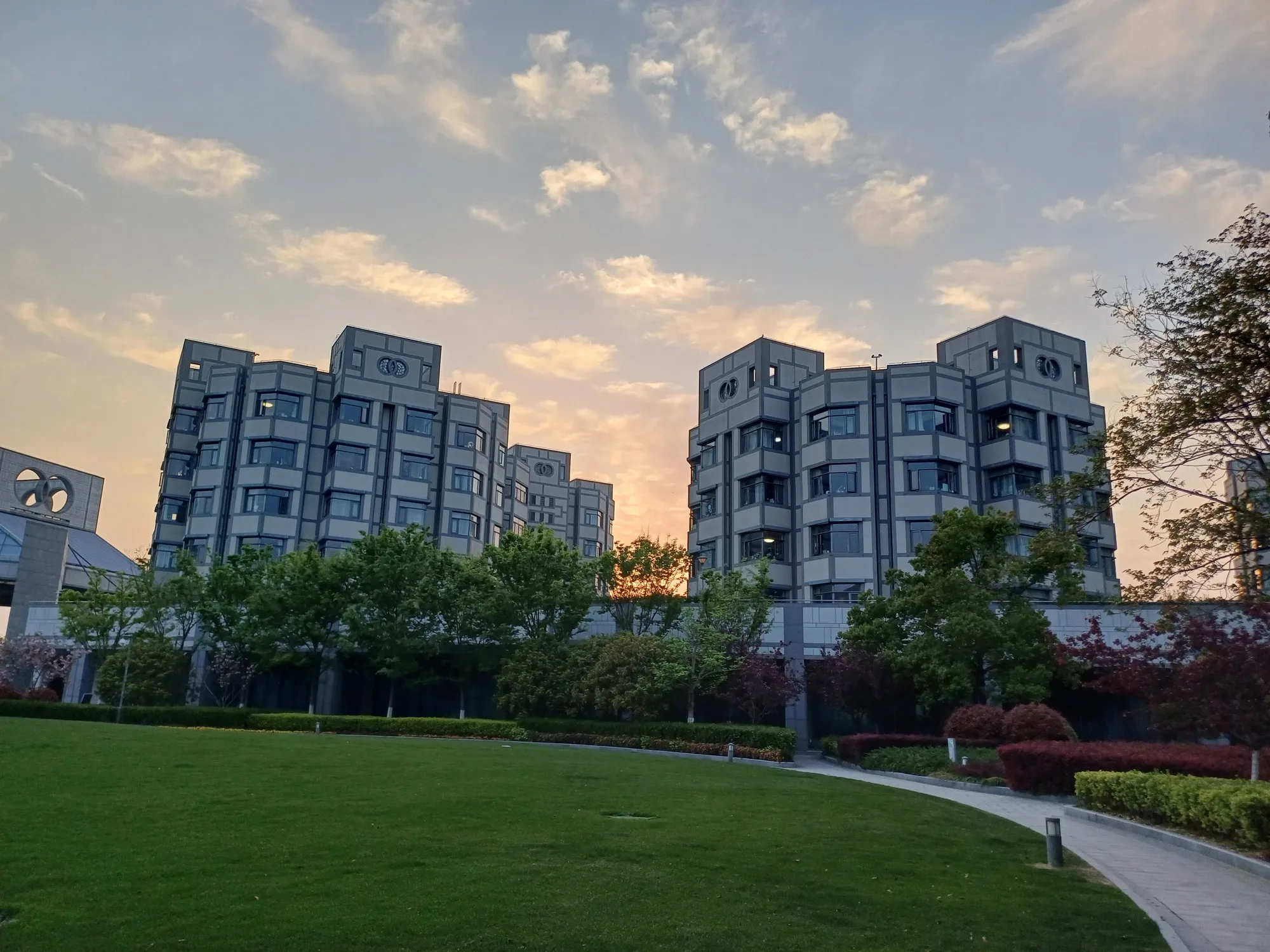
All eighteen UWC schools follow the International Baccalaureate curriculum, a system entirely different from the Hungarian national one. I suddenly went from thirteen equally weighted subjects to six, three higher and three standard levels. All of which I could choose myself. It makes it sound like logically the workload would decrease - it does not.
While back in Hungary, I spent eight hours at school, went home, studied a bit, and started over the next day. In China, time management suddenly became the most important skill to acquire. The days were filled with classes, essays, projects, and extracurriculars ranging from kayaking and football to teaching children online. The boarding school setting allowed us to see our friends often, but you still have to make an effort to socialise, plus maintain communication with family back home with a seven-hour time difference. I often went to bed at 1 AM and woke back up at 7.
All that said, once you learn to adjust and set your own goals and habits, it’s a great environment to grow in. A really good thing about UWC is how it lets you develop as a person. I arrived invested in international relations and left with a passion for design technology. Seeing the community of UWC, what they achieve year after year, and how the movement passes on its values was incredibly motivating.
As for the IB and its challenges, a uniquely good thing about it is that there are a lot of resources available, since thousands of students worldwide take it every year. There are so many past papers, guides, and help that you can utilise, and you won’t get lost once you learn where to look and how to ask for assistance.
While it was definitely not easy at times, it taught me so many valuable lessons. You really have to push yourself in the IB at UWC, but I think after learning the skills to manage it and the value of time and consistency, you will always seek a life where you have this many exciting things to fit into a day. I’m a lot more adventurous, and I’m looking forward to using what the last two years taught me.
Hungary vs the IB Diploma
Fun fact: my standard level math class was the equivalent of a Hungarian higher level math class.
The first semester academically was a challenge. Having all good grades through school in Hungary didn’t help scores in the IB, and it took effort to get situated in this new system. I climbed from the low 30s to 35-36 out of 45 points total, and in the end achieved 40/45, 3-4 points above my predicted grade.
I’m not trying to say the Hungarian system is bad or leaves you unprepared - you can truly make it work. But the IB really enables you to think for yourself, set up your own assessment, and develop on your own terms. It demands that you actually understand what you write about, and we mostly studied our subjects at a university level. There were some huge changes: the workload, the pace, and it’s easy to be demoralised when you work this hard on a project and don’t achieve the desired grade. But in the end, you will value all the skills you gained in the process.

Beyond the Diploma - Scholarships and universities
I will be starting higher education in Florence this fall, at an American university’s campus. UWC has this amazing scholarship program called the Davis Scholarship to support students who were offered a place in college. However, it’s almost exclusively for schools in the USA, and that’s something I wasn’t very enthusiastic about. After moving across the globe at seventeen, I wanted to be closer to my family.
Then I saw that an American university, Marist, has a program at another institution’s campus in Italy, Lorenzo de’ Medici. With recent developments, financial aid is offered at more and more campuses outside the United States, which was very lucky for me. This way, studying in Italy is actually cheaper for me than back home in Hungary.
I think the most challenging thing about applying to university is getting on the right path with your research. There aren’t really any guidelines or predetermined paths; it’s very specific to each person. Nevertheless, my newfound background as a UWC student definitely helped me ‘up’ my application. There were opportunities to do so many different activities that I would never have had the chance to try back home, which set the cornerstone for my application.
Even when I was applying to UWC, scholarships were at play. Determining the exact amount of scholarship you will receive is based on financial records. What I appreciate about UWC is how it was never about profit, and it doesn’t ask for more than you are willing and able to give.
The UWC movement itself views these sums as investments in each student’s future, and when you see what alumni achieve later in life and the good they do in the world, you see that it’s worth it. The national committees are there to support your case, so if there’s any adjustment that needs to be made upon acceptance or later, no student is alone.

For you, applicant
If you’re thinking about applying to any scholarship whatsoever, but UWC in particular, ask yourself a question: Do you feel that drive for change within? Because if you do, others will as well.
If you are already applying, know that UWC isn’t looking for someone who has lived it all. It’s alright to feel like you don’t have a huge defining moment to talk about, or a hundred activities to list. UWC looks at your application holistically and as people who have lived what you are signing up for. Thus, it is not expected from 16- to 17-year-olds to have their life and aspirations all figured out.
My advice? All you have to do is phrase the things you did live, the things you did do, and talk about why you are who you are. No life or lived experience is too small.
And if you applied before and didn’t get in, it isn’t because you aren’t worthy or lucky enough. It simply means that at that moment in time it didn’t work out, and something else will. You can also just apply again! Don’t let rejection hold you back from becoming the person you aspire to be. As one door closes, another one opens, and your destined path will become more defined as you go.
For everyone at all stages of this journey: be brave, be confident, and see what the world has to offer.