A Quick Look Into My Profile
My GPA was 4.96/5.0. I scored 1580 on the SAT and 7.5 on the IELTS. Academically, I was mainly interested in Computer Science, Artificial Intelligence and Data Science, although I also applied to programs related to Electrical Engineering.
My profile was not built around one traditional academic path. I was interested in technology, but I also spent several years working in filmmaking and media, taking leadership roles at school, and building projects. That combination eventually became a big part of how I approached the application process.
From “Maybe I Can” to Actually Applying
I’m from Shebir, a small village in Kazakhstan’s Mangystau region, but later moved to Aktau. My older brother studied at Nazarbayev Intellectual School (NIS), a network of selective schools in Kazakhstan, which inspired me to apply there too. Even after entering NIS, studying abroad was not really part of my plan. Around 10th grade, after struggling with Olympiads and research competitions, I started doubting whether I was strong enough to apply abroad.
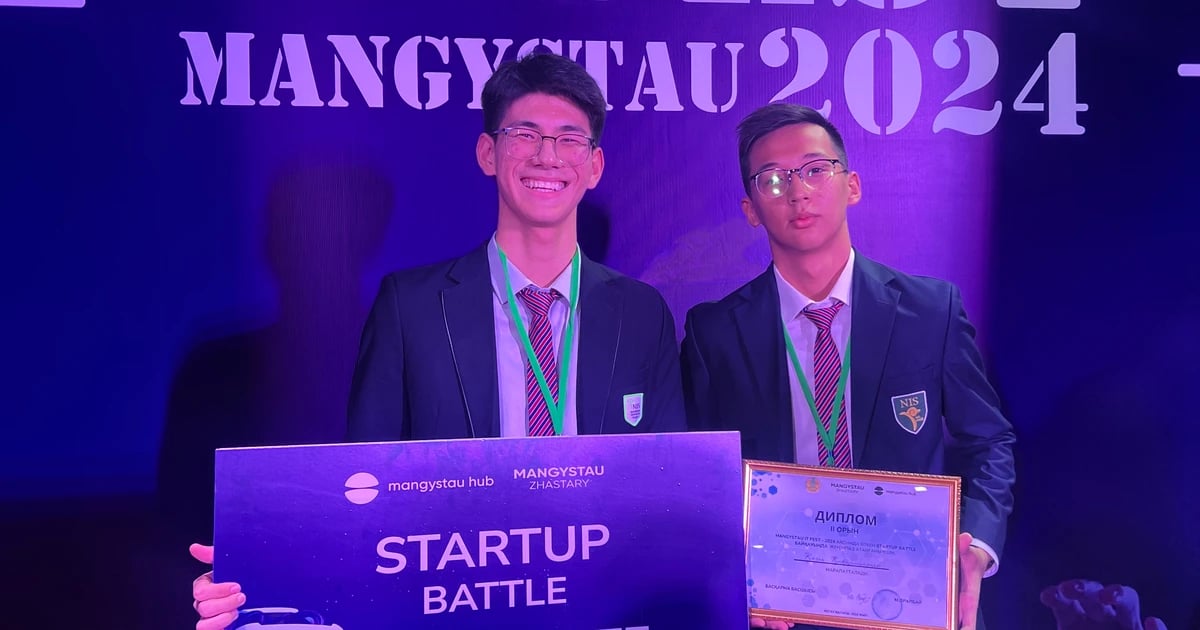
In my junior year, I became more involved in projects and school activities and eventually decided to take the IELTS and try. The turning point came when I applied to a university-application mentorship competition in Kyrgyzstan. I thought my interview had gone badly, but I ended up placing first and receiving a 100% scholarship for the program. “After they believed in me, my eyes really lit up.” That was when studying abroad stopped feeling like an unrealistic idea and became something I genuinely wanted to pursue.

Extracurriculars
I realized early that Olympiads were not really my format, so I focused more on projects. Among my most relevant activities were:
- AI & Projects: I won 3rd place at InfoMatrix with a project that brought mythical characters from Kazakh mythology to life using AI. I also won 1st place at InfoMatrix with a short movie.
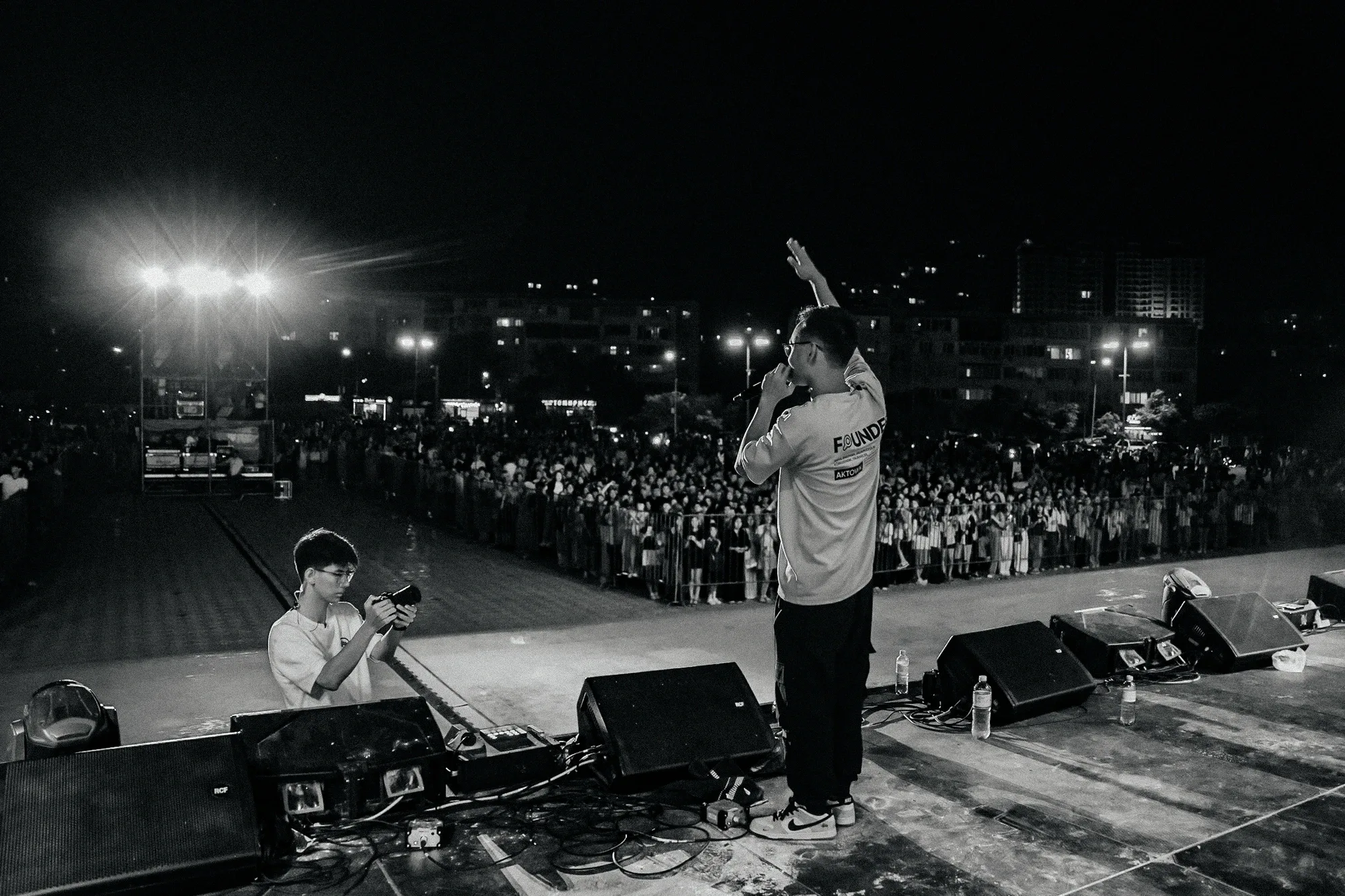
- Filmmaking & Media: I have worked as a filmmaker and videographer for around three years, including projects with Mechta, Honor, and local businesses in Aktau. I also worked as a content manager at Aktaun, where we organized concerts featuring artists such as Son Pascal and Belucci, reaching around 12–13 thousand people.
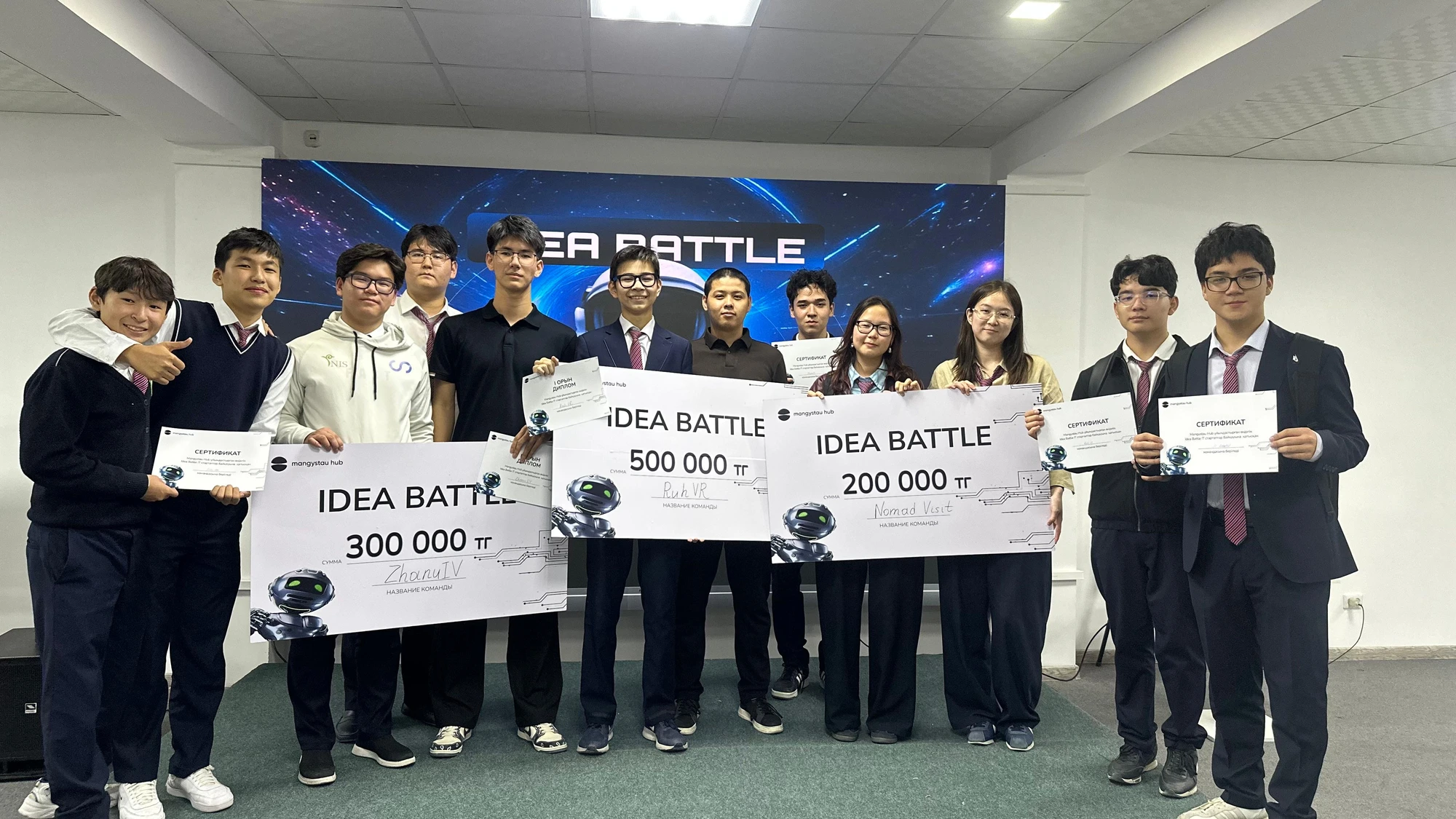
- Leadership & Other Projects: I served as vice president of my school's Student Council and worked on projects including an AI Psychological Assistant and a Drone Delivery System, which earned me a grant of 1 million tenge ($2,188).
What I ended up with was a combination of Computer Science, AI, media, filmmaking, and leadership. I was simply following the areas I enjoyed. Looking back, I think I would have benefited from choosing one direction earlier and becoming much stronger in it before adding everything else.


Four Countries, One Application Journey
I applied to universities in the United States, Hong Kong, China, and South Korea. Because I needed a full ride rather than just full tuition, financial aid played a major role in deciding where I could realistically apply.
In total, I received around 20 rejections, 16 of them from American universities. I was rejected by Carnegie Mellon University Qatar, while Duke Kunshan waitlisted me, but I eventually stopped pursuing it because Duke Kunshan does not offer full-ride financial aid. In Hong Kong and China, I received offers from CityU, CUHK-Shenzhen, and Shanghai Jiao Tong University. I also applied to UNIST in South Korea, but my application was rejected because my documents did not meet the requirements.
That was one of the biggest lessons of the process: there were many universities I could have applied to but simply didn’t. I had put a strong emphasis on America, even though my financial situation made other countries much more realistic.
The Offers, Financial Aid, and the Final Decision
The CityU offer was especially generous because it came with a full ride. I also received half-tuition offers from both CUHK-Shenzhen and Shanghai Jiao Tong University.
But having international offers did not automatically mean that leaving Kazakhstan was the right decision for me. Nazarbayev University eventually became my choice because I see it as a strong option for both my education and future career in Kazakhstan. More importantly, I don’t see it as the end of my international journey. I see it as a potential stepping stone toward pursuing a stronger master’s or PhD abroad later.
The Rejections: What Went Wrong?
The rejections were difficult, but looking back, I think I understand some of the reasons better. The biggest issue was probably my supplemental essays. I wrote many of them too quickly and started preparing them too late. I underestimated how much time they needed, and some of my essays simply weren’t as strong as they could have been. That is why I now believe students should start early: visit each university’s website, look at the prompts, and start thinking about possible answers. Every time you return to a prompt, you can come up with new ideas, personal experiences, or different ways to present yourself.
There were also other factors behind the rejections. Some universities were financially unrealistic for me, while others came down to timing or application mistakes. UNIST, for example, rejected me because my documents did not meet the requirements, while I missed the KAIST deadline. When several rejections come in, it is easy to question your abilities, but over time I realized that admissions decisions depend on many different factors and do not necessarily define the strength of your profile.
Personal Statement
My personal statement was about a marathon. At one point, I decided that I wanted to run every day for an entire year, so I set myself the goal of running for 365 consecutive days. The running itself became a way into a much more personal story.
The essay also explored a conflict with my father and eventually connected that experience to my AI Psychological Assistant project and my interest in Computer Science and product development. I ended with the idea that mental health can be just as important as physical health: someone can look completely healthy physically while mental health problems affect everything else in their life.
For me, that was the point of the personal statement. My activities and grades were already somewhere else in the application. The essay gave me space to explain something more personal and show how different parts of my life connected.


How I Organized the Application Process
The documents themselves were relatively simple once I organized them. I collected my transcripts, diplomas, and other documents, translated them into English, had them notarized, and saved digital copies. After that, I could reuse them for different applications instead of repeating the process each time.
The essays were much more demanding. I started my personal statement around August and worked on it for about three months, while the supplementals for 16 universities were written in roughly one month. Looking back, that was far too little time.
I recommend giving yourself at least three months for supplementals, researching universities early, and checking their webinars, seminars, and other opportunities.
Ideally, I believe the IELTS and SAT should already be finished by the beginning of the final school year, leaving enough time to focus on applications. Of course, sometimes you may end up taking the tests during your final year, but the important thing is not to put all your focus on one part of the process. You also need to give enough attention to your essays, documents, extracurriculars, and deadlines.

The People and Resources Behind the Application
My mentor was probably the most important source of direct support. She answered my questions throughout the process and helped me navigate the applications. I also consumed a huge amount of information online. By autumn, my TikTok and Instagram feeds were filled with IELTS, SAT, admissions, and essay content. I also used Prospect Admissions to research universities. I found it to be a really useful resource called “uaqi qaqi.” Their essays are especially good.
I did not spend much money on preparation itself. Most of my expenses went toward application fees, documents, and testing. I believe students can prepare for standardized tests independently, but essays are different. Even strong writers can miss weaknesses in their own work, so having someone with admissions experience review your essays can make a real difference. In that sense, essays are one of the few parts of admissions where expert help can be especially valuable.
What Admissions Taught Me About Myself
The biggest thing the application process changed was how I saw myself. When you repeatedly write about who you are, what you have done, and where you want to go, you inevitably start reconsidering your future.
I really started thinking more broadly about my future, considering different opportunities and different ways my career could develop.
I also learned how to present myself, how to understand my strengths, communicate them and show other people what I can do. That skill later became useful beyond university admissions, including in sales and other projects. But perhaps the most important realization was how many opportunities are actually available if you are willing to look for them.

What I Would Do Differently
If I could start again, I would deal with personal problems differently, begin my essays earlier, and prepare my documents earlier. I also would not have missed some of the universities I wanted to apply to. A lot of those opportunities were lost not because I wasn’t qualified, but simply because I did not manage the process responsibly enough.
I would also change the way I built my profile. For a long time, I believed that it was better to know a little about everything and be versatile. Now I think it is better to choose one direction where you can become genuinely strong, and then build other interests on top of that.
One Last Piece of Advice
The first piece of advice is practical: start your essays early. Don’t wait until the application deadline is close to start thinking about what you want to say.
The more time you give yourself, the more opportunities you have to find better stories and understand what each university is actually asking.
The second is to believe in yourself. When you genuinely believe that you can succeed, the whole process becomes easier, and you are more likely to keep going when things get difficult.
If I convince myself that I will fail, I will naturally start looking for small signs that prove it: one rejection can make me think, “I knew it wouldn’t work,” and make me give up.
That is why I think it is important to sincerely believe that you have a chance. A lot of success starts with that belief.