Hi, I’m Dhruv Ramu, and I just finished my first year at the University of California, San Diego, where I am pursuing a B.S. in Molecular & Cell Biology and a B.S. in Business Economics. I grew up in Bangalore, went through the IB at Neev Academy, and spent my high school years buried in research labs, hackathons, and a science olympiad I helped build from scratch. The path that took me from cold-emailing professors to representing India at ISEF.
If I had to name the moment my life quietly changed direction, it wasn't a test score or an acceptance letter. It was a smoke-filled first-grade classroom.
I was trying to build a desk fan for show-and-tell, and instead of a gentle breeze, I produced a small cloud of smoke that scared my teacher. At the time, I had no idea what I'd done wrong. But that instinct—to take things apart, to build, to fail loudly and try again—never really left me. It just grew up with me, from animatronic hands and six-legged robots in middle school to Discord bots and research papers in high school. Everything I've done since has been some version of that same kid poking at a circuit to see what happens.
This is exactly what I wrote about in my PIQ for my UC application when they asked me to respond to this prompt: “Every person has a creative side, and it can be expressed in many ways: problem solving, original and innovative thinking, and artistically, to name a few. Describe how you express your creative side.”

How research actually started for me
My research journey started around Grade 10, but the groundwork for it was laid in Grade 9, when I was deep into computer science and doing hackathons almost every chance I got. Those hackathons taught me a way of thinking—about problem-solving, about the real-world application of science and technology—that I still lean on today.
The turning point was a three-day hackathon called Ashoka Red Brick Hacks. Two friends and I represented our school, went to Ashoka University, and built a prototype over the weekend. We won—and more importantly, the mentors there told us something I hadn't considered: this didn't have to be a weekend project. It could be genuine science research.
That's how my first real research project was born. My friend and I worked on a vision-correcting display — the idea that instead of wearing glasses to correct myopia, you could alter what's shown on a screen itself to match your visual aberration. We started thinking about a hardware fix using pinhole displays, realized a patent for that already existed, and went deeper into a software approach using the point spread function — essentially figuring out how to "un-blur" an image so that once your eye applies its own blur, it looks normal.
Two professors at Ashoka took us seriously, met with us regularly, gave feedback, and eventually flew us out to present to their faculty.
That project became the one we submitted to the IRIS National Fair, which — outside of the International Olympiads — is the biggest science competition in India and the qualifying funnel for the International Science and Engineering Fair (ISEF). The top 20 out of roughly 65,000 qualify. We made it, represented India at ISEF 2024, and walked away with an $8,200 Mawhiba Special Award after presenting to a panel of more than a dozen judges.
I say this not to list trophies but because I genuinely believe most students underestimate how reachable these things are. If your research is impactful and you can communicate it well, apply. They fly you out, they cover everything, and you end up presenting alongside a thousand students from around the world. It's the pinnacle of high school science fair—and it's more accessible than it looks.
The email lesson
Here's the least glamorous advice I have, and maybe the most important: send the emails.
I sent somewhere between 50 and 100 emails to professors because I wanted to work in a real lab. Most went unanswered. But eventually, I got the opportunity to work at the Computational Bioengineering Lab at the Indian Institute of Science (IISc) Bangalore, under Professor M.K. Jolly, and I ended up spending two summers there.
When you're in Grade 10 or 11, most people won't help you—but if you send enough emails, someone will. That's the whole trick: it's a numbers game.
At IISc, I finally got to do the kind of work I loved most: the quantitative side of biology. My project was on combinatorial gene expression in cancer prognosis. The standard approach—Kaplan–Meier survival analysis —looks at a single gene, correlates its expression with patient survival, and concludes that the gene is good or bad for you. My argument was that nothing in the body works in isolation. There are 20,000 other genes in that same dataset. Maybe the real signal is gene X high and gene Y low, and gene Z high.
So I built out combinations—single genes, then pairs, then triads, then quads—across 20,000+ genes and 31 cancer types using TCGA data, and showed that as you scale up the combination size, the reliability of single-gene predictions falls off almost exponentially. We calculated false positive and false negative rates as a novel contribution, and I presented the findings at the lab symposium alongside collaborators from IISc and Texas A&M.
Part of why this mattered to me is personal. My father works in a cancer hospital, and I grew up hearing that research focused on single-gene expression often doesn't translate cleanly to the clinic. This project was my way of chipping at that exact gap.
Getting my hands dirty
By Grade 12, almost all my experience was "dry lab"—computational work. I wanted to know what it felt like to work with real biological material, so I joined the University of Agricultural Sciences in Bangalore and worked in plant pathology under Professor M.S. Sheshshayee, studying the crosstalk between drought and bacterial stress in rice plants through ROS production and scavenging.
It was the first project where most of the work was genuinely mine—culturing bacterial cells, sampling leaves, running biochemical assays. On the day I finally collected my third time-interval dataset, I spent over twelve hours in the lab, and even then, I couldn't wait until morning to process the numbers. I went home and analyzed them that same night. That paper became a preprint, so it's citable and publicly available now.
One honest note on publishing: I got accepted into a journal, but formal publication is expensive. If someone is willing to sponsor the cost, go for it. If not, a preprint still puts your work into the world.
What I wish more IB students understood about subject choice
If you're doing the IB and thinking about the US, listen carefully, because this genuinely changed my first year.
I did Biology HL, Chemistry HL, and Math AA HL, with Economics SL, Spanish B SL, and English Lang & Lit SL. My predicted score was a 43. Here's why those HL choices mattered so much:
- I took Math AA (Analysis) instead of AI (Applications). US universities are not receptive to AI HL for credit —you get essentially nothing — whereas AA HL lets me skip Calc 1 outright.
- A 6 or 7 in Bio HL meant I skipped an entire year of introductory biology at UCSD.
- A 7 in Chem HL meant I skipped a full year of General Chemistry (a 6 still gets you out of two of the three courses).
- The IB diploma itself is worth about 30 units of credit at the UCs.
The cumulative effect is that I could graduate in three years if I wanted to. Instead, I'm using that head start to double major, which I simply couldn't do otherwise. For anyone applying to the UK, most universities, especially for STEM courses, have strict subject requirements, such as Science and Math at HL. I
believe my subjects and my strong predicted is what secured my offer from Imperial College London as well.
And a word on the MYP: don't drop a science. Take all three. Your eAssessment only counts your best science anyway, so there's no downside. I didn't take Physics in DP, but Bio majors at UCSD are required to take a full year of physics, and it's hard. The electricity and magnetism I learned back in Grade 10 is the only reason I didn't walk into that class completely blind.
In MYP, my subject combination was: Extended Math, Physics, Chemistry, Biology, Spanish, English Language and Literature, Integrated Humanities, Drama, and Personal Project. I ended up with a final MYP E-assessment score of 52/56
On testing: the UCs are test-blind, so my ACT didn't matter for admission, but I took it anyway and got a 34 (35s in math, science, and English, and — inexplicably — a 30 in reading that I never bothered to retake).
And if you take English SL in the IB, you generally don't need a separate English proficiency test. What matters is that your university marks you proficient on your I-20 form.

The thing I'm proudest of
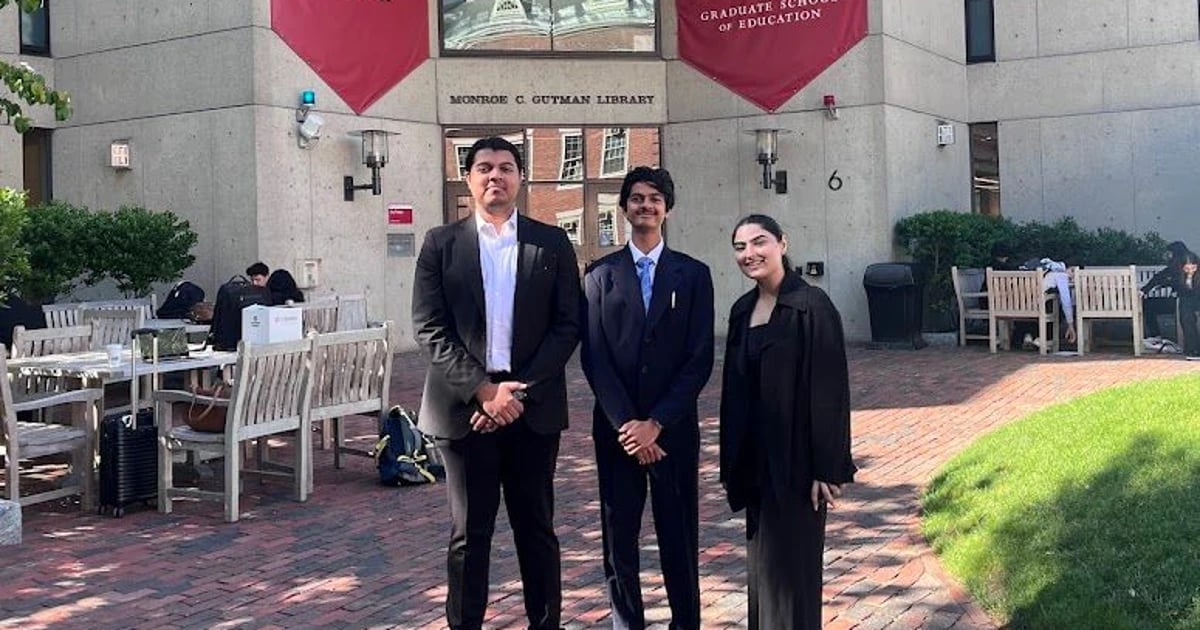
Somewhere in the middle of all this, I helped co-found the International Research Olympiad—the world's first olympiad-style competition built entirely around scientific research for high schoolers. It began as a curriculum and a handful of mock exams. It's now grown to 13,000+ participants across 80+ countries, with 200+ school clubs and a team of staff spanning curriculum, operations, and partnerships. We've raised over $82,500, built a 32-exam curriculum and a textbook, and hosted our finals at Harvard three years running.
It's the closest thing I have to a through-line: I couldn't find the opportunity I wanted, so we built it for everyone else.
My UC application included 16 activities in total, listed in this exact order. This is because UC’s do not use the Common App, and you can submit a total of 20 activities/awards on the UC portal combined.
- Independent Research, Ashoka University
- Conducted independent research in computational optics, developing a vision-correcting display using digital signal processing. Won a $1,500 Ashoka hackathon award and received faculty mentorship toward publishing a first-author research paper.
- Research Intern, Indian Institute of Science (IISc)
- Researched cancer prognosis using gene expression profiling and survival analysis across 31 cancer types. Presented findings at the lab symposium and co-authored a research paper.
- Research Intern, University of Agricultural Sciences
- Investigated drought–bacteria stress interactions in rice through ROS signaling. Presented findings and submitted a manuscript to the International Journal of Plant Biology.
- Co-founder & Co-President, International Research Olympiad (IRO)
- Co-led the world's first research-focused Olympiad for high school students. Managed 5,000+ registrations, established 250+ clubs, raised $42,500, led a 25-member team, authored an Amazon #1 New Release textbook, and organized international competitions in Boston and Shanghai.
- Co-founder & CTO, Cafe Development
- Co-founded an international software company building Discord applications reaching 3M+ users. Led product development, sponsorships, and business operations, generating $11,200 in revenue while growing communities to 160,000+ users.
- Founder & Editor, The Geekly Magazine
- Co-founded a science publication dedicated to making advanced STEM topics accessible. Published 81 articles across 16 issues covering genetics, neuroscience, cosmology, and Nobel Prize-winning research.
- President, Interact Club (Rotary)
- Led a 40-member service organization, raising $1,000 for menstrual health initiatives, teaching STEM to 150+ students, organizing environmental drives, and leading animal welfare projects. Earned recognition as a Top 8 Interact Club globally.
- Founder, COMP² (Computer Comprehension Programme)
- Founded a nonprofit providing computer science education to underserved middle school students. Expanded from 1 to 3 schools, leading 9 volunteers teaching 150+ students weekly, and authored a bilingual programming textbook.
- Black Belt (1st Stripe), Tang Soo Do
- Trained in martial arts for 12 years, earned a Black Belt, mentored junior students, and conducted self-defense workshops for 60+ healthcare professionals.
- Western Classical Piano (Grade 4)
- Studied piano for 12 years, preparing for Trinity Grade 5 while developing discipline, musical interpretation, and performance skills.
- President, Engineering Club
- Led software engineering and robotics projects, taught ReactJS, and mentored members. Directed projects including a license plate recognition system, a Reddit clone, library management software, and soft robotics research.
- Organizer, Inter-school STEM Events
- Organized major inter-school competitions, including Neev Hacks, Science Bowl, Eureka Science Fair, and Theatre Competition, coordinating logistics, volunteers, and event execution.
Awards
- ISEF 2024 Mawhiba Special Award ($8,200)—Qualified through India's IRIS National Fair (Top 20/65,000) and earned the $8,200 Mawhiba Special Award at ISEF for research excellence and science communication.
- Neev Service Excellence Award — School's highest service honor recognizing sustained leadership and community impact across multiple initiatives.
- CERN Beamline for Schools Shortlist (Top 50/3,000)—Led a five-member team proposing a novel proton beam experiment; selected among the Top 50 teams worldwide.
- Hackathon Champion (TISB, Stonehill, NeevHacks)—Multiple first- and second-place finishes developing software solutions in healthcare, sustainability, education, and productivity using ReactJS, Firebase, and SQL.
The application—and the visa
I'll be honest about the hardest part, because nobody warned me: the visa.
I applied without an agent—just me. Getting a slot meant keeping my laptop open from morning to night for an entire week, reloading the page, waiting. I'd booked my appointment right after the pause happened, which put me squarely in the group that got hit by the political situation. Some people in my exact position didn't get a visa in time and had to defer to winter.
What saved me was staying in the know. There are WhatsApp groups where people track open slots in real time, every five to ten minutes. I was literally mid-appointment at the doctor's when I got a call that slots had opened. I left, ran to my laptop, and grabbed one.
For the interview itself: be prepared, but don't over-stress it. Most undergraduate applicants are fine. The officer I spoke with told me they roughly look for two things—schools where international students sit around 15–20% of the class, and recognizable institutions. A visa for UCSD is far easier than for a lesser-known school. Show you can support yourself, be confident, make small talk, and smile. And make it clear you intend to go home afterward—talk about earning your degree and returning to support your family, not about working in the US.
One more thing that made the decision easier: UCSD gave me a $50,000 Provost Award. Several UCs offer merit scholarships to out-of-state students, and for these, international counts the same as out-of-state. You don't apply—you just receive them.

Where I'm headed now
Something shifted for me this year. I came in as a bio researcher, but the more I saw of how science actually reaches patients, the more I found myself drawn to the business and strategy side of it — which is exactly why I picked up Business Economics as a second major. The main thing you should remember when you are applying for these clubs in College is that about 400 people are rushing (applying) for a club that only chooses 20, so to maximize your chances, you should really apply for all you can manage to do.
That's shown up everywhere. I joined Triton Consulting Group, UCSD's pro-bono consulting club, working on market-entry and pricing strategy for real San Diego clients across tech, real estate, and hospitality. I spent last summer at Claisen, a healthcare startup in Boston, negotiating supplier contracts, building financial models, and ending up as first author on a digital health paper and a named inventor on a patent filing. And this summer I'm a Life Sciences Strategy Analyst at Illudent Therapeutics, evaluating genomic and preclinical datasets for a precision-oncology drug and supporting its Series B fundraising work.
It's the same combinatorial-gene-expression curiosity from my research at IISc — just pointed at a different question now: not only does this science work, but how does it reach the people who need it?
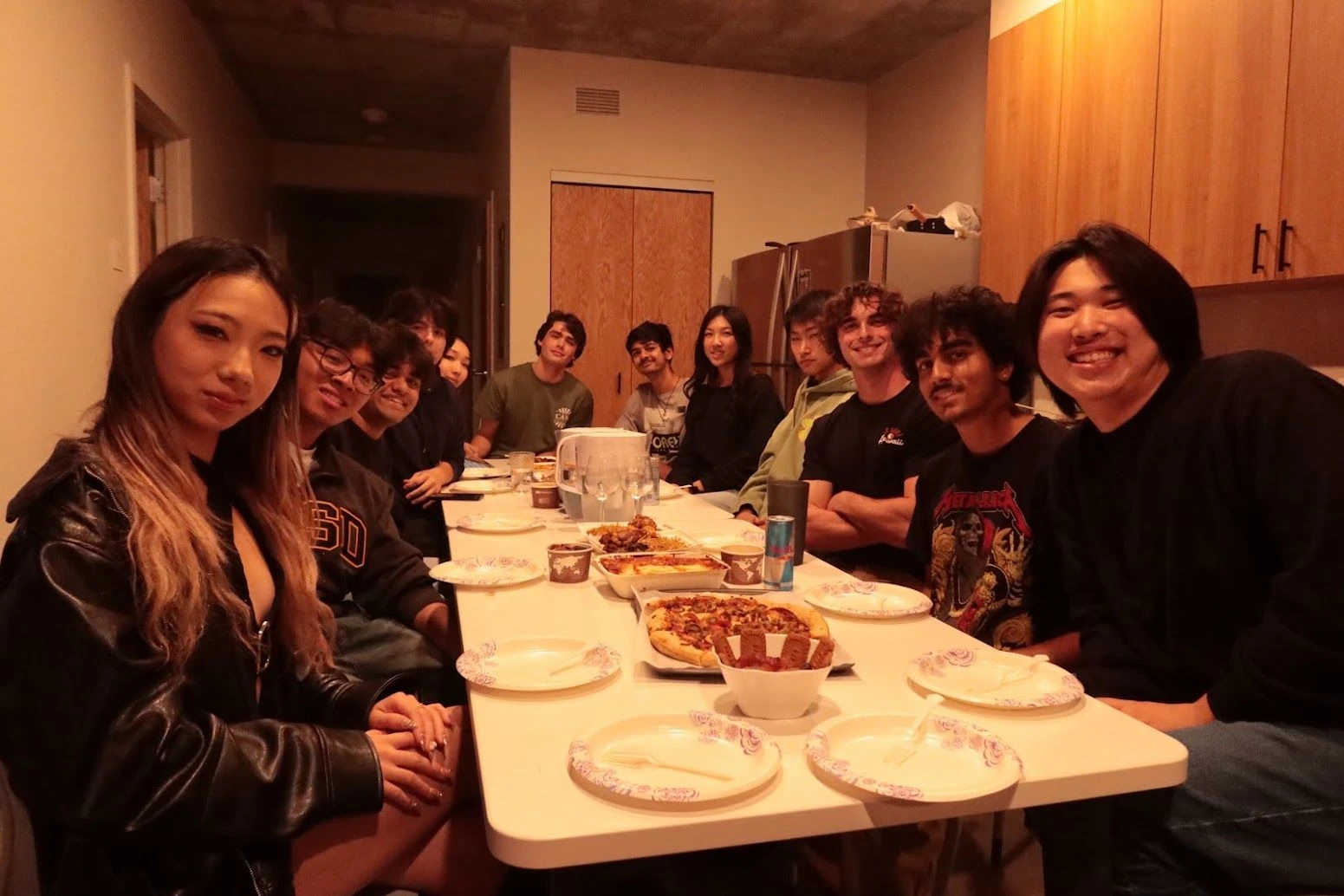
The opportunities may feel gated, but the gates are mostly unlocked. Send the fiftieth email. Enter the competition you think is out of reach. Say hello to the person in the elevator. Most of what happened to me started with simply trying the thing everyone assumes won't work.
What my first year at UCSD actually felt like
I'm genuinely happy I committed to UC San Diego, and a lot of that comes down to its scale. We have around 30,000 undergraduates. A friend of mine at UChicago has about 8,000 students in total. When I walked into my first lecture and counted roughly 300 students, it was a completely new experience.
The professor stops being a teacher and becomes more of a lecturer—you show up, you learn, you take the test, and whether you attend is largely up to you. Most of my classes averaged around 300 students, and the math department doesn't even track attendance. I'll admit I skipped most of my math lectures all year (not something I'd fully recommend). Looking back, I'd probably attend a few more—not just for the content, but to stay connected. Ironically, I'd often show up to organic chemistry lectures I didn't strictly need to attend simply because they were a great place to meet other people in my major.
That's because the social opportunity at UCSD is enormous, but it moves incredibly fast. In a school this large, the first two to three weeks essentially decide your year. I set myself a goal of meeting a few hundred people during that window, swapping Instagram handles with whoever sat beside me in class or stood next to me in the elevator. Roughly 80% of my closest friends came from those first weeks, before anyone had settled into fixed groups. The beauty of a campus this big is that whoever you are, you'll find your people—introverts find introverts, extroverts find extroverts, and every niche exists somewhere. You just have to log in early.
What nobody really prepares you for is the pace. UC San Diego runs on the quarter system: three ten-week terms instead of two long semesters. Ten weeks is fast. Midterms arrive almost before you've learned everyone's name, and the entire quarter feels like a sprint. It rewards staying on top of things from week one and punishes coasting. On the other hand, if a class isn't clicking, it's over quickly, and you get three fresh starts every year instead of two.
Research is one of the biggest reasons people come to a university like UCSD, and it's surprisingly accessible if you're willing to ask. The same approach that got me into research labs in high school—sending fifty to a hundred emails until someone finally said yes—still works here. The difference is that UCSD also formalizes the process. Departments and major research labs regularly post paid and unpaid opportunities through the campus job portal, and students can earn academic credit through independent study projects known as 199s.
There's also an Undergraduate Research Hub that runs structured programs. Two are particularly valuable for international students because they're open regardless of citizenship status: the Triton Research & Experiential Learning Scholars (TRELS) program and the Faculty Mentor Program. TRELS is especially helpful because first-year students are eligible, whereas many stipend-paying summer research programs are primarily aimed at underrepresented, low-income, or first-generation students.
For most freshmen—especially international students—the most realistic path into research is through for-credit lab work and these citizenship-blind programs. Paid research positions become much more attainable once you've built some experience and demonstrated commitment.
For me, that curiosity has actually started pulling me toward the business side of science rather than the bench itself. But that's the beauty of UCSD: the opportunities are there. Thousands of labs, countless research groups, and in many cases, the biggest barrier to entry is simply asking.