


A new beginning in Canada
Hello! I'm Oana Vasile, and I’m from Tulcea, a small city in Romania, where I attended Colegiul Dobrogean "Spiru Haret". I also have an older sister who studied in the U.S. before me. While visiting her, I was exposed to North American culture and the educational environment from a relatively young age. As I became more familiar with it, I realized that I resonated more with that environment, which contributed to my desire to pursue my studies abroad.
I am now entering my third year at the University of Toronto, where I am completing a specialist program in Health and Disease. At UofT, a specialist is the most in-depth type of undergraduate program and is somewhat comparable to completing a double major.
Because I want to apply to medical school, the educational pathway is different from the Romanian system. In Romania, medicine is a six-year direct-entry program. In Canada and the United States, students generally complete an undergraduate degree first, which usually takes four years. They may also need to take the Medical College Admission Test (MCAT), depending on the medical schools they are applying to, and then apply to medical school separately. Medical school itself generally lasts another four years. This means that the overall path is usually longer in North America, but I don’t necessarily see that as a negative when it is something you are genuinely passionate about - and, for me, it is.
Moving abroad became a family decision
When I first told my parents that I wanted to study in North America, they fully supported my decision. They went even further and made the sacrifice of leaving their life in Romania behind and moving to the United States so that they could give me the support I would need throughout my studies.
Although I am considered an international student in Canada, my family is now only a four- to six-hour drive away, depending on traffic. Having them relatively close makes the experience of studying abroad much easier, and I feel very fortunate because I know that many international students are separated from their families by several hours of travel.
Choosing Canada and the University of Toronto
From the American Dream to Canada
Initially, I was planning to apply only to universities in the United States. However, I also decided to explore Canadian universities because I found several of their programs interesting. Canada felt like a strong choice for the goals I had at the time, while also giving me the opportunity to experience a new country and an educational system different from the one I had grown up with.
Why I chose the University of Toronto
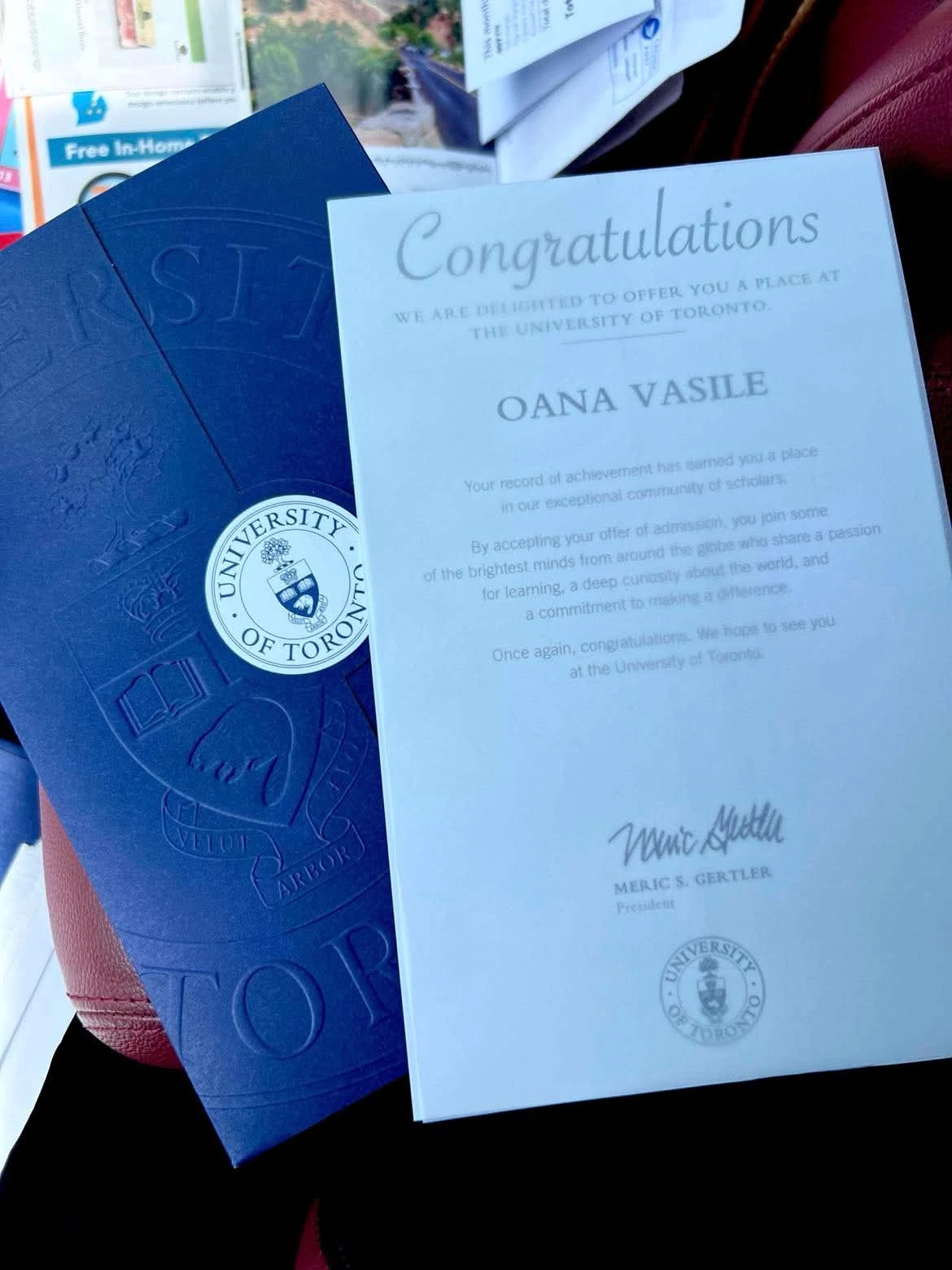
One of the most important things for me while researching universities was the range of opportunities they offered. University of Toronto stood out because of its strong focus on research, which was something I definitely wouldn’t have had as many opportunities to explore if I had stayed in Romania. I wasn’t necessarily set on pursuing research, but I wanted to keep the option open in case I decided to. I remember telling myself that if I got accepted into the University of Toronto, I would go there no matter what, so when I found out I got in, this whole thing felt like a calling.
My application process
I applied to several universities in both Canada and the United States. In Canada, I applied to four universities and was accepted to all of them. In the United States, I applied to around ten universities, and I was also contacted by one university that was interested in recruiting me after seeing my profile.
The application processes in the two countries are quite different. For my U.S. applications, I used Common App. The platform allows you to create one general profile containing information about your education, activities, achievements, and personal background. You also submit your transcript, personal essay and, depending on the university, additional essays, test scores or recommendation letters.
For universities in Ontario, I applied through the Ontario Universities’ Application Centre (OUAC). Through OUAC, I entered my personal and academic information (high school transcript and my BAC grades:10 in Biology, a 9,40 in Romanian, and 9,15 in Math) and selected the universities and programs to which I wanted to apply. After submitting the application, each university provided its own portal where I could upload the required documents and follow the status of my application. Unlike the U.S. process, there was not one general personal statement required for all of my Canadian applications, although certain universities or programs may request supplemental applications.
As an international applicant, I also had to provide proof of English proficiency. I took the TOEFL and received a score of 101 out of 120.
One recommendation I have for future applicants is to check whether they qualify for application fee waivers. Application fees vary between universities, and the total can quickly add up when applying to several schools. Some American universities do not charge an application fee, while others offer Common App or university-specific fee waivers. Canadian application fees can also include a general application fee, additional program choices, and university-specific supplemental fees, so it is important to research the costs in advance.
I did not work with a professional counselor or admissions guide when I applied. My sister helped guide me through both the Canadian and American application processes, and I am very grateful that I had her support.
Understanding UofT’s Structure
The University of Toronto is divided into different academic faculties, such as the Faculty of Arts & Science - which I am part of - or the Faculty of Applied Science and Engineering. Within the Faculty of Arts & Science at the St. George campus, every student also belongs to one of seven colleges.
The colleges do not determine your academic program, but they provide students with a smaller community within the larger university. Depending on the college, students may have access to different residences, scholarships, academic advising, courses, and other opportunities. When I applied, I did not fully understand the distinction between the university, faculty, college, and academic program, but I was asked to rank my college preferences as part of the application. Some colleges may also have additional requirements.
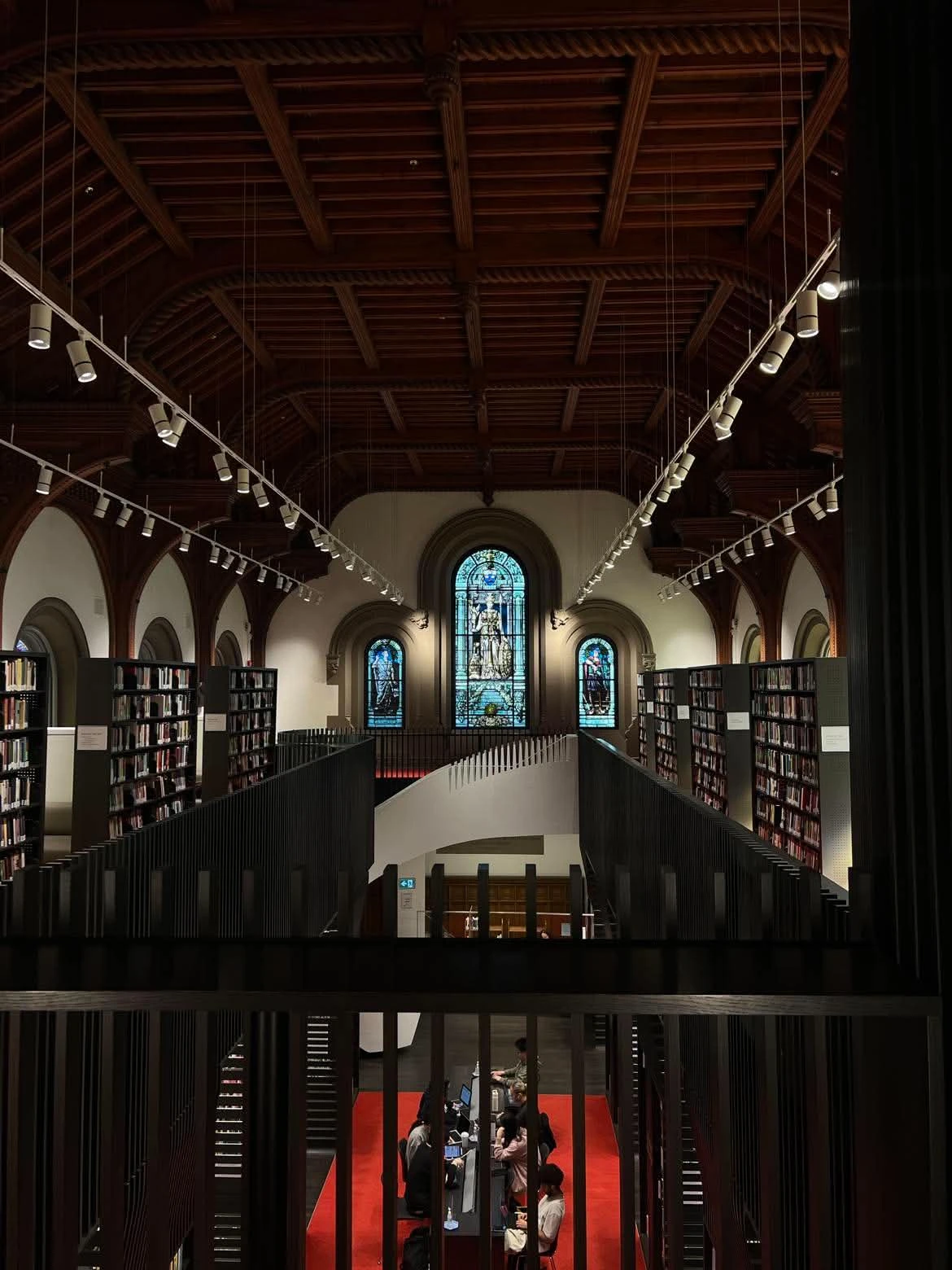
I ranked University College as my first choice. It is U of T’s founding college and has a large, diverse community, which appealed to me because I felt it would give me more opportunities to meet people and build connections.
Applications were open during the fall and generally due around January. U of T releases admission decisions in several rounds between January and May. Applying and submitting the required documents early can make a student eligible for consideration during the earlier admission rounds, although it does not guarantee an earlier offer.
I also applied separately for on-campus residence and ranked my preferred residence options. First-year students who meet U of T’s deadlines are generally guaranteed a place in residence, but their specific residence, building, or room preference is not guaranteed.
Experiences That Shaped My Journey
I have always enjoyed being involved in my community, taking on leadership roles and trying to find solutions whenever I saw an opportunity to contribute. This was reflected in the extracurricular activities, competitions, and volunteer initiatives I pursued throughout high school.
One of my longest involvements was with Interact. I joined in 7th grade as a general member, later became part of the club’s leadership team, and eventually served as president in 11th grade. We regularly organized community initiatives and social events for young people in our city. I was also president of my high school’s student council during my final two years of high school.
I participated in several academic and team competitions as well. I led my school’s team in Sanitarii Pricepuți, a first-aid and health education competition, where we placed first at the county level and qualified for the national stage. I also competed in Young People in European Forests (YPEF), qualifying for the national stage in both years that I participated and placing second nationally one year. In addition, I reached the national stage of the Physics Olympiad twice.
Volunteering was another important part of my high school experience. As a Romanian Red Cross volunteer, I helped in Isaccea, near the Romanian-Ukrainian border, after Russia’s invasion of Ukraine and the arrival of refugees in Romania. I also volunteered as a translator during a health caravan, acting as a liaison between Romanian patients and the French doctors providing care.
I was also a Junior Ambassador in the European Parliament Ambassador School Programme (EPAS), which gave me the opportunity to visit the European Parliament in Strasbourg. I participated in an Erasmus+ anti-war project in Deauville, France, served as editor-in-chief and a writer for my school magazine, and helped organize my school’s freshman ball during 12th grade.
These experiences allowed me to explore many of my interests while developing my leadership, communication, and teamwork skills.
The Financial Reality of Studying Abroad
Studying abroad is a significant financial commitment, especially for international students. International tuition for Life Sciences at UofT is approximately CAD $65,000 per year, before accounting for housing and other living expenses. This is considerably more expensive than pursuing a university education in Romania, so finances are an important factor to consider before applying. I would strongly encourage prospective students to research scholarships and other funding opportunities early, as financial planning can help determine which options are realistic and sustainable for them.
Making UofT more affordable
Several scholarship opportunities are available to international students at UofT. One example is the University of Toronto International Scholar Award, a merit-based admission scholarship for which eligible international applicants are automatically considered. It can be worth up to $100,000 CAD over four years of study.
As a member of University College, I also have access to additional scholarships and awards. Some recognize academic performance, while others consider a student’s program of study, financial circumstances, or involvement in campus life. Certain awards require an application, while for others, eligible students are considered automatically by the college. Their values vary depending on the specific award and its criteria.
Financial support can also come in forms beyond major scholarships. Depending on their eligibility, students may have access to book bursaries, emergency grants, and reimbursements for eligible educational expenses, such as textbooks or necessary technology. For example, one form of support available to me provides reimbursement of up to $500 CAD per semester for eligible university supplies.
Individually, some of these forms of support may appear relatively small compared with the overall cost of studying internationally. However, when combined, scholarships, bursaries, grants and reimbursements can meaningfully reduce some of the financial pressure and make the experience more manageable.
Lester B. Pearson International Scholarship
One thing I wish I had known about before applying to university is the Lester B. Pearson International Scholarship. I only learned about it after I had already completed the application process, by which point it was too late for me to be considered.
The Lester B. Pearson International Scholarship is one of UofT’s most competitive awards for international students. It covers tuition, books, incidental fees, and full residence support for all four years of an undergraduate degree, which can make a significant difference for a student hoping to study abroad.
The application process begins before the regular university application deadlines. Students cannot apply independently; they must first be nominated by their high school, and each school can nominate only one student per year. Once nominated, the student must apply to an undergraduate program at UofT and complete a separate scholarship application.
Because I did not know about the scholarship early enough, I missed the opportunity to be considered for it. It is not something I dwell on, but it is information I wish I had had at the time. My advice to other international applicants would be to begin researching scholarships before submitting their university applications. Some of the most significant opportunities have earlier deadlines or require nominations, so learning about them early gives you the chance to at least put yourself forward.
Finding a place to stay in Toronto
Why I chose to live off-campus
Initially, I planned to live in residence. As a Faculty of Arts & Science student, the college you belong to influences which on-campus residences are available to you. Students can rank their residence preferences and may later be asked about preferences such as room style, but receiving a particular residence or room type is not guaranteed.
The cost of living on campus varies considerably depending on the residence, room type, length of the agreement, and whether a meal plan is included. Current St. George residence fees range from approximately $9,000 to over $30,000 CAD for the academic year or lease period. Because the options are structured differently, it is important to look closely at what each price includes rather than comparing the totals alone, as some include meal plans and housing, others only include housing.
After receiving my residence placement and considering the type of accommodation in relation to its cost, I decided that living off campus would suit me better. UofT has an Off-Campus Housing Finder where students can browse rental listings and connect with potential roommates. However, students should still research each property carefully because the university does not inspect or guarantee the listings.
I eventually found an apartment that I love. It is close enough to both campus and downtown that I can still be involved in university life while having the privacy and independence of my own space. For me, it offers the best of both worlds.
Off-campus housing in Toronto can vary widely in price. Living with roommates or looking slightly farther from downtown can reduce the cost. Toronto also has an extensive public transit system, so living farther from campus does not necessarily mean being disconnected from university life. Commuting time can also become time to review material, listen to something, or speak with family and friends.
Finding My Community Far From Home
One of the challenges I faced after moving to Toronto was making friends and building connections. Before the end of my first year, I decided to search for Romanians in Toronto on LinkedIn, hoping that our shared background would give us a starting point for connecting. That is how I met Ana and Carla. Through them, I gradually met more Romanians and became involved with LSRS - the League of Romanian Students Abroad (Liga Studenților Români din Străinătate).

During my first year, I also joined a First-Year Learning Community (FLC). The program places approximately 25 to 30 students from the same area of study in several of the same core courses and gives them opportunities to meet regularly, support one another and form their own community. My FLC friend group reflected the diversity of Toronto itself: we had people from Romania, the United States, South Korea, Sudan, Lebanon, Ethiopia, Italy and Canada. I have really enjoyed spending time with them throughout university, and the program helped make such a large institution feel much smaller.
One of my favourite stories happened during a physics lab. While the teaching assistant was taking attendance, I heard a name that sounded Romanian. We started talking and became friends, only to discover later that we had lived across the street from each other in Tulcea. Somehow, we had to move thousands of kilometres away to finally meet. Now, me and Bianca live in the same building in Toronto and even founded an emergency medicine club together: Code Blue Student Club (UofT).

How to Learn in a New System
Adjusting to a new academic system took time. Courses generally include lectures and may also have tutorials, practical sessions, or laboratories, depending on the subject. I usually take five courses per semester, and because each semester has only 12 weeks of classes, the workload becomes intense very quickly. By around the fifth week, it can feel like there is always another test, assignment, or lab to prepare for. Although this can be challenging, it has taught me to manage my time more effectively and become more efficient in how I study.
The biggest adjustment was learning that I could not prepare for exams in the same way I had in Romania. In high school, I was often expected to memorize information and reproduce it quite closely on a test. At UofT, knowing the content is only the first step. Exams often ask you to apply what you have learned to a new scenario, so understanding the reasoning behind a concept is much more important than memorizing it.
One thing I really appreciate, however, is how accessible and willing to help many professors are. They hold regular office hours, and in most cases, you can simply attend and ask questions without needing a formal appointment. They are generally happy to explain concepts again, clarify something you did not understand, or help you approach the material from a different perspective.
Exploring Different Paths at University
I’m really grateful that UofT has given me so many opportunities to explore different interests and possible paths. I initially tried becoming involved in research because it seemed to be a direction that many students around me were pursuing. However, I realized that it was not the right time for me to continue down that path.
I also joined the Arts & Science Internship Program (ASIP), which allows students to gain paid work experience related to their studies. Participating in the program will extend a four-year undergraduate degree to five years because of the additional work terms. After spending a year in ASIP, I realized that the program no longer aligned with my plans and goals, so I decided to leave it.
I think university is a time to explore different interests and learn what you actually enjoy. That is exactly what I have tried to do: pursue different opportunities, see what I like, and recognize what may not be right for me. I would encourage other students to be open to new experiences and say yes to opportunities that genuinely interest them. If something turns out not to be the right fit, it can still be a valuable learning experience, and it is completely okay to move on from it.

My Advice for Studying Abroad
My biggest piece of advice for anyone considering studying abroad is to research as much as possible before applying. Look beyond the university’s name and learn about the program structure, tuition and living costs, scholarships, housing options, and the opportunities available to students. Research scholarships and other forms of financial support early, as some have separate deadlines or require a nomination before you even submit your university application.
I would also recommend speaking with students who already attend the university or people studying and working in the field you are interested in. Social media and platforms such as LinkedIn make it much easier to reach out, and hearing about someone’s real experience can help you understand things that may not be obvious from a university website.
Most importantly, remember that your path does not have to be completely linear. Your interests, priorities, and plans may change as you gain new experiences, and that does not mean that you have failed or made the wrong decision. You do not need to have your entire life planned in advance. Give yourself the freedom to reconsider your choices, adjust your direction, and remain open to where different opportunities may lead you.