Hi, my name is Aryan Varma, and I am from Bangalore, India, where I studied at Neev Academy for all my schooling years.
I’ve always considered myself a visual arts student at heart. Throughout school, I gravitated toward the creative side of things: expression, experimentation, storytelling through visuals. This reflected in my subject choices throughout highschol from the IB MYP program to the IB DP program.
That creative focus I honed through my academic coursework and extracurricular engagement is something I’ve now carried forward into college, where I’m currently studying Communication Design at Parsons School of Design in New York City. This course essentially focuses on graphic design, typography, branding, and visual storytelling. For me, choosing this path was about committing fully to creativity and pushing this side of myself further.
Why Parsons? Why New York?
When I was applying to colleges, I applied to five places, and I told myself that if I didn’t get into one of the schools I truly liked, I wouldn’t go to college immediately. This is because outside of university rankings, or going to college for the sake of it, exposure was extremely important to me—not just academically, but also the environment where I would spend these formative years of my life.
As an artist, I see inspiration in everything. I didn’t want my college experience to just be about classes; I wanted it to be about what happens outside of class as well. I looked at options like Italy, SCAD, UAL, and other well-known design schools, eventually settling on 5 schools that were located in places I would enjoy and interact with both like-minded individuals and those from diverse backgrounds.
I finally received offers from RISD, Pratt, SCAD, and NABA.
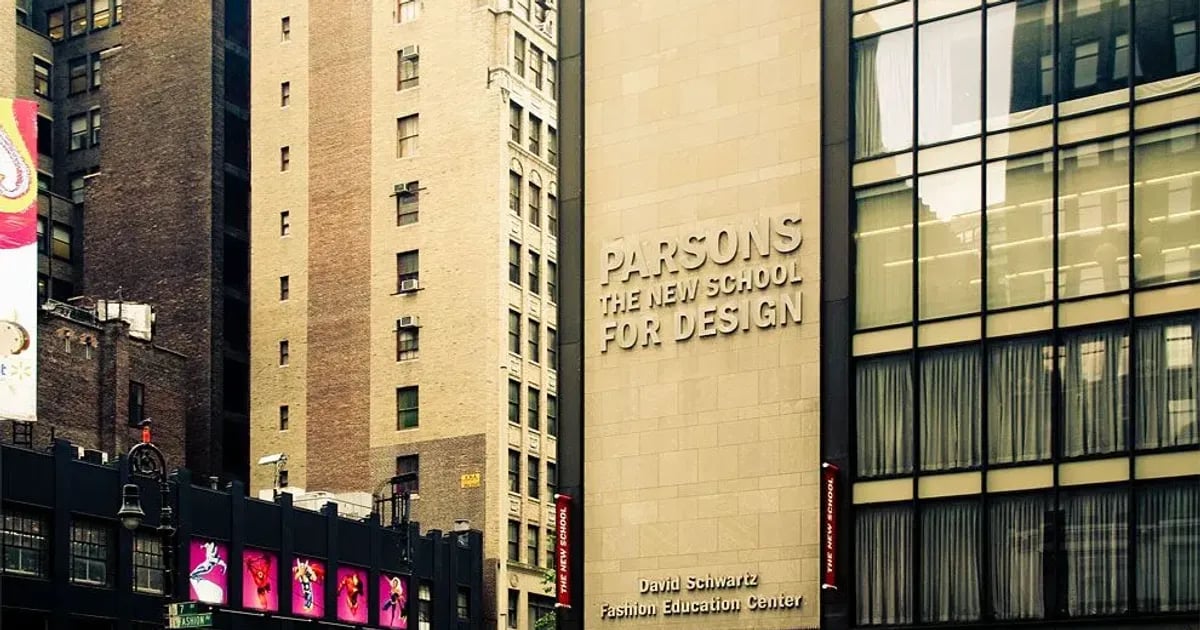
What really drew me to Parsons, now renamed The New School, was New York City. Parsons isn’t just a campus—it’s embedded in the heart of New York. And that changes everything. In a traditional campus, you might see the same group of people for months or years, as someone who was in one relatively small and tight-knit school my whole life, that was definitely the case with me. Which is why, for college, I wanted to experience something different. When New York becomes your campus, your environment constantly expands. You meet new people, see how industries function in the real world, and understand how creativity exists beyond the classroom.
That balance between structured learning and real-world exposure is what made Parsons the right choice for me, as someone inclined to learning not only from my classroom setting but the world around me.
The Application Process
Parsons accepts applications through the Common App, but for a design school, I’ll be very honest—the portfolio is what truly matters.
If you can nail your portfolio, you’re in a very strong position for admissions.
But “nailing it” doesn’t mean creating the most technically perfect work. It means expression. They are not looking for a generic, polished set of pretty artworks. They’re looking for personality. This is because a factor that admissions officers in most universities often consider is how, by admitting students, ***they are building a diverse class profile of people who think differently and will add unique value to the school.***Hence, especially in a design school, going for a standardized approach just does not work.
When I applied, I was in a very experimental phase, which showed in my portfolio. I explored different media and different styles through my IB Higher Level Visual Arts coursework and endeavors outside of school. Yet, even though each work was unique across all my portfolio, there was a subtle theme—I was fascinated by underwater environments at the time. That interest showed up in each piece in a different manner.
The important thing, I personally believe, is that it wasn’t forced; it was just genuine.
Furthermore, I think what worked in my favor was that my personality came through clearly.
Hence, my biggest advice would be :
- Be true to yourself.
- Show expression, not perfection.
- Have fun with the process.
If you’re trying to manufacture something that you think admissions wants to see, it usually falls flat.
Academic Background & Subject Choices
In high school, I chose subjects that told a story about who I was becoming.
At Higher Level in the IB, I took:
- Psychology
- Visual Arts
- Physics
At one point, I might go into architecture. Physics gave me a physical, structural foundation. Psychology gave me insight into human behavior and perception. Visual Arts gave me creative expression.
They were also a unique subject combination that allowed me to explore different parts of design in very different ways, with psychology teaching me subtle insights into communication, physics cultivating a strong sense of technical understanding, and visual arts providing me a creative outlet. They together embodied the design student I was, especially at the time.
Even though I later realized I didn’t enjoy physics and didn’t want to pursue it further, the combination made sense narratively in my application process. It showed interdisciplinary thinking. That’s something I strongly believe in: your subjects should tell a story about who you are and what you want to become.
You don’t need impossible grades to get into Parsons. It’s not about being academically perfect. You do need solid grades, but the emphasis is on your creative direction and portfolio.

Arriving in New York
The transition was hard.
I had never switched schools before—I had been at the same place, around the same people, my entire life. Suddenly moving to New York, a large city half the world away, where I was thrown into a completely new environment, was overwhelming.
I remember my first day thinking, I don’t want to be here. I genuinely felt like I was going to go through this journey alone. However, that did not end up being the case.
Here’s what I learned: everyone is nervous in their first year. Everyone feels out of place at first. Which is why this shared discomfort becomes something to bond over.
You have to be fearless to a certain degree. Put yourself out there. Be unapologetically yourself. If you’re confident in who you are, you naturally attract people who align with you.
That shift in mindset changed everything for me, and I truly believe that for anyone entering any college, this is the right way to perceive it.
Academic Life at Parsons
Classes at Parsons are very different from school.
You’re treated like an adult. You have freedom:
- You can step out of class if needed.
- You can speak openly.
- You’re not micromanaged.
Most assessments are project-based rather than timed exams. You’re given week-long projects and creative briefs. But freedom can be dangerous if you don’t push yourself. There’s no one forcing you to work hard, which is often the case in school, with parents and teachers holding you accountable. If you don’t take initiative and be your own accountability structure, nothing happens.
That responsibility is both exciting and challenging.
One thing that no one prepares you for is course registration at Parsons. You have to log in at 8:30 AM sharp on the registration day. It’s first-come, first-served. If you’re late, you might not get the classes you want, which affects your academic motivation and trajectory. It’s stressful for sure.

Internships & Opportunities
Opportunities exist, but you have to find them yourself.
Parsons uses a platform called Handshake, which connects students with businesses and entrepreneurs for internships and job opportunities.
However, there are some things to consider as an international student:
- First-year international students generally cannot work off-campus.
- On-campus roles (like Resident Assistant positions) may be possible.
- There are visa processes (SSN, CPT, OPT) that you must understand and navigate.
No one really prepares you for these administrative realities—setting up a bank account, understanding work authorization, and managing paperwork. You figure it out step by step.
I personally landed a job very quickly after arriving. This is because I took initiative—I reached out, I put myself out there. Now I work at a restaurant, whereas all my life, the whole culinary mastery thing had been my brother’s forte, yet I progressed faster than I expected.
This experience taught me that confidence and action matter more than overthinking every trivial or big decision. In a large place like New York, if you do not put yourself out there, no one else will do it for you.
Studying in New York
New York is expensive. Very expensive.
Tuition is high. Living costs are high. Daily spending adds up quickly—eating out, exploring the city, and small personal expenses. It may not seem significant at first, but it accumulates over time.
As an international student, you’re also at a disadvantage compared to local students: they may have been working since they were 16, have fewer work restrictions, and understand the system better.
My biggest advice: Learn how to manage your money early. You don’t need to track every cent obsessively, but have a monthly understanding of your spending. Know what’s necessary and what isn’t.
And most importantly, if you’re making the financial commitment to study here, commit fully. Make the four years worth it.
The tuition cost as well is something you should consider while applying; it is typically $30,120 per semester ($60,240+ annually) for full-time students.
What Parsons Really Teaches You
Parsons gives you freedom—but freedom comes with responsibility.
You can choose to:
- Take it easy and just “pass through,” or
- Push yourself creatively and professionally.
If you’re willing to work, the city rewards you. The environment rewards you.
Final Advice to Students
Don’t stress.
Seriously—don’t.
Have fun with the application process. Be confident in yourself and your work. If you’re always comparing yourself to others, you’ll feel restricted. I used to feel that way in school—like others were better academically, more successful. But once I embraced who I was creatively, everything felt smoother.
College prepares you for life. School prepares you for college.
If you already start thinking about who you want to become—beyond just getting in—everything starts to align.
- Be fearless.
- Be expressive.
- Be prepared
- And most importantly—enjoy the process.