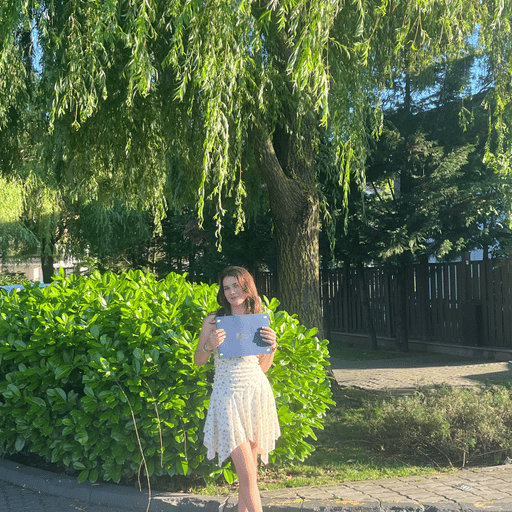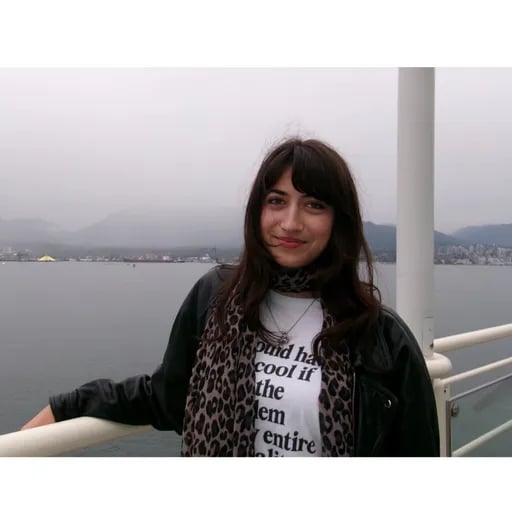
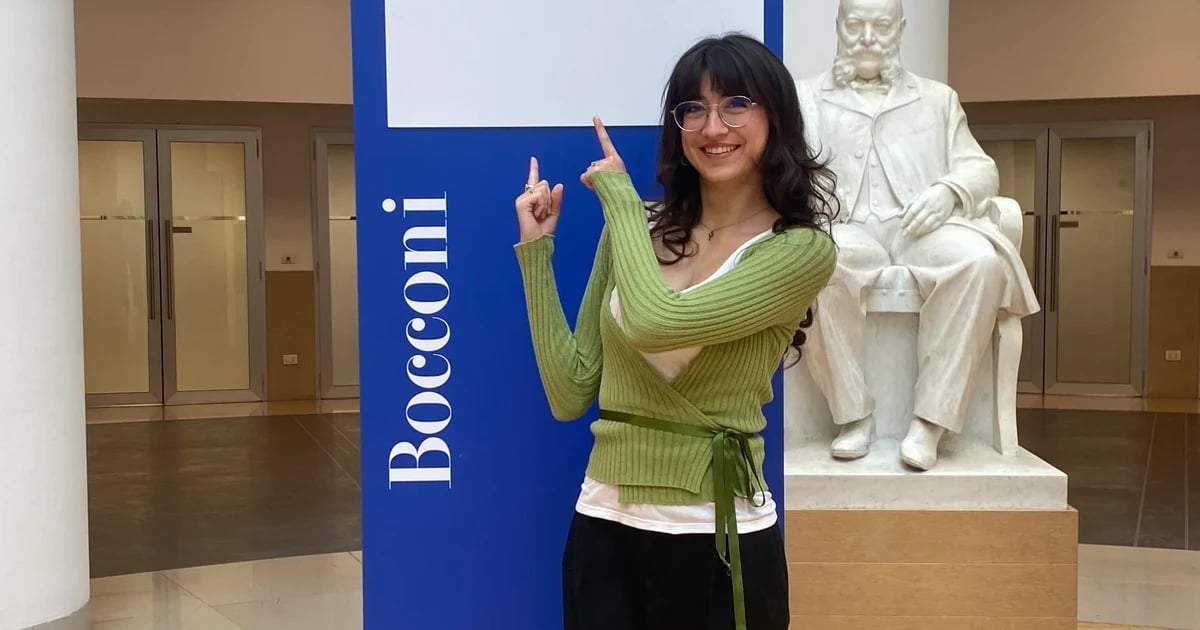
I often look back on my high school years and wonder, ‘How did I even do that much in high school?’ Don’t get me wrong—as an economics major at Bocconi University in Milan, Italy, I have hardly any free time. But high school was on a whole other scale.
Even so, would I be where I am right now without my hard work and dedication? Without all the Google Calendar schedules, each test, every application, and the sheer weight of my stress and responsibilities? I wouldn’t.

Who I am
I’m Daria, a Romanian university student who grew up in Cluj-Napoca, a city a few hundred kilometres from Bucharest, my country’s capital. I consider myself to be somewhat of an overachiever, and that stems from wanting to make my family proud. The Romanian system values these students because its programs are so intensive.
My High School Experience
I attended a good public school called Avram Iancu High School. As with many Romanian schools, it’s more or less focused on scientific studies like math, science, and such. I have nothing bad to say about it. The school was academically rigorous; your grades and ‘GPA’ were based mostly on tests rather than projects, since the school prioritises individual growth. Nonetheless, it depends on the subject; teachers can tailor their teaching style.
I wouldn't say that the Romanian program is more intense than A-levels. It depends, first of all, on what high school you attend. At my high school, at least, you had three main subjects for final exams at the end of high school. You could pick one natural science in addition to your two other mandated classes, Romanian and Mathematics. I chose chemistry first of all because I genuinely enjoyed the class and I found it easy for me, like a combination of math and some memorisation. It came naturally, compared to biology, for example. For biology, you have to study and memorise a lot of information, which the Romanian system favours over developing critical thinking.
One big issue with the Romanian educational system is its focus on the three subjects that you're taking your final exam in. As you move into 10th grade, 11th grade, and so on, your skills are focused on those three subjects. You don't get a diverse set of skills. I would say that's one issue.” We weren’t taught as much in the humanities—I didn't do much history. I don't know high school-level history that well, but I did read outside of the curriculum.

My Extracurriculars
I struggled to balance my academic life and extracurriculars in high school. Most of my teachers expected students to put all of their effort into their subject, which was just unrealistic for me. They don’t take into consideration the programs you’re working on outside of school. You have to know when to sacrifice a test or an assignment for school to fulfil your responsibilities outside of school. I was involved both in high school and outside of high school, locally and nationally. And for that reason, I skipped a lot of school, especially in 11th and 12th grade. Some professors understood, and I could talk to them about it, but others looked down on me a bit, even though I had the mental capacity and I was getting good grades. That’s why I believe it’s harder, compared to an international high school, to balance extracurriculars and school because of the pressure some teachers put on you. I built strong personal relationships with some of my teachers for my recommendation letters and for their understanding of the different path I was on, compared to my colleagues who were pursuing medicine or computer science in university.
In terms of the activities I pursued, I’d say I was pretty well-rounded. I served on the student council, which is when I started to join other initiatives. My first volunteering experience in high school was the basis for the Interact club that I founded, which focused on arts and culture. My main essay for American universities was actually about it. The culture club was very different from a stereotypical club, and notably included members of the LGBTQ community. We had people who tried to hinder our path to success, to put it that way, judging our members. Even so, I found a strong community in the club, which is what I wrote about in my Common App essays.
Another initiative I was passionate about was a national mentoring group. I was president of the tutoring initiative. We had 40 public schools as partners, and we generally organised activities to incentivise students from unfortunate high schools in less developed regions to develop extracurricular activities. We would help them found debate clubs, volunteering clubs, or book clubs- that sort of thing. I also ran an economic newspaper, which is how I ended up at Bocconi; I realised that I was interested in economics. My profile was more or less focused on social impact, education, and economics. I wasn’t doing any sports, competitions, olympiads, or anything like that.

My Standardised Tests
I took the SAT twice, and the TOEFL once, for my American applications and because Bocconi required your score—or those of the university’s official testing. I've seen some great, smart, academically focused students who didn’t do well on the SAT. The first time I took it, I received a 1380. I learned how to practice for standardised tests, and I received a 1530 on my second attempt. I definitely took it more seriously. I realised the test is anything but easy and very stressful. You need a lot of preparation to understand your mistakes and deeply understand the test. I'm teaching the SAT these days, specifically for math, because I understand the importance of monitoring your mistakes and such. I prepared during the summer, so I didn’t have trouble balancing my practice with schoolwork.
My Application Journey
It was not very encouraging to apply abroad, as I was one of the first; actually, I was the first person to attend my now-school university from my high school.
I applied to several schools in the US and a few in Europe, including UCL, Bocconi, NYU, Bentley… The American application system is very challenging. Even though you’re meant to enjoy your final year of high school, senior year was my worst year. I wrote essay after essay, applied for financial aid, and prepared for my national exams. I had also applied to more than 15 schools, which meant that I had so many deadlines. As I said, I didn’t have much scholastic support, and my parents couldn’t help me either, since neither of their fields had anything to do with finance. The creative writing process was especially demanding, since the Romanian curriculum doesn’t develop this skill, and I struggled to reflect on my experiences and to present the most beautiful truth to universities. Thankfully, I had some educational consulting to support me. I worked with Vreau să Studiez în America (VSSA), a counselling company helping Romanians apply to the US, and with Upgrade, for college advice. I consulted with them; they helped me write my essays, correct them, rephrase sentences, and so on.
My European applications were much simpler. For the UK, you only have to write a personal statement—detailing your passion for the major, your interests, and providing certain references based on the program you want to follow. The UK has some emphasis on national exam results—once you're accepted into your university of choice, you could be removed if your scores aren’t high enough. As for Bocconi, they pay more attention to your GPA and standardised testing scores—the admission process works as follows: 50% is the SAT, 48% is your GPA, and 2% is for an essay (when I applied). The essay, as for the personal statement, is more academically focused, which is why I found it easier to write.
My Acceptances
My most important criteria for choosing a university was financial aid, which Bocconi offered me the most. I got into Bocconi, NYU, UCL, and some others. Many of the schools I wanted to attend didn’t give me sufficient financial aid. NYU offered some, but UCL and others didn't. I wanted to leave, go out—the kinds of experiences you need as a student—but the aid offered wasn’t enough to support me, and I didn’t want to take on many school loans. I have full financial aid for Bocconi, including a tuition waiver.
I did like Bocconi as a school. I knew it was well known in Europe, and I want to work in Europe, not in the States, which was a major advantage. I did want the flexibility to choose and change my classes and major that the American system offers, because you don't have that at Bocconi.

Bocconi University
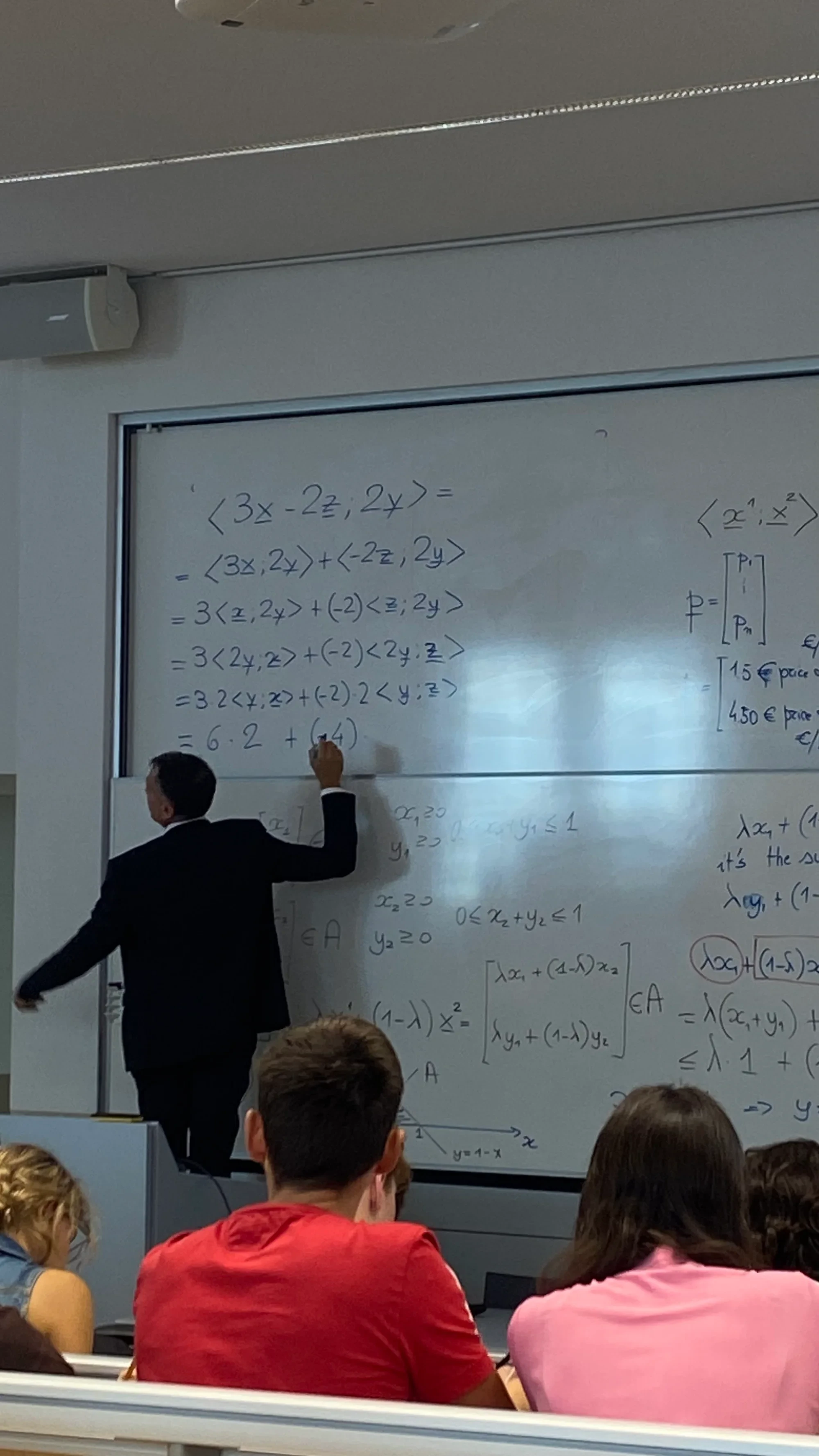
Bocconi is a business school. My official program is international economics and finance, majoring in finance. My expectations about its focus on the humanities were completely wrong. Bocconi is very math-focused; it's quite analytical, and you really don’t do much humanities at Bocconi. It prepares its very diverse student body ( I’d say 60% of it is international ) to become a corporate machine, an expert in your field, but in a good sense, I would say. For instance, you see a lot of people in London in finance, investment banking, and consulting from Bocconi. The university prepares you to manage a substantial workload and retain information quickly. Most European universities don’t enable you to choose your own courses. In the three-year program, you take mandated comprehensive classes in the first year. Then, in the second year, second semester, you can choose either finance or economics. In your third and final year, you have many more electives.
Although the lack of freedom may seem disadvantageous, class picking is a complex process, as I recently discovered on my exchange trip in Canada. I’m attending Simon Fraser University ( SFU ) for the semester, and the selection process was stressful.
My Out-of-University Life
I do some extracurricular activities outside and within the school. I’m part of 180 DC, a consulting club for NGOs, which helped me utilise my social impact. I’m also the head of an asset management group for simulating contributions to monitoring long-term stocks. I’ve done multiple internships related to my field over the summer in Romania, since it’s hard to find them in Italy (Italian is required for many of them); I worked with a venture capital group, where we worked with start-ups, and I analysed statistics.
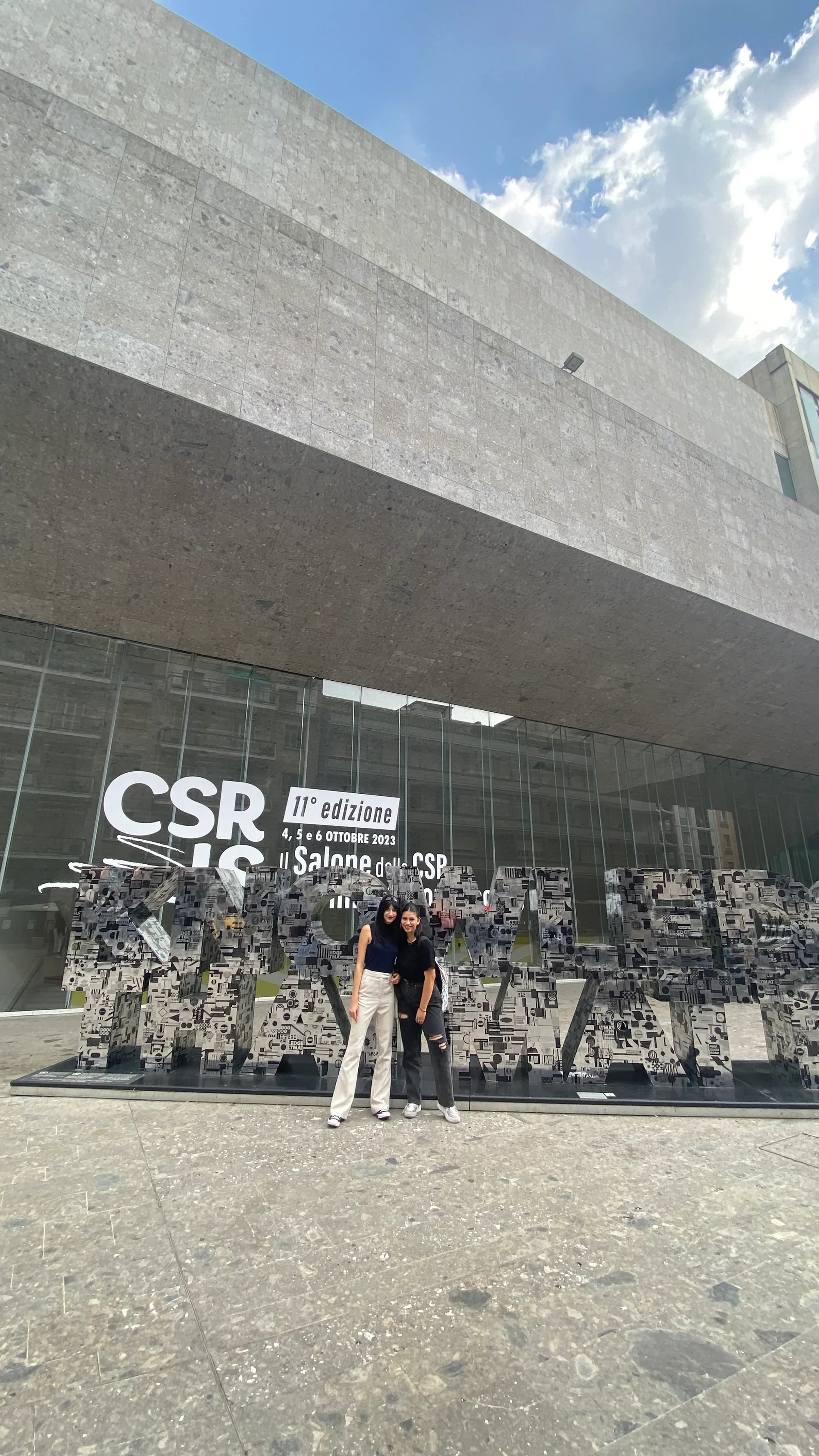
I’ve found a great community of diverse people and minorities in Romanian society at Bocconi. I’m excited to pursue a master's in economics once I finish my final year at Bocconi. I’ll definitely miss meeting new people from different worlds and the incredible lifestyle.