
For many students in Southern Africa, finishing IGCSEs feels like the beginning of the next big decision: Do I stay for the IB? Do I do A Levels? Do I go somewhere else? I knew quite early on that I wanted to leave after my IGCSEs.
I spent my high school years at Waterford Kamhlaba United World College of Southern Africa (UWCSA), and despite having a fulfilling experience there, I did not see myself staying for another two years to complete the IB Diploma. Instead, I began looking for universities that would accept IGCSE qualifications directly.
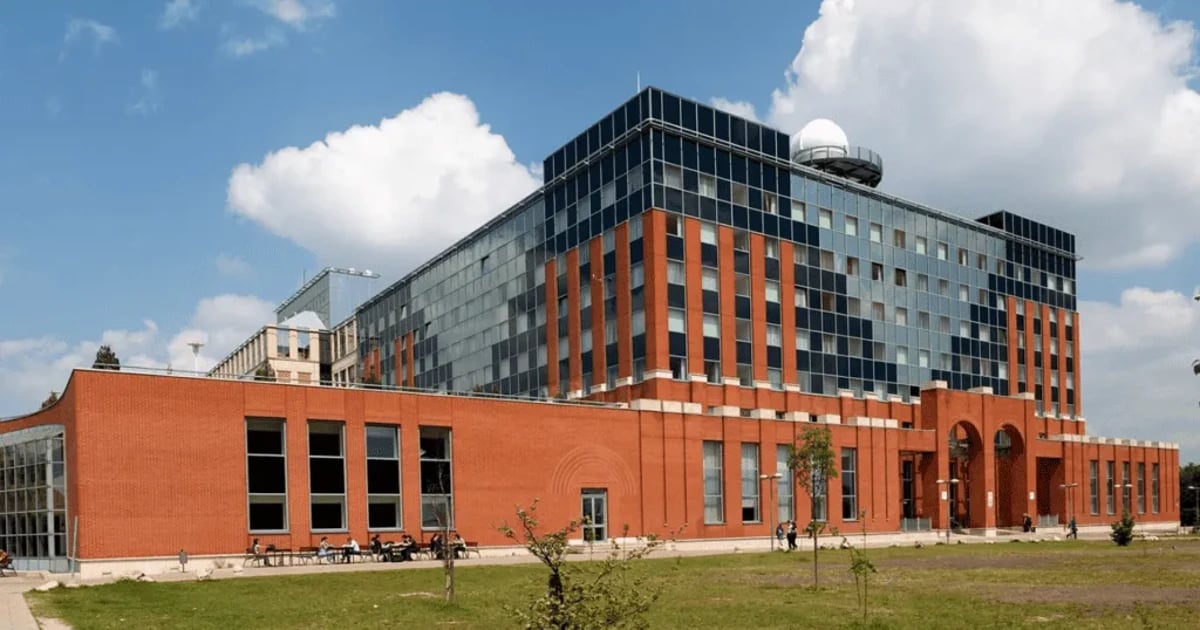
That decision eventually led me to Hungary, where I will be studying International Relations at Eötvös Loránd University. But getting there was not as straightforward as people might expect. I had very little guidance from my school, had to do most of the research myself, and discovered my university partly through luck.
My Experience at UWCSA
I completed both primary school and high school in Eswatini before attending UWCSA, where I graduated in November of last year (2025). Overall, I had a good experience at UWC. It was a friendly environment, and although I had to adjust to being surrounded by people from many different backgrounds, I found the transition relatively easy.
Before UWC, I had been in a school environment that was far less diverse. At UWC, I constantly met people from different cultures, beliefs, and perspectives. One of the biggest takeaways from the experience was learning that everyone is different. Everyone has their own beliefs, experiences, and ways of looking at the world. I learned that the best thing I can do is respect those differences and try to understand where other people are coming from. I know that is the biggest thing I will carry with me into university.
Choosing My IGCSE Subjects
For my IGCSE subjects, I selected Siswati, Business, History, Global Perspectives, Chemistry, Mathematics and English. The biggest challenge was not necessarily the workload. In some subjects, the workload was manageable. The bigger issue was having different teachers throughout the two years. For some subjects, I had several teachers, including around three different teachers during my first year of chemistry. That made it difficult to properly settle into a learning style or build a consistent relationship with a teacher.
The first year is particularly important because it gives you the foundation for the second year, so constantly adjusting to new teachers made the second year more difficult. There were also certain subjects where I had to sacrifice time elsewhere to achieve the grades I wanted.
Why I Decided Not to Do the IB
I already knew that I wanted to leave UWC after my IGCSEs. For me, the biggest factors were cost and location, with the cost around 40,000 USD for 2 years. The IB Diploma is a great qualification, and UWC offers the Shelby Davis Scholarship for students who continue to university after IB. Still, personally, I did not feel that spending another two years at UWC was worth the cost.
When I compared the price of two years of IB with the cost of my eventual university degree, the numbers did not make sense for me. I also wasn't particularly interested in going to North America, which was the only destination available with the scholarship. Even if I had been offered the chance to move to another UWC, I don't think I would have stayed for the IB.
Searching for Universities After IGCSE
Searching for universities was probably the most difficult part of the process. I did not have much support from my school when it came to finding universities that accepted IGCSEs directly. Most of the time, the advice I received was essentially that I needed A Levels or another high school qualification before university. The most common suggestion was to go somewhere else in Southern Africa and complete A Levels.
There wasn't much exploration or information on other international options. As a result, most of the research was done by my dad and me. I had to find universities, check their entry requirements, and then investigate whether they actually accepted IGCSE qualifications.
Looking back, I think I was one of relatively few students from my school who chose this route. Many of the students who did not continue with IB went on to do A Levels in South Africa. Only a much smaller group, perhaps 15–20% or even fewer, looked for universities that accepted IGCSEs directly.
How and why I chose Hungary
Interestingly, finding my university was partly down to luck.
My parents had traveled to Budapest for work, and while they were there, they attended a university campus tour. That was where my dad first came across information about the university I eventually applied to. From there, the luck ended, and the research began. We had to make sure that the universities we were considering actually accepted IGCSEs and that I met their requirements. I applied to several universities (including one high school) in Hungary, and all of them accepted IGCSEs.
So while discovering the university was partly accidental, getting to the point where I could actually start applying required a lot of research and time.
Hungary was always my main destination. At the beginning of my research, I briefly considered Ireland, but my dad discouraged me from going there because of the cost. He had been there before and knew how expensive it could be. Hungary seemed like a much more financially realistic option. I looked at several universities within Hungary, but I knew that I wanted to stay focused on the country. Eventually, it became almost a case of Hungary or nothing.

What University Will Cost Me and Scholarships
One of the biggest reasons I chose Hungary was affordability.
My accommodation is expected to cost between 405 and 460 USD per month. My total university tuition for my degree is approximately 21,700 USD. For transportation, I expect to spend around 11usd per month, particularly because I will be able to use public transport such as trams and bicycles. I don't yet know exactly how much I will spend on groceries and other everyday expenses because I haven't arrived in Hungary yet. So these are estimates based on what I currently know rather than my final living costs.
My university does offer scholarships, but from what I have seen, many of them are aimed more toward European and Asian students. I haven't found many opportunities specifically targeted toward African students. That doesn't mean I think students should give up if they don't have the means to study abroad immediately.
I genuinely believe there is always an option. Not every European country (or country abroad) is extremely expensive. Some places are significantly more affordable than others, and Hungary is one example.I also think students need to be willing to ask for help. People and organizations are willing to support students, but sometimes you have to actively reach out, send emails, and let them know you need help. With social media and communication being so accessible today, there is no reason to keep your situation completely to yourself.
What Made My University Stand Out
One thing that really stood out to me about my university was the way it recognizes extracurricular activities, particularly sports. Students can receive credits for participating in sports. It's not necessarily that the university itself has an enormous sports program. Rather, it works with local organizations and recognizes the importance of participating in sports outside the classroom. It showed me that the university values students as more than just their grades. Academic performance matters, but so do the strengths we have outside the classroom.
My Application Process
The application process was quite long.
I applied around February and had to pay an application fee. I believe it was around 115 USD or slightly more, although I don't remember the exact amount. I then submitted my qualifications, a motivational letter, and several other documents, including my academic results and information about my activities. After applying, I had to wait quite a while.
Although applying in February, my interview didn't take place until around the week of May 10. I received my university acceptance in June. Then, in the same month, I applied for student accommodation. I didn't receive the accommodation decision until July. With the semester beginning in September, everything happened relatively close together.
One thing I learned from this process is that applying early doesn't necessarily mean that everything else will happen immediately. You could apply in January or February and still end up waiting until May for an interview.
What Were My Grade Requirements?
Interestingly, I wasn't aware of any strict grade requirement for my program. The interview was much more important. I was expected to demonstrate knowledge of current world events, smaller events happening around the world, and different political issues. I also had to be able to explain my opinions on topics such as politics, world leaders, and how change can be created.
There was no mathematics or English entrance exam for my program. My interview was conducted online with what I believe was a faculty leader or professor and two student representatives. That was essentially the entrance process.
Why I Chose International Relations
I will be majoring in International Relations.
My interest in the field developed from several different parts of my life. My dad works in a diplomatic environment, so I had the opportunity to see a little bit of what that world looks like on a day-to-day basis. I also participated in Model United Nations, which gave me a sense of what international conferences and diplomacy can look like.
Academically, I was particularly interested in History and Global Perspectives. History taught me about different regions of the world and how the past has shaped the present. Global Perspectives introduced me to politics, international organizations, global issues, and questions about why certain systems exist. All of those experiences made me realize that International Relations was something I could genuinely see myself pursuing.
Preparing for My Visa
At the time of this interview, I was still going through the visa process. So far, the main focus has been on establishing the purpose of my travel and proving that I am genuinely going to Hungary to study. I understand why that is important.
For a student visa, authorities need to know that someone is actually going to study and isn't simply using education to enter another country and then violate the conditions of their visa. The process has involved standard personal information, relevant family details, and biometrics. So far, I haven't felt that the process has gone extremely deep into my personal life beyond what is relevant to the application.
I am also aware that African students can face some stigma when applying to study abroad. There is a perception that some people from Africa or other parts of the Global South may use student visas to move abroad permanently rather than to study. I haven't personally experienced that very strongly during my own application so far, but I know that other students have had visa difficulties. It is something I think African students need to be aware of when applying. The best thing we can do is make sure our applications are genuine, complete, and well prepared.
The Hardest Parts of the Process
The most difficult part of the entire process so far has probably been accommodation. The university accommodation decisions come quite late, which means you can find yourself scrambling to find somewhere to live shortly before the semester starts. University accommodation is also much cheaper, so not getting it can make the financial side of studying abroad more difficult. The visa process has also been stressful because, even after being accepted into university, your visa could still be rejected. Getting accepted to university does not automatically mean you can travel.
My Biggest Pieces of Advice
If I could give advice to someone applying abroad, it would be to never depend on just one university. You should always have options. Personally, I think students should have at least five. You can't have one or two universities and assume that everything will work out. Having several options gives you a backup if something goes wrong with an application, accommodation, or visa.
The biggest thing I wish I had known at the beginning was how long the entire process would actually take. When you first look at the timeline, six months can seem like a very long time. But it really isn't. The months go by quickly, especially when you're dealing with university applications, interviews, accommodation, visas and documents all at once.
Lastly, I would also tell students to start as early as possible. Make sure you have all of your documents. Even if you're not completely sure whether something will be required, it is better to have the relevant documents ready than to discover later that you are missing something. Make copies. Get documents certified where necessary. Keep everything organized. When you are applying to universities and visas in another country, being prepared makes the process much easier.
For anyone who has just finished IGCSEs and wants to study abroad, especially students from Southern Africa, I would say: there is a place for you somewhere. There are so many universities around the world that it is almost impossible to say that there is nowhere that will accept you. The difficult part is finding them. You have to research which universities accept IGCSEs. Research the countries. Research the costs. Research scholarships. Research visa requirements. And don't stop after finding one option. Keep looking.
My Biggest Takeaway
Looking back at everything, I think the biggest lesson I've learned is that the traditional path isn't necessarily the only path. I didn't do the IB or A Levels. Instead, I spent time researching universities that accepted my IGCSEs and eventually found a university in Hungary where I could study something I genuinely care about.
The process wasn't easy. I had to do a lot of the research myself, and there were moments of uncertainty around applications, accommodation and visas. But I'm glad I took the risk.
For students who are currently sitting with their IGCSE results and wondering what comes next, don't assume that your options end with the choices you’re presented with. Look further, ask questions, research, apply as early as possible, and keep your options open.
And, of course, study hard, but don't forget to have fun too. There is a time to study, and there is a time to enjoy the journey.