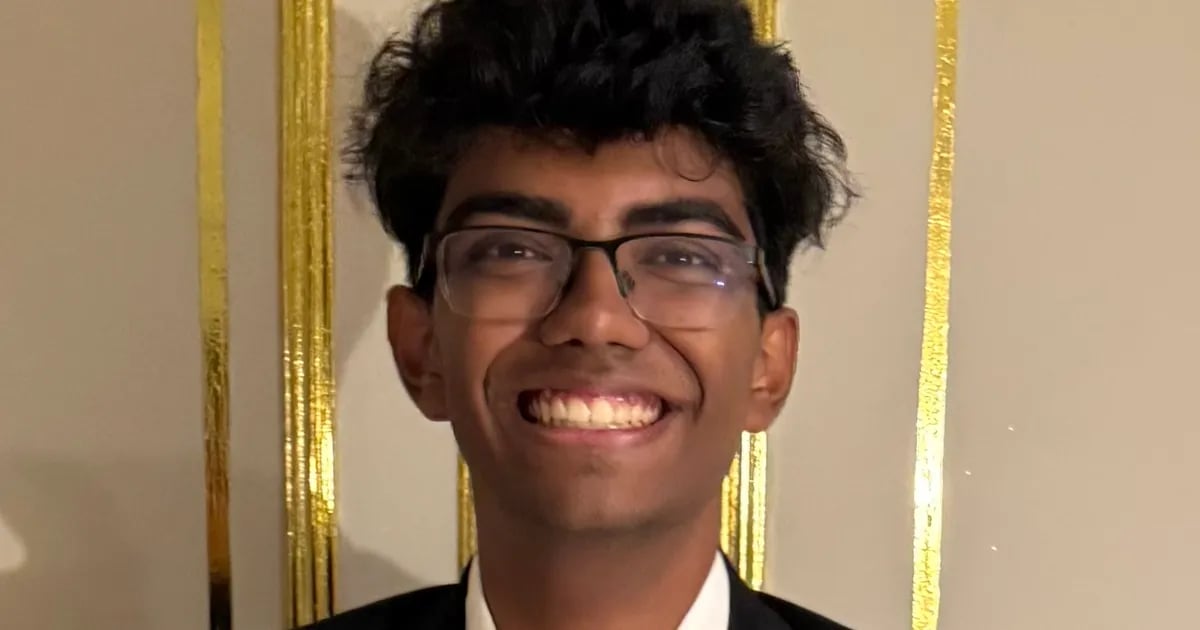

Hey, I’m Aarav Mittal, from Bangalore, India. I studied at Inventure Academy, where I did the IGCSE and A-Level boards, and I’ve always been interested in finance and math.
Right now, I am at the University of California, San Diego, where I’m pursuing a joint major in Math-Econ with minors in Finance and Accounting. One thing I really liked about UCSD, specifically, was the balance between mathematics and economics. It’s one of the only universities that gives me a really good balance between math and econ, and because it’s a joint major instead of a double major, it only requires the standard 180 credits instead of 240 required for a double major. That was one of the biggest reasons UCSD became one of my top choices.
The weather here is phenomenal, and the campus is beautiful. We’re also very close to the beach, which gives the area an almost private beach atmosphere.

My Academic Profile
UCs are test-blind, so I didn’t submit my SAT score. My academic profile was primarily based on my IGCSE results, predicted A-Level grades, extracurricular activities, and essays.
For IGCSEs, I took:
- Physics, Chemistry, Biology, and Extended Mathematics, Computer Science, Hindi Second Language, English Language, English Literature, and Economics
In my total of nine subjects, I scored eight A*s and one A.
For A-Levels, my subjects were:
- Mathematics, Further Mathematics, Business Studies, Accounting, Economics, and AS Level English
My predicted grades during my application were 2 A*s and 3 As
As an international student, I also had to take the TOEFL IBT. Honestly, I was way more stressed about it than I needed to be. People had hyped it up a lot, especially online, where you get advice from people with completely different backgrounds and levels of English exposure. However, once I actually took it, it was straightforward. It was online. As someone who grew up speaking English, it was genuinely not something I needed to worry about.
I scored 112/120.
The threshold you generally need to meet for TOEFL IBT is a score of 105+, with a minimum of 27 in each component.
Building My UC Application
One thing about the UC application is that you can list up to 20 extracurricular activities. Most people struggle to fill those spots. I had the opposite problem. I had 27 activities, and had to shorten them down to 20.
My school’s college counselor helped me a lot with this. We made a huge spreadsheet of:
- Experiences
- Stories
- Activities
- Personal qualities I wanted to show through my application
I wasn’t trying to tailor myself to one specific UC campus because it’s one application that goes out to as many of the nine different schools you want to apply to. Instead, I focused on showing the strongest and most authentic parts of myself.
I didn’t want to have 10 experiences that have leadership in them, but five strong ones, and then the other ones to dissect other parts of my identity.
I also took a more relaxed approach to writing the activity descriptions. I chose not to rewrite each activity section a bunch of times. I wrote it out once, and I was like, yeah, this is something that depicts me.
The Extracurriculars That Mattered Most
A few activities became the core of my application.
Student Council
I portrayed my leadership role in the student council as two separate entries:
- One focused on day-to-day operations and leadership
- Another focused on a specific initiative I spearheaded
Music
Music was another major part of my profile. I play multiple instruments, and I split this into two activities as well:
- One about my personal passion for music
- Another about performing in school bands, organizing events, and teaching peers
Finance and Business
I also worked at an NGO startup as Head of Finance and completed several internships related to business management and economics.
What mattered most was showing range.
I had a wide variety of experiences.
At the same time, I also included simple hobbies. I talked about watching sports and casually playing with friends because I wanted to show I wasn’t just some robot trying to check off boxes of what I thought a college wanted to see.
They want to see that you’re a normal person with hobbies and passion.



Writing the PIQs
For the UC Personal Insight Questions, I did not avoid repeating extracurriculars entirely.
I wouldn’t say it’s necessary not to repeat something in your ECs because they give you a very limited space to talk about them when you are listing them initially.
Instead, I used the PIQs to zoom in on specific moments or challenges within those experiences and more personal ones.
For example:
- I wrote about resolving conflicts in the student council
- I discussed personal hardships and family issues
- I expanded on meaningful moments rather than just describing the activity itself
Don’t just use up a PIQ to convert a 20-word sentence into 200 words. It needs to be less descriptive of the activity itself and more to showcase the best version of yourself.
Exploring Math-Econ in High School
Two internships really shaped my interest in economics and finance.
Working at Yulu
I interned at Yulu, a prominent Indian shared electric micro-mobility service designed to solve last-mile connectivity and reduce urban traffic congestion and pollution. I worked with the product team on pricing analysis.
For around a month and a half, I surveyed delivery partners about their satisfaction with Yulu’s services. Based on both qualitative and quantitative data, I created financial models and pricing strategies.
At first, I wondered how much impact my work could actually have.
Surely this huge startup is not going to take my word as sacrosanct.
But I ended up loving the experience because my mentor, who was the Product Head, was extremely involved and supportive. One of the coolest parts was comparing my findings to the company’s actual research.
You get to compare findings with people who are actually in the industry.
Bhawani dairy
Another major experience was working with Bhavani Dairy, a dairy and ghee manufacturer in North India.
I observed dealer and retailer meetings before peak season and analyzed around 240 separate interactions. Using that information, I created forecasting models and revenue projections for an entire quarter.
Again, what stood out most was comparing my work with experienced professionals. My numbers weren’t aligned with the CFO, but they were on similar grounds. That process of asking why professionals approached problems differently became one of my biggest learning experiences.
The Visa Process: Honestly Terrifying
Applying for the F1 visa last year was stressful.
I got my appointment before the shutdown, but the appointment was for after the shutdown. Everything kept changing. I was also the first among my friends to interview after the new regulations came in, including social media screening requirements.
I had to do what I can only describe as a complete digital cleanup. I had to do a deep scrubbing of my online presence. Then came the interview itself. Standardized questions, same old same old.
But immediately afterward, I received what looked like a rejection slip. I was escorted out, and I was confused, asking, ‘Hey, what does this mean?’ But to no avail.
It turned out to be a temporary rejection pending social media review, but nobody explained that at the time. That was terrifying. I had already gotten into Ashoka University as a backup option in India and only withdrew after my visa finally came through, one month before university was supposed to begin.
My Biggest Advice for Visa Interviews
Don’t stress yourself out, but also don’t take it too lightly.
I organized every single document into labeled sections:
- University documents
- Academics
- Identity proofs
- Financial statements
- Proof of ties to India
I memorized my folder by heart.
I knew what everything was because I knew that in that moment when I’m asked a question, I don’t want to blank.
One really useful thing my parents did was sign an affidavit confirming they would financially support me throughout university. That helped avoid unnecessary confusion during the interview.
Most importantly: Be completely transparent. If they feel like you’re lying, they will ask the right questions.
My First Year at UCSD
I genuinely love UCSD.
I could honestly be an ambassador to India for UCSD.
That said, the academic transition was intense.
One thing I strongly recommend is researching how your curriculum transfers into college credits. My A-Levels gave me a lot of credits (60 specifically), so I entered with advanced standing and got pushed into higher-division classes immediately.
That was difficult because I was simultaneously:
- Adjusting to a new country
- Trying to make friends
- Learning the campus
- Managing intense academics
And then there’s the quarter system.
The quarter system is not your best friend.
At UCSD:
- Each quarter is 10 weeks
- Midterms can start as early as Week 3
- Finals happen in Week 11
I’ve had midterms a week before finals.
The pace is relentless, but it’s also rewarding because you get exposed to far more coursework than students in semester systems often do.

Opportunities at UCSD
One thing I learned very quickly is that at a huge public university, opportunities are entirely dependent on initiative. You get back exactly what you give them.
There are:
- Finance clubs
- Consulting organizations
- Trading groups
- Research labs
- Music communities
- Cultural organizations
But nobody is going to come looking for you. You have to take every opportunity that you can.
I joined a research lab even though I never saw myself as someone interested in research. I also explored music communities and even auditioned for an acapella group. I didn’t get in. But what matters is that I tried out.
That willingness to explore makes college far more rewarding.
The Social Life at UCSD
UCSD has a reputation online for being “the socially dead UC,” and honestly, I was worried about that before coming in. The internet makes it seem like everyone is an academic weapon that stays locked in their room, studying all day.
But that really hasn’t been my experience. You just have to do more outreach to find the right people.
There are plenty of communities for international students:
- Indian Student Association (ISA)
- South Asian clubs
- International student groups
- International housing communities
Next year, I’m actually moving into International House, which is specifically designed for students who want more cultural exposure and community.
One thing I would strongly recommend to incoming students is to put themselves out there early.
In the first two to three months, everyone is trying to do everything, and everyone’s trying to meet people. You need to catch that wave.
Once social circles solidify, it becomes harder—not impossible, but definitely harder—to break in.
Final Advice
One thing I’m genuinely grateful I did before coming to college was reaching out to people online.
There are always Instagram pages like UCSD Class of 2030, UIUC Class of 2030, among other similar student networks.
Talk to people before you arrive. It makes the transition much easier.
At the end of the day, applying abroad, moving countries, and starting university can all feel overwhelming. But the biggest thing I’ve learned over the last year is this:
The truth is, you get back exactly what you give.