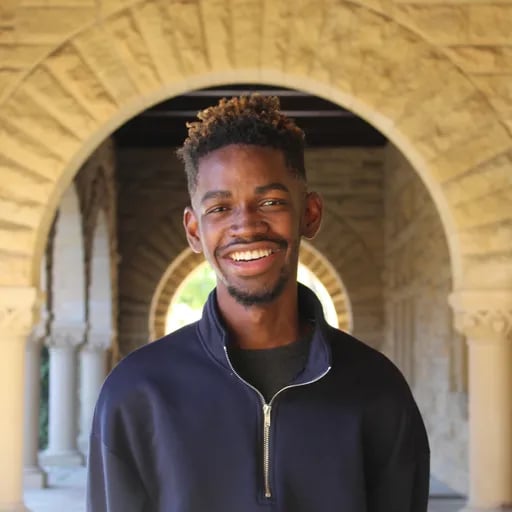

When Jonathan Shaw first arrived in the United States for college, he had to learn that “What’s up?” was not always a question.
“I was like, ‘Oh, hey, what’s up?’ And then you keep walking,” he recalled. “I didn’t expect that.”
It was one of many small cultural differences Shaw encountered after moving from Jamaica to California to attend Stanford University. But compared with some of the larger questions he had before leaving home- how he would adjust to a new academic system, what college life would be like, and whether his experiences in Jamaica would translate to a U.S. university- the phrase “What’s up?” was a relatively easy one to figure out.
Shaw was born and raised in Jamaica, where he attended school through Grade 13. During his final years of high school, studying abroad gradually became a possibility. Students from his school who had graduated before him talked about universities such as Harvard, Yale, Stanford, Oxford, and the University of Toronto.
“At first, those sound interesting,” Shaw said. “Maybe it’s for me. Maybe we’ll find out.”
By Grades 11 and 12, he began seriously researching universities abroad. He eventually applied to schools in the United States and Canada, ultimately being accepted to Stanford through Restrictive Early Action.

Looking for academic freedom
One of the biggest reasons Shaw wanted to study abroad was the opportunity to explore academically.
In Jamaica, he explained, many universities require students to apply into a particular program and spend much of their college career completing its requirements. Stanford offered something different: students could enter as undergraduates without applying to a specific major or school, giving them room to explore different fields.
Shaw already knew that he enjoyed biology and subjects related to it, but he did not want to decide immediately exactly what his academic path would look like.
“I really wanted to go to a place where I didn't have to say, ‘All right, I will go to this. I'll get into this school, yes, but I'll be in this program and I'll have to take this class, this class, this class,’” he said.
At Stanford, that freedom introduced him to fields such as computational biology and bioengineering. The opportunity to conduct research and learn from faculty was another attraction. Shaw was also interested in meeting students and professors from around the world, something that fit with his interest in international experiences.
For him, studying abroad was less about leaving Jamaica behind and more about gaining the freedom to explore possibilities that were harder to access at home.
Applying from Jamaica
That process came with its own challenges.
One of the biggest was explaining Jamaica’s education system to universities abroad. Rather than following a K–12 structure, Jamaican students can continue through Grade 13, with differences in coursework and examinations compared with the United States.
Shaw also took the Caribbean Examinations Council, or CXC, examinations. Explaining those qualifications and the opportunities available to him required context from his school and admissions officers.
Fortunately, Shaw said his Stanford regional admissions officer had experience with CXC, while his guidance counselor was able to explain the Jamaican education system and his academic background.
Access to extracurricular opportunities was another difference.
At Stanford, Shaw encountered students who had participated in extensive research as early as Grades 9 and 10. In Jamaica, he said, opportunities for high-school students to work in university wet labs were generally much less accessible.
Instead of treating that lack of access as a reason not to pursue his interests, Shaw looked for other ways to explore them.
“You have to say, ‘All right, how can I explore my interests? How can I make a difference in a different way?’” he said.
That meant finding alternative ways to learn about biology and other subjects even when the conventional opportunities available to some U.S. students were not available to him.
Leadership before Stanford
Much of Shaw’s high-school experience centered around leadership.
During his senior year, he served as head boy, a leadership position in the British-style school system that is roughly comparable to the lead student or prefect. At his school, he helped lead around 100 prefects, coordinating schedules and duties while working with administrators and students. The role also taught him how to think on his feet.
Sometimes, Shaw said, a school administrator would ask him to give a vote of thanks at an event with little or no preparation time. Other times, events would not go according to plan, requiring him and his team to adapt.
Those experiences became useful preparation for college.
He was also involved with his school’s environmental club, Green Generation, and its Medics Club. Through Green Generation, he participated in activities such as beach cleanups, while the Medics Club organized CPR programs.
Together, these experiences gave Shaw opportunities to plan events, work with others, and explore interests outside the classroom.
Finding Stanford
Even with his excitement about studying abroad, Shaw had some concerns before arriving at Stanford.
He wondered what his roommate situation would be like, whether he would be able to balance academics with extracurriculars and social life, and what it would mean to navigate college as an international student.
But one thing he did not want to do was let other people’s experiences determine his expectations.
He had heard stories about difficult roommates and professors who supposedly wanted students to fail. Instead of assuming those experiences would become his own, Shaw preferred to experience Stanford for himself.
That approach shaped his perception of the university.
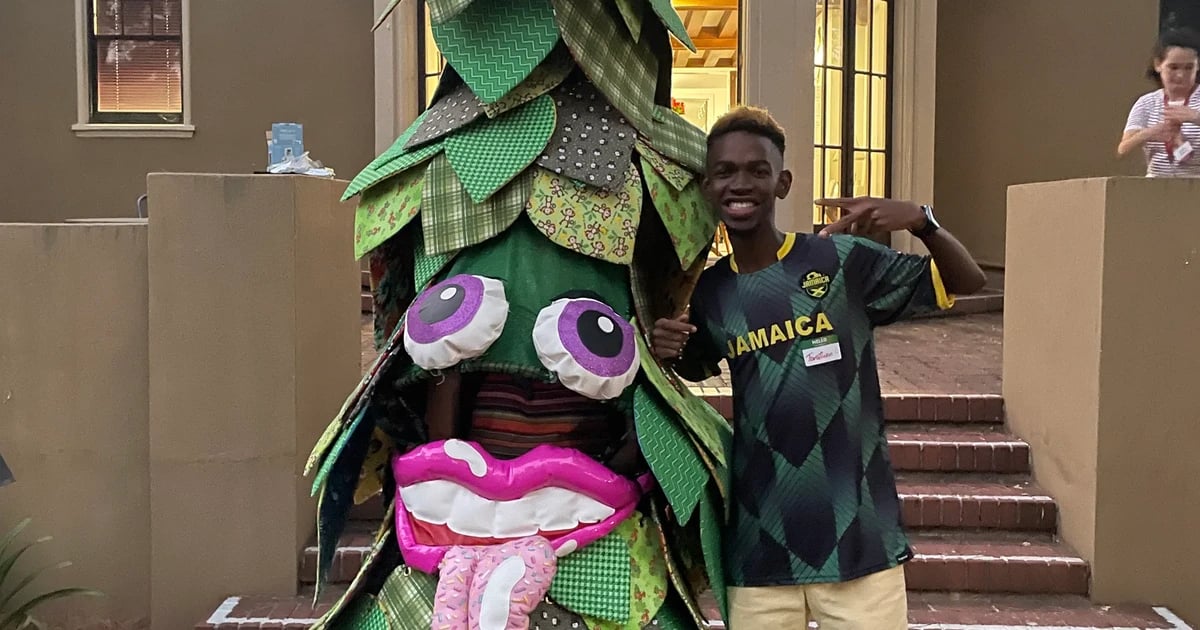
Part of what attracted him to Stanford was not simply its academics, but its culture. He became interested in traditions such as Big Tree, Stanford’s unofficial mascot, and the Leland Stanford Junior University Marching Band, which is known for its unconventional costumes and performances.
He also enjoyed the university’s emphasis on having fun alongside serious academic work.
“There’s a saying that Stanford students take their work seriously, but they don’t take themselves too seriously,” Shaw said.
For Shaw, that balance mattered. He wanted an academically challenging environment, but he also wanted to enjoy being a college student.
Adjusting to a new culture
Moving from Jamaica to the United States also changed Shaw’s expectations about university culture.
Before arriving, he had heard descriptions of elite universities as highly competitive or “cutthroat.” His experience at Stanford was different.
He said that students he met were supportive of one another, celebrating each other’s successes rather than treating classmates as competition.
“If you succeed, if you get that internship, if you pass that class, if you do very well, everyone you know is there to support you,” he said.
The adjustment was not always complicated. Sometimes it was simply learning small pieces of everyday American culture, like understanding what someone means when they casually ask, “What’s up?”
After enough conversations, Shaw learned the answer.
Now, he uses the phrase himself without thinking twice.
For Shaw, though, the larger transition from Jamaica to Stanford has been about something much more substantial: having the opportunity to explore interests, meet people from different backgrounds, and build an academic path that he did not have to define all at once.
Studying abroad did not erase the differences between where he grew up and where he studies now. Instead, it gave him a chance to navigate those differences for himself—and to discover what he wanted from both places.