

How It All Started
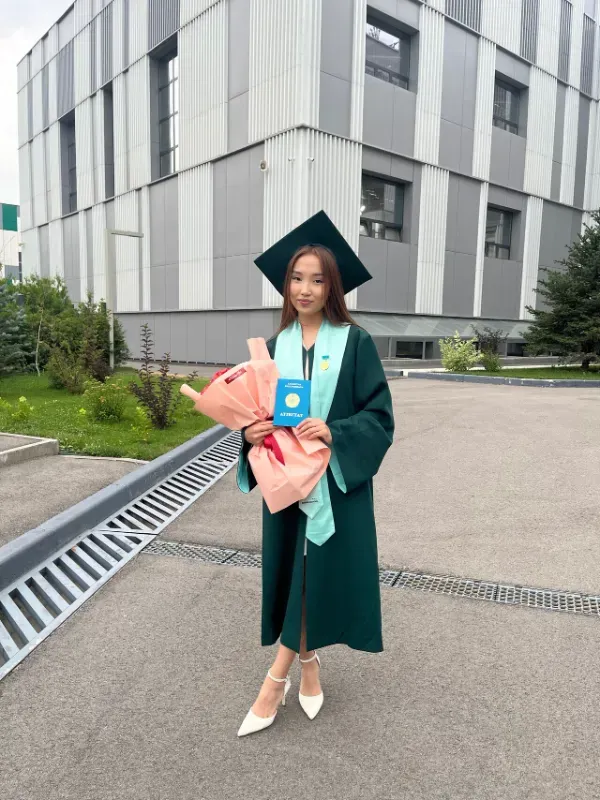
My story began in seventh grade when I started preparing for the Mathematics Olympiad and became interested in STEM subjects. At that time, I imagined myself studying mathematics at a university. In eighth grade, I received a full scholarship to Shoqan Walikhanov Private School. Although it was not an international school and we studied in Kazakh, the school had a program where they gave us a list of the top ten universities in the U.S., and if we were admitted to one of them, the school would pay for our education.
In ninth grade, I started doing my own projects and participated in programs like TechGirls and Samsung’s Solve for Tomorrow. Even though I did not win, it was a great experience, and that was when the dream of studying abroad became very real. I am the first person in my family to study abroad, so it was something new for my parents, but they supported my choice.
Why I Did Not Believe in Safety Schools
Everyone talks about safety schools, but I don’t think safety schools work for low-income international students. I’ve noticed that it’s actually harder to get into a safety school than a top-ten school if you need a full scholarship. I don’t know any international students who study at Lafayette, for example, but I know many who study at top-20 universities.
I also couldn’t apply to Europe or the UK because our system has only 11 grades, and I would have needed to complete a foundation year. They also don’t typically offer full-ride scholarships, and I needed full financial support. My only real “safety” options were in Kazakhstan.
Why I Chose UC Berkeley
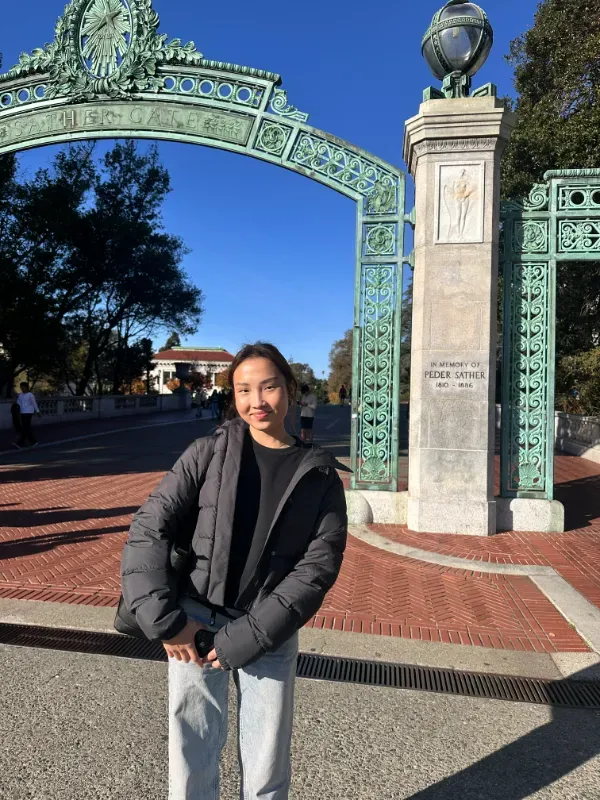
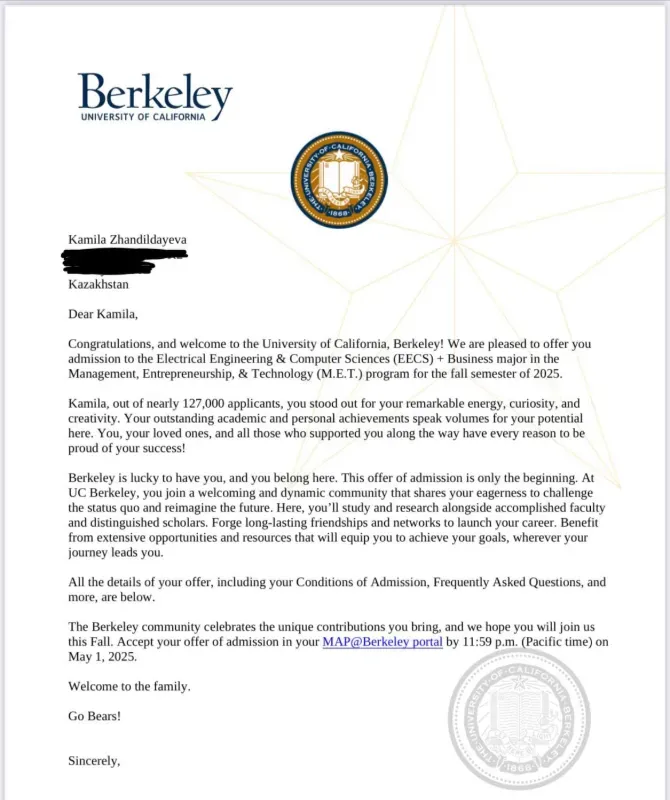
I applied to UC Berkeley through Regular Decision and received my acceptance in February. I loved UC Berkeley because of its M.E.T. (Management, Entrepreneurship & Technology) program. They accept only 50 students per year, including domestic students. Berkeley is a large university, but this program provides a small, close-knit community. UPenn has a similar program, but I think Berkeley’s engineering program is stronger. I truly believe I would choose this program over any other school.
Scholarship
My school covered all college expenses for students who got into one of the 10 universities they have identified as top schools. The list primarily included Ivy Leagues, but UC Berkeley was on it, too!
The UC Application
The UC system is different from the Common App. They do not follow the 10 extracurriculars and 5 honors format. Instead, they give 20 slots for both activities and awards. They also ask 6 personal insight prompts, and you choose 4. I focused on my projects because I like building things, and I felt like it aligned with what the M.E.T. program is about: entrepreneurship and wanting students who do things in the real world.
My Belt Project
One of my main projects was a belt that tracks baby health for pregnant women. My co-founder, who was one year older than me, had a personal story about wanting to help his mom. The belt goes around the belly and tracks temperature, heart rate, and other data. It connects to a mobile application, which I coded. Pregnant women cannot go to ultrasound checkups every day, so they can miss important signs. We wanted to solve that. We ended up receiving investment from a private clinic in Astana.
How students can start projects
When I first started, the first month felt overwhelming, but competitions helped a lot. By applying to programs like Solve for Tomorrow or TechGirls, you are forced to create presentations, videos, and slide decks. That’s how you get feedback and iterate. Nowadays, you can post on LinkedIn or Instagram and reach out to people, asking them for a coffee chat on Zoom.
Other Extracurriculars
My belt project lasted from 9th to 11th grade, until my co-founder graduated. During that time, I also joined LaunchX at the University of Michigan, where we worked in teams on a matching app for service providers. I also did Lumiere Research, where I wrote a 15-page paper analyzing the Saito toolkit for fairness in workplaces, education, and healthcare. My mentor was a professor from South Wales University in the UK. Then I did Ladder Internships and worked at FinanceGPT, where I was a software intern working with engineers, doing front-end development and building Python dashboards for financial analysis. Lastly, I mentored children in coding. They were fourth or fifth graders and very young but engaged.


My Test Scores
My IELTS score was 8.0 and my SAT score was 1490, with 790 in Math and 700 in English. Math was easier because of my background, and SAT English was harder because it focuses on critical thinking. IELTS reading feels easier since it is pure English, while the SAT requires logic, understanding arguments, and strong vocabulary. I studied for the SAT every day for around three hours while also managing schoolwork and projects.
How I met my mentor and why mentorship matters
I worked with Max Doyle from Luminary Education, who played a huge role in my journey, and we are still in touch. I honestly think everyone should have a mentor. Because of experience, a mentor knows things you do not know and is able to guide you. Nowadays, social media is full of misleading stories and advice that should not be blindly followed. A mentor like Max helped me navigate the real admissions process, shape my story, and polish my essays.
My advice for applicants
- Not everyone can afford a mentor, so reach out to students at universities you like. Some ignore you, but some help.
- GPA matters. Even if you have strong projects, your GPA still shows discipline. High school is easier than college, so if you cannot focus in high school, they will think you cannot handle college.
- I know that you see stories of people getting into top schools with low GPAs or no SAT. Keep in mind that many are US citizens or simply outliers. Berkeley is a state school, and 90 percent of students are from California. International students should not compare themselves to these cases.
- Be wise when choosing schools, especially ED. Acceptance rates for domestic students may be high, but for internationals, they can be 5% or zero because of financial aid.
- If you do not get enough financial aid, you can reach out to local companies or businessmen in your country.

How is college going so far
My first week here was exciting but also a little sad. After the orientation, it quickly hit me that I am alone, my family is far away, and I have to figure everything out myself. But the college has strong support systems, mentors, and advisors. I am also 17 because I completed only 11 grades, so I am younger than most students.
I take many units and have classes from 8 a.m. to 6 p.m. I like having a full schedule. I usually sleep around 11 or 12, and even during break, I kept waking up at 7:30 because I’m used to it. College gives you a lot of free time, and you need to use it wisely because social life is strong, and it is easy to get distracted.
Outside of classes, I go to the gym and intern at Berkeley National Lab as a business analytics intern, where I help automate financial decisions by building Python dashboards. There are not many international students here, so most of my friends are from the US, although the international student community hosts events, which helps.
Berkeley is very nice and bigger than I expected. On weekends, I go to Berkeley Marina, which is quiet and has water and a park. The nature in California is amazing. San Francisco is close, and I take BART there for events or shopping.