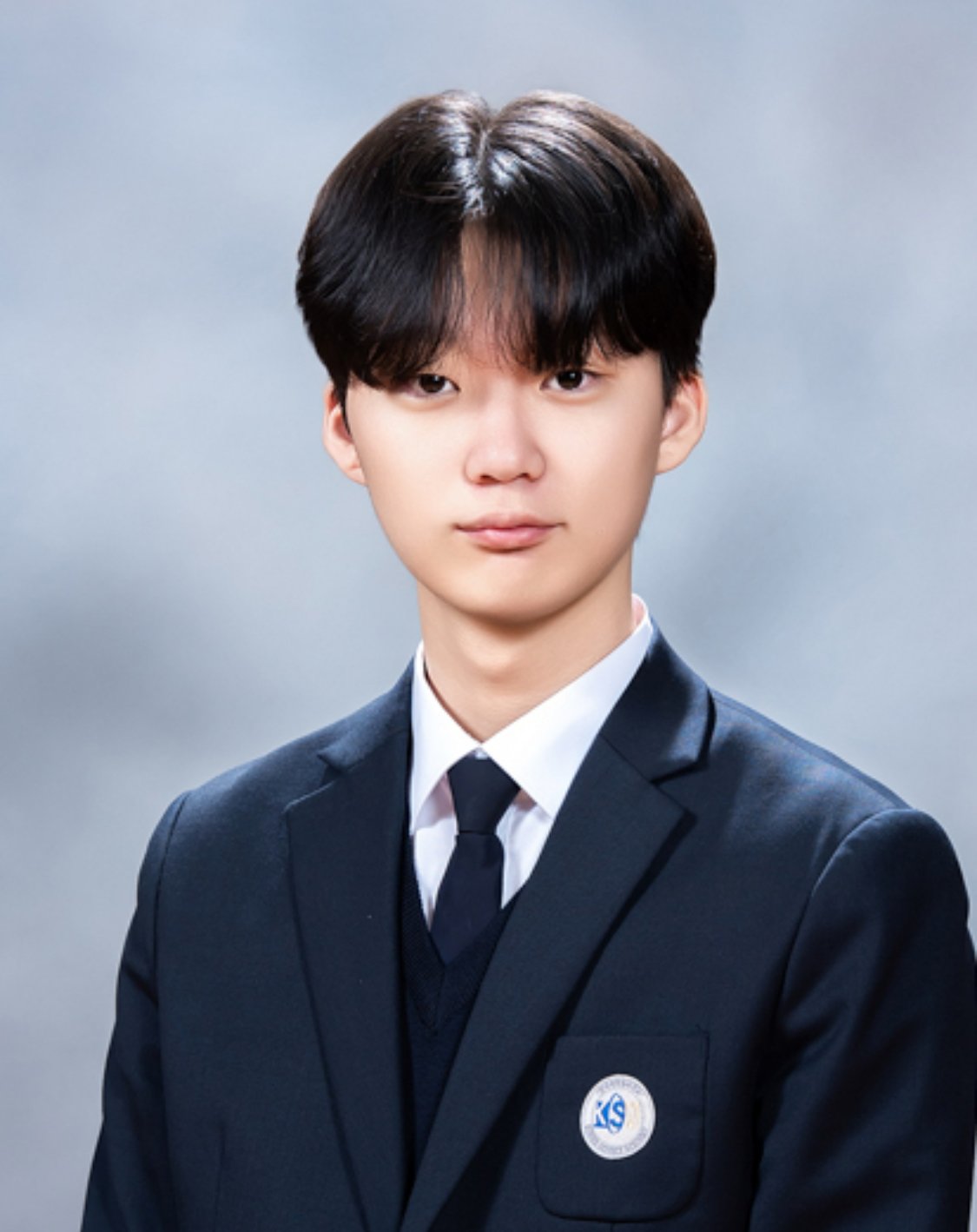

Hello, my name is Junkyu Kang, and I’m from Seoul, South Korea. I recently graduated from the Korea Science Academy of KAIST (KSA), and received an offer to study Mechanical Engineering at the University of Oxford.
From an early age, my academic journey has been shaped by curiosity, experimentation, and a deep love for engineering - particularly robotics. Looking back, my path to Oxford was not linear, but each experience helped me understand who I am as a student and what kind of future I want to build.
A Nontraditional Beginning
One of the most distinctive aspects of my background is that I was homeschooled during my elementary school years. At the time, my parents and I believed that education should not simply be about following a fixed path or aiming for traditionally prestigious careers such as a doctor or lawyer, which many students in South Korea pursue. Instead, my parents wanted to create space for me to think deeply about my life, my interests, and what I genuinely wanted to become.
That freedom allowed me to fully immerse myself in robotics, a field I was fascinated by from a young age. My passion led to a unique opportunity when I was featured on 영재발굴단 (“Talent Discovery Program”) at the age of ten as a robotics expert. The program is a nationally broadcast television show designed to discover gifted individuals across Korea, showcase their daily lives, and provide support for developing their talents. Appearing on the show not only gave me confidence but also motivated me to take my interests seriously and pursue them at a higher level.
During middle school, my curiosity extended beyond robotics into creative problem-solving. I published an origami book, blending design, structure, and engineering thinking - skills that would later become central to my academic work.
Choosing to Study Abroad
When it came time to apply to university, I applied to institutions in South Korea, the United States, and the United Kingdom. Applying to Korean universities such as KAIST felt natural, as I attended KSA, a high school affiliated with KAIST that strongly emphasizes advanced science and research.
At the same time, I was drawn to studying abroad. In many Korean universities, lectures tend to focus on professors conveying content, with limited opportunities for discussion. In contrast, universities in the U.S. and the U.K. encourage debate, dialogue, and close interaction between students and professors - an education system I found appealing. I wanted to learn in an environment where questioning ideas and actively engaging with material was not only accepted, but expected.

With this in mind, I applied to several universities in both the U.S. and the U.K. While the U.S. offers a flexible and broad academic culture, the U.K.’s emphasis on subject depth and academic rigor particularly resonated with me. Consequently, I have received an offer to study Mechanical Engineering at the University of Oxford and am currently awaiting decisions from universities in the United States as I consider the best conditions for my academic and personal growth.
Academic Profile
Academically, I maintained a strong record throughout high school. My final unweighted GPA was 3.9. I scored 1480 on the SAT, including a perfect 800 in Math, and earned a TOEFL score of 110.
In addition, I achieved a perfect score of 100 on the Physics Aptitude Test (PAT), the subject-specific admissions exam required by the University of Oxford for engineering and physics-related majors.
I also took several AP exams, receiving scores of 5 in AP Calculus AB, AP Calculus BC, AP Physics 1, and AP Physics 2, along with a 4 in AP Statistics. These courses helped build a strong foundation in mathematics and physics, which became essential for my engineering research.
Research, Competitions, and Leadership
Research has been at the center of my extracurricular activities. I participated in numerous national and international competitions, earning recognition across multiple fields of engineering and physics. I received a Silver Medal at the Samsung HumanTech Paper Award, one of the most prestigious research competitions in South Korea.
Moreover, my research on migrational wind turbines earned a Gold Medal at the Korean Science and Engineering Fair, as well as a Bronze Medal at the International Green Reach Olympiad. I also took part in YYSS (Youth International Science Fair), where I received both a semi-grand prize and a gold medal. Several of my research projects were later published in technology-related journals.
Additionally, I won a Gold medal at the Korean Youth Physicist Tournament and received the 대한민국 인재상 (Korean Talent Award), an honor given to students who demonstrate exceptional potential and achievement throughout their high school career.

Beyond research, I took on leadership roles. I served as the leader of my school’s badminton team and founded an engineering jams club that grew from just five members to over eighty students. I also co-founded GAON, a group that provides free robotics education to low-income immigrant children in South Korea. One of the students I’ve mentored went on to win a gold medal for his own research project - an accomplishment that remains one of my proudest moments.
Essays and the Application Process
In my college essays, I focused on my experiences in international physics tournaments and the research projects that shaped my intellectual growth. For my personal statement, I wrote in a technical and academic tone, carefully explaining the concepts and core ideas behind my migrational wind turbine research using engineering jargon.
To be honest, time management was one of my biggest challenges. The U.K. application process took about four months in total, with additional time spent applying for scholarships. Also, during my second year of high school, I struggled to balance school responsibilities, training camps, part-time work, and recovery from a knee injury, which affected my GPA. Thus, through the application process, I learned to prioritize tasks case by case rather than trying to do everything at once.
I primarily relied on guidance from school teachers and a study-abroad center in Korea, which helped me structure my essays and prepare application materials.


Costs, Scholarships, and Financial Planning
The total cost of attendance at Oxford, including tuition and living expenses, is approximately 180 million KRW. Because of this, I’m actively seeking scholarships and financial support, both from Oxford and from organizations in South Korea.
While I cannot recall the exact cost for the application process, it was roughly around $100.
Advice for Future Applicants
One thing I wish more applicants understood is how different admissions processes are across countries. For U.S. universities, storytelling and unique personal narratives are crucial - you are expected to present a cohesive story about who you are. In contrast, U.K. universities value depth of academic knowledge and subject-specific passion more than personal branding. Understanding these differences early can make the application process far more effective.
Junkyu’s journey shows that there is no single “right” path to a top university. Through curiosity, persistence, and a willingness to explore beyond conventional boundaries, he carved out a future that reflects both his passion for engineering and his commitment to meaningful impact.