

Background & Life Before Moving to Canada
Hi! My name is Rama. I lived and went to school in Ghana and Senegal for most of my life. Moving to Canada was definitely different, as both the curriculum and environment are very different from what I was used to back home. When I moved to Canada as an international student, people were welcoming, although not overly so. Navigating the lifestyle here was difficult, but not an overwhelming change, since Ghana was not my home country.

I decided to study abroad because I am the type of person who wants to see more of what the world has to offer. I also wanted to experience a different educational system. Although Canada was not my first choice, I found that its curriculum here is more appealing than the one I experienced in Ghana.
Before deciding to study in Canada, I considered the United States. As someone interested in majoring in law, I wanted to understand the legal system of any country I might study in, because I could study law in many different places. However, I did not want to practise as a lawyer in a country where I felt the legal system was corrupt. I ultimately chose Canada because I felt its legal system was fairer in comparison with that of the United States.
I decided to attend Columbia International College (CIC), a boarding school in Canada, because, at the time, it was the only private boarding school I was aware of. I also learned that CIC offered an opportunity to fast-track my diploma and finish earlier.
Admissions & Application Process for Columbia International College
Applying to CIC was quite difficult because, as an international student, I had to provide a significant amount of documentation for my student visa.
I’m adopted, so I had to submit identification documents for both myself and my mother. I remember the adoption documents being particularly challenging because they were in French. Since my mother lives in Italy, the document also had to be signed by a lawyer there.
In addition to the adoption documents, I had to provide financial documents and academic transcripts.
Life at CIC
The transition from Ghana to Canada was significant. The cultures, educational systems, and weather were all very different. For me, Canada offered more freedom than Ghana. For example, we were not allowed to use electronics at school in Ghana, whereas in Canada, we were required to use them for schoolwork. Moving to Canada was both a mental and physical adjustment.
The student body at CIC was also quite diverse. Since the school primarily catered to international students, there were not many Canadian students. Making friends was relatively easy because we were younger, and I found it easier to approach people in high school than in university. I was able to make many friends and meet people from a wide range of cultural backgrounds.
In Ghana, there was much more homework, and the curriculum was broader overall. You were learning about a wide range of subjects. At CIC, students were asked early on what you want to study in college or university, and their courses were tailored accordingly.
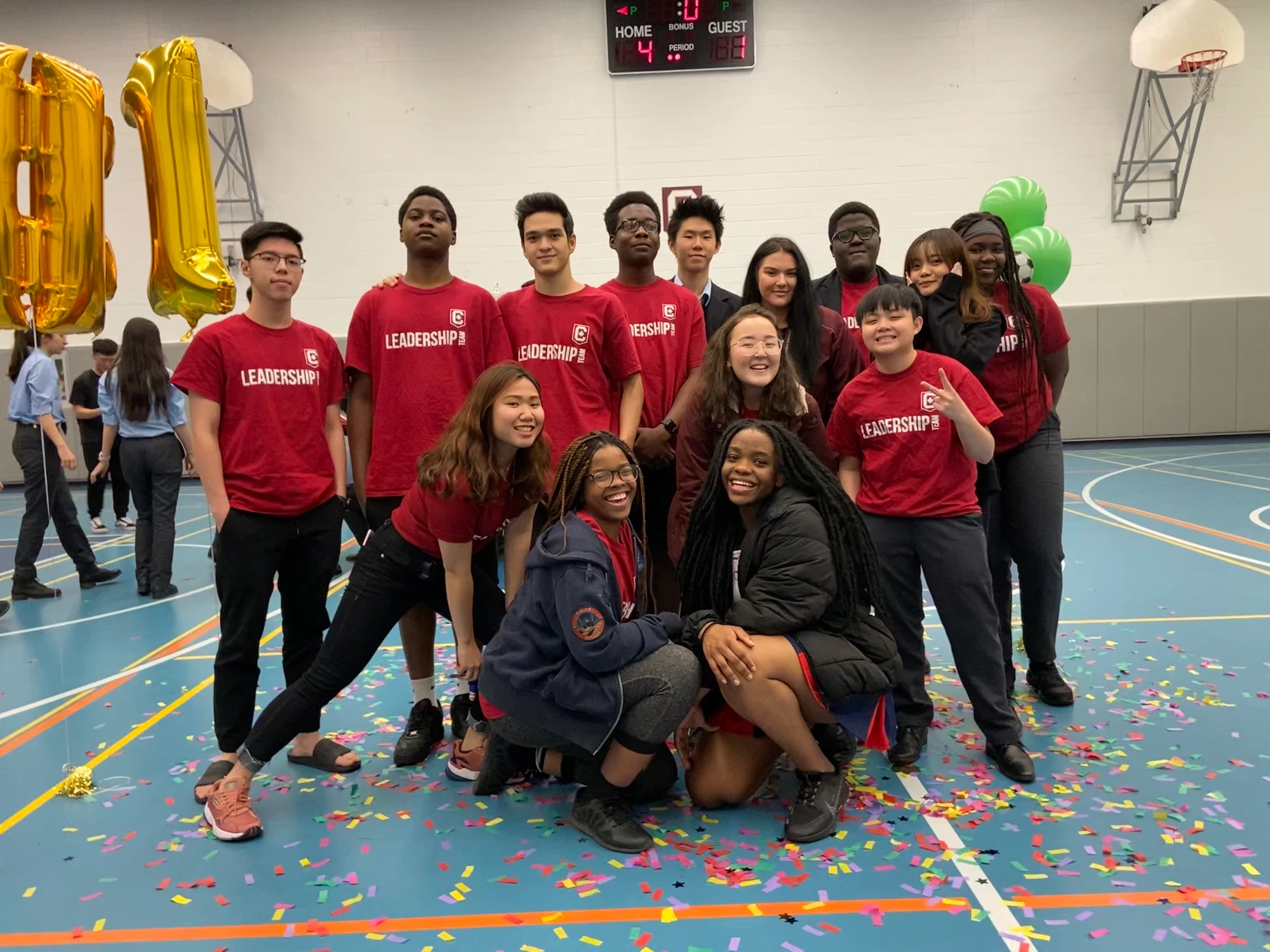
When I entered CIC in my sophomore year, I was asked what I wanted to study. Since I was interested in law, I took courses that would help prepare me for university. As a result, I did not have to take classes such as physics or chemistry. Assignments were meant to complement what we were learning in lessons.
The work-life balance at CIC was good because we still had time to socialise.
I also volunteered quite a bit while at CIC, including at a hospital and at various school events. I was an athletic prefect, so I helped set up scoreboards and make sure sporting events were running smoothly.
The Impact of COVID-19
COVID-19 was a huge turning point for me.
I used to be an extrovert. I was always going out, and I had a trip planned through a program called the Duke of Edinburgh Award, which involved hiking. The trip was scheduled just a few days before the lockdowns were announced.
We knew something was happening, but we did not expect the school to shut down. We still went on the trip, and sometime between leaving and returning, the country went into full lockdown. It was a complete switch. One moment I was allowed to go outside, and the next, I was confined indoors.
We were not allowed to be in rooms full of people or visit our friends' rooms, so we were isolated almost 24/7. I actually got sick during that period and had to go to the hospital. Because I had left the building, I was then quarantined for three weeks.
During this period, I became more introverted. I also realised that I would not have the traditional senior-year experience. There would be no prom, graduation pictures, or traditional graduation ceremony.
All of this left me wondering: What am I going to do now?
Admissions & Application Process for York University
I chose to attend York University because I believed it had one of the best law programmes in Canada. It was also relatively close to CIC and located in Toronto.
I did not want to move to Ottawa, which was further away, and I was already familiar with York’s programme. The university’s proximity to the airport was another advantage as it made travelling home easier.
When I applied to York University, I only needed my transcripts and a renewed visa. I had taken pre-college courses, and because my high school had already prepared me to study law, I did not have to write any essays or take any entrance tests.

I began speaking with my counselor around November or December, before the winter semester, and explained my university choices and what I wanted to study. Over the break, I applied to universities, paid the application fees, and began receiving responses.
Overall, the process took approximately one to two months from submitting my applications to getting an offer.
At the time, I paid $50 for each university application. I applied to 10 universities, bringing the total application cost to $500. Then I paid $400 for the visa and $150 for my study permit, meaning I spent approximately $1,050 just on application fees.
In terms of the tuition, I received a partial scholarship. Since I entered university in 2020, I believe the fees were also slightly discounted. My mother paid the remainder of my tuition, which was approximately $32,000 in Canadian dollars.
Outside of tuition, I had to budget around 2,000 Canadian dollars for rent and living expenses.
Life at York University
The transition from CIC to York University was also difficult.
I graduated from CIC during the COVID-19 pandemic, and during the first semester of my freshman year, I was not allowed to return to campus. Therefore, I had to study online.
Navigating online learning for the first time, along with everybody else, was challenging. I lost focus at times because I was not used to learning behind a screen. I was accustomed to learning in person.
When we eventually returned to in-person learning, it was still tremendously difficult. I had not interacted with people for such a long time that I developed anxiety about getting sick.
However, once things began to settle around 2022, the social difference between CIC and York University did not feel as significant as it had initially.
Social Life at University
The social life at university in Canada was not as strong as I expected.
When schools returned to in-person learning, you might have thought that people would be so eager to meet new people and socialise after COVID-19. Instead, I found it quite difficult to make friends. Unless you lived in the same residence, most people would simply go to class and then go home. They were not necessarily looking to start conversations or get to know new people.
As a result, during my first two years of university, I made most of my friends online.
The student body itself was very diverse, with people from many different nationalities and cultures. Academically, I also had a good work-life balance at York. There was much more freedom, and I was able to work part-time while also socialising.
Extracurricular Activities & volunteering
During university, I became involved in several extracurricular activities.
I started donating blood every three months through my university. Canada receives relatively few blood donations from certain communities, including people of colour, so I’ve continued donating for approximately four years.
I also joined the Application Association Alliance at York. There are many African students at the university who may not have access to counsellors who can understand or can address their specific needs, so I volunteered as a counsellor.
In addition, I participated in an initiative called Go Safe, a patrol unit that helps ensure students are safe at night. When incidents occur, the team works with the police to address them.


Closing Remarks
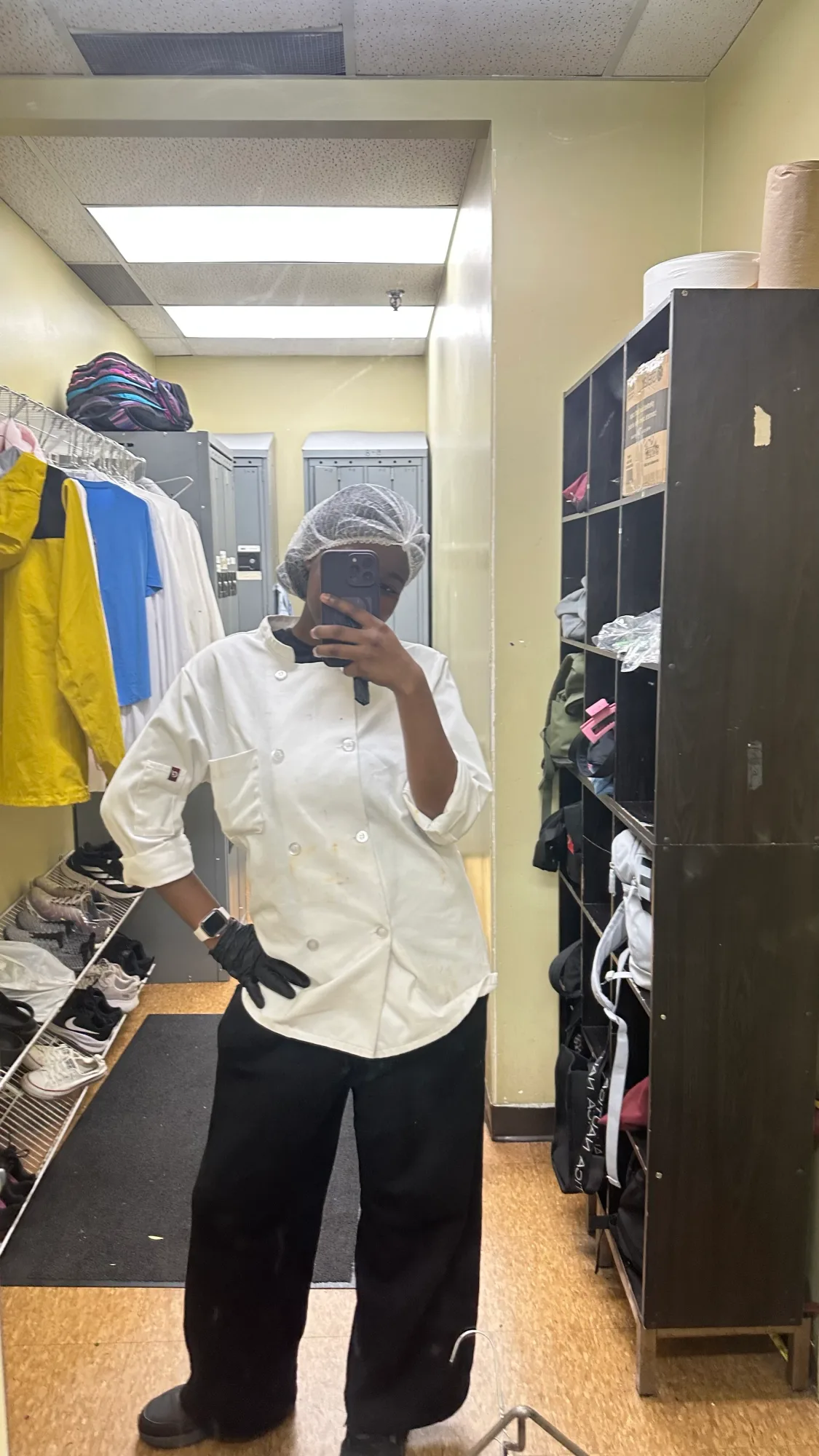
Since graduating in 2024, I have been working to obtain my work permit so that I can hopefully secure the necessary documents to get a job at the airport.
Looking back on my experience, I would recommend that anyone considering becoming an international student thoroughly research the country that they are planning to study in before making a decision.
You may end up staying in that country beyond graduation, so it is important to consider more than the high school or university itself. Prospective international students should also research employment opportunities, residency options, and work requirements before choosing where to study.