
A little bit about me
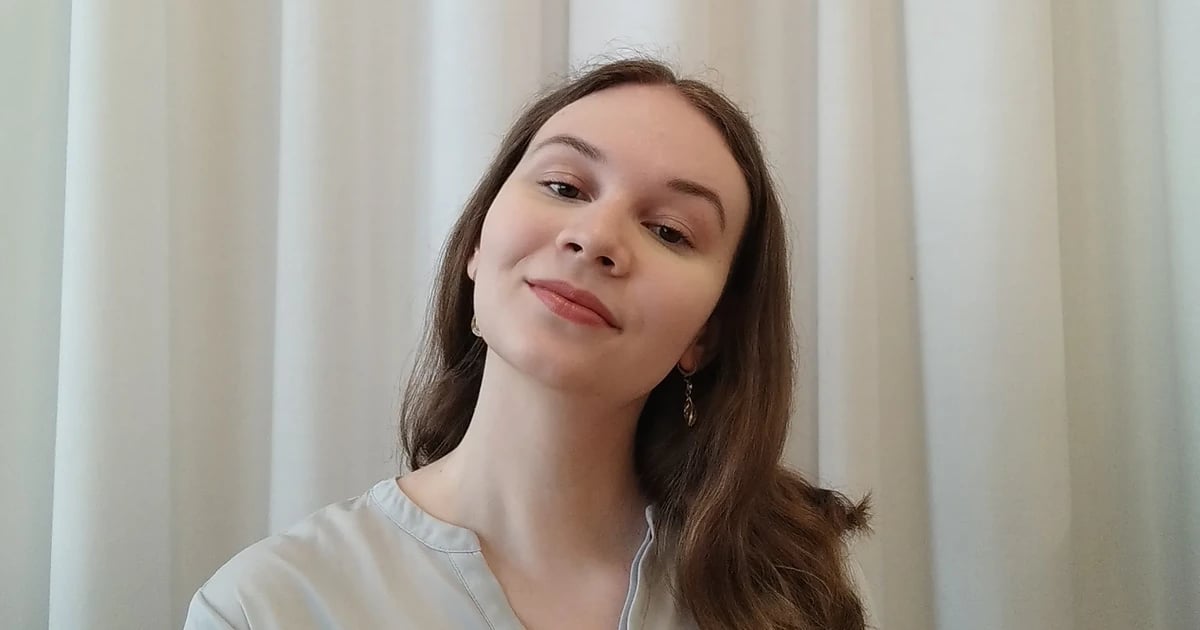
Hello! My name is Andreea, and I come from Timișoara, Romania. I attended music school throughout my entire education, from first grade to the end of high school, at Ion Vidu National College of Arts. I studied piano for eight years before switching to classical singing in high school.
Unfortunately, during my first 2-3 years of high school, I experienced the COVID-19 pandemic, which disrupted my vocal studies. Luckily, though, I had a wonderful teacher who encouraged me to make the most of the time I had left and apply to any university I wanted. That support eventually led me to Switzerland, where I pursued a Bachelor of Arts in Music, specialising in classical singing, at the Haute École de Musique de Genève.
Outside of music, I like to joke that I have the hobbies of a little old lady, as I love baking and crocheting. During my second year at university, a friend also introduced me to climbing, and I got hooked. Now, I’m officially someone who owns a pair of climbing shoes!

Why I Chose to Study Abroad
Honestly, I think I’ve always had this desire within me to leave, explore, and avoid becoming stagnant. I’ve always been driven by ambition, which is what inspired me to study abroad. I saw it as an opportunity to explore a different academic path, experience a new environment, and broaden my understanding beyond what I was already taught in Romania.
In a way, I felt I had two options: I could continue in a Romanian conservatoire, where the approach to music was more or less familiar, or I could leave and be faced with other ways of looking at things. For me, it was about opening myself up to different perspectives and creating more opportunities and paths in different directions.
Take contemporary music, for example. This isn’t a particularly controversial example; it’s just something that doesn’t receive as much attention in Romania as it does abroad, where contemporary music is much more widely explored. There’s this cliché that contemporary music is something nobody understands, but when you actually perform it, you begin to understand it; That’s the difference between trying different things, learning to understand them and opening your eyes to new possibilities for the future, versus staying on the well-trodden path.
Thankfully, my parents have always supported me. They always believed that I knew what I was doing, even if they had some hesitations about me pursuing higher education rather than entering the workforce directly. And, of course, there’s a practical side to it. When you’re a student, you must support yourself even if you’re not yet working in your field, and even after graduation, there’s no guarantee you’ll find a job. That being said, they still encouraged me to go for it.
Why Switzerland?
When choosing where to study, I applied to the Haute École de Musique de Genève and to a literature program in Amsterdam, just to see if I could do it. Funnily, I got into both!
I decided to go to Switzerland in part because I already spoke French, so studying in a French-speaking country made sense. However, for example, in France, very few music institutions offer a bachelor’s degree. They usually award other types of qualifications. And getting into those few institutions is extremely difficult, with students often beginning their bachelor’s degrees at a later age. The same is true to some extent in Geneva: I started at 18 and was the youngest singer in my year. Most of my colleagues were in their 20s.
Application Process
The application process was actually quite straightforward. I used the official website of the Haute École de musique de Genève, and I didn’t need anyone to help me because I already spoke French, and all the information was publicly available and easy to understand. Applications usually open towards the end of January, and you have until the beginning of March to submit yours, so I applied in February. I also had to write a motivation letter explaining why I wanted to study there.
As for the documents, they asked for the usual things, such as my ID and high school transcript. After I took my baccalaureate exam, I also had to submit my diploma to prove that I had passed. As far as I know, my school grades and documents weren’t the deciding factors in the admission process. What really mattered was the audition. Here’s a fun fact about Switzerland: when you enrol at university, they actually put a sticker on your baccalaureate diploma!
The audition required three pieces of my choice, as long as they met certain criteria. I had to include at least two different languages, two different musical periods, and varied styles and composers. Basically, they wanted to see that I could demonstrate some versatility as a performer. The audition itself was online, and I had to send videos of myself singing. The audition was quite easy for me, as I was able to rely on everything I had learned throughout high school to prepare.
I also had to prove my French proficiency. For a bachelor’s degree, the required level is B1. I took the DELF B2 exam during my final year of high school. I also had a Cambridge English certificate at C2. They didn’t ask me for it, but I sent it anyway.
After submitting everything, I waited until May to receive my results. Ultimately, the audition was the most important part of the whole process.
Tuition Fees and Financial Support
When I first applied, tuition fees were CHF 500 per semester, which meant CHF 1,000 per year. Since then, fees have increased, and the rise hasn’t been proportional for Swiss and international students. Swiss students now pay around CHF 700 per semester, while international students pay CHF 1,050. These new fees apply to everyone, including students who had enrolled when the previous rates were in place.
Fortunately, there are financial aid opportunities in Geneva. One example is the Hans Wilsdorf Foundation, which is a private organisation that provides financial support to students. You can apply for financial aid from your second year onwards, and the amount you receive depends on your financial needs.
The application requires quite a bit of documentation. For example, you need to provide the last three payslips from both parents, as well as documents showing their income and property taxes. In my case, this meant providing financial declarations issued by ANAF in Romania. The idea is to give the organisation a clear picture of your family’s financial situation so it can assess how much support you may need.
I haven’t had to work during my studies, as I’ve been able to get by with the financial support I receive. However, as an international student with a B residence permit, I’m only allowed to work 15 hours per week (and 40h per week during vacations), which makes finding a job quite difficult. Not many employers are willing to hire students under those conditions.
I get CHF 600 per month from the financial aid organisation, and it helps cover accommodation costs. As for food, I spend around CHF 70 per month as a vegetarian, while my friends who eat meat can spend as much as CHF 200.
In addition to the monthly financial support, I was also able to apply for one-off financial assistance during a difficult financial period. This meant that I could receive a sum of money to help me get through that particular situation, without having to pay it back or have it deducted from the monthly financial aid I was already receiving.
Finding Accommodation in Switzerland
During my bachelor’s degree, I lived in a student accommodation, although in Switzerland, student campuses are privately run rather than managed directly by the university. Therefore, finding a room was just as complicated as renting a regular apartment.
An important thing to keep in mind is that, since Switzerland isn’t part of the European Union, residence permits are an important part of the process. In my case, I didn’t have any kind of Swiss residence permit because I hadn’t even started university. And so, landlords and accommodation providers were reluctant to accept me without a valid permit. I eventually had to email the university secretary and ask her to call the person in charge of the residence and explain my situation to help me secure a room.
It was a classic catch-22: you need a rental contract to apply for a residence permit, but you need a residence permit to get a rental contract. Thankfully, I managed to find accommodation in the end. The residence had three rooms, each with its own private bathroom, while the kitchen was shared.
The Reality of Life Abroad in Switzerland
My First Culture Shock
I never expected everything to be sunshine and rainbows when I moved to Switzerland, but I also didn’t expect people to be so strict about the rules. Swiss people really do value peace and quiet, since apparently, even flushing the toilet after 10 p.m. can become an issue! :))
I moved there on my own, and one of the biggest culture shocks was realising that even if you speak the language, you won’t necessarily click with everyone. I had this idea that, because I spoke French, everything would be fine and I’d make friends easily. But things turned out to be quite different. Being surrounded by people so different from the ones I was used to at home made me realize just how differently people can approach friendship and relationships in general.
Learning to Feel at Home while Being Away from Home
At first, I was pretty okay with the idea of being far away from home. However, as my studies became more demanding, I found myself flying back to Timișoara much more often. In my last 2 years, I had reached a point where I was going home about once a month.
Now, during my master’s degree, I don’t feel the same need to go home as often. I think studying and living abroad eventually matures you enough to be okay with the certain changes that are happening. You also get to know yourself better and understand exactly how much contact with home you need to feel connected without feeling like you have to be there all the time.
One thing I definitely haven’t gotten over is the weather. During my bachelor’s degree, it felt like it was constantly raining. You know that classic Western European weather? Rain, rain, and more rain. :))
But beyond the weather, what I really miss is my family and, especially, my dog, Mimi. She’s an eleven-year-old Bichon named after Mimì from La Bohème.
What Studying at a Swiss Conservatoire Is Like
When it came to classes and professors, I experienced a bit of everything. Most of the teachers who taught general music subjects were very relaxed and didn’t really make a big deal out of attendance. The professors who taught my main subjects were generally more involved. This included my voice teacher, coaches, pianists, and diction teachers. Most of these classes were also one-on-one, which makes sense when you think about it. Everyone has their own repertoire to work on and their own specific needs, so having individual lessons is much more useful than working in a group. During my bachelor’s degree, I also spent two years studying diction in four different languages: Italian, English, French, and German.
In Switzerland, grades range from 1 to 6, with 6 being the highest mark and 4 being the minimum passing grade. This was quite different from what I was used to in Romania, so it was another aspect of the academic system I had to familiarise myself with when I started studying abroad. Another interesting thing about Switzerland is that written exams can be taken in French, German, Italian, or English, regardless of which language is spoken in the canton where you study. Oral exams, however, are taken in the canton’s official language.
One thing I really appreciated about studying here was the number of projects and performances available. There are so many opportunities to perform, both as a soloist and as part of a choir, so you’re never really short of projects to get involved in. I particularly appreciated having the opportunity to gain stage experience for free. Thanks to a research project coordinated by a professor, I even had the chance to perform in Paris, which was a wonderful opportunity to gain experience.
Building a Career in Opera: What to Keep in Mind
If you’re thinking of following a similar path and pursuing a career in classical singing, I highly encourage you to stay open to opportunities.
After your studies, you could apply to an opera studio. For those who aren’t familiar with the concept, an opera studio is a specialized program where you usually work within a small group of singers, sometimes around 15 people, and focus exclusively on opera, from rehearsals to full productions. There are three main types of opera studios: independent studios, those affiliated with an opera house, and those affiliated with a university. Personally, I would focus on studios connected to opera houses or universities, especially those that offer a stipend. With independent studios, financial support can be much less predictable.
Switzerland can offer a good environment for you to develop your career, but it’s also worth exploring what other places have to offer. Germany and Austria, for example, have a strong opera tradition.
How Living Abroad Shaped Me
Looking back, studying abroad has definitely shaped me as a person. One of the biggest things I’ve learned is how to recover from difficult situations much faster than I used to. Inevitably, you’re going to face rejection, get low grades, or be faced with people who don’t particularly like you. Experiences like that teach you that you can’t always please everyone, and you must learn how to deal with it and move on. I’ve also learned to be more mindful of how I communicate and how my words might be perceived by others. Over time, I’ve come to approach different situations with a bit more thought and understanding.
One of the hardest parts of the whole experience was probably adjusting to the social life in Switzerland. People seemed more reserved, and it wasn’t easy to form friendships because there wasn’t necessarily the same expectation to communicate frequently or make plans to get to know someone on a personal level. However, around the middle of my first year, I met my partner at the time, and having someone by my side made that period a little easier to get through. It still took me about a year to find my own circle of friends, but eventually, I did.
Of course, I kept in touch with my friends back in Romania, but life was changing for all of us. We were growing in different directions, and I had to accept that sometimes, things simply change, and that’s perfectly normal.
My Advice
So, if you’re considering studying abroad, I think it’s important to understand that the experience isn’t always going to be easy or glamorous. There are definitely ups and downs, and living in another country can be challenging in ways you might not expect before you leave.
That being said, my biggest piece of advice would be to always think three steps ahead. Don’t just think about your bachelor’s degree; think about your master’s and what comes after that. Consider where you want to work, which languages you’ll need to speak, how well you think you’ll adapt to the culture and the people, and even how much you’ll be able to tolerate the weather. Be realistic about money, too: what you have, what you don’t, and what financial aid is available. What happens if you run out of money halfway through your studies? Would you have to drop out or transfer somewhere else? These are things you need to consider before making such a big decision.