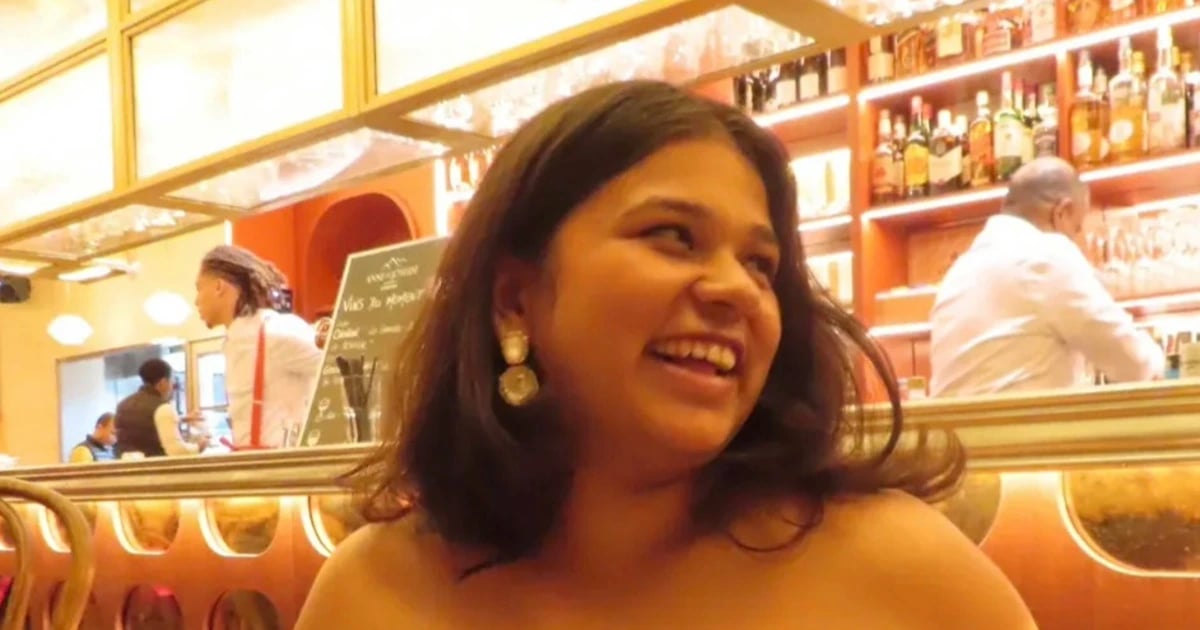
This is Dishi Dotiya, a 22-year-old from Mumbai, Maharashtra, reporting from the Paris School of Business, France. Planning on pursuing Biotechnology in college, the 17-year-old Dishi would have never imagined that changing degrees would have led to me ending up in Paris.I studied at Nirmala Memorial Foundation Junior College of Commerce & Science, affiliated with the State Board of Maharashtra, offering an integrated course in grades 11 and 12. In the senior year of high school, my subject combinations included Physics, Chemistry, and Biology, along with English.
I completed my bachelor's in Biotechnology at Jai Hind College(JHC) in Churchgate, Mumbai. I always knew the place I was in wasn't where I was meant to grow. My decision to move abroad to pursue my education stemmed from a desire to grow and discover a world outside my comfort zone, which, in my case, was on the other side of the globe. I also wanted to be the first in my family to break the mould and become a pillar of my community.

My Academic Background
- Secondary School Certificate (SSC)— Grade 10: CGPA: 9.2/10
- Higher Secondary Certificate (HSC)— Grade 12: CGPA: 6.5/10
- Bachelor of Science in Biotechnology, Jai Hind College: CGPA: 8.94/10
- IELTS: 7.0(1st Attempt)
Why I Switched Degrees and How It Led Me to Paris
My life took a major turn when my father unexpectedly passed away 2 weeks before starting my undergraduate degree at JHC in 2022. He had dreamed of seeing me pursue biotechnology.
My original plan, until July, after concluding my Bachelor's in April 2025, was to apply to German universities, as they are reputed for their science and biotechnology background and offer very low to no financial costs for accepted students; however, I couldn't make it due to the requirement for extensive academic merit and experience. By the time I reached 3 years—as my undergrad concluded—I realized I was too burnt out to commit to, and reap the benefits of, what I had actually studied, so I took the risk and changed my degree.
It was finally in August 2025 that I decided to apply to French and other European universities.
I split my career into two distinct pathways. The first followed my passion for luxury fashion, cosmetics, and branding; the second connected to my previous biotech degree.
Where I Applied To and Why I Chose PSB
I applied to 7+ universities in Germany, France, and the UK:
- All public business universities in Germany
- 3 in France, for an MSc in Luxury and Fashion Management
- 1 in the UK, for a Master's in Global Management and Biotechnology
I received acceptance letters from:
- Paris School of Business
- NEOMA Business School, France
- SKEMA Business School, France
I ultimately decided to pursue a Mast in Luxury and Fashion Management at PSB because it was the first school to accept me, and I didn't have a specific school in mind.
While my mom knew I was applying internationally, she remained critical until the end. Nevertheless, she saw that I had full faith in my decision, which gave her the confidence to stand by me and support my final decision.

Activities and Awards
Awards and Recognitions
• 1st Position – International Conference, Jai Hind College• 2nd Position– XPLORE Research Competition• Participant – National Research Scholars Meet (NRSM) 2024• Published Review Article in Peer-Reviewed Journal
Internships and Training
• Intern – ITCFSAN (International Training Center for Food Safety & Applied Nutrition), FSSAI (Food Safety and Standards Authority of India) (2 months): Assisted in laboratory research and food quality analysis• Hands-on Training: Aflatoxin, Pesticides, Antibiotic & Veterinary Drug Residues (ITCFSAN)• Basic Manufacturing Training – FOSTAC (Food Safety Training and Certification), FSSAI• Workshop – CODEX ALIMENTARIUS, CASMB (Chamber for Advancement of Small and Medium Businesses), FSSAI
My Application Process and What Got Me Accepted— US v/s France
The application had 4 major requirements:
- Academic Documents: High school and university transcripts, graduation diplomas, and certified French or English translations.
- Curriculum Vitae (CV) & Cover Letter / Statement of Purpose (SOP)
- Language Proficiency Proof: DELF/DALF/TCF for French-taught courses, and IELTS or TOEFL for English-taught courses
- Interview
This contrasts with US applications, where applicants submit standardized test scores like SAT/ACT, personal statements instead of statements of purpose (which are also required for Visa applications), and a separate activities and awards column in the Common Application.Every college also has its own supplemental essays, which are required for admission. Letters of recommendation are also required for the application in the US.
The differentiating factor in my application, which I credit with getting me accepted, was the interview round, which demonstrated my communication skills and how well I think on my feet. I received my acceptance letter after just one round of interviews, instead of the usual two rounds every applicant goes through. Even in my statement of purpose, I had to reiterate why I was a good fit for the college, why I switched degrees after my undergrad, and why I chose Europe for my master's degree—which was challenging because I had almost no experience in the field. I convinced the college that I met all the criteria they looked for in an applicant.
Resources, Time, and Opportunity Cost of Applications
I worked with an agent my friend referred, and it took me about 3 months to structure and complete my applications. I completed all the work she assigned and followed up promptly.
Application fees for each college ranged from €80 to €100 (~$90-$110).
How I tackled Language and Cultural Changes (and how you could do it too)
I hadn’t learned any foreign language in high school, so I felt it was imperative to learn French before starting a new chapter in France. I took French courses for a few months and can comprehend and write French up to the “A2” level. Because I am currently taking classes taught in English, my unfamiliarity with the language hasn’t affected my learning. However, breaking the ice, especially with the initial aloofness you may feel toward French people, makes it critical to have at least basic conversational skills.

Friendships and Support Systems in a Foreign Land
It is extremely important to choose your friends mindfully and learn to trust your instincts. There is also a factor of racism, especially with Asians in Europe. However, people will always want to help you and be there for you. I found my people five or six months into college, and they became the support systems I depended on to navigate through the cultural and language difficulties I faced.
Parisians are known for their spontaneity—most friends I have made in Paris have been met in random cafes, on the street, and at parties.

Never shy away from seemingly challenging situations, because you always learn something from them. I have been in situations that, in the moment, felt extremely punishing, but remain integral life lessons as I look back.
Student Body and Diversity
People come from all over the world—Asia, other European countries, and the Americas. If you apply to PSB, you step into a world with diverse interests and views.
Unfamiliarities in the French System
One practice I have noticed in the grading system here is that, in a group project, each student is marked based on the project done by the entire group—rather than on individual work. Therefore, one quality an applicant must possess is the ability to lead a team and divide work equitably. The French are somewhat laid-back in their work style and need frequent follow-up.
Life Outside the University Halls: Internships and Part-Time Jobs
My course mandates having an internship to validate our degrees. The college has a placement cell that helps students search for and secure internships and jobs, but we still need to put in work outside the classroom and show continued interest and dedication to on-field work and the company. I am starting an internship the following year, so I still have time to gain experience and learn new things.
I am also pursuing a part-time job, which I started in April this year, to help my mom pay for college. It is a good use of the summer months and can help me gain some real experience for my internship next year, and presumably after college.
I do not usually engage with in-college clubs, associations, or societies, as they are mainly handled and led by fellow Indians, among whom I believe there is unhealthy competition— and honestly, nothing new for me to learn, as I will be ultimately trapped in the same cycle as I was in JHC. Moreover, I chose PSB for a different kind of exposure altogether, and I want to discover a life beyond my college associations.
Using Tools Everyone Possesses
Two qualities which, I believe, every student applying to international universities must possess are networking and patience.
Networking is one of the most overlooked parts of a student’s life, and it can lead them to places they never expected. Networking with the right people can help you find that job you thought was unattainable, gain business and professional insights, and even get a head start in your career.
And patience is one quality that goes without saying in international admissions—the application process, the incessant confusion and anxiety, and finally the pressure of actually making it to a place far from home.
To all the people targeting France or international admissions in general:Keep going. Keep your head up and believe in yourself, because the only way out is through it.