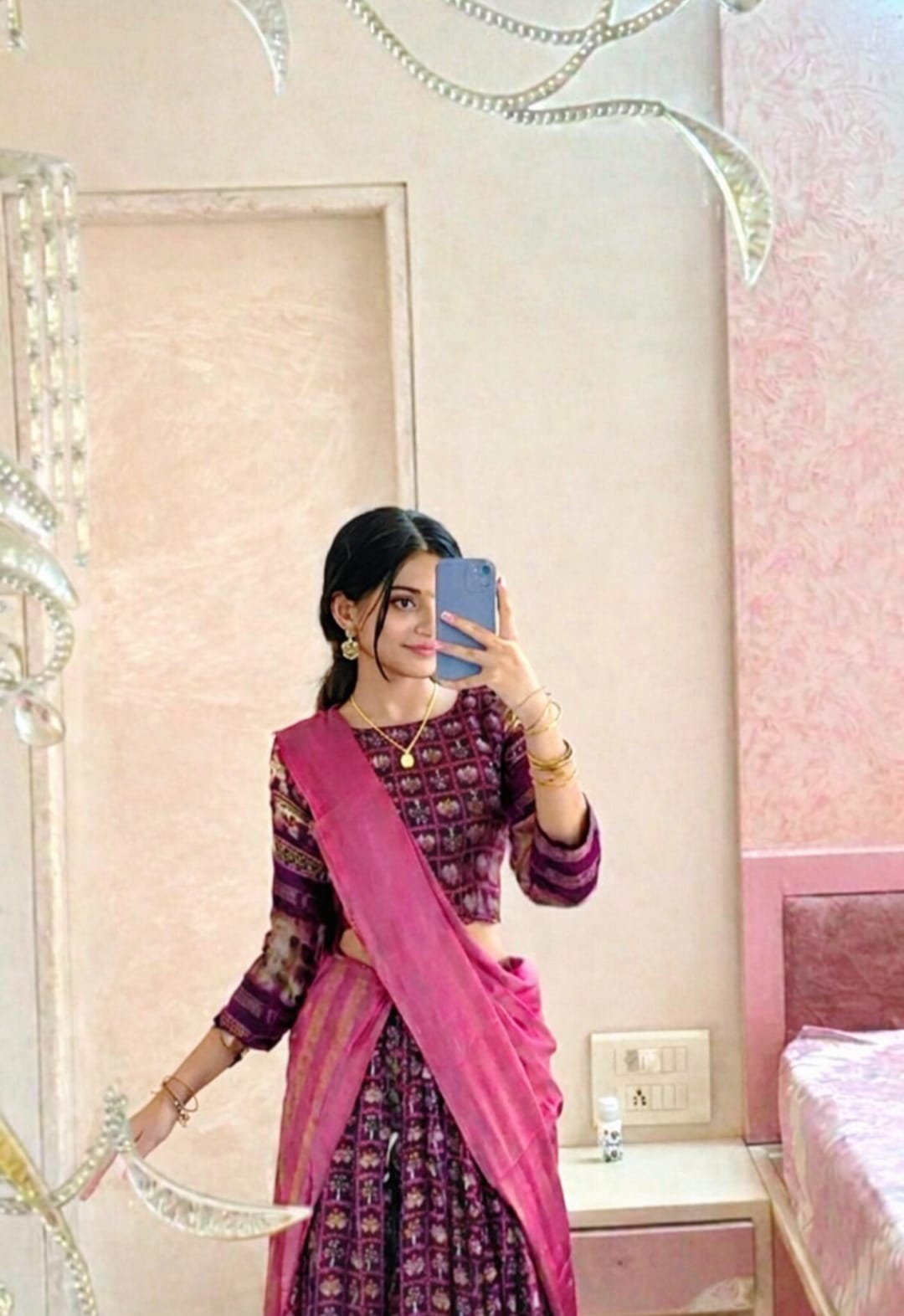

My name is Tanisha Sahu. I am a past recipient of the Asia Kakehashi Project (+) scholarship, where I spent four beautiful months in Japan as an exchange student. Looking back, hearing about how I discovered the program is actually a pretty funny story. Back then, I was really into learning the Korean language. I was a part of a Korean language learning WhatsApp group, and I guess in the month of February 2025, out of pure coincidence, someone in that group shared a link to the AFS India website for a Japanese high school exchange program. Just look at the irony. I got information about a Japanese high school exchange program in a Korean language learning group. Out of pure curiosity, I messaged the person who posted it. I asked him for the details and that person literally encouraged me to apply for the program. I also decided, "Why not give it a try?" even though a part of me thought that there was no way I could make it.
I also remember asking my mother, while filling out the Pre-Application Google Form, whether I should apply for this scholarship or not. She immediately looked at me and said, “You can do whatever you want, but please check if it's a fraud or not.”
That was so funny that it still makes me laugh at that moment, thinking about what my mother's thoughts about the program were back then. Later, when I talked to other Asia Kakehashi Project students, they told me that they found out about this program through their school and their seniors. But for me, it was pure coincidence that completely changed my life. I am still so incredibly grateful to that person who posted the AFS India link in a Korean language learning group.

Stepping into Yamagata
Before I arrived in Japan, I felt so worried and anxious about how my life would be there. I live in a nuclear family with just my parents, my sister, and me, but I was placed in a host family with seven members. This included a grandfather, a grandmother, both parents, and three host sisters. That literally made me think whether I would be able to connect with them or not.
Apart from that, I also had the thought that I wouldn't be able to adjust to the food in Japan, and I feared that I would lose a lot of weight as a result. I was also worried about the climate there.
But all my fears, tensions, and worries just completely vanished when I arrived in my host city, Yonezawa. The reality was completely different from what I had imagined. I was literally hesitating to even go outside the bullet train gate. But when I finally stepped out, there was my host family standing there, holding a beautiful signboard that said, "Tanisha Sahu Swagat Hai," written in Hindi. That tiny, sweet gesture instantly connected me with them.
Later, I also noticed that my host family had actually been learning a bit of Hindi just for me, even writing down words and pasting them on the wall just in case I didn't understand them! In the initial days, we used to talk to each other using Google Translate a lot, but later on, I naturally started understanding them. I started making conversations even with my broken Japanese. Even at school, I tried to talk to everyone around me. My classmates and teachers were so kind that they would gently correct me if I said something wrong. They completely made me feel included in each and every activity they did in the classroom.
Apart from that, I also had the thought that I wouldn't be able to adjust to the food in Japan and I feared that I would lose a lot of weight as a result.
And about the food? From the very first day, I was literally addicted to Japanese food. It was so delicious that I actually gained weight by the end of the exchange! And about the climate in Yamagata, it is so beautiful that it surprises me each and every day with beautiful scenery. I even experienced snow for the first time, and I played a lot with my host sister.

The Cycle Stand Incident
The whole point of an exchange program is to push us out of our comfort zone and into the learning zone so we can understand ourselves, our culture, other cultures, people, and identities. Even though I felt well-prepared by AFS through all of their orientations and sessions, there was one specific moment where I was pushed across the learning zone and straight into a full panic zone.
In Japan, cycle stands at stations require a pass. If your pass expires, you either have to renew it for several months or pay on a daily basis. Since I only had about 10 to 15 days left before the end of my exchange, I was paying daily. What I didn't realize was that I was required to pay twice a day, once when taking out my bicycle in the morning, and again when returning after school to park it.
One evening, I was coming back from school and was a bit behind my host sister. My eldest host sister and I go to the same school. We go together every morning and come back together every evening, but that evening I was a bit behind her. When I arrived at the station and was about to park my bicycle, the attendant who was present there came up to me and asked for money. I tried explaining in my broken Japanese that I had already paid that morning and didn't understand why he was asking me to pay again. But he kept insisting, and I became completely confused.
To make things worse, my train was already on the platform. I was so stressed at that moment. I knew that if I continuously argued with the person, I was going to miss the train, and there was no next train to get home. I would be in trouble. I was totally panicking, watching everyone around me just moving smoothly along while I was stuck. Suddenly, out of nowhere, my host sister appeared! She completely rescued me from the situation, paid the fee, and later explained how the double-payment system worked at the cycle stands.
That feeling of panic literally taught me a huge lesson. I realized that managing an unfamiliar environment means accepting that you will make mistakes, and that was where I was wrong; I was not accepting my mistakes. That moment of panic also taught me how important it is to carefully observe and learn the tiny, everyday rules and regulations of the country you are living in.
Representing India on Foreign Land
Representing India in a foreign land like Japan was a huge responsibility. Before going to Japan, I had prepared my own handmade traditional Indian paintings. I also bought Indian bags, hair clips, bracelets, and postcards from culturally rich places in India that I had already traveled to. I packed them with my own hands for my host family, teachers, friends, and even my international friends. In this way, I brought pieces of India directly to them through gifts.I had also prepared a special traditional Indian painting for my host school. I was so proud to see that the principal hung the painting right in the main teachers' meeting room. On my first day, I had to explain my artwork. During art classes, I used a translation app to explain the meaning behind it, and the teacher gave me the most beautiful compliments about Indian culture.
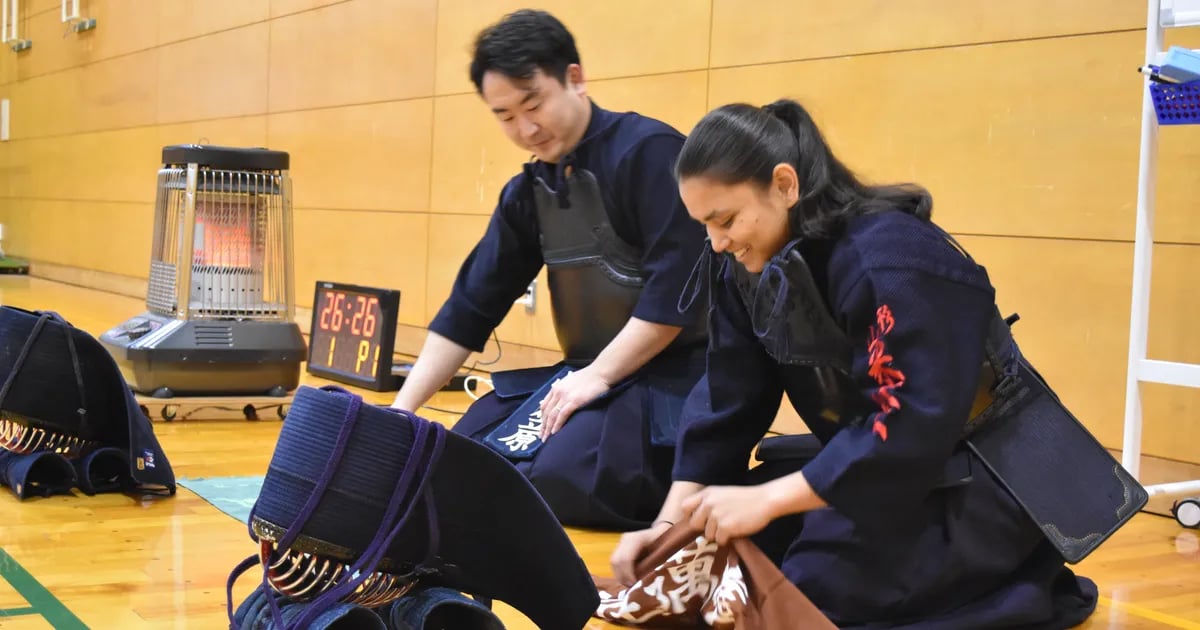
At school, during Physical Education classes, I played different sports like hurdles, javelin throw, basketball, volleyball, badminton, and soccer. Soccer is my all-time favorite sport, and it was so much fun playing and competing alongside Japanese high school students. Being a national-level Taekwondo athlete, I pushed myself to excel in every field I entered. I even joined a wide variety of sports and cultural clubs, from Kendo and Kyudo to soft tennis. I also attended the Tea Ceremony Club. I participated in school festivals, known as Bunkasai, and took part in volunteering activities with my Japanese schoolmates and host sister during different seasonal festivals in Japan. I started noticing that the people around me were amazed. They would constantly tell me how strong I was, remarking that people from India must be very strong!

Out of all these moments where I represented India, the most beautiful one happened when I participated in a local shrine festival and joined the flute-playing group. I had never touched a flute before. Believe it or not, with my nightly practice and a lot of effort, I actually learned to play the traditional flute tunes that were performed during the shrine festival in just 10 days with the help of my host sisters and the host community. Everyone around me was amazed at how quickly I learned.
After dinner every single night, my host sister and I had a shared routine. We would sit down and write about our day, what we had done and express our gratitude to each other in our notebooks. Then, the next day, we would exchange our notebooks. I would write my feelings in her notebook, and she would write her feelings in mine.

The Hardest Battle behind the Scenes
For me, the hardest part of the entire process wasn't even the interview; it was the documentation. It was completely overwhelming. The Main Application Round results came right in the middle of my final Class 11 exams. I was literally rushing from school to local clinics and district hospitals for medical tests that I had never even heard of, all while my exams were going on. To make things even harder, my parents had to go out of town during the final submission days. So, I had to handle the submission completely on my own. I stayed up all night writing my essays and the letter to my future host family. Right before the deadline, my home printer completely broke down, and I had to rush to a nearby shop in a panic just to get everything printed.
But what truly broke me into pieces was trying to get my passport. Because I was a minor, I faced rejection after rejection at the passport office. The officers kept asking for documents that were almost impossible to obtain, and because my parents didn't have passports yet, the officials bluntly turned us away. At that moment, I almost lost all hope. I knew I had been selected for the program, but without a passport, I wouldn't be able to go to Japan. I was almost ready to give up, but my parents kept encouraging me and worked tirelessly to find every possible way to help me.
There was a passport agent's office outside the passport office. That local agent charged us a massive fee, to be honest. At that time, my family was going through financial difficulties, but my father didn't hesitate. He somehow arranged the money because he wanted to make me happy. It was crazy because earlier I couldn't even get past Section A of the passport office. But after the agent made a call inside, I went through Sections A, B and C, and my passport application was accepted almost immediately. It was exhausting to feel like we had to fight so hard for something that should have been so simple.
What truly stopped me from giving up entirely was looking at my parents. Seeing how much they quietly sacrificed, negotiated and fought for me made me realize that this wasn't just my journey; it was theirs too. Their support was what kept me moving through the hardest parts of the documentation.

A message to Future Dreamers
I was once exactly where those students are right now. When I first applied for this program, I was filled with so much insecurity. I honestly thought there was no way someone like me would get selected. On top of that, we live in a society where people sometimes project their own fears and doubts onto our dreams. My parents and I had to deal with a lot of negative opinions and discouraging comments from people around us. They would try to scare my parents by saying things like, "What if Tanisha gets into trouble over there? How will both of you travel all the way to Japan to rescue her or help her out?" They painted a frightening picture, saying that everything might look nice on the outside but not be so nice on the inside. But those negative rumors are simply not true.
Also, there is no shame in trying something new. You have to shut out the outside noise and just give it a shot, because what if you do get selected, just like I did? Or what if you become the first person from your state or your hometown to do it? You absolutely do not need a perfect background, a flawless journey, or society's approval to try something. You can start completely from scratch, build your own skills, and create your own path.
Because of my experience, I actually started a YouTube channel where I now help other students applying for this program. Recently, I have met so many students who are afraid of failure or worried about what people will say. To all of them, I always say, "You don't need to fear losing. You need to fear never trying when you have the chance." Programs like the Asia Kakehashi Project, or any other exchange program, broaden our perspective far beyond the four walls of a classroom. They teach you how to become a strong individual, a compassionate leader and a responsible global citizen. Your background and other people's doubts do not define your potential. Take that first step, because everyone has the right to dream, and everyone's dreams are welcome.