Growing up, I had your typical rock band-obsessed dad. He would blast his music anytime he could, clashing with my bubblegum-pop tastes. Whilst I was listening to the newest trending songs on the radio, he would stick to his rotation of songs, probably older than I was, like "Paranoid Android" by Radiohead. Paranoid Android is one of those songs that stays in your head all the time, whether you want it to or not. The track sounded like death and felt lonely. It disturbed me so much that a chill would run up my spine whenever he played that song in the car. But as I got older, something shifted, and I grew to appreciate the song and its message. I listened to Ok Computer, the song’s album, and before I knew it, I had listened to all of Radiohead’s albums and was watching the Creep music video on repeat.
How I Picked Up the Bass
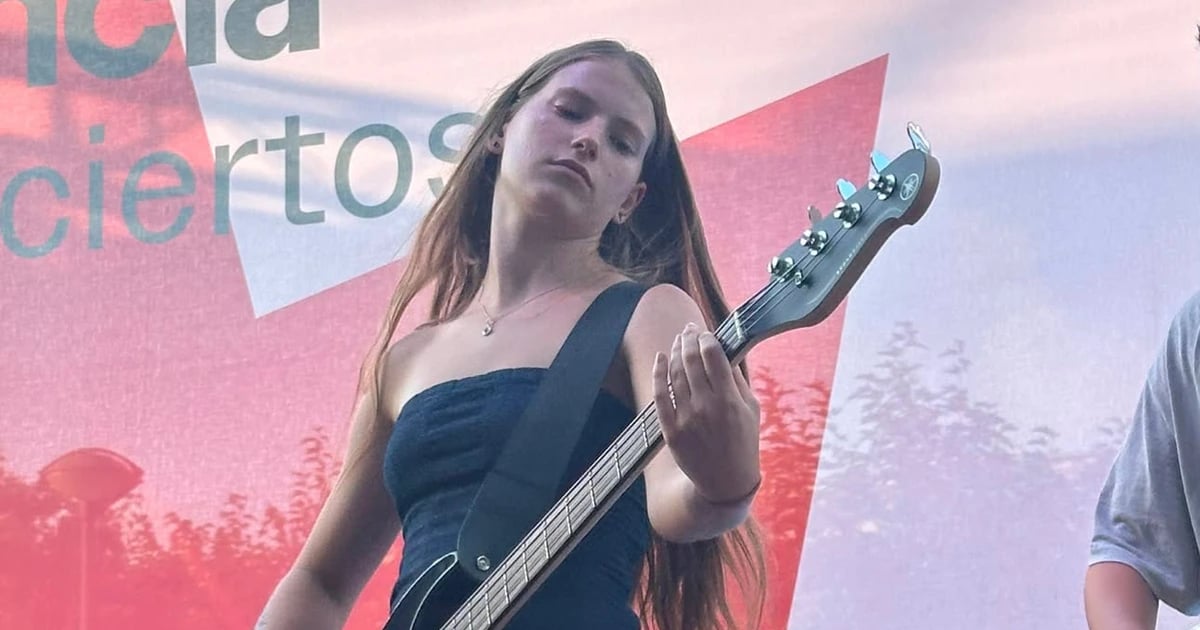
In eighth grade music class, I picked up the bass for the first time. I had played the guitar and the piano before, but I wanted to try something new. At first, my technique was horrible; my fingers couldn’t curl, and I couldn’t play the right notes. I was only messing around, but at that moment, I felt a real connection to the instrument. I’d love to be an insane guitarist or pianist, but I don’t have the same drive that I have for the bass, which pushes me to keep practicing. I decided to play more for my ninth-grade music class, and those two classes inspired me to invest in getting my own bass. Now I practice almost every day, with YouTube’s help—I even have blisters on my fingers to prove it. Luckily, I’m a part of the IB’s music class, so I have the chance to develop my skills with my music teacher’s support.

My Application Process
It’s a two-week program for teenage musicians, costing about 2500 €. Unfortunately, neither housing, food, nor instruments are included in the price. Since most of my family is Spanish, this aspect was convenient for me, since we try to visit my hometown during the summer. I believe the most important part of your application is for you to demonstrate your passion for your instrument. Berklee requests videos of you playing your main instrument and will place you in a section depending on your skills. Once you’re registered, you need to fill out some forms with your personal information. To organize the camp’s performances, they ask you to fill out a musical profile sheet (favorite band, genres, etc.).
More about the program here: https://valencia.berklee.edu/summer-programs/spp/spain-summer-performance-program
My Experience at Berklee’s Spain Summer Performance Program
My day-to-day routine resembled your average university schedule. There are three courses taught by Berklee professors offered for the program. The first class is called musicianship, where we learned about music theory; we studied rhythm, sheet music, and pitch. We also did a lot of improv, a skill I usually don’t have the opportunity to practice with such large groups. Even if musical theory isn’t my strongest suit, I enjoyed improving my skills. The next class is based on your individual instrument. The skills were divided into two main levels. I was in Bass 1, which wasn’t easy by any means, but there was also a second group, Bass 2. We covered musical genres from across the world, such as blues, and practiced pieces from some of them. My teacher brought in an upright acoustic bass, which I hadn’t ever tried before. My final course was performance class, where we practiced for the final performances. The teachers organized us into many different groups based on the musical profile sheet, to group kids with similar music tastes.
I discovered many interesting artists and tracks thanks to my performance group. We decided on three songs: Aerials by System of a Down, Would? by Alice in Chains, and Rhiannon by Fleetwood Mac. The program also allows for gaps in your schedule to take breaks and meet new people, granting us some level of independence. I had the opportunity to explore Valencia with my peers: we went to malls, tried new restaurants, and visited parks. Our last day, the performance day, was bittersweet for me. I’d had such an incredible time at the camp that I didn’t want to leave, but seeing everyone’s hard work pay off was worth it.

How My Music Lives at School
Ever since I started playing, I’ve looked for any way to integrate my passion into my schoolwork. For starters, I joined many performance groups and bands, and I’ve jumped at any opportunity to be on stage. I’ve performed at my school’s Rock in the Park (music fest), during lunch breaks to raise money for our school’s service groups, and signed up for music class in my sophomore year. I joined my school’s rock band, where we played classic rock songs with other international schools in Prague, in Czechia. I’m grateful for the skills I acquired from playing with the group—most importantly, how to perform for an audience. Next, I also directly incorporated music into some of my more academic work. In my journalism class, I chose to write articles about some of my favorite albums, Pink Floyd’s The Wall and Radiohead’s Ok Computer, and I recorded a podcast episode about the Smashing Pumpkins. One of my proudest projects was for my Grade 10 Personal Project. In the MYP (my old school curriculum), they require that by the end of tenth grade, students have led projects to create an object, improve a skill, or advocate for a cause. I chose to develop, write, and produce an anthem for the school. I spent many hours writing lyrics, designing harmonies, and recording instruments to produce a song that will hopefully outlive my legacy at my school.
My Dreams for my Future
One of my strongest aspirations in life is to create, especially in an age when AI is threatening artists. When I listen to music, I love stripping down layers of vocals, chords, and beats to interpret the artist’s message. One of the reasons I love Radiohead so much is that their music is quite complex, whether it's the emotions poured into their contrasting melodies or the arrangement of the instruments. Ultimately, that ability is what makes their music so compelling for me. I want to be able to write music like Radiohead. In addition, I wish that there were more female representation in alternative/rock music. There are so many female voices that deserve to be heard in this patriarchal world. One of the most talented songwriters I listen to, Björk, is definitely underappreciated compared to her male colleagues. Even this summer, I noticed how male-dominated the camp was. The music industry should never prioritize one gender over another.
My Advice for Musicians
In this digital era, I’m tempted to criticize artists, since I’ve developed such specific tastes. But one of my ensemble teachers at Berklee reminded me that we have the privilege to be part of an incredible music community that is varied yet beautiful. Music taste will always be subjective. One song will resonate with at least one person, and that’s enough. I believe that we should be open to any music. You never know what type of music or artist will speak to you.