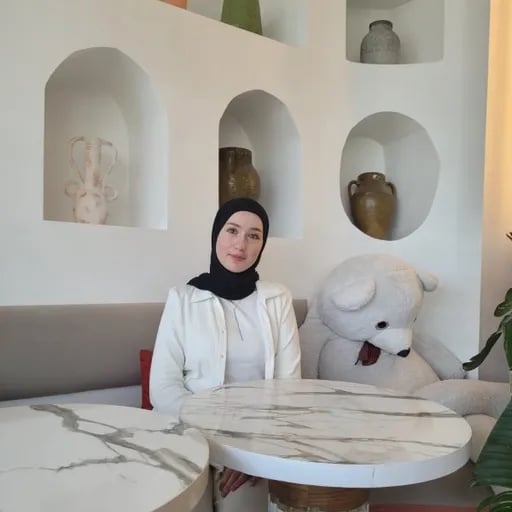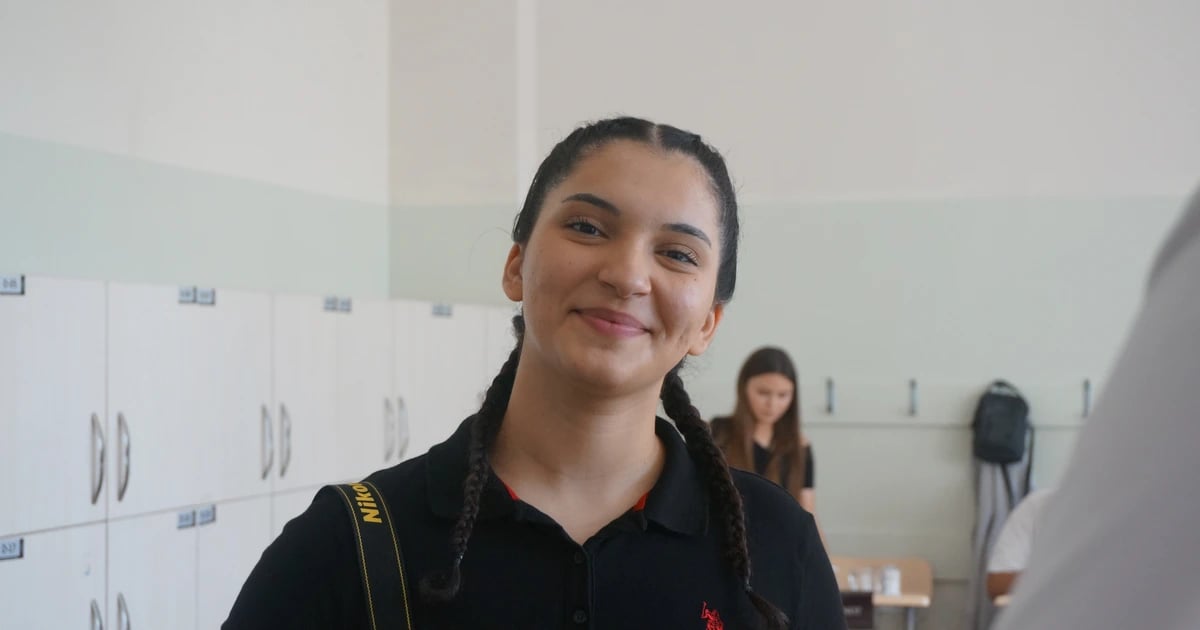
Hi everyone, I’m Aden, and I’m currently a high school student at İbrahim Cinkaya Social Sciences High School. Last year, I had the opportunity to explore the cultural roots of Andalusia through an Erasmus project at my school. During that one-week journey, I visited remarkable historical places, experienced a different education system, and even discovered pieces of my own culture and heritage thousands of kilometers away from home.
Being able to broaden my horizons by walking through the streets of Spain and experiencing a completely different culture at the age of 16 was an unforgettable experience for me. But what makes this story even more meaningful is that I almost didn’t apply for the project in the first place.
I want to share my Erasmus journey because I hope it will remind other students that there may be more opportunities around them than they realize—even while they are still in high school. So, if you’ve ever wondered what it’s like to explore Europe before turning 18, experience a new culture through an Erasmus project, or discover the heart of Andalusia without having to bear the full cost of the journey yourself, I invite you to read my story.

The Chance I Almost Walked Away From
When I first heard about the Erasmus project, I was already thinking about applying. I was excited about the possibility of joining the project, but that changed when I read the selection requirements. One of them stated that applicants had to have participated in an eTwinning project that had received a National Quality Label.
That requirement genuinely frustrated me. During my preparatory year, I had participated in an eTwinning project and had completed every responsibility that was assigned to me. I had done my part, but the project did not receive a National Quality Label because the partner side failed to meet the deadlines and complete their responsibilities.
What bothered me was that I had no control over that. I had put in the work, but because of something the other side had failed to do, the project did not receive the label. And now, it felt as though the absence of that one label could make everything I had done in that project—and perhaps everything else I had done—count for less.
I remember thinking, How can one label that I had no control over determine whether I deserve a chance to participate in an Erasmus project? I had been involved in eTwinning, national competitions, and other school activities. I had spent years trying to make the most of the opportunities available to me. Yet suddenly, it felt like all of that effort could be overlooked simply because one project did not have a particular label.
The requirement frustrated me even more because participating in an eTwinning project is not always something a student can control. At my school, for example, our preparatory-year teacher selected students for one of our eTwinning projects through a lottery. So even getting the chance to participate in an eTwinning project could depend partly on luck. Requiring a National Quality Label on top of that felt even more unreasonable to me.
There was also something else that made the situation confusing. Before the selection requirements were announced, I had spoken to one of the teachers who had written the Erasmus project and asked whether I had a chance of being selected. They asked whether I had participated in eTwinning projects and national competitions. I said yes to both, and they told me that I could be selected and should apply. At that point, nobody had mentioned that the eTwinning project needed to have a National Quality Label.
So I became convinced that I probably would not be selected anyway.
And because I felt that the selection process was unfair, I decided not to apply.
On the day applications closed, I came home and told my father that I had decided not to apply. He was surprised—and honestly, a little angry. He asked me why I was giving up on an opportunity just because of one requirement. His reaction made me reconsider.
He told me, essentially, to stop overthinking it and just apply.
So I did.
The funny part is that by then, the deadline had already passed. I submitted my application anyway, and the next day I asked one of the teachers who had written the project whether my late application would be a problem. They told me it would be fine.
At the time, I had no idea that this last-minute decision would eventually take me deep into Andalusia, where I would discover a place, a history, and a culture I had never experienced before.
Choosing Our Fate: 1 to 10
Once I had submitted my application, I had to go through the selection process. The school considered several things when choosing the students, including our previous year’s final grades, participation in national competitions and eTwinning projects, and our overall involvement in school life. We also had to take an English proficiency exam, which consisted of both written and oral stages.
The written stage of the English proficiency exam was more like a quiz, with mostly multiple-choice questions. The oral stage, however, felt much more like a real interview. We were asked challenging questions related to the project, and there was even a small element of chance involved: at the beginning, we had to choose a number between one and ten, and then answer the question corresponding to that number. In a way, we were choosing our own fate.
For me, the oral part was definitely the most difficult stage. The questions were challenging, and I had also made a few careless mistakes in the written exam. Because of that, I honestly did not think I would be selected.
Then the English exam results were announced.
When I saw that I had scored higher than I expected, I started thinking that maybe this could actually lead somewhere. Still, I had to wait for the final results.
The students selected for the project were eventually announced on our school’s website. I remember feeling both excited and incredibly happy when I saw my name on the list. Spain had always been a country I wanted to visit, so suddenly realizing that I was actually going there felt unreal.
Looking back, the selection process taught me something I didn’t expect: sometimes, you can be much closer to an opportunity than you think. I had almost convinced myself that I wouldn’t be selected—and yet, there I was, preparing to travel to Spain.
When Bridges Across Centuries Come Alive
Our Erasmus project took us to Andalusia, a region I had never visited before and knew mostly through what I had learned in history lessons. But being there was completely different from reading about it in a textbook. For the first time, I could see the history I had learned about in class right in front of me.
One of the places that impressed me the most was Plaza de España in Sevilla. Its architecture and enormous scale immediately caught my attention. As a huge Harry Potter fan, I also couldn’t help but think of Hogwarts when I saw it. It was one of those places that made me stop and simply take everything in.
But Córdoba left an even deeper impression on me, especially the Mosque-Cathedral. Having a guided tour made the experience even more meaningful because our guide explained the history and details of the building so thoroughly. What fascinated me most was seeing how traces of two different religions could exist within the same space. You could turn your head in one direction and see a cross, then turn the other way and see a mihrab. It was a powerful reminder that different cultures and religions had once shared the same space and left their own marks on it.
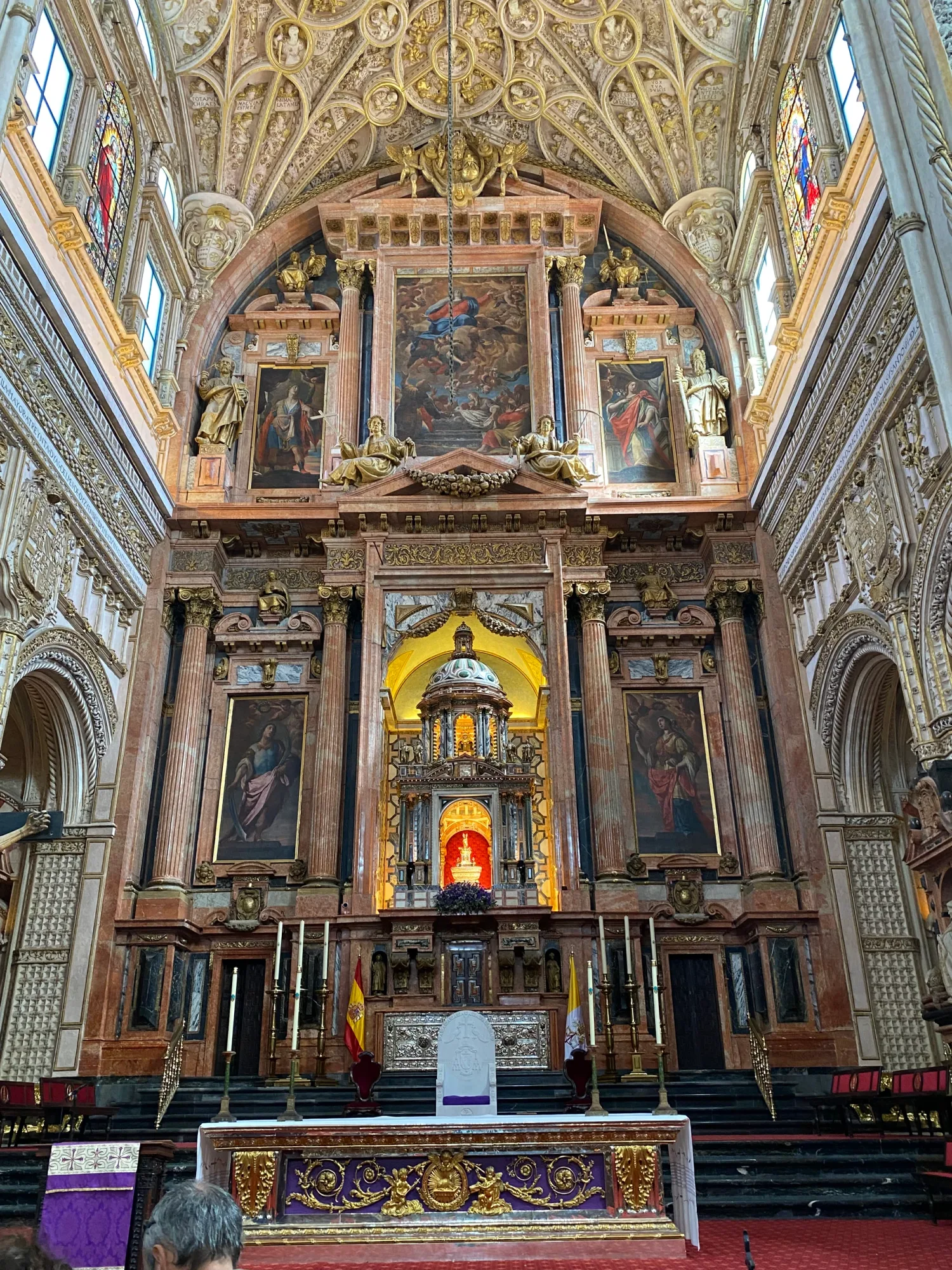
Then our guide told us something I really did not expect: some of the mosaics in the mihrab had come from Istanbul.
I immediately felt a sense of pride. Finding a small piece of my own culture and heritage thousands of kilometers away from home made me look at those mosaics with even more attention. I was already examining them closely, but after hearing that they had come from Istanbul, I started looking at every detail even more carefully.
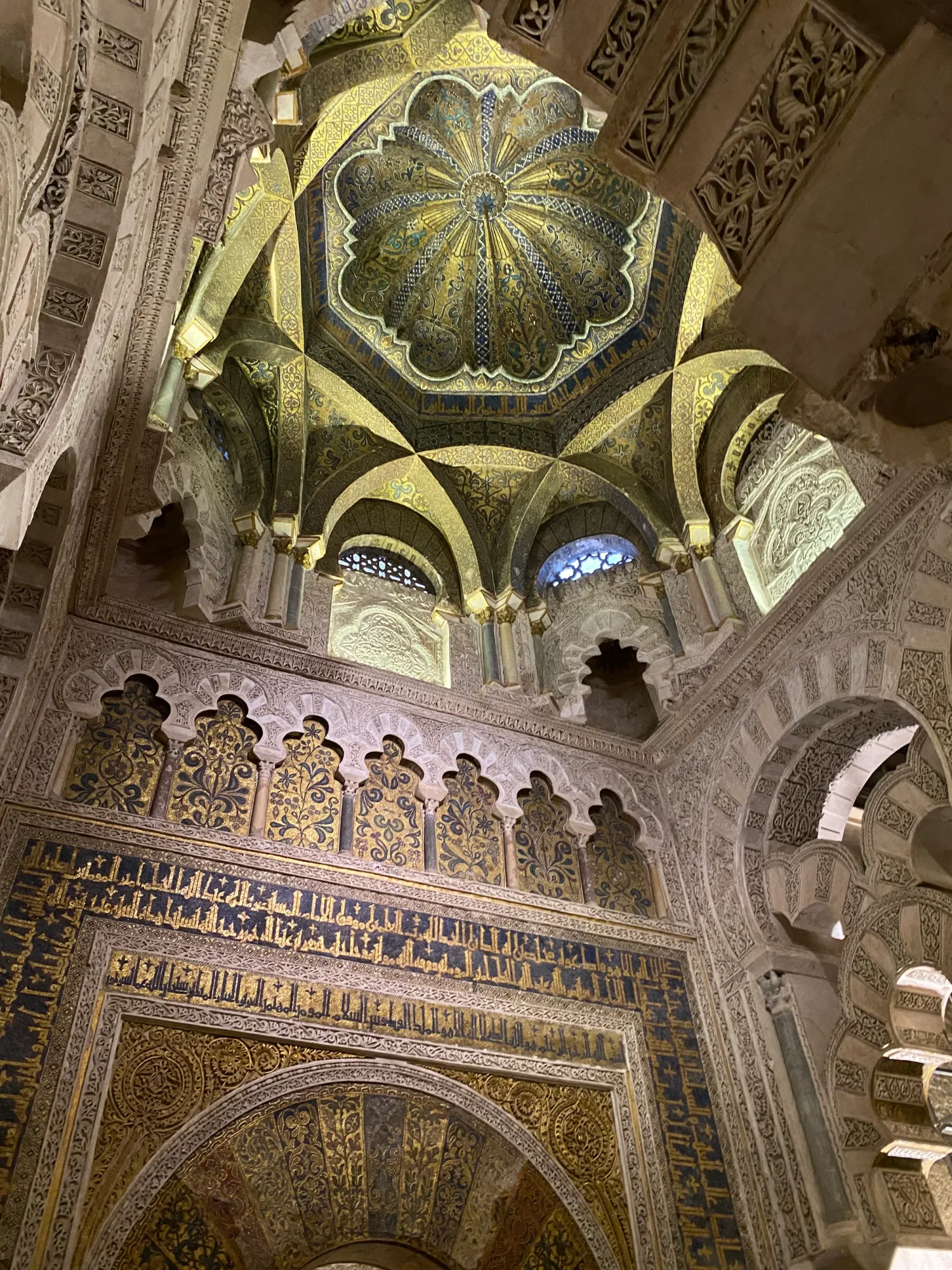
I wasn’t the only one who was surprised. When our guide mentioned Istanbul, all of us reacted at almost exactly the same moment, going, “Oh!” and laughing. Some of the other tourists noticed our reaction and asked, “Is Istanbul your hometown?” We told them that it was, and it turned into one of those small, unexpected moments that I still remember with a smile.
Experiences like this changed the way I understood history. In class, we often learn about historical events and cultures as theoretical information. But in Andalusia, those things became real. I could finally connect what I had learned in textbooks with the physical places, buildings, and traces left behind by people who had lived there centuries ago.
More importantly, Andalusia made me question the idea that people from different religions and cultures cannot live together. Walking through these historical places showed me something much more complicated and beautiful: different communities can share the same space while leaving traces of their own identities behind.
And those traces can survive for centuries. They can eventually become a bridge that brings together thousands of people from completely different backgrounds, allowing them to experience and appreciate a shared cultural heritage.
That was perhaps the most meaningful thing Andalusia taught me: history is not only something we study. Sometimes, it is something we can walk through, see, and feel around us.
Stepping Into the Unknown
Although exploring Andalusia was one of the highlights of the project, my Erasmus experience was about much more than visiting new places. Alongside our cultural and historical trips, we also worked on the main themes of our project: digitalization and sustainability. We researched how these ideas could be connected to education, prepared presentations, and shared what we learned. We also visited our host school and had the opportunity to observe a different education system and see how it worked in another country.
Of course, experiencing another country also meant facing some challenges. The biggest one for me was the language barrier. We didn’t speak Spanish, while many local people didn’t speak English. Asking for directions, communicating in shops, or even speaking to hotel staff could sometimes become surprisingly difficult.
This became particularly important for me because, as a Muslim, I don’t eat pork. Meat dishes were quite common at our hotel, and although the ingredients were listed in Spanish, it was not always easy to communicate with the staff and make sure there were no pork products in the food. In fact, some of the students and teachers in our group accidentally ate pork because of these communication difficulties.
But then something happened that I still remember.
We were the only Turkish and Muslim guests at the hotel, and the staff realized that we were having trouble understanding the labels. So they started writing the Turkish word “domuz” (meaning “pork”) next to the Spanish labels on dishes containing pork, just so we could understand.
It was such a small gesture, but it meant a lot to me. I don’t think I had ever felt so welcomed and looked after in a place so far from home. It reminded me that even when you cannot communicate perfectly through language, kindness can still cross that barrier.
There were also some practical challenges, including financial difficulties caused by the currency difference which made managing expenses a little difficult. But these challenges became part of the experience rather than something that took away from it.
In fact, one of the biggest things I gained from the trip was realizing that I could actually handle myself in a completely unfamiliar country. Before going to Spain, I had never really tested myself that way. But after spending a week there, I realized that if I ever had to get on a bus or figure something out on my own in a country I had never been to before, I could probably manage it.
That realization pushed me outside my comfort zone in the best possible way. Erasmus did not just show me a new country. It showed me a version of myself that was more independent, more confident, and more willing to step into the unknown.

Advice from Someone Who Almost Didn’t Apply
Sometimes, I think about what would have happened if I had listened to my frustration that day and simply decided not to apply. I would probably be very upset with myself today, and I would definitely be angry at myself for letting one requirement stop me from trying. I might never have seen Andalusia, never walked through the streets of Sevilla or Córdoba, and never experienced everything this journey taught me.
That is why, if there is one thing I would tell other students, it is this: apply anyway.
You might get rejected. That is always a possibility._ But at least you will have tried_. Getting rejected does not mean that the world has come to an end. A rejection only closes one door; it does not tell you what will happen with the next one. But what if you get accepted?
Of course, applying is not the only thing you can do. Opportunities like these may not come around every day, so I think it is important to prepare yourself before they do. One of the best things you can do is improve your English as much as possible. Knowing a foreign language, especially English, can open so many doors—not only for Erasmus projects, but also for university and for many other opportunities later in life.
I also believe that students should try to make the most of the opportunities they already have. Participate in school activities, join projects, take part in competitions, volunteer, and most importantly, get out of your comfort zone. Getting out of your comfort zone can push you toward experiences and opportunities you never expected, while also helping you discover new sides of yourself. And once you start stepping outside that comfort zone, you may realize that the world beyond it is much bigger and more exciting than you thought—and you might not want to go back. These experiences can help you build your CV, but more importantly, they can help you become the kind of person who is ready when a new opportunity appears.
At the same time, don’t limit yourself to what your school offers. Not every school organizes Erasmus projects, and being able to participate in one at school can sometimes depend on luck. If your school does not provide these opportunities, look for them elsewhere. Many organizations and associations organize international youth projects, including Erasmus+ opportunities for high school students and young people. Research them, follow their announcements, and apply to as many as you reasonably can.
And don’t let one rejection stop you.
I have received rejections myself, but I have never seen them as the end of the road. The result of one application cannot determine the result of the next one. The more opportunities you apply for, the more chances you give yourself to find the one that is right for you.
I have also learned not to be unnecessarily selective. In the past, I sometimes avoided applying to projects because they were taking place in a smaller country or even in my own country. Looking back, I realize that this was a mistake. A country you might consider “small” can still give you unforgettable memories and experiences you never expected. Even a project in your own country can introduce you to people, ideas, and opportunities that lead somewhere completely different.
That is why I no longer see Erasmus simply as a way to travel abroad. What matters is not only where a project takes you, but what you learn from being there. Sometimes, the most valuable part of an opportunity is the person you become because of it.
My Erasmus journey started with frustration. I almost let one requirement convince me that applying was pointless. Then my father told me to apply anyway.
I did.
And I am so glad I gave myself that chance.
Sometimes, the opportunities that change us are the ones we almost choose not to take.