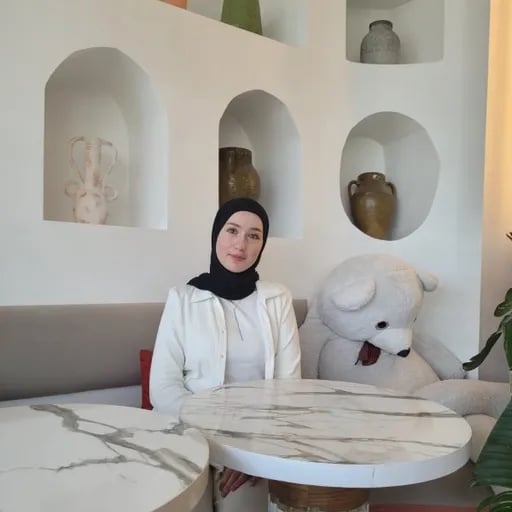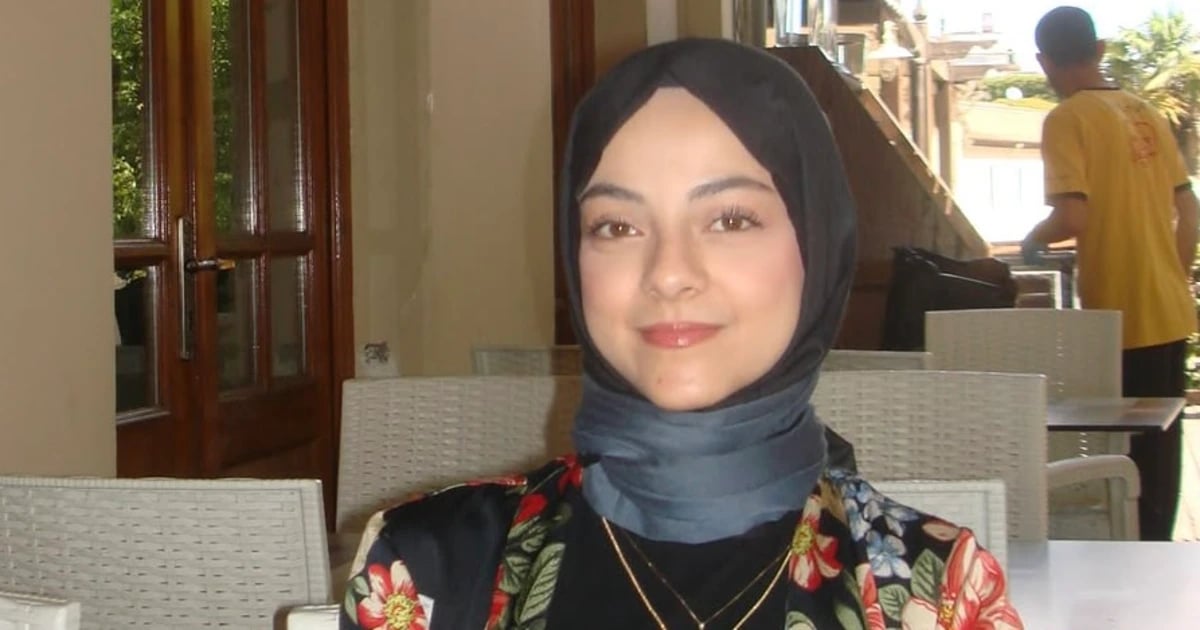
Hi, my name is Rana, and I’m a Turkish high school student who will spend the next two years at UWC Pearson College on a full scholarship. Before high school, I worked incredibly hard for Turkiye’s National High School Entrance Examination (LGS). However, I didn’t get the result I had hoped for, and at the time, it felt as though everything had fallen apart. Eventually, I learned how to deal with disappointment and understand that one result does not define my future. Through my story, I hope everyone who reads it—whether they dream of studying at a UWC campus or are simply facing a disappointment of their own—can see that life is never limited to your grades, a single program, or one opportunity.

Surviving High School Before UWC
To be honest, my high school journey before UWC was complicated and, at times, quite difficult. After not getting the result I had hoped for on the LGS, I started attending an Anatolian High School in Istanbul. In 10th grade, I transferred to a vocational high school, but in 11th grade, I returned to my previous school.
Throughout my UWC journey, I often felt that my schools did more to hold me back than to support me. This was reflected both in the school system and in the attitudes of some of my teachers. There were hardly any social activities at my school. In fact, whenever our principal became upset about even the smallest issue, he would cancel the school’s only regular activity: football matches.
Things became even more difficult after I was accepted to UWC. Instead of congratulating or supporting me, some of my teachers started giving me lower grades. Rather than seeing my achievement as something to be proud of, they treated me as if I were going to a school in a war zone or a third-world country. I rarely felt that my teachers understood or supported my goals.
Since my LGS result had prevented me from attending the schools in Istanbul that I had originally hoped for, I already felt like I was in an environment I had never wanted to be in. For these reasons, the year and a half to two years I spent in high school after the LGS were some of the most difficult years of my life.
How UWC Came Into My Life
One of my biggest dreams has always been studying at Stanford. While researching how I could make that dream a reality, I came across a YouTube video called “The Journey to Stanford” by a Turkish channel called Kariyer Kılavuzu. The video focused on undergraduate education at Stanford, and one of the people featured in it was a UWC graduate. I remember watching the video and immediately thinking, “What is UWC?” That was the first time I became curious about UWC and started researching it.
Interestingly, I had also heard about UWC from my electrical and electronics teacher when I was in 10th grade. Since I was attending a vocational high school at the time, my teacher was familiar with educational opportunities in places like China and Europe, and he mentioned UWC as a program that could take students abroad. However, my family was not very comfortable with the idea of me attending high school abroad at that time, and they were even concerned about me pursuing my undergraduate education abroad. So, although I had already discovered UWC, I decided not to apply in 10th grade. Instead, I waited and eventually applied in 11th grade.
Finding Myself in UWC’s Mission
When I first learned about UWC, I could have easily seen it simply as a way to study abroad. However, I think one of the most important things for anyone considering UWC is understanding its mission and vision rather than seeing it only as a gateway to another country. UWC is not primarily about sending students to top universities; it is about bringing together young people who want to make a difference and empowering them to become agents of change.
Since I was a child, I had what might sound like a cliché dream: I wanted to change the world. My interest in robotics at BİLSEM, Türkiye’s Science and Art Centers for gifted students, was one of the first ways I explored this desire. Later, seeing my grandfather struggle with certain health conditions made me think more deeply about how I could help people and make their lives better. I started asking myself, “How can I be useful to others? How can I help them?” Over time, I realized that these questions were not limited by medicine. They extended to the wider problems facing our world, from inequality to hunger and many other challenges.
That was when I began to understand that UWC was much more than a regular exchange program. Its mission, vision, and community were built around ideas that genuinely aligned with the way I wanted to live my life.I didn’t just want to study at UWC; I wanted to be part of that community.
This feeling became even stronger during the final stage of the selection process, when I had a conversation with my mother. She told me that she hoped I would be selected for UWC and that I would have a bright future in an environment where I could grow and add value to myself. Her words made me realize why UWC mattered so much to me. Since the LGS, I had often felt disconnected from the education system in Türkiye because I rarely felt that it gave me enough space to express myself or turn my ideas into action. I wanted to create things, contribute to others, and work on ideas that mattered to me.
What attracted me to UWC was that it seemed to offer exactly that kind of environment. Unlike what I had experienced in my previous schools, or what I imagined a conventional exchange program would offer, UWC seemed to give students the freedom and support to pursue their own ideas and projects.For the first time, I felt that I had found an educational community where I would not have to choose between learning and making a difference. I felt like I belonged there.
A Long Journey of Doubt and Pressure
Once I decided to apply, the application process became a test of more than just my qualifications. I had always been a stressed and perfectionist person. I tended to think in terms of “all or nothing”: if I believed I could not achieve something, I sometimes felt like there was no point in trying. Because of this, I found myself comparing my profile to those of other applicants. I would think, “There are students from such good schools with such impressive CVs. Am I really good enough to do this?”
These thoughts made the beginning of the application process especially stressful for me. I constantly questioned whether I was capable of reaching the next stage. But the process kept moving, and so did I. One of the most stressful moments came during the academic assessment, when I realized that my camera is not working. I immediately contacted the committee to explain the problem, and they were very understanding about it. Still, those ten or fifteen minutes while I was waiting for a response felt like an entire century to me.
Looking back, the academic assessment was probably the most stressful part of the whole process. But it also taught me something important: sometimes, the hardest part is not the obstacle itself, but the way we respond to the uncertainty around it. I had started the application wondering whether I was good enough. As the process continued,I began to realize that I did not need to have everything under control to keep moving forward.
The Application as a Journey of Self-Discovery
Writing my essays was not simply about finding the right words or presenting an impressive application. It was also a process of getting to know myself. Before applying, I spent a lot of time asking myself questions: What do I enjoy? What do I care about? What do I think about the issues around me? The application wasn’t just about showing UWC who I was; it also forced me to figure out who I was. I was inspired by people who had made an impact around the world, including activists such as Malala Yousafzai, but I never wanted to write in someone else’s voice. I wanted the application to reflect my own way of thinking.
One thing I tried to do in my essays was looking at situations from different perspectives. Rather than simply describing what happened, I wanted to explain why it mattered to me, what it taught me, and how it might look from someone else’s point of view. I think being able to express my thoughts clearly and directly, even when they were not necessarily conventional, was one of the things that made my essays stand out.
One of the most challenging questions was an essay about James Watson. We were asked to write a statement as a university director following his death, which meant that the question involved an ethical dilemma. I had never encountered a question like it before, but I knew what I believed. I felt that no matter how successful a person is, if they benefited from or took credit for someone else’s work, that contribution should be acknowledged. I wanted to express that position openly while still being respectful. The question surprised me, but it also gave me an opportunity to show the values behind my way of thinking.
I also wrote about one of the most difficult periods of my life: the disappointment I experienced after the LGS and how I eventually recovered from it. Through that essay, I wanted the committee to see that even after a major setback, I had never lost my love of learning. For me, learning was never limited to school subjects. It could come from a hobby, a new idea, a different perspective, or simply being curious about the world.
Looking back, I am quite happy with my essays because they feel like a genuine reflection of who I am. My CV, however, may not have communicated the full picture. During the group activities, some other candidates saw my STEM-heavy background and assumed I would choose a STEM-focused campus. But I have always been interested in many different fields and never wanted to be defined by just one of them. If I could change anything, I might explain that side of myself more clearly. The application taught me that a list of achievements can show what you have done, but your words are what can show people why those things matter to you.
Speaking My Mind, Listening to Others
Before the interview, I expected the process to be much more formal and intimidating. I had participated in other interviews before, so I imagined that I might struggle to find the right words or stumble over some of my answers. However, the interview turned out to be much more relaxed and enjoyable than I had expected. Since I had not spoken to anyone who had applied to UWC before applying myself, I had no real idea of what to expect.
One thing I appreciated was that the questions were personalized for each applicant. This gave me the opportunity to talk openly about my own experiences, values, and perspectives rather than trying to give the “right” answers. Being able to express my thoughts and feelings honestly was something I was genuinely proud of. I believe that people can have completely different perspectives depending on their cultural, social, religious, or personal backgrounds. I do not think respecting people means that we have to agree with their ideas. My truth can be someone else’s wrong, just as their truth can be mine. For me, what matters most is respecting the person behind those differences.

Another memorable part of the interview was meeting UWC alumni. One of them, Mine, was someone I had personally looked up to, so finding out that she would be one of my interviewers made me incredibly happy. It was a special opportunity to meet someone I already considered a role model and to have a conversation with her as part of my own UWC journey.
I also think my communication skills helped me during the interview. I had spent a lot of time beforehand thinking about what I might be asked and had already asked many of those questions to myself. Because of that preparation, I was able to give clear and direct answers instead of trying to come up with everything on the spot.
The same confidence helped me during the group activities. I was not afraid to share my ideas or take the initiative when necessary. For example, when the group needed a spokesperson, I did not hesitate to volunteer and say, “Can I be the spokesperson?” I think being willing to step forward while still listening to others was one of the things that helped me stand out.
What the UWC Journey Taught Me
One of the biggest things I discovered about myself during the UWC application process was that I was much more resilient than I had believed. Before applying, I thought of myself as someone who was quite fragile and easily discouraged. People close to me sometimes even told me that I gave up too quickly. But the UWC process challenged that belief. No matter how stressed, frustrated, or overwhelmed I felt, I kept trying until the very end. The application was long and involved multiple stages, yet every time I moved forward, I found the motivation to continue. I realized that I was not someone who gave up easily; I was someone who could keep going even when I was afraid of failing.
The other major lesson I learned was the importance of understanding. During the group activities, I met people from different parts of Türkiye who had completely different social, cultural, and ideological perspectives. In everyday life, we naturally tend to surround ourselves with people who think like us. We choose friends who share our values and feel comfortable around people who see the world in similar ways.
Being placed in a room with so many different perspectives made me realize how limiting that can be. I learned that having different opinions does not have to push people apart. We do not have to agree with everyone to understand or respect them. Instead, we should be willing to step outside our own bubbles, listen to people who see the world differently, and recognize that our own perspective is not the only possible one.
Looking back, the UWC journey taught me two things I had not expected to learn: I was stronger than I thought, and the world was much bigger than my own perspective. Both lessons have stayed with me far beyond the application itself.
Pearson Wasn’t My Choice—But Maybe It Was Meant to Be
People often ask me why I chose UWC Pearson College, but the truth is, Pearson was not actually on my list of preferred campuses.I had not even researched it during the application process because I did not know that it had opened a place for a student from Türkiye. Pearson had not offered a place to Türkiye for several years, so it was not even on my radar. When applicants are asked to rank their preferred campuses, I had three categories to choose from: the campuses I wanted most, the ones I would consider if I did not get my first choices, and the ones I would not want to attend.Pearson was not in any of them.
Before Pearson entered my life, I had always dreamed of studying at one of the UWC campuses in Africa, particularly Tanzania, or at UWC Mahindra College in India. I was fascinated by the idea of experiencing a completely different culture and way of life, especially one so closely connected to nature and a different ecosystem. So when my family found out that I had been selected for Pearson before I did, I had no idea what was waiting for me.
Because UWC contacts parents when a student is selected, my family received the news while I was at school. They immediately started researching Pearson, and my father was actually the first person to tell me about the campus and what it offered. I began researching it myself after I found out I had been selected, and I quickly understood why Pearson could be such an exciting place for me.
One of the things I am most excited about is its location in the middle of nature. Pearson is situated on an isolated island with its own ecosystem, which creates opportunities to experience the natural world as part of everyday life. I could go diving, observe seals, learn about marine life, and even study the unique wildlife of the area through courses focused on the local ecosystem. The possibility of encountering wildlife such as cougars and exploring the underwater world is something I find incredibly exciting.
It is funny to think that I had never even considered Pearson when I was applying. I was looking for a place where I could experience a completely different world, and somehow, I ended up being offered a place in one of the most unexpected environments I could have imagined. Maybe Pearson was never my original choice because I simply had not discovered it yet.
There Is Never Only One Door: Advice for Future Applicants
If there is one thing I would want students considering UWC to take away from my experience, it is this: never treat an opportunity as the only door to your future.
If you are applying for the first time—or even the second time—try not to put too much pressure on yourself. Be yourself throughout the entire process. In your essays, do not try to sound like someone you think the selection committee wants to see. Your application should reflect the way you actually think, the things you care about, and the person you are. The same applies to extracurricular activities. Do not fill your CV simply for the sake of making it look impressive. Instead, spend your time doing things you genuinely care about and are passionate about.
The interview does not have to be something you are afraid of, either. I expected it to be much more formal than it actually was. Be yourself, express your thoughts, and do not be afraid of making mistakes. There is no need to have a perfect answer to every question. During the group activities, do not be afraid to speak up or take initiative when necessary. At the same time, remember that expressing yourself also means being willing to listen to others.
There is also something I wish I had known after being selected: being selected by the national committee is not necessarily the very last step. You are nominated for a UWC school, but there is still a process afterward before everything is officially finalized. There are financial documents, translations, forms, and procedures that can take considerable time and effort. I wish I had known beforehand just how complicated that part could be. It would have helped me worry less when I was waiting for everything to be finalized.
But perhaps the most important lesson I learned has nothing to do with forms, essays, interviews, or even UWC itself.
Before UWC, I had treated the LGS as if it were the most important door in my life. I had worked incredibly hard for it, to the point that my teachers at my prep course used me as an example for younger students. So when I received a result that was much worse than I had hoped for, I genuinely thought my life was over. I had wanted to attend an American-style high school, and suddenly I believed that opportunity was gone forever.
The year and a half that followed was one of the hardest periods of my life. I was in an environment I had never wanted, surrounded by limitations, and often unable to pursue the things I wanted to do. I tried many different opportunities afterward, too. In fact, the number of things I was rejected from was probably ten times greater than the number of things I was accepted into.
But that is exactly why I am here now.
UWC was not the first door I knocked on, and it will not be the last. It was simply one of the doors that eventually opened.
So if you are thinking about applying to UWC but feel that your grades, your CV, your financial situation, or where you come from makes you “not good enough,” please do not let those thoughts stop you from trying. UWC receives applications from students across Türkiye, including students from smaller cities, different types of schools, and a wide range of financial backgrounds. Your circumstances should not automatically become a reason to count yourself out.
==You may be rejected==. I was rejected many times before UWC. You may not get the result you hoped for. I know what that feels like.
But one rejection does not mean there are no more opportunities, just as one acceptance does not define your entire future.
There is never only one door. Sometimes, the door you thought you needed to open closes—and only later do you realize that there were many others waiting for you to find them.