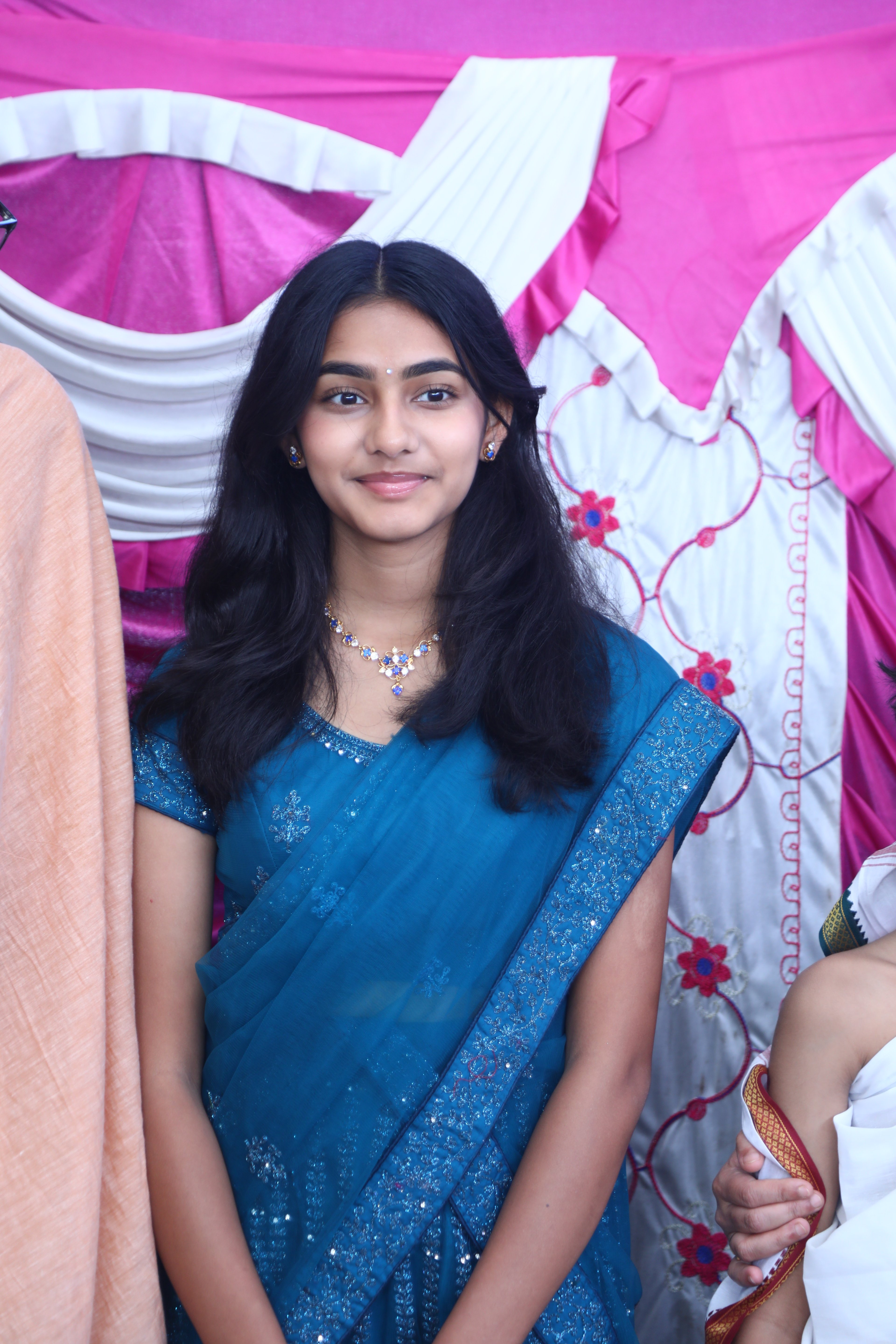
In a world full of opportunities, exchange programs are some of the most challenging and rewarding. As someone who has gone on exchange twice, the age at which you travel and the level of independence you have will greatly vary your experience abroad.

My name is Heidi Alan, and I am a Bachelor of Arts/Bachelor of Advanced Studies (International and Global Studies) student at the University of Sydney. I am currently on exchange at the University of Montreal in Quebec, Canada; the duration of this exchange is one semester (or two terms).

This exchange is my second overall, as I previously spent my Year 10 in Belgium on exchange, where I was able to learn the local language and learn more about the culture. For this, I did my exchange through the Rotary Youth Exchange Program, which you can learn about here.
Currently, I am studying for a Bachelor of Arts/Bachelor of Advanced Studies degree, where I major in International and Global Studies, and Biochemistry, and my minor is French.
About
Montreal
The city of Montreal is located in Québec, Canada. Montreal is the largest city in Québec, and accommodates around 1.7 92 million people (2022).
University of Montreal
The University of Montreal or UdeM (Université de Montréal) is a French-speaking university in the city of Montreal in Québec, Canada.
UdeM is currently the 1st-ranking university in Québec, 4th in Canada, and 125th internationally.
My Background
I grew up in Sydney—specifically Springwood in the Blue Mountains. I attended Springwood High School until my exchange to Belgium, after which I transferred to another small school called Coral Wall in Hazelbrook, Blue Mountains.
When I turned 18, I moved to central Sydney for university, as it was difficult for me to attend the University of Sydney from the Blue Mountains.
Why Canada?
Since I have a highly specific degree, combining both humanities and sciences, I had very limited options to choose from to do an exchange. Canada was able to offer variations for my degree, so I am able to complete my required credits.
Furthermore, the administration for other places (such as France) was extremely difficult, and since I had already done an exchange to a French-speaking country in Europe, I wanted to try something different, while still being able to use the French I studied at university.
As I had never been to Canada, or anywhere in the Western Hemisphere before, it was an opportunity for me to discover something new.The idea of Montreal also intrigued me, mostly because I liked the sound of the city’s name and the general vibe.
And finally, my best friend from my exchange to Belgium had organised to do a working holiday in Canada, and as this is located in Montreal, I found it as a means of support and comfort while being in a new situation.
One thing I was nervous about, and still would have preferred, is doing the exchange while it wasn’t so cold, as the winters in Canada can be quite extreme.
Why Montreal?
As mentioned before, I had to choose a university that offered classes for my specific degree, which made the options limited.
As biochemistry is specific, I had to find somewhere that supported this aspect of my degree, and UdeM is able to do this and provide me with labs to do.
Furthermore, the use of French as the main language throughout the university was a good way for me to use my French studies from university.
Stats
ATAR
My ATAR was 97.3
Since I achieved this ATAR, I found myself feeling almost restricted to “use” my ATAR. Originally, I had enrolled for Double Laws, which I changed very last-minute on the Thursday before the Monday I was due to begin my degree.
University GPA’s
At USYD, my GPA sat at around 87-88.
In UdeM, my average is around 85.
Extracurriculars
High School
During high school, I did pottery outside of school as a personal and small-scale thing.
I also engaged in recreational netball with my friends, and played futsal (which is indoor soccer).
University
At university, I haven’t had any consistent extracurriculars, however, I have engaged in a few classes and have picked up many hobbies.
I participated in a two-day self-defence class for women at my university, which was also helpful. I also joined a few photography trial classes.
In terms of hobbies, I love cooking and baking, arts and crafts, and watching live music.


Application Process
The application process is long and has many different parts; however, this is all done through USYD. USYD was also able to guide me through the application process, making it easier to understand and submit.
There are two main parts to the application: the initial application through USYD and the application through a university, and the application to the university you are accepted to.
Components
An important thing to do is research while you are applying. This includes research on where you want to apply and what you need to submit in your application. Different universities will have different entry requirements and supporting documents required. For example, UdeM required fluency in French, as it is a French-speaking university. Another important factor to research is whether the university you desire offers classes for your degree or not, as this is vital for your exchange.
In my application, I had to answer some questions, including:
- General questions about my degree.
- What I intended to study at UdeM.
Another step was my letter of motivation, which is a document you submit with your application, explaining why you're a good fit for the program and university, and highlighting your goals, experiences, and passion for the field of study.
I also had to respond to questions in the application through USYD, where I replied to what I would do in certain situations. For example, you might be asked, “You're stranded without a phone while outside, what do you do?”. This was mainly to ensure that you are a capable adult who can deal with situations in a mature way.
You were also required to prove your financial independence and capability to support yourself overseas. Since I receive government support in Australia (youth allowance), I am able to receive this overseas too.
For UdeM, the application process was quite similar to USYD. I was required to submit documents, including my birth certificate, passport, a copy of my grades at USYD, a letter of motivation in French, and proof of French proficiency, which I attained through the French department at USYD.
In my letter of motivation to UdeM, I wrote about how I was very interested in Montreal as a city and curious about it, especially given its history. Personally, I find it fascinating when a place is bilingual or functions with multiple languages. Essentially, I was very curious to discover the place, and I also had personal motivations as a factor.
Since Montreal and Canada in general produce a variety and abundance of research, I found it was beneficial for my growth as a Biochemistry student. I mentioned this during my application, and how I was specifically interested in discovering that aspect of the university, and have to opportunity to be taught by different professors and gain those new kinds of perspectives.
Overall, it was a long process to get to UdeM, but worth every bit of effort I poured into it.
Costs
There were no fees required to be paid while applying to the universities; however, I did have to pay for an obligatory health insurance. This was around $350 (CAD), which was helpful now that I think about it. I did actually break my arm in Canada, which was covered because of the insurance. This was the only direct fee I had to pay to my host university.
You also have the USYD health insurance, which adds up to double insurance, which I don’t really need. Every student is required to attain this.
Resources and Support
In terms of resources from USYD, it was more of a reminder of what you had to submit and by when. They provided you with updates on what you have to do, how you do it (briefly), and kept you up-to-date with the steps of the application. However, at the ned of the day, it is your responsibility to get it all done. I found that this is a new kind of pressure that I had not experienced before, since when I went on exchange to Belgium, I was still a child, which put the responsibility of paperwork on my parents.
I am lucky that I lived in a student housing co-operative before I went on exchange, since there was a student staying there from France. She was able to help me with my letter of motivation. Once I wrote my letter, I was able to show it to her, and she guided me with changes to make it more culturally and professionally accurate.
Generally, the motivation of my friends who encouraged me had a great positive impact. For example, one of my friends gave me a jersey for the Montreal ice hockey team to “manifest” me getting into the university, which I did get into in the end. I brought it with me to Canada and got to see their game four days after arriving. Personally, I believe the manifestation and support helped mentally while applying.
Scholarships and Financial Aid
Scholarships
I was able to receive the Vice Chancellor’s Global Mobility Scholarship, which is generally available to students. You can find out more about that here. I received $2000 through this.
I was also lucky enough to receive an unrelated scholarship from the semester prior. This was called the Garton Scholarship II in French, which you can find out more about here. I received $5000 through this, which was actually a surprise to me because I had not applied for anything related to this scholarship; I received an email at some point during that semester, which informed me that I was the recipient of the scholarship and was required to accept it. I most likely received it since I was good at French in my university, and it was definitely my best subject, which is also the reason I feel confident studying in French now.
There is also a list of scholarships available for USYD exchange programs, which you can find here.
Financial Aid
As I mentioned briefly before, I receive Centerlink allowances of $700 a fortnight, which I have received since I was 18, and it has always been enough to pay my rent.
This is only for students who require financial support. There is a low threshold for your parents’ income before the age of 22—after that age, you are no longer considered a dependent, which affects your eligibility to receive youth allowance. This is a good way to level the playing field for all students and support those who are less financially privileged. To find more information about Centrelink youth allowances in Australia, click here.
Cost of Living
Estimates show that you need approximately $18,000 for an exchange program, and after I received $7000 in scholarship, I would estimate around $10,000.
This price does vary depending on your expenses—travel and cost of rent are two major players, while spending on your exchange.
I find that my rent is a lot cheaper than most places. I pay $600 (CAD) a month, which is quite good. I also have not travelled much, and save fairly well. I have also picked up a few jobs to help fund my trip.
Overall, having around $10000 in your bank account is always a safe option when on exchange.
Work-Life Balance
I find that I have never been excellent at having a work-life balance; I am definitely a major procrastinator and leave things to the last minute—it is not a good habit to have, so I do not recommend it!
At university, it is harder to procrastinate and put things off, particularly because there are deadlines and the workload increases.
In Canada, I am a full-time student and attend five classes. In Sydney, I only had four classes, but this is not too much of an increase in pressure.
I do tend to prioritise life over work, mainly since I am on an exchange and it is an expensive thing to do with only a limited time period, so I try to make the most out of the experiences and go out as often as I can.
Sometimes I do have to remind myself to slow down and take a break. I have assignments that are impossible to avoid. Maybe of my projects are group projects, which means I do try to put effort into my work so I don’t let my group down.
It is also quieter in Montreal compared to Sydney, and I live with fewer people, so I strive to make sure I also have time for myself.
Overall, I think I am striking a healthy-ish balance between academics and life, but could probably do a little less procrastination.
Post-Graduation Plans
At this point in time, after graduation, I will most likely do a post-graduate degree, mostly because I am not ready to think about a career yet.
In post-graduation, I am interested in going down a linguistics route since I am passionate about it. It really depends on what opportunities open up, though, especially since I have a science-humanities degree combination, with a minor in French. I am also more interested in sociolinguistics than in the technical theory of linguistics.
I would also like to travel—I think I need a break after graduation. While changing travelling is travelling in a way, it does become hard at points, and I would like a break from university.
After graduating, I think I would probably take some time for myself, work, and travel.
I would also love to go to South America and learn Spanish, so that is one of my next challenges.
Tips for Students
Tips for people travelling overseas are to definitely be prepared for anything.
When you are overseas, it is a great experience, but things can always go wrong.
While I am having a great time and I love the city, the culture, and the people I have met here, it is important to be prepared (mainly mentally) for things, as it is not always easy. I broke my arm, which is a pretty big thing to have happen to me, but I came out stronger. Stuff is going to happen, but it will make you stronger.
It is certainly worth travelling overseas, and if you have the chance, you should of it at least once.