When I first applied to United World College, I wasn't applying because I was determined to leave India.
In fact, for both my parents and me, it was simply an opportunity to understand what a rigorous application process looked like. I had already been studying at an IB school, Neev Academy, so academically, I wasn't looking for something fundamentally different. We thought of the application as practice for future college admissions—a chance to write essays, prepare for interviews, and experience a competitive selection process.

It Started as "Just a Try"
I never expected that somewhere along the way, UWC would become somewhere I genuinely wanted to be.
The more I learned about UWC, the more I realised it represented something I had not found elsewhere. It was not just about academics. It was about bringing together people from completely different countries, cultures, socioeconomic backgrounds, and perspectives, and encouraging them to learn from one another. That emphasis on diversity, dialogue, and understanding was what drew me in.
Everything changed after I was invited to the interview round at the Pune, India campus of UWC.
Meeting current students, alumni, and applicants from across the country made the experience feel real. I saw a school that valued much more than grades—a place where academics, service, extracurricular activities, and human connection were all equally important. By the end of the day, my parents and I had both become emotionally invested.
Ironically, the application that had begun as "just a try" had become something I desperately hoped would work out.
The selection process itself was unlike anything I had experienced before.

What I Think Made My Application Stand Out
The first stage involved submitting my ninth-grade transcripts, teacher recommendations, six essays of roughly 250 words each, detailed extracurricular information, and even a statement from my parents. I also had to rank my preferred campuses.
Once shortlisted, I travelled to Pune for the interview process.
Calling it an interview almost feels inaccurate because it was much more than that.
Throughout the day, we participated in debates, collaborative team-building activities, multiple interview rounds, and informal discussions with students, teachers, and alumni. Every interaction mattered. Even conversations during lunch or while waiting between activities were quietly observed, with assessors taking notes on how we interacted with others.
It was overwhelming to know that someone seemed to be evaluating you all the time.
But if there was one thing I learned, it was that pretending to be someone else simply would not work.
One of the biggest misconceptions about competitive applications is that they're looking for the "perfect" student. I do not think UWC is looking for such an applicant.
My grades weren't extraordinary. In fact, I would describe myself as an average student academically. What I believe helped my application wasn't a list of achievements—it was the way I presented who I was.
The essays, especially, gave me an opportunity to think differently.
One prompt asked why airlines instruct passengers to put on their own oxygen masks before helping others. Many people could answer that logically. Instead, I reflected on how helping others begins with taking care of yourself first. It wasn't about selfishness—it was about recognising that you can't support anyone else if you're unable to stand yourself.
I realised that the strongest essays weren't necessarily the cleverest ones. They were simply the most honest.
Outside academics, I spoke about the service projects I had worked on and my personal project—a book I wrote about my family's experiences during the Partition. Interestingly, those became some of the biggest talking points during my interviews, much more than competitions or sports.
Standing by What I Believed: The Interview + Scholarship
The interviewers weren't interested in hearing a rehearsed version of who I thought they wanted.
They wanted to understand who I actually was.
Sometimes they even challenged my opinions.
One interviewer asked whether it was fair that UWC supposedly did not have a national committee in Pakistan. Whether or not the premise was accurate was not really the point. The question tested whether I would simply agree because I wanted to impress them.
I did not.
I said I didn't think that would be fair because everyone deserves equal opportunities.
I remember wondering afterwards whether I had just ruined my chances.
Looking back now, I think standing by my beliefs mattered far more than trying to give the "correct" answer.
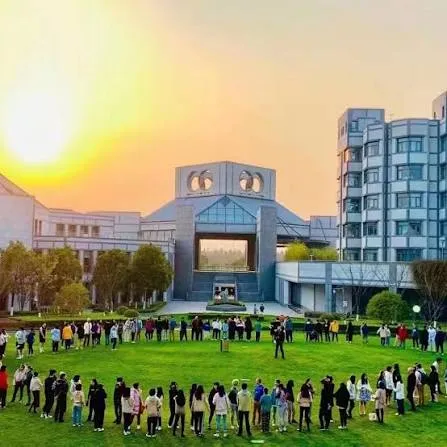
After the interview, the Indian National Committee reviewed my application and recommended me for UWC Changshu in China along with a scholarship. Their recommendation, however, was not the final step. My scholarship recommendation, interview notes, online application, and overall profile were then sent to the school itself for approval.
That's when things became unexpectedly difficult.
The school decided to reduce my scholarship.
What frustrated us most was not simply the reduction—it was that we were not given any explanation for why it had happened.
Of course, my family could contribute financially. But that was not the point.
Higher education is a major investment, especially when I also have a younger brother whose education needs to be considered. The job market is unpredictable, and financial planning is not as simple as looking at whether someone can technically pay.
Unlike universities, educational loans for UWC become more complicated because UWC exists in an unusual space—it is not quite a school in the traditional sense, but it is not a university either.

For a bit, it genuinely looked like I would not be going.
My family went back and forth with the Indian National Committee, discussing what was possible. At one stage, for almost two weeks, we accepted that I might have to decline the offer.
That was much harder than I expected.
Initially, I had applied simply to gain experience.
Now, after the interview process and after falling in love with the school, walking away felt heartbreaking.
Thankfully, after further discussions, the situation was resolved, and we were able to move forward. I received a partial scholarship from them at the end.
It reminded me that while educational institutions often represent ideals, they are also organisations making financial decisions. Sometimes those realities collide in difficult ways.
One Piece of Advice
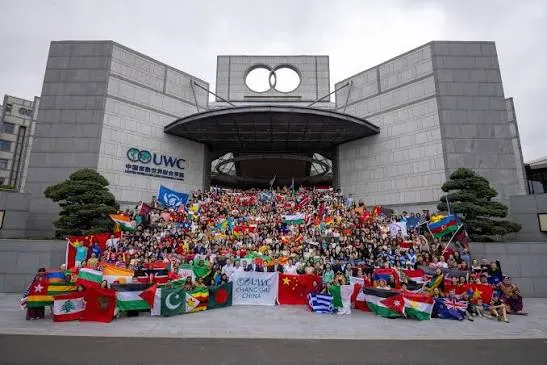
Today, I'm incredibly excited to be joining UWC Changshu in China.
For me, UWC is not just about earning an IB Diploma.
It's about spending two years living independently, sharing a room with someone from another part of the world, having conversations that challenge my assumptions, and learning as much outside the classroom as inside it.
People often assume I'm moving abroad for university when I tell them I'm going to China.
They're surprised when I explain that it's "just" for Grades 11 and 12.
But I think those two years will prepare me for college—and for life—in ways that are impossible to replicate anywhere else.
If I could give one piece of advice to anyone considering applying to UWC, it would be simple:
Do not try to become the applicant you think they want.
Be the person you already are.
Know your values. Be honest in your essays. Be confident in your interviews. Do not invent accomplishments or try to appear perfect.
Because if my experience taught me anything, it's that authenticity is far more compelling than perfection.