
My Background Information
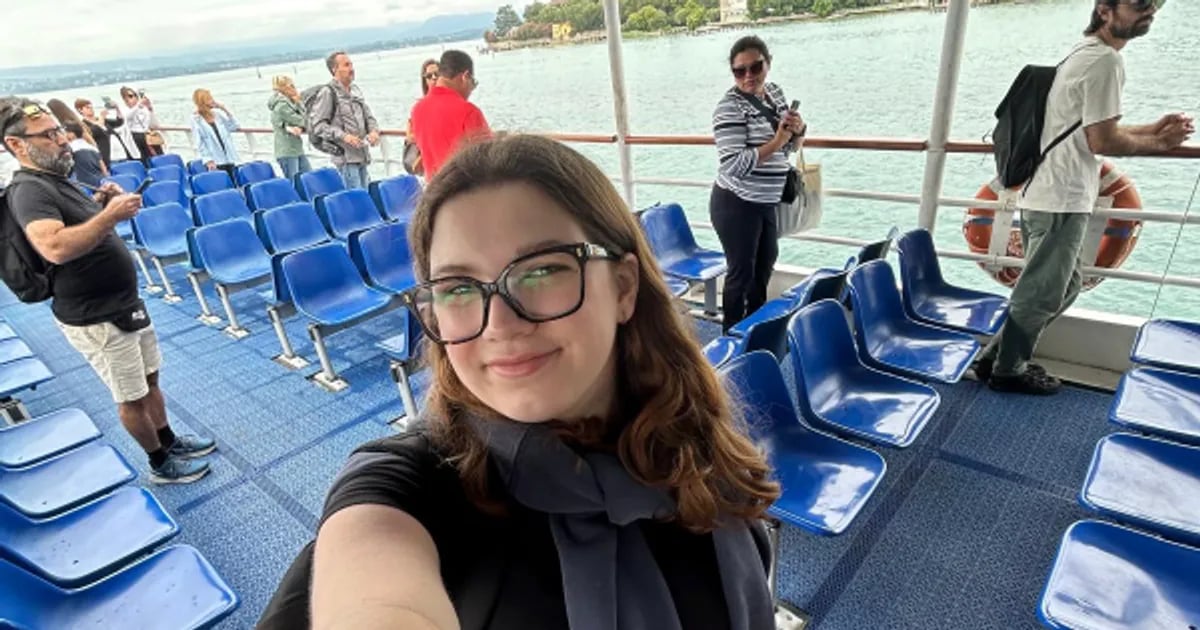
Hi, my name is Tamara. I grew up in Bratislava, Slovakia, where my days were filled with walking around the historic town centre, sitting in cafés, being with my friends, and volunteering. I grew up in a single-parent household, and I am an only child, so my friends were like an extended family for me.
I always loved studying, and to be honest, I was always good at school. Being an only child, my life was always about proving myself to my parents and making them proud—first by getting accepted to a top 5 high school in the country at 11 (it’s an 8-year grammar school), and later by finishing my high school in the UK.
When I was 15, I realized that I needed to put in the work if I ever wanted to study abroad. I didn’t have any magic formula—everything that I did, I did because I genuinely enjoyed it. At that time, I was set on going to UWC, and I was obsessed with it. In retrospect, I put very little effort into the HMC Project Scholarship (which got me to where I am today).
Not getting into UWC as a finalist hurt, yet I never expected to get a full scholarship to go and study at a private boarding school in the UK. Honestly, this experience changed my life. Not only did I have an opportunity to finally study under an educational system that challenged me, but I also got to experience the life of an international student before I went off to uni.
Moving abroad as a teenager isn’t all rainbows and sunshine (there is no sun in the UK), but I learned more about myself in the year I have been here than in my whole life.
These experiences reshaped the way that I learn and understand the world, and I believe they were instrumental to my whole application—so I will mention them a lot. So here is the story of my application process and what I have learned through it! (I don’t know exactly what got me in, but these are my best tips and observations.)
Why I Chose to Study Abroad, Specifically in the US
I always wanted to study abroad, mainly because of my teachers. In Slovakia, I went to a very competitive high school, and it was kind of expected of us to go and study beyond the capital. Yet while my classmates dreamed about going to Czechia or the Netherlands, I wanted to go further.
The US was my lifelong dream—possibly because of all the movies and TV shows. At first, I wanted to study in the US, but being realistic, I was mainly focused on Europe. The countries I really wanted to go to were the Netherlands, Finland, Denmark, and Belgium. As I live in the EU, most of them are free for me, so I always kept them as a security option.
After I moved to the UK, I started to think about attending university there, but I quickly realized that it wasn’t financially possible—especially given that I wanted to apply to top universities. Researching more about the US and the UK, I realized that I much preferred the style in the US—not only because of the amount of opportunities, but also because it’s a bit more flexible and focused on exploration than the UK.
In the UK, you have to choose a subject or major you want to study, and it’s very hard to change it. The fluidity of the US was exactly what I needed. I also chose the US over the UK because of undergraduate funding, which is so much higher in the US, allowing undergraduates to complete research and access many other opportunities.
Going to a British school, which was mainly geared toward UCAS and domestic applications, I really had to do most of the work alone. One thing that helped me through this process, though, was a volunteer counselor I got assigned through my scholarship program. She read my essays and helped me make sense of the whole application, and I think her help was crucial to where I am today.

My Stats When Applying to Colleges
- National curriculum: 3.95 GPA (converted to US scale)
- A Levels: 4 A* predicted — Maths, Further Maths, Physics, Economics
- SAT: 1490 (RW 700, Math 790) — went test-optional
- IELTS: 8.0 overall (Listening 9, Speaking 8.5, Reading 7.5, Writing 7.5)
I went test-optional with my SAT scores because, at the time of submitting my ED application, they weren’t as high. I took the SAT two more times after the ED deadline, mainly because many of my RD schools weren’t test-optional anymore. I really struggled with the English section—even though I speak mostly in English, the type of questions was quite difficult for me to get right, especially in such a short time.
My best tip is to study the concepts first. I used Khan Academy, and then I did practice tests either from Bluebook or—if you want, just specific questions—Oneprep. A big mistake I made was doing all the official Bluebook practice tests before my first SAT and not really reflecting on them properly. Then, for future resits, I had to mainly rely on the unofficial ones, and my favorites are on Oneprep.
As for my other academics, I think the main thing is time management and using the right revision strategies. For A Levels, it’s really important to work through past paper questions to understand the style of the questions.
As for IELTS, when I took it, I was mainly focusing on writing, as I believe that is the hardest section to get right. Don’t really stress about speaking—my best tip is to speak how you normally would and answer their questions to the best of your ability. For reading, don’t worry about your words per minute; instead, focus on understanding what the text is really asking you. And writing really just comes with practice—especially knowing the structures.
My Extracurriculars, Awards, and Honors
One of my biggest honors was placing in the Top 5 at a UK national final for Best Research in a competition called TeenTech. My partner and I researched and designed a transportable kidney perfusion machine, made from cheaper materials, because we wanted it to be accessible for public hospitals and rural areas. We worked on this project for months, and in the middle of it, we learned that a similar project already existed—and had gained FDA approval just a week earlier. It was a really challenging but rewarding time. I learned how to work in a team with people who had different skill sets, and how we can benefit from each other.
To anyone looking to do a STEM project and not knowing where to start, try thinking about a real problem—either in your community or in the world—you would like to solve, and then look for an interesting angle to approach it. We tried to decrease the number of people on kidney waiting lists, as it is the most demanded organ, and many get damaged in transit.
Overall, most of my activities are leadership roles, mainly in school. In Slovakia, I was the class president and council representative for six years. I think this is such a rewarding role because you get to work with people from all over the school—organizing all sorts of activities and dealing with real issues that matter to people. When I moved to the UK, I continued this by becoming my Form’s Prefect, as well as a Maths and Economics Ambassador, which are mainly roles about representing the year group or the subject. My best advice is: apply, and know what you want to change, whether in your school community or beyond.
Later, I earned more senior roles like being the Sixth Form Prefect and Head Scholar, which are the highest leadership positions students can get. Having to go through a real interview and application process for those, I really advise anyone who wants a leadership role to be prepared to answer questions and have a clear plan of what they want to do—it requires some inner reflection. Show people how you will make a difference in their community.
A big part of my life has also been volunteering. I volunteered for Young Progressives, a youth organisation, where I organized three country exchanges and served as a deputy of the international team. I also volunteered as a medic for the Red Cross, helping at community functions as well as weekly training, where I trained a group of younger kids. After moving, I started volunteering at a charity shop and with an online STEM organization, for which I manage their social media. With volunteering, my biggest tip is to do it because you care about the cause, not because you want it to look good on your CV. I genuinely cared about my volunteering, and it became a way for me to relax, feeling like I was making a difference.
Besides that, some of my other awards were math olympiads that I did this year.
During the summer, I also did two online summer programs. One was Girls Who Code, where I was on the AI and Data Science track. I highly recommend this program to anyone looking to learn something new and find an incredible online community. The workload is absolutely manageable, and the assignments are very fun to complete. I learned a lot—not only about data science and coding, but also about my learning style and how to approach learning something outside of the classroom.
Then I participated in a UWC short course about Sustainability and Green Future. This course was more focused on understanding sustainability—what it means and how we can be better, more sustainable citizens. It showed me sides of climate change I had no idea about, because I got to talk to a lot of international students and see how climate change has impacted their communities.
I think the most important thing with your extracurriculars is not having the most impressive or groundbreaking activities, but having consistency. Each EC should show a part of you, and they should all be things you enjoy doing. Don’t feel like your activities aren’t “competitive” enough—if you’re genuinely passionate about them, it will speak more in your application than flashy titles.



All About My Essays
Main Essay
I wrote my main essay about how shopping with my mom taught me curiosity and to ask questions—and how these questions became a map for me, helping me navigate my life, whether through extracurriculars or when moving abroad. When I started the writing process, I didn’t really know what to write about or how to approach the essay. What helped me the most was CollegeEssayGuy and reading some example essays from there to understand the main point of the personal statement.
I rewrote mine like a million times, but the hardest part was deciding on the topic. I had so many ideas, so what I did was choose four values I wanted to show in the essay, and I wrote the beginning paragraph for all my ideas. After the seventh one, I finally got to an idea that—even though it wasn’t final—was the closest. I just felt like that topic was the right one to try and work on.
As I am a yapper, it was quite hard for me to put my thoughts into sentences and keep it concise, so that’s where most of my editing happened. Everyone says this, but it’s really important that the essays reflect who you are as a person and humanize your application to the admissions officer. Don’t feel pressure to write about your best EC or the biggest award you’ve won if you don’t think that will show the AO all they need to know about you. The main job of the essay is to show them who YOU are—so keep it true to yourself, and that is what’s going to be most impressive.
The best tip is to trust yourself and not overedit. Choose one or two trusted people to show your essays to and consider their feedback. And with feedback, not all of it needs to be accepted. If I receive feedback telling me that some structure isn’t clear or that an idea isn’t working to show what I want, I gladly accept it. But if you get feedback that clearly suggests how you should change things, or someone tells you they don’t like the topic, take this feedback in and think about it. There is no magic or perfect topic that will get you into an Ivy, and you don’t need a groundbreaking story—the depth is much more important.
Supplemental Essays
Overall, I worked on my Columbia supplements the longest, trying to make each of them an addition to my profile—so they would show a different picture of me, while also supporting the other parts of my application. You shouldn’t write them all last minute, because for competitive colleges, they can really be the thing that sets you apart from other applicants. For Columbia specifically, it’s really important to mention the Core Curriculum in at least one of the essays, as it’s an integral part of the school, and an application without it may be a red flag.
The List Question
The List question is, in my opinion, the simplest one—yet many people overthink it. It’s there to show the AO what media you engage with and to give them an idea of what you enjoy in your free time that intellectually shapes you. I mentioned everything from books, podcasts, musicals, museums, to YouTube channels.
My biggest tip for this question is to give them variety—don’t just focus on academic books related to your major. Columbia is a very interdisciplinary institution, and it’s important to show that in these questions. I mentioned two of my favorite fantasy books, some history and classic books, and only one book faintly related to my major. This should also apply to any other type of media—whether it’s podcasts or blogs—showing things you genuinely like, like a quirky podcast or a silly YouTube channel that still teaches you something.
You can also include things from an international perspective: podcasts or shows that aren’t all based in the US. Feel free to include ones from your country—you don’t need to provide an explanation or translation.
Community, Disagreement, and Adversity
For the three supplements about community, disagreement, and adversity, I treated each one as a window into my life, trying to show the AO a different side of me and how I would fit into their campus. These are very common questions, so you can reuse some ideas from different essays you’ve written—just don’t copy and paste. I approached each as a mini story, and what really helped me was brainstorming my ideas into mind maps to see how all the values and parts of my life could connect to each question.
Why Us and Why Major
For the Why Us and Why Major supplements, I started by researching the school—going through the entire program I wanted to study, extracurricular activities, student life, and other parts of the school I’d be interested in. I wrote all of this down in a big doc to refer to later, but honestly, the best thing is writing the essay right after researching.
Based on my experience, it’s better to mention 3–4 specific things rather than a laundry list of everything you like about the school. For my Why Us, I mentioned a class I liked that wasn’t part of my major, then a club I’d like to join (and how I’d use what I learned there), then a professor who inspired me and who I’d like to work with—and because Columbia is in NYC, I connected this to a real non-profit organization in NYC that I’d like to work with.
In general, it’s really important to connect the things in these short supplemental essays, but they don’t need to follow a chronological order like mine did. Also, when naming professors, it’s important not to just name-drop them, but to connect them to something you want to learn from them. Maybe you’re working on a project and you’d like that professor’s help, or you want to engage in research with them.
This essay is also a perfect opportunity to mention NYC as an extension of campus and how you want to take advantage of the opportunities there, without clichés like “it’s the greatest city ever” or “there are many amazing internships.” For the major essay, I used the method of connecting a real engineering project I had done to why it motivated me to pursue engineering further—and how I would benefit from Columbia’s resources, again mentioning professors, classes, and resources I wanted to use. This gives you space to show academic curiosity, which is something Columbia values.
My List for How to Write a Killer Essay
- Brainstorm the values you want to show, then find a story from your life that demonstrates them
- Don’t overthink your first draft—just write it down
- Reread the draft or give it to someone else to see if it makes sense
- Make sure it is about YOU
- Check whether it fits with the rest of your application
- Once it’s done, don’t over-edit it



How Long It Took to Prepare My Applications, and How I Shaped the Process
I started thinking about universities when I began high school, but I truly started the application process in the summer of my senior year. After researching some schools that I liked and would want to attend, I started drafting my main Common App essay. This took me longer than I expected because I didn’t really feel the pressure to finish it until late September.
Having to juggle the heavier workload of my last year, SAT prep, extracurriculars, and essays was really hard, so I dedicated specific days—and even specific times of day—to specific tasks. For example, on Mondays during lunch, I would always work on my supplemental essays, and if I didn’t have an exam on Wednesday afternoons, I would do a longer SAT revision session. This helped me get everything done on time while still leaving room to go out with my friends.
During this time, I really loved the Borderless website and all the reels, but I already knew most of the important application information from my earlier research—or just from scrolling through TikTok. As mentioned earlier, I relied a lot on CollegeEssayGuy for essay structures and ideas, and I also used various YouTube channels to learn more about the schools I was applying to.
I managed to get a fee waiver from my school because I am on a full scholarship there, so they supplied me with a document confirming that. In general, a lot of schools have school-specific fee waivers you can apply for if you’re unable to secure the Common App one. The requirements for these waivers usually aren’t heavily tested, and you often don’t need extensive evidence to receive one.
The only thing I paid for was the CSS Profile, which was $25, and I felt like that was an amount I could afford.
Why I Chose Columbia University
My why for Columbia
I know this may sound really cliché, but there wasn’t one specific moment when I decided Columbia was my dream school. Instead, it was a collection of small moments and details about the university that made it stand out to me. I first became interested in Columbia after seeing the List supplemental question and thinking, “This would be fun to write.”
I’ve always wanted to study STEM, but I’m also deeply interested in politics and genuinely enjoy reading about the history of our society. Columbia’s Core Curriculum felt like the perfect fit because I could still pursue a rigorous engineering degree while also taking classes on the history of civilizations or art, and completing the non-technical electives required to graduate. I also loved Columbia’s interdisciplinary approach to learning and its emphasis on creating well-rounded students with a broad knowledge base—students who can genuinely make positive changes in the world.
As I learned more about SEAS, I fell in love with its ethos of engineering for humanity. It represents everything I want to do in my life, and it’s the main reason I want to study engineering in the first place. The more I read, the more I felt it was a place where I could actually make a difference in the way I want to. Columbia began to represent a place where you come to learn, but where they don’t try to mold you into a “perfect student.” Instead, they take your talents and ambitions and help you achieve more than you ever thought possible.
The city also played a big role in my decision process. Because I grew up in a capital and was used to big-city life, I knew I wanted something similar in university. I chose to apply to Columbia before I ever visited New York, but when I finally did visit, I fell in love with it. I’ve been to many vibrant cities in my life, yet New York captured me in a different way. I loved how the city moves nonstop—and the infinite opportunities it offers. After that visit, New York became yet another reason why I wanted Columbia even more.
My Expectations
I’m really excited about starting college this fall. I’m most excited about meeting new people and, hopefully, finding a lifelong group of friends. I’m also excited about exploring NYC and everything the neighbourhoods have to offer—cafés, food, entertainment—and going to all the museums that Columbia students can access for free.
I also hope to travel to other parts of the US and experience life in different states—especially the Northwest or the West Coast, since I’ve never been there. I’m looking forward to joining clubs and activities, meeting even more people, and doing the things I love in my free time—really embracing everything the university has to offer.
How to Research Schools
When it comes to research, I think the most useful resource is the school website, because it offers the most accurate and detailed information. I also took advantage of online information sessions that the university hosted, since they helped me learn more and hear current students talk about their experiences.
I found it useful to reach out to current students, and even to watch students on TikTok, to get a feel for day-to-day life and learn small details that aren’t always mentioned on official pages. Overall, research is important—not just for writing essays, but for understanding whether a school is truly the right place to make such a long-term commitment.
My Experiences with Materials Beyond Essays
I think I was very lucky when it came to my Letters of Recommendation, because my school is quite small and my class sizes are also small. That allowed my teachers to really get to know me—the type of student I am and the activities I do.
For your letters, it’s really important that your teachers, in one way or another, back up the claims you make in your activity section, because it’s one of the only more “objective” ways for AOs to see that you’re not exaggerating. I highly recommend building a good relationship with your teachers, asking for recommendations early, and offering to help them with the process—especially if they’ve never used the Common App before and don’t know how or where to upload them. Helping them doesn’t mean writing your own letters, but it can mean providing a resume, and maybe asking them to mention certain activities in their recommendations. Also, make sure you give your teachers enough time to upload the letter so you’re not stressing the night before the deadline.
I also had some struggles with my transcripts, because I changed schools and countries, and my current school only provided the transcript from the time I was there—not the rest of my high school journey. In the span of a day, I had to find my old transcripts, get them translated, and send them to my high school so they could forward everything to my university. So I really recommend getting all four years of your high school transcripts translated early, so you don’t run into any silly problems that could hurt your application.
My best tip is to organize all your supplemental materials and ideally have everything ready well before submitting your application. If you go to an international school, also make sure you have a dedicated counselor of some sort, because they will be the person submitting your transcripts, recommendations, and the school profile. If they’ve never worked with the Common App before, be ready to supply them with materials and help them in any way you can, so everything is submitted correctly.

My Regrets and “Glad I Did That” Moments
I think one of the most crucial points in my life—and therefore in my application journey—was moving to high school abroad. I not only learned how to be an international student, but I also gained so much more independence and a deeper understanding of the world, which I later used throughout my application. While it isn’t necessary to study abroad in high school in order to apply abroad, if you have the opportunity, I really recommend it—it played a crucial part in my journey. Moving abroad taught me how to navigate uncertainty, and I honestly think that became one of the greatest skills I used during the application process.
Some things I’m really glad I did were starting early and having at least a rough plan. That kept me from rushing everything at the last minute and gave me time to actually show my personality through my writing. I’m also really happy that throughout high school, I consistently pursued the activities I genuinely enjoyed—and tried to achieve something meaningful within them.
I think one of the best decisions I made at that moment was submitting the research proposal for the TeenTech competition. I was doubting our idea so much that I wasn’t even sure what to submit, until my partner convinced me to send it in on the day of the deadline. That competition changed the way I saw engineering and innovation, and I got to meet so many inspiring people.
Looking back, I wish I hadn’t spent so much time comparing my stats or essays to other applicants. Everybody’s story is different, and no two people with the same profile will have the same outcome. My biggest advice is: don’t compare yourself to your friends or to people online. Yes—look at a school’s general profile and the kinds of stats that are common for admitted students, but beyond that, try to use your time to revise, build your application, or craft your essays instead of asking people on Reddit to “chance” you.
My Advice for Students Who Want to Study Abroad
First, I just want to disclaimer that I don’t know exactly what about my application got me into Columbia, so I’m going to share the things I think helped me.
I think the key factor was the competitive international scholarship that allowed me to study in the UK. It showed that I wanted to pursue a more rigorous education outside my country and that I already had the adaptability needed to succeed while studying abroad. It also showed that I had already lived in a setting similar to the one I would be in at university—and that the experience moved me forward rather than set me back.
Another factor that I think really helped was my essays. I didn’t target my main essay at Columbia specifically, but the values I showed in it were values that Columbia aligns with, and I think that emphasized my fit for the school and my ability to thrive in a competitive and rigorous environment. At the same time, my supplemental essays were very Columbia-specific, and in each one, I tried to show how I would interact with people on campus and what kinds of things I would genuinely get involved in.
In every essay, I made sure I showed a different part of my personality—why Columbia would benefit from having me on campus, how I would grow there, and what I would contribute—while also showing my deep knowledge of Columbia. Writing them also taught me a lot about the school, and even when writing supplements for other universities, the process helped me realize whether I truly wanted to attend that school or not.
In the end, my whole application tried to tell one story—and that was my story.
Advice on Getting into Top-Tier Universities in an Urban Setting
This advice is mainly for students who want to apply to universities in big cities, but even if you don’t, you can still apply some of it to the local area your school is in.
Beyond the classic “research the school well” and “build a strong application,” one of the best ways to stand out for top universities in an urban setting is to leverage the city the university is located. This can become a unique point that goes beyond the usual lines like “the city is diverse” or “there are great opportunities.” Instead, focus on how you can fit into the urban community and how you can personally grow within it.
You can do this by finding specific community engagement programs you’d want to participate in, or by discussing ideas for what you think could benefit the community in that city. This might look like working with nonprofits, museums, or even startups.
Urban settings have a lot of advantages, and a good way to stand out is to show how you’ll use what you learn in the classroom and apply it outside of campus. It can be useful to mention internships the city enables, but if you don’t want to focus on career prospects, you can also highlight other things you want to take advantage of—museums, music shows, food culture, or anything else that genuinely excites you.
This kind of city engagement shows universities that you’re an open and outward thinker—someone who won’t spend their whole time locked in a dorm, and who will actually take advantage of what both the university and the city have to offer. I tried to do this in my application in both the Why Us essay and my community essay, so I could avoid clichés and build real connections to what I was looking forward to gaining from the city.
How to Stand Out (Hopefully in a Good Way)
There are many ways of standing out—good and bad. Some of the bad ways include writing an essay that comes across as insulting or belittling someone, or choosing an inappropriate topic.
But there are also good ways to stand out and truly differentiate yourself from the crowd:
Stop comparing your stats and ECs to other people
If you go online, find someone who got into your dream school, and try to do the exact same thing they did, you still might not get in—not because you weren’t qualified, but because colleges don’t need two identical students. They’re building a class of people with different experiences, so everyone can learn from each other. So if you look at other accepted students’ extracurriculars, don’t copy them—get inspired to pursue something you actually care about.
Make your application coherent
Your values in your essays should reflect your activities. Your letters of recommendation should reinforce the same values and themes. Everything should fit together like a puzzle. Think of it as threading one thread through your entire application. This makes the admissions officer’s job easier because they can clearly see who you are.
Have an impact in what you do
You don’t need six clubs and ten leadership titles, and you don’t need to win every Olympiad. But having one or two achievements, backed up by other strong extracurriculars, can show what you truly care about. There are hundreds of class presidents—what matters is the impact you make through that role. Admissions officers can tell depth from quantity, and they value depth.
Be passionate about something
Everyone is passionate about something—and it doesn’t have to be curing cancer or solving world hunger. You can be deeply passionate about cooking, helping kids learn how to read, or literally anything. Once you find that passion, leverage it. Let it become your common thread. Not every activity has to relate to your major, but everything should have a shimmer of real interest behind it.
You don’t need to cure cancer or solve world hunger—you just need to have intention.
And honestly, the best way to differentiate yourself is simply to be YOU.
My Financial Aid & Scholarships
I received $90k per year in aid from Columbia. This covers tuition, housing, and food. However, because the total cost of attendance is a bit higher, my family is still expected to contribute about $8k. This was doable for my family, and I will say that need-based aid really tries to make sure your family can afford any contributions, big or small.
I submitted the CSS Profile, which—even though it is dreadful and long—the questions made it quite straightforward to fill out.
A good tip is to sit down with your parents and discuss how much your family can realistically afford in parental contributions, while also taking into account travel costs, personal expenses, and unexpected expenses. While it’s not uncommon to see full-ride scholarships, it’s quite uncommon for scholarships to also cover all indirect and personal costs.
Don’t rely only on need-based scholarships and assume you won’t have to pay anything. Also consider applying during senior year to a few outside scholarships that can help cover either part of your cost of attendance or your day-to-day expenses.
If you’re unsure how much to budget for personal expenses, I’d suggest looking up flight prices and multiplying that by 4, plus—depending on where your university is located and how much you usually spend—budgeting around $2,000–$5,000 per year for personal expenses like school supplies, going out, hygiene, and other things you may need. This should give you a rough estimate of how much you’ll spend on personal costs, and it’s really useful to know this when planning your family budget.
Also, make sure you understand what type of aid your school offers—merit-based or need-based. And after you’re admitted, the financial aid office is usually very responsive and helpful in explaining your financial aid award, and they are sometimes open to appeals as well.