Background
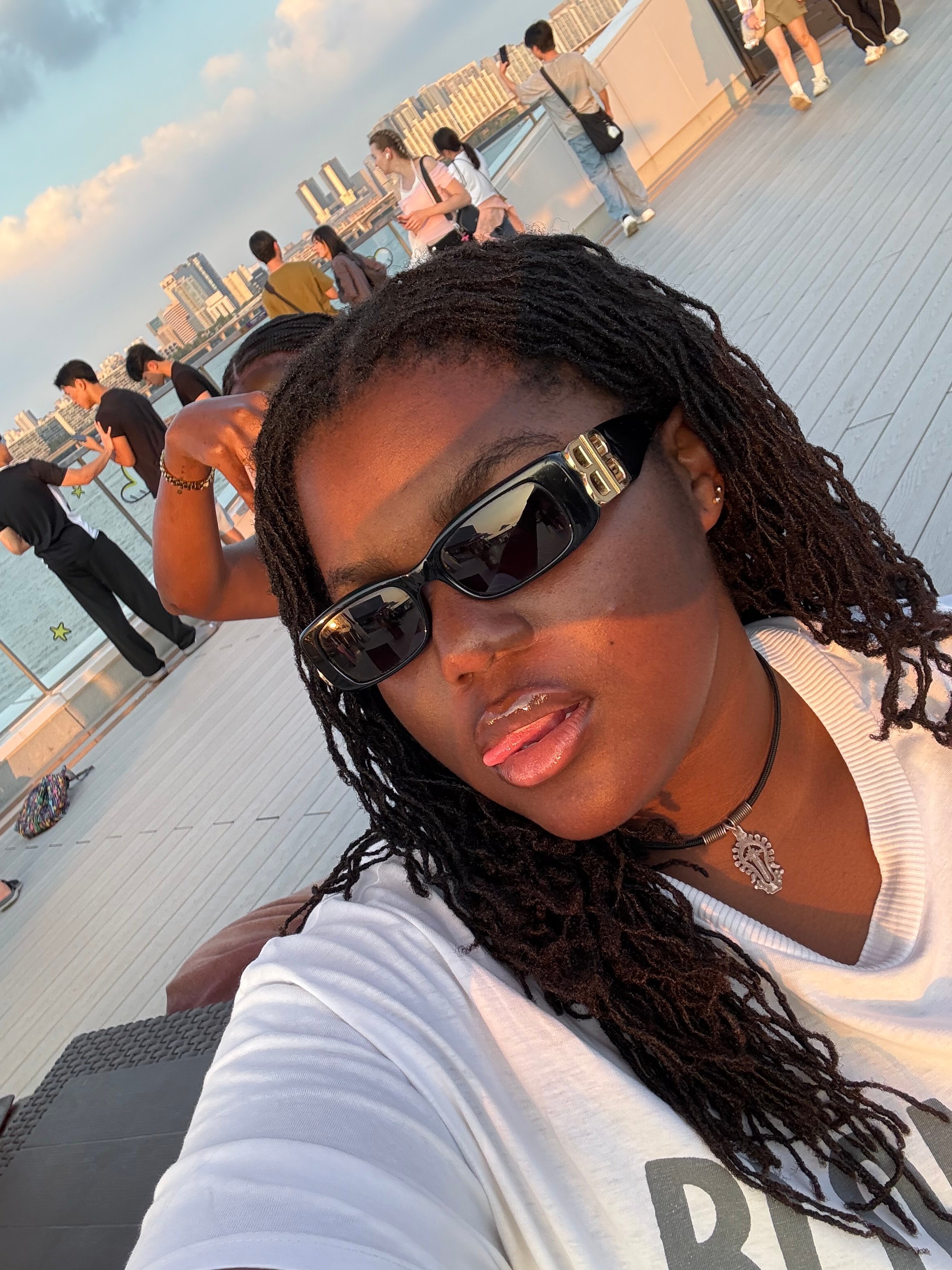
My name is Paula-Jayne Mbiaketcha, welcome to my seven minutes of Fame! I am Cameroonian. I was born in the U.S, then lived in Cameroon for nine years, thereafter moving to Kenya for another nine years. I completed middle school in French school Nairobi, and High school at Braeside Lavington, where I sat for my IGCSE examination. I continued my education with A levels at Braeside, albeit being homeschooled for approximately 1 term in year 13, and graduated in June 2025.
Studying Abroad
It would be an exaggeration to say that going abroad for university was a prospect for my future that was set in stone, however that is pretty close to the truth. The transition from high school to university abroad was natural in all the environments that I had been in, thus I had in a similar fashion adopted that mentality. Moreover, I was sure that I did not want to stay in the same place. I was eager to explore something new and exciting, hence studying abroad was something that I was very set on!
Why South Korea?
Initially, I did not consider South Korea at all! The only countries that I gave consideration to, and applied to, were the U.S and France. In the U.S, I applied to Georgetown, The George Washington University, University of Southern California, University of Michigan and the University of Maryland. In France, I applied to Leornardo Da Vinci School of management (EMLV) and ESSEC Business School. It was further down in my application journey that I decided to apply to Yonsei! It is one of the SKY universities, SKY being an unofficial acronym for the three prestigious, highly competitive universities in the Nation. I chose South Korea, because I wanted to study somewhere exciting and unique! Most of my classmates and childhood friends had opted to venture into the typical student destinations, I.e the UK, Canada and the US. I however, wanted to immerse myself into a new culturally unfamiliar territory, thus following the hard-fought approval of my mum, I applied to Yonsei University!

Why Yonsei?
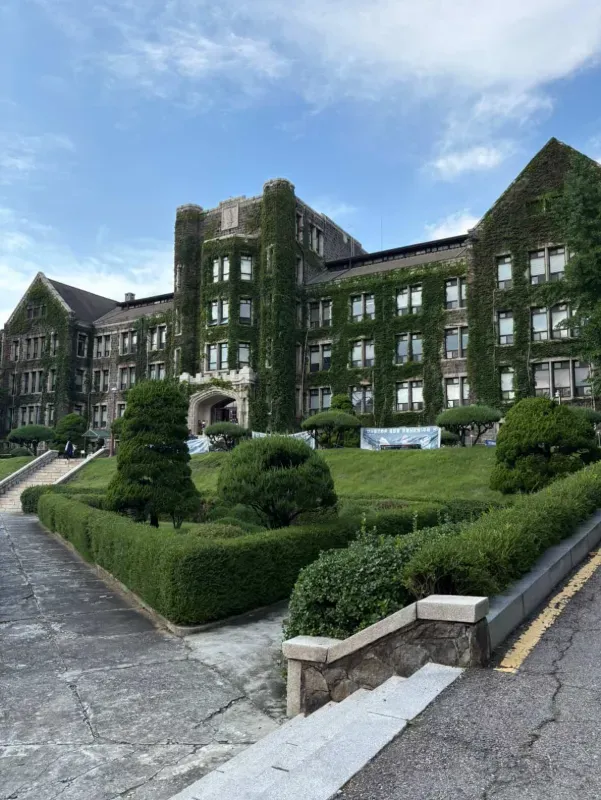
Among the formal reasons for why I chose Yonsei is its world ranking. It is ranked 50th in the world, as per the QS University rankings, and has held the title of the top private university in Asia for four consecutive years. I must confess however, my exposure to the University's informal events such as concerts and student festivals, also played a huge role in influencing my decision to apply! I applied to the Underwood International College, which is a liberal arts college within the University. With a focus on diversity, the college offers a range of courses that are fully taught in English. This was the most important factor of appeal for me, as well as the small class sizes, interdisciplinary curriculum, and opportunity to study at 2 campuses in two different cities; from Songdo in Incheon, to Sinchon in Seoul.

Stats & Extracurriculars
I applied using my predicted grades. I had sat for my French A-Level exam in year 12, and scored an A in it. This final result, combined with my predicted grades of an A in both Math and Economics, gave me a triple A Application grade.
I also gave a brief overview of the extracurricular activities I had done during high school in one of my essays. Among these, was volunteering at the Kenyan Society for the Protection and Care of animals (KSPCA) Animal shelter and three different community service projects within my school that were fundraisers leading to charity causes. Under my awards and honors section, I outlined the following awards that I had received over the years;
- Academic Excellence Awards
- Performing Arts Award
- Certificate of Leadership Recognition
- Honorable Mention at the Harvard MUN
- Securitary Certificate
- Battle of the Crows Colloquium Award
- World Scholars Cup Awards
In addition to these, I also talked about my work experience opportunities! I interned as a finance intern at Africa Reinsurance Corporation, and was a CEO assistant intern for a non-profit organization, Women For Sustainable Energy and Climate Action. The awards, community service evidence, and work experience, are not intrinsically what are valuable, but how these factors have shaped you into who you are today. Don’t list them just to sound impressive, demonstrate the impact they made on you!


English Proficiency
The Underwood International College within Yonsei, is the only division that offers all studies in English. Therefore, as an English faction of the University, they do ask for proof of English proficiency. I was exempt from this, because I am a native English speaker, and I studied my secondary education in English
Deadlines, Diversity and Decisions ; Application Essays
The Application essay prompts were very rigorous! I wrote 2 essays, both under the UIC Yonsei College division that I was applying to. The first essay had 5 prompt options, and I chose the one which resonated best with me, which was, “One of UIC’s greatest strengths is its immense diversity. Describe how your own personal background would add to UIC’s diversity, and why your personal traits would stand out, even in such a rich multilingual and multicultural institution”. The angle of this particular prompt was very similar to the personal statement I had written for my former applications, thus I chose to modify my former essay to address the question. I highlighted my multilingual and global citizenship background, essentially explaining how my diversified background would perfectly align with UIC’s value of diversity. My second essay was under the prompt, ‘Underwood International College is an all English liberal arts college within a major Korean University. What makes you a suitable fit for UIC, and what have you done so far to prepare for a rigorous liberal arts education? How do you plan to achieve your future goals at UIC and beyond?’ This is the essay where I interwove my awards, extracurriculars, community service and work experience with each other to craft a comprehensive essay on how they had shaped me to become the leader and entrepreneur that I am today. Both the essays were rather intense, and planning them out took quite a chunk of time. In my previous experience of applying to universities in France and the US, most of the essays tended to take the angle of, “Why is our university a good fit for you?”, whereas Yonsei’s UIC essays were more of “Why do you belong here? Why are you a good fit for us?”, which required a deeper level of introspection to craft a response.


An Unconventional Application Process
I actually applied to Yonsei in secret! While waiting on my responses from the US and France, I used the remainder of my application fee fund to apply to Yonsei, without my moms knowledge. The application fee was 70 USD. As it had not been part of my original plan, I started preparing my application a mere week before the deadline, which was very far from the ideal 2-3 month timeframe that is encouraged for applications. Something I found very unique about Yonsei, was that unlike a majority of universities that have online application portals, Yonsei requires its applicants to prepare a physical application and send it to the university by post! As an international applicant, who had started my application really late, I was extremely stressed! I frantically worked on my applications, worried that If I sent them too late, they would arrive past the application closing date. Completing all my essays and documents in approximately 4 days, I packed them and sent them by post. To my immense relief, they arrived at the University a day before the application deadline, and therefore my application was considered. My resources were perhaps unconventional, but most of my advice came from Social media; international students who had experienced applying to South Korea for themselves.
Student Visa Application Process
The Visa application process for South Korea is a hybrid of online and physical steps. There was an online application form that I needed to fill in and print, as well as printing out copies of my academic certificates, financial documents, and identification documents. The Embassy required the applicants to get their documents officially verified by the Kenyan Ministry of Education, Ministry of Foreign affairs, and the South Korean Embassy, and thereafter scan and upload all the required documents onto the South Korea Visa Portal. Despite the straightforward and relatively simple procedure, my personal experience was not the best due to a number of factors. Firstly, the week in which I sought to go to the national ministry offices to get my documents verified, was unfortunately one where national protests and demonstrations were rampant in the Nairobi Central Business District. This delayed me by a few days, a setback that I feared I could not easily accommodate. Fortunately, the option of having an expedited process was available on the Kenyan E-Citizen Website, which was the platform I used to get my documents verified by the Kenyan Ministry of Foreign Affairs. At a fee of approximately 1,500 Kenyan Shillings, I got all my documents ready, and was able to upload them to the Visa Portal. I received my Visa a week later!
Tuition and Living Costs
The tuition fee is 8 million won per semester, which is approximately 5,300 USD. We have 2 semesters, thus my annual school fees are about 11,000 USD. Compared to my initial options, Yonsei’s fees are definitely more manageable. They also offer scholarships, however I was not awarded any. The cost of living is similarly affordable. It is mandatory for first year students to stay in the on-campus dorms, where rent is priced at 600 USD per semester. I have most of my meals at the University's cafeteria, where the breakfast buffet is priced at 1000 won, and lunch and dinner at around 4.5 USD. Convenience stores are an extremely popular option amongst students, for their cheap variety of snacks. Lifestyle is the defining factor of one's cost of living, for whilst accommodation and food are rather affordable, going out for outings, events or restaurants can get rather expensive!
Class structure
I am part of the Underwood International College in Yonsei, and within that, there are further subdivisions e.g Engineering, Humanities, Arts & Social Sciences, and the Underwood division, of which the latter is the one I am part of! The Subdivision offers 5 majors, namely:
- Comparative Literature and Culture
- Economics
- International Studies
- Political Science and International Relations
- Life Science and Biotechnology
As a first year student, I have not yet had the chance to formally pick a major, as the selection happens at the beginning of your second year. However, I am very set on picking Economics. All freshmen study the divisions’ Common Curriculum, which is a compilation of foundational classes across all disciplines. Despite this, we do have the autonomy to pick a few classes, which I really enjoy.
Adaptation and Culture Shocks
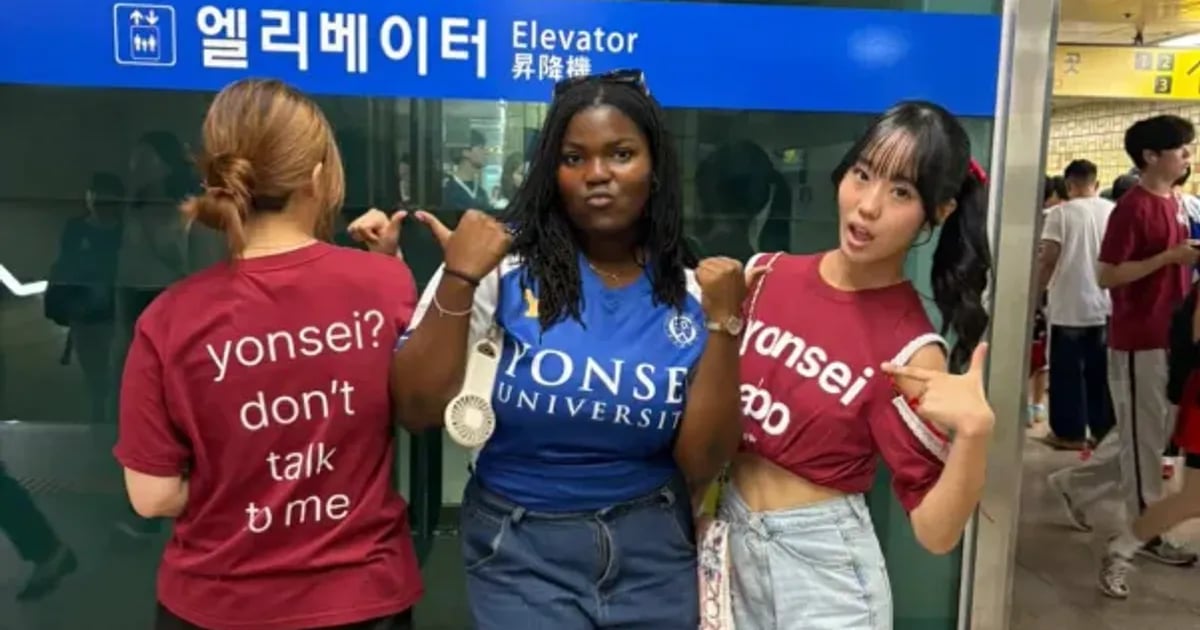
My first week was pretty great! All my classes were laidback, introductory sessions where the lecturers broke down the semester syllabus. I quickly made friends, and went out with them often. The adaptation process was smooth for me, as I had the advantage of having been exposed to many elements of South Korean Culture, through various elements of the media. For instance, it is a sign of respect to slightly bow when greeting or thanking someone, which I fortunately already knew before I arrived, thus I settled down rather easily. Do research on the culture before you arrive, learn what is considered disrespectful, what the norms are, and facts about the lifestyles of your destination. I did not experience any culture shocks because I had done all this, thus I can only imagine the confusion I would have been in if I had not bothered to do my research! For instance, in South Korea the restaurant service culture is vastly different from the majority of the world. Whilst in most countries, you wait at your table and let the waiters attend to you, from taking your order, bringing your order to your table, clearing up, and bringing you the bill, in South Korea there is less interaction with the servers. Generally, in most restaurants here, customers go up to the counter to order and pay, for the most part pick up their own order, and clear their table when they are done. All countries have their own way of life, so try to learn a glimpse of it before you move there!

Work - Life Balance ; Karaoke and Notes
The Yonsei culture heavily prioritises the balance between work and life, which is something that is rather admirable! Although the university is one of the most prestigious schools in Asia, the study culture is not as overwhelming as I had assumed it would be. All the students, International and Korean students alike, take their studies very seriously. However, we nevertheless have festivals, student events, parties, and activities regularly! Whilst the academic workload is heavily dependent on which course you are taking, it is still considerably hefty. For instance I have a subject called eastern civilization, an online class I would consider my easiest, in which the quantity of assigned reading is insane! Thus the work aspect of the balance is undeniably rigorous, but life balance is thankfully matched in intensity. Navigating the two spaces is something that I have been able to do pretty well so far, with much enjoyment. From late night karaoke sessions with my friends, to intense study block sessions and reviewing notes, life at Yonsei has been very rewarding.
Making new friends!
All my anxiety and reservations about making friends dissolved when I realised that everybody is new here! Even if you are not at all extroverted, it helps to think about the fact that everyone wants to make friends just as much as you do. No one has any bad intentions, and most people will likely be as nervous as you are, so don’t let making new friends scare you! During Orientation, I struck up conversation with as many people as I could, getting to meet students from all over the world. Taking the first step is the biggest way to connect with others, and find your people in the process.

Managing Finances
The first lesson I learned when it came to managing my finances, one that I learned very quickly, is to not make any unnecessary expenditures! Back in high school, whenever I needed money I would simply go to my Mother to ask for more, but now that I am independently managing my finances, I am trying to budget and be resourceful with my finances every month. The most practical advice that I can give is to strive to go for the cheapest option as much as you can. Buy the cheapest brand of bottled water, look for student discounts in service subscriptions, and try to maintain an affordable lifestyle; saving starts with the little things!
Post graduation plan
I do not know exactly what I plan to do after graduation just yet. My post high school plan was so structured, as I had planned on applying to a selection of Universities, in select certain countries, but that didn’t work out. I am living out a new-found dream at Yonsei, and I am now trying to take life one day at a time, as I figure out my next steps. I am working on doing as many Internships as I can during my holidays, in hopes that along the way, I will build a clear vision of what I want to do next.
Advice to Applicants
- Start your applications early! You cannot afford to procrastinate any factor of your application, be it the essays or institution-stamped documents, because you need to factor in time for the post carrier to arrive in South Korea. Although the admissions office was accommodating of my situation, being that the National Ministry offices that needed to verify my documents were inaccessible due to Protests (Maandamano), it is not guaranteed that they would otherwise make any compromises on the application deadline. Therefore, make sure to send in your application as early as possible!
- Yonsei required all admitted students to make a number of payments before the start of the semester, which was during the summer for me, as I applied to the fall intake. Due to this, make sure to regularly check your email! I missed an email on the payment of miscellaneous fees, which led to a whole bunch of complications with receiving my student resident card, amenities services card and even opening a bank account. Thus, I would encourage all international students to be on the lookout for important emails even before you join the university. Subscriptions and payments, such as for the Yonsei newsletter and Student council, are some examples of stuff I had to pay for before landing in South Korea.
- My last piece of advice is not specific to Yonsei, but one to all prospective international students. Don’t let rejections get you down too much! Yonsei was one of my dream schools, thus I was naturally very happy to get in. However, before Yonsei was in the picture, my ultimate dream university had been the University of Michigan. I had put so much effort into that application, but got rejected, which was very upsetting to say the least. Adding salt to the wound, I got accepted to all my applications in France, but got rejections from all the other universities I’d applied to in the US ! Despite that, I nevertheless ended up somewhere I am just as happy to be, so don’t be too rigid, and don’t panic if your first plan doesn’t work out! Sometimes, rejection is redirection; and although it may not feel that way in the moment, you will be okay!