
When I first decided to apply to a summer program in the United States, I wasn't trying to "fall in love" with a university. Like many international students, I had spent countless hours comparing rankings, reading Reddit threads, watching campus tours on YouTube, and scrolling through Quora posts trying to imagine what life at different universities would actually be like.
But no amount of online research could answer one simple question:
Would I actually be happy there?
That question is what ultimately led me to the UCLA Summer Songwriting Intensive, offered through the UCLA Herb Alpert School of Music. I expected to improve as a songwriter. What I didn't expect was to completely rethink how I evaluate universities.
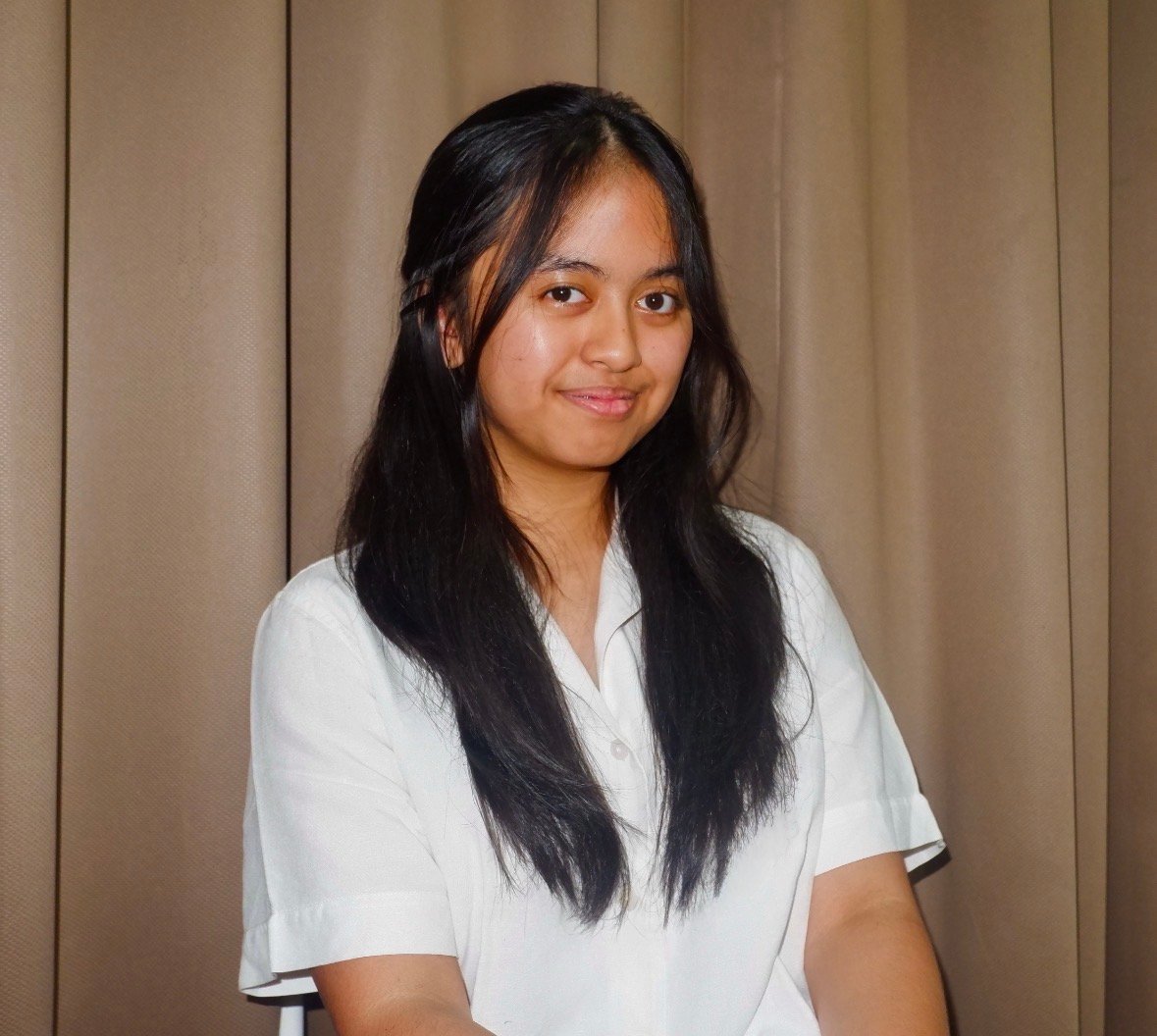
My name is Matahati (Maha) Sabri, and I'm currently a senior at Mentari Intercultural School Jakarta in Indonesia, where I study the International Baccalaureate Diploma Programme.
Although I've spent most of my life in Jakarta, I also lived in the United States for four and a half years while my mother pursued her PhD in the Chicago area. After returning to Indonesia, I continued my education here before deciding to spend part of my summer back in the United States.
Interestingly, my summer ended up taking me to two very different universities. I attended the Summer Songwriting Intensive at UCLA's Herb Alpert School of Music after participating in the Career Insights in Health Care and Biological Sciences program at the University of Chicago.
Although both programs were held in the U.S., they couldn't have been more different—and that was exactly what made the experience so valuable.

Applying to the UCLA Summer Songwriting Intensive
Unlike many academic summer programs that focus heavily on grades and coursework, the UCLA Summer Songwriting Intensive was designed to understand something much more personal: your relationship with music.
Every program at UCLA has different application requirements, even within the Herb Alpert School of Music. Students applying to instrumental intensives, for example, might submit recordings of themselves playing their instrument. Friends I met during the program who attended the jazz intensive had completely different portfolio requirements from mine because they were evaluated primarily on their instrumental performance.
For songwriting, however, the application focused on creativity.
I submitted:
- A recording of an original song that I had written.
- A video of me singing.
- Written responses explaining my interest in songwriting and why I wanted to study this specific area of music.
What stood out to me was that the admissions team wasn't looking for perfection.
They wanted evidence of genuine curiosity.

Your compositions didn't need to sound professionally produced. Your portfolio didn't need to be flawless. Instead, they wanted to see that you had already started creating, experimenting, and developing your own artistic voice. Throughout the application, there was a strong emphasis on telling your story—why music mattered to you, what inspired you to write songs, and why this particular program aligned with your goals.
Looking back, I think that authenticity mattered far more than trying to present yourself as a finished musician.
Finally Experiencing Campus Instead of Reading About It
Before attending UCLA, I had researched universities the way many students do.
I compared rankings.
I searched Reddit.
I read Quora discussions.
I watched campus tours.
But I gradually realized something: many of those opinions were years old. Some posts had been written by students who graduated decades ago (class of 1978). Even the newest videos couldn't fully capture what it actually feels like to wake up, commute to class, meet classmates, and spend your evenings around campus.
Actually living near UCLA answered questions I didn't even know I had.
Instead of staying in university housing, I booked an Airbnb close to campus and commuted each day. The walk itself became part of the experience.
Every morning, I walked through Westwood toward campus, passing students on their way to lectures, cafés filled with conversations, and streets that slowly began to feel familiar rather than intimidating.
I ate lunch and dinner around the UCLA neighborhood, explored local cafés, wandered through the campus between classes, and slowly started imagining what everyday life as a UCLA student might actually feel like.
That was something no ranking website could ever tell me.
Learning at a Completely Different Pace
The biggest academic adjustment wasn't the difficulty of the material.
It was the speed.
At my high school, I study IB Music Standard Level, but because relatively few students pursue music seriously, classes naturally move at a pace that allows everyone to keep up. The Summer Songwriting Intensive was completely different. Everyone there had intentionally chosen to spend part of their summer writing music.
That immediately changed the classroom dynamic.
The instructors assumed that we already understood musical fundamentals. Instead of spending long periods explaining theory, they introduced concepts briefly before asking us to immediately apply them.
We weren't simply discussing songwriting.
We were writing songs.
Constantly.
Within just one week, I wrote three original songs.
That number still surprises me because, under normal circumstances, I would spend much longer perfecting a single composition before moving on to another. At UCLA, however, the philosophy was different.
The goal wasn't to spend days trying to create the "perfect" first draft.
It was to create quickly, receive feedback, revise, and improve.
Rather than getting stuck at the starting line, we continuously produced new work, allowing far more time for refinement and collaboration.
That shift in mindset fundamentally changed how I think about creative work.

Learning From Musicians Who Work in the Industry
One of the most memorable parts of the program happened outside the regular classroom schedule.
During the week, we attended a music production masterclass led by professional producers who had worked with major recording artists. Instead of simply teaching us software or technical skills, they walked us through how music is actually produced in the industry.
Even more exciting, they helped us begin producing our own demos. For someone interested in songwriting, hearing directly from professionals actively working in music was invaluable. It connected everything we were learning in class to careers beyond the university.
Moments like these reminded me that summer programs aren't only about coursework.
They're also about access.
Access to people, experiences, and conversations that would otherwise be incredibly difficult to find.

Finding Community Through Music
One thing I hadn't fully anticipated was how collaborative the environment would be.
Because everyone had gone through a portfolio-based admissions process, every student arrived genuinely passionate about creating music.
People constantly exchanged ideas, offered feedback on each other's songs, experimented with different styles, and celebrated one another's progress.
There was very little sense of competition.
Instead, everyone wanted everyone else to improve.
That atmosphere made writing feel far less intimidating.
Whenever someone finished a draft, they immediately shared it, gathered suggestions, and started revising. Watching dozens of students approach creativity this openly encouraged me to become much more comfortable sharing unfinished work rather than waiting for everything to be perfect.
Discovering Westwood and Los Angeles
Of course, learning didn't stop when classes ended.
One of my favorite parts of the experience was simply exploring Los Angeles.
Westwood felt energetic without being overwhelming.
There were countless restaurants to try, cafés filled with students, and so many opportunities to simply walk around and absorb the atmosphere.
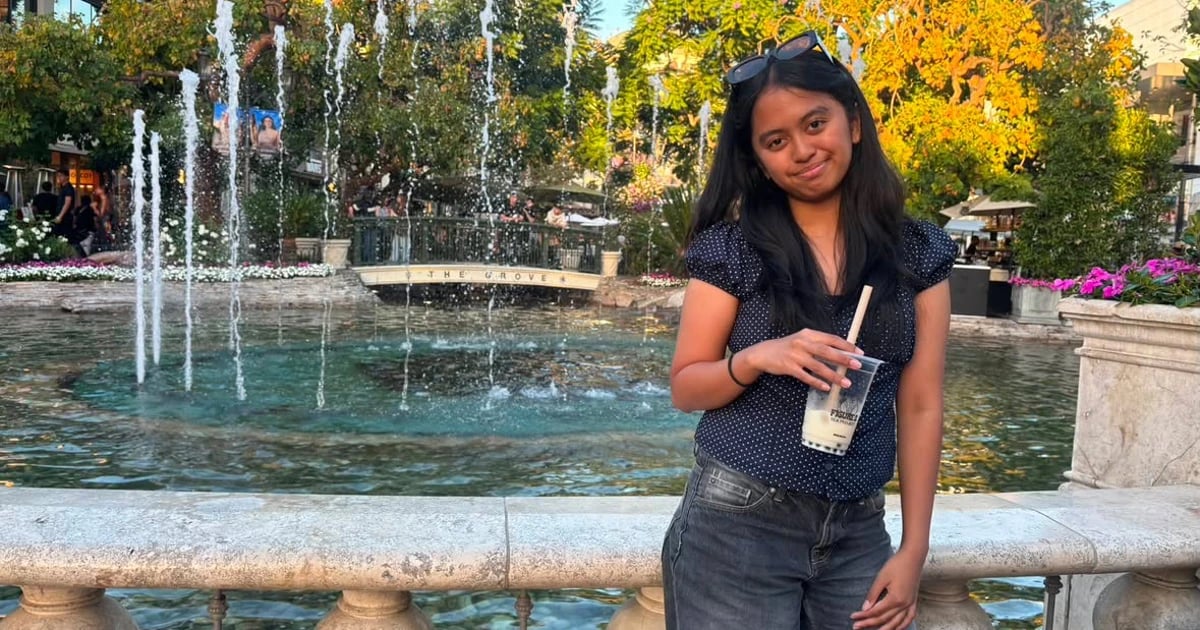
I especially enjoyed eating around campus and visiting The Grove, where I spent time exploring shops and restaurants between activities. My friends and I ate pizza, got boba, and even went to a cute sticker shop to buy souvenirs to take home.
The campus dining halls were also surprisingly memorable.
I still remember seeing places like Panda Express alongside smoothie bars and açaí bowls inside the dining facilities—small details that somehow made campus life feel much more real.
And then there were the beaches.
Living in Jakarta, I had certainly seen beaches before, but spending time near the California coast gave Los Angeles a completely different atmosphere. The combination of ocean views, warm weather, diverse food, and an incredibly relaxed culture made the city feel vibrant in a way that is difficult to capture through photographs alone.
I did eventually run out of spending money—which, in hindsight, probably says something about how much exploring I did—but every experience felt worth it.
Perhaps the most surprising outcome of the program had nothing to do with songwriting.
Before attending, UCLA wasn't necessarily one of my top choices.
I planned to apply, but emotionally, I hadn't really imagined myself studying there.
That changed within days.
Experiencing campus firsthand completely transformed my perspective.
Instead of evaluating UCLA through rankings or statistics, I started evaluating it through lived experience.
Could I picture myself walking to class here?
Yes.
Could I imagine spending four years surrounded by these people?
Absolutely.
Would I genuinely enjoy living in Los Angeles?
Without question.
Those answers became much clearer after one week than months of online research ever could have made them.

Navigating the U.S. Visa Process
For many international students, receiving an acceptance letter is only one part of the journey. The visa process can be just as important, and in many ways, just as stressful.
Thankfully, I had a lot of support from my parents, who had previous experience with U.S. visas. Even with their guidance, though, I quickly realized that this is not something you can leave until the last minute. The process requires extensive preparation, and it's important to research the requirements well in advance because visa approvals can be unpredictable. I've heard stories from family friends who had to apply multiple times before receiving their visas, so it's worth giving yourself as much time as possible.
One thing that surprised me was the sheer number of documents involved. Beyond the standard identification documents, I needed paperwork such as my birth certificate, family certificate, academic transcripts, accommodation details, and proof of my travel plans. Another important document was my program acceptance letter, which created a small challenge because I hadn't yet received admissions decisions from UCLA or the University of Chicago when I first started preparing my visa application.
To work around this, I explained that my primary purpose was to visit universities in the United States while also planning to attend a summer academic program if admitted. Once I received my acceptance letters, I carried them with me while travelling. At U.S. immigration, when I was asked the purpose of my visit, I explained that I was visiting universities and participating in the summer program, and I presented my acceptance letter to the immigration officer.
My biggest advice is to stay organised. Keep digital and physical copies of every document, start the process early, and don't assume you'll be able to gather everything at the last minute. A visa is just as essential as your acceptance letter, and preparing carefully can make the entire journey much smoother.
Advice for Future Applicants
If you're considering applying to the UCLA Summer Songwriting Intensive—or really any university summer program, my biggest piece of advice is simple:
Don't wait until you feel "good enough."
If you genuinely love songwriting, show that. Your portfolio doesn't need studio-quality production. Your songs don't need to be perfect. The admissions committee wants to see curiosity, commitment, and evidence that you're already exploring your interests on your own. Once you're there, take advantage of everything beyond the classroom.
Talk to professors. Ask guest speakers questions. Exchange contact information with classmates. Attend masterclasses.
Explore the city.
Those conversations often become just as valuable as the coursework itself.
For international students especially, summer programs offer something that brochures and rankings simply cannot: the opportunity to experience daily life at a university before making one of the biggest decisions of your education. Looking back, that's what made UCLA so memorable.
I arrived hoping to become a better songwriter.
I left with a much clearer understanding of the kind of university—and community—I wanted to call home.