The week is finally almost over! I have a million things I should be worried about. I have a math test today, an English essay to draft, an oral presentation I have to give… But none of that matters. Because next week I’ll be in the presence of United Nations (UN) officials, seated in the World Forum, surrounded by thousands of students across the globe, united by their passion for Model United Nations (MUN).
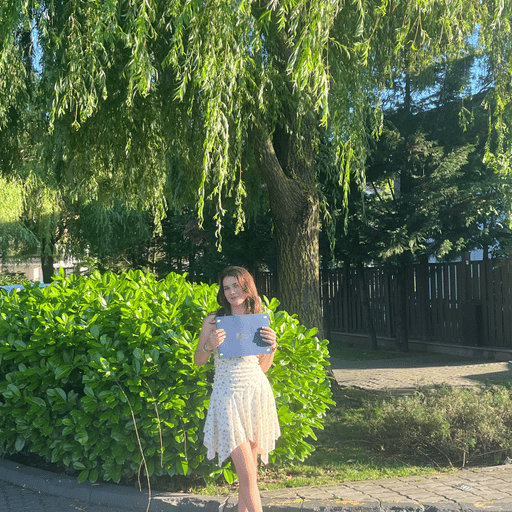
My name is Shirin Sinha, and I am an 11th-grade student at the American International School of Bucharest, in Romania. Last year, I had the chance to represent the World Wildlife Fund (WWF) at the Environmental Committee at the Hague International Model United Nations.
What is the Hague International Model United Nations - THIMUN ?
MUN is an activity where students simulate UN debates. Each delegate (or pair of delegates) obtains a delegation—a country’s stance to represent at your conference. There are many committees, but the main ones are the General Assembly (GA), the Economic and Social Council (ECOSOC), the Security Council (SC), and the Human Rights Council (HRC). Delegates prepare resolutions based on their country’s opinion on the issues at hand, form alliances with Member Nations, and prepare speeches to defend/challenge certain resolutions (comprised of pre-ambulatory clauses and main clauses) detailing actions Member Nations should take.
The Hague International Model United Nations is one of the most prestigious MUN conferences, held the last week of January. Most conferences involve anywhere from 50 to several hundred delegates, with most students living in that one region. Yet, THIMUN convenes more than 3000 students from 200 schools from around the world every year. Contrary to most MUN conferences, the participants who are considered to be most contributing aren’t given awards; THIMUN does not believe in that practice, feeling that competition detracts from the simulation experience and is detrimental to the idea of cooperative problem solving that it wants to promote. I definitely believe THIMUN fosters essential collaboration skills, such as debate, compromise and thoughtfulness, which is why students interested in politics, diplomacy, and law are generally drawn to it, like myself.
Why Your Delegation Really Doesn’t Matter
Many students consider the country they represent to be essential to how important they are for conferences. This myth is not only false but offensive. I believe the whole purpose of the UN is to give all nations and NGOs, no matter differences in cultures, populations, or GDP, an equal opportunity to share their voice. So, even if you don’t consider your delegation to be compelling, it’d be a disservice to the nation if you didn’t represent its stance to the best of your ability. The five countries with veto power (the ability to refuse a resolution from being put into motion in the Security Council), the United States, China, Russia, France, and the United Kingdom (the P5), are only active in the Security Council, which is typically reserved for experienced delegates, and have regulations. A delegate’s main role is always to represent a country’s view as best they can, not to obtain the most power or give the most speeches.
My MUN Journey
I joined MUN at my old school in Tashkent, Uzbekistan. The idea of role-playing international leaders seemed very interesting to me, and I’ve always considered myself to be politically engaged, since I’m up-to-date with global affairs. Unfortunately, I left for AISB in January, just before THIMUN, so I wasn’t able to represent my school at the conference. I joined my school’s MUN group in the fall of 10th grade, and I had only one thing on my mind: THIMUN. My friends had told me about how engaging the conference was, and I was determined to be selected amongst many of my peers. I’d consider our school to be more competitive than most for MUN, since our teacher in charge is part of the Approval panel of teachers for resolutions—those who have the most experience and MUN know-how (indeed, she was one of the main original organisers of IMUN, a conference in Portugal with 400 students).
I participated in our school’s weekly debates, wrote speeches and resolutions, and asked pertinent questions, which earned me a spot on the team.
To prepare for THIMUN, I wrote some resolutions for my committee’s issues, researched potential allies, and consulted my teachers for advice. My brainstorming document, although messy, was vital to my success as a delegate.
Travelling to The Hague for the conference may be expensive, but the conference is partially funded by students as well. I paid about 1100 € to attend, but I’m sure that even that price is reasonable compared to non-EU residents.
Which Committee was I Part of?
Since THIMUN is much larger than the average MUN conference, they have many more available committees to participate in. I was part of the Environmental Committee (EVC). We debated issues related to sustainability efforts and resource repatriation. When participating in MUN, it’s important to choose a committee with topics you’re passionate about, so that you’re engaged throughout the discussions.
The THIMUN Experience
On the first day at THIMUN, I’ll admit that I was slightly nervous. The World Forum is a very large building, and it took a while for me to find my conference room. Once I got there, we did some MUN-flavoured icebreakers, and I spoke to my seatmates. Then, we were seated in the massive theatre to enjoy the opening ceremony. The Opening Ceremony lasted for about 2 hours. We listened to speeches from UN officials and met the student leaders, such as the Secretary General.
Once we returned, we began to organise resolutions for the issues at hand. THIMUN does resolution writing for the first and third days—two on the first, one on the third. Resolutions have Main Submittors, the delegate who is considered to have contributed the most to the resolution, and co-submittors, who can only co-sign one resolution per issue. Those resolutions then pass on to the approval panel for final corrections in form, and then they are considered to be chosen for the main resolutions of the issue (generally 2-3). Delegates vote on whichever resolution they believe their country would support after listening to delegates’ speeches for and against the stance. I discussed the policies I wanted to suggest to fellow delegates and proposed my resolution to them on “Developing climate action by non-Party stakeholders, and mobilising all levels of society”. Thankfully, I received enough signatures to go to the Approval Panel, and submitted my resolution for consideration. We had lunch and began Issue 1 by entering debate for the first resolution. We heard the opening speeches, and Day 1 ended. I found later that night that my resolution was chosen for debate! I ended the night by eating dinner with my friends.
Day 2 was spent entirely debating Issues 1 and 2. I submitted my amendments for a few of them. Amendments are clauses or subclauses to be added to resolutions to add precision or add an action to encourage. My amendments focused mainly on improving environmental protections, as I was the WWF, after all. I gave some speeches and voted on the resolutions the WWF believed in. Day 3 and Day 4 were spent debating Issue 2, and tackling Issue 3. I was very pleased that my resolution passed! I continued to make speeches for what my delegation believed in, voted on resolutions, and worked until midnight writing speeches.
During THIMUN, I was also lucky enough to see some of my friends from my old Tashkent school. I ate with them and laughed about our fondest memories.

How Can You Go To THIMUN?
THIMUN has an incredibly long waitlist, so there’s a low chance that your school could attend without having a history there. But it’s not zero—except for non-international schools, unfortunately. If your school doesn’t have a well-established MUN group, contact teachers to start weekly meetings and invite friends to join. Universities love that level of initiative. A strong team is your biggest advantage for getting into conferences. Try to attend local conferences to build up your experience while improving your speaking skills. If there are no or few local contests, organise one with your school!
How Can I Apply For Special Committees/Chairing?
The special committees in THIMUN, although intriguing, are very competitive. To apply to them, I’d recommend that you go to THIMUN (or a large-scale MUN conference) before to build up experience. For THIMUN 2027, they removed the section for other relevant experience, but I’d still recommend pursuing Speech and Debate and other clubs with public speaking and advocacy. Finally, when applying, remember to demonstrate how passionate and qualified you are for the specific committee in your letter of motivation. For instance, for the ICJ committee, simulating the principal judicial organ of the United Nations, you should illustrate why you’d be a good addition to the delegates—your knowledge about the defendant and any external research you’ve done—and why you want to be chosen.
As for chairing, you need to have a lot of experience in the role, since you’re enforcing MUN roles in the room! Try looking for chairing positions at lower-stakes conferences to practice all of the general MUN debate protocols (rules vary depending on the conference).
My future with MUN
Although I won’t go to THIMUN next year, I will try to participate in other local conferences in Romania, because the extracurricular is relevant to what I would like to pursue (economics and politics). I’m glad I was able to experience such an incredible event, and I encourage all of you to attend, or at least try MUN this school year!