
“I did not choose law because I always dreamed of becoming a lawyer. I chose it because, very early on, I realised that every system I was curious about: politics, society, power, conflict, eventually led back to the same foundation: the law.”
That realisation didn’t come from a classroom. It came from the discussions I had with my father as a child: he would read the newspaper and involve me in conversations about events in Malaysia and around the world. Over time, I began to notice a pattern. Governments rose and fell, social debates intensified, policies shaped people’s lives, and beneath all of it was a framework deciding what was permissible, enforceable, and just.
That framework fascinated me. It still does.
Today, I’m a second-year law student at the University of Bristol and a PETRONAS scholar. But the path here was not linear. It was shaped by honest self-reflection, intellectual curiosity, and a willingness to take risks even when outcomes were uncertain.

Choosing Direction: When Passion Meets Realism
Before law, I was deeply drawn to STEM, particularly physics. I still enjoy discussing engineering concepts with friends who pursue careers in aerospace or mechanical engineering. But I reached a point where I had to ask myself a difficult question: could I realistically excel there?
Interest alone is not enough if you want to compete at the highest level. I recognised that my mathematical ceiling might limit my long-term growth in engineering. Rather than forcing a mismatch, I looked inward and asked what else truly engaged me. The answer was law, a discipline that allowed me to combine structured thinking, argumentation, and my interest in global systems with a people-centred career. Law wasn’t an escape from science; it was an alignment with my strengths.
The PETRONAS Scholarship: Pressure, Preparation, and Perspective
The PETRONAS scholarship was the only offer I received, but it was the one that changed everything. The application window opened immediately after SPM results, and I found myself submitting documents from my ancestral village in Tamil Nadu with unstable Wi-Fi and a ticking deadline.
The process unfolded in three stages: biodata submission, an online IQ and personality assessment under live proctoring, and a group interview. What made the biggest difference when preparing for the tests and interviews was access to shared knowledge through initiatives like BASE, a community where scholars openly explain the process and dismantle the myth that scholarships are reserved for the extraordinary few.

KTJ: A Different Way of Learning and Living
My A-Level years at Kolej Tuanku Ja’afar were among the most transformative of my life. Coming from Malaysia’s national school system, I encountered an academic culture that prioritised argument over memorisation. Subjects like History demanded structured reasoning. There was no “official answer” to repeat, only positions to defend. That shift forced me to rethink how learning works. Understanding concepts became more valuable than storing facts.
Beyond academics, KTJ’s British-style boarding house system reshaped my sense of independence. As House Captain, I discovered that leadership is less about authority and more about accountability: showing up consistently, setting standards, and supporting others. The house culture also taught me something subtle but profound: generosity builds community. Small acts: sharing food, helping with work, looking out for juniors, create bonds that last long after graduation.

Thinking Beyond the Curriculum: The EPQ
My Extended Project Qualification became an outlet for intellectual curiosity. I examined how geography influences political decision-making, using Singapore as a case study. By analysing both human and physical geography, its multiracial society, island status, and regional tensions, I explored how these realities shaped defence, housing, and speech policies. For instance, I considered how limited land resources have driven housing policy innovations, or how proximity to larger nations informs defence strategy.
Completing the EPQ also honed my skills in long-form research and disciplined writing. Producing a 5,000-word report demanded more than endurance; it required careful structuring, iterative planning, and the ability to synthesise complex information into coherent arguments. Beyond academic skills, the EPQ cultivated intellectual independence, resilience in tackling large-scale projects, and confidence in presenting informed arguments—skills I now carry into all areas of study and leadership.
Entering the UK System: Learning to Think Critically
Admission to UK law programs required the LNAT (National Admissions Test for Law), a test focused on reading comprehension and persuasive writing rather than memorisation. Preparing for it reinforced a lesson I would encounter again at university: thinking matters more than recall.
Studying Law at Bristol feels like intellectual sparring. There is no single correct narrative. You are given frameworks and asked to reason independently. That emphasis on understanding reduces anxiety because exams become exercises in thinking, not memory contests. More broadly, I’ve noticed a cultural difference in how education is treated. Here, academic success is intertwined with personal growth. People invest in hobbies, reading, and sports, not as distractions, but as essential parts of becoming well-rounded individuals.
Leadership and Service: Seeing the Bigger Picture
One of my most meaningful experiences came through the UNICEF Young Leaders Programme. I worked with peers to pitch child-centred budget proposals to the Ministry of Finance, visited Parliament, and spent weeks engaging children from low-income communities in Damansara Damai, teaching climate awareness.
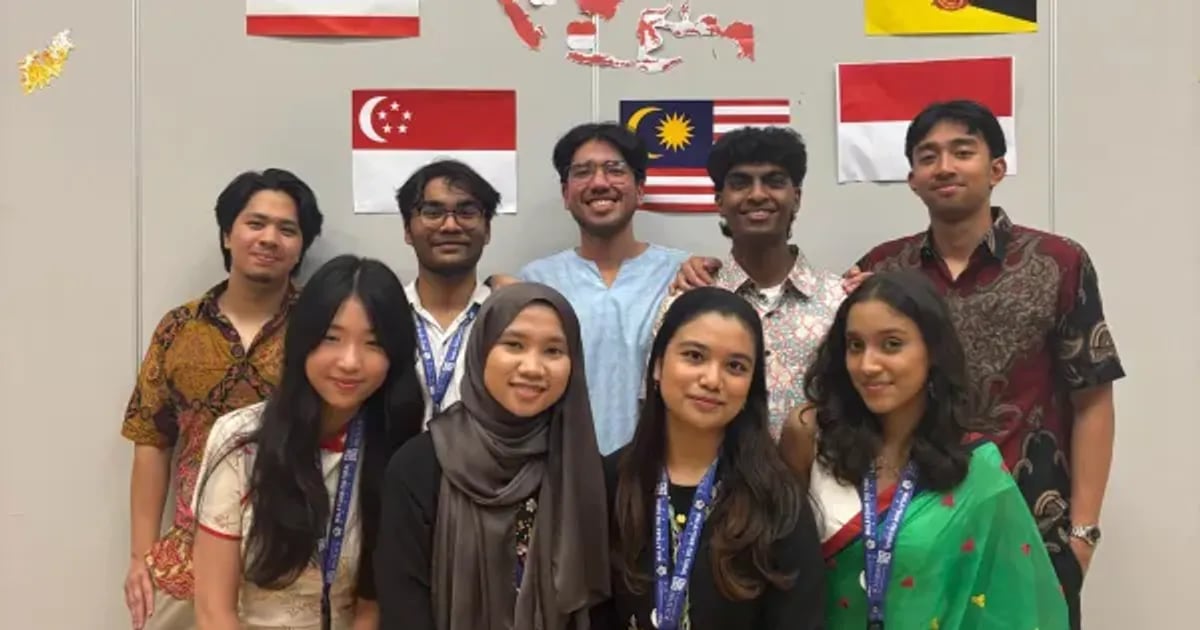
Those interactions grounded abstract discussions of policy in lived reality. They forced me to confront privilege, not as guilt, but as responsibility. Today, I channel that perspective into my role as President of the Malaysian Cultural Society at Bristol. What started as a student club is, in practice, a lifeline for Malaysians navigating life abroad. Through cultural events, gatherings, and collaborations, we build a sense of belonging. We might attract students with familiar food, but they stay because they find community.
Living Abroad: Growth Through Experience
Life in the UK has expanded my understanding of what it means to live well. I joined sailing and lacrosse clubs, travelled through Eastern Europe, and deliberately sought conversations with locals about politics, culture, and social tensions.
I’ve also noticed a stronger culture of reading and personal development. People actively protect time for hobbies and intellectual engagement. It reinforces a belief I’ve come to value deeply: work should support life, not consume it.
Looking Back, and Forward
If I could speak to my younger self, I would say this: You will be okay, but only if you are willing to work relentlessly and take risks without waiting for perfect certainty. Learn the language. Try the sport. Start the project. Growth favours action.
I am half Tamil and half Chinese, and I sometimes regret not mastering my mother tongues earlier. But that regret has become motivation to keep learning, to stay curious, and to embrace discomfort as part of development.
More than anything, I hope my story reflects a willingness to be bold when odds seem uncertain, to pursue adventure not recklessly, but intentionally. Because building a life across borders is not just about geography, it is about continuously choosing growth over comfort.