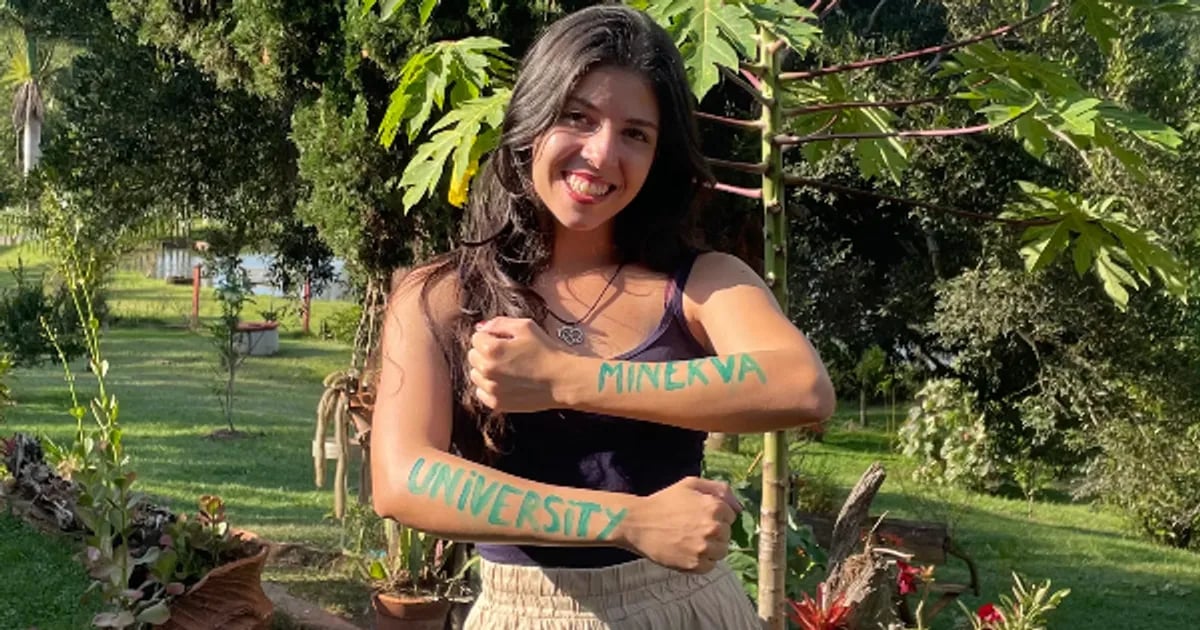

Hello! My name is Alice, and I got into Minerva University for the class of 2029! Read here how I did it!

My Background
My background is a bit all over the place. I was born in São Paulo, but I've lived in more than ten different places and have attended two different high schools. I actually moved to a farm in the middle of nowhere during the pandemic, and that's where I was when I applied to college. I've always known I wanted to study abroad, so since I was 13, everything I did was to prepare for that.
My family was super supportive, and they've always pushed me to be a "global citizen." I wasn't just doing what other kids were doing. Instead of going to the mall, we'd go to entrepreneurial workshops or volunteer events. Since I was six, my parents took me to monthly meetings in São Paulo with important people from the business world, and I even helped my mom start a jewelry company when I was ten. I handled the business and client side, and it was through that experience that I learned how to deal with pressure and how to find rational solutions to problems. My parents always encouraged me to seek out new experiences, and I ended up getting involved in some cool things without even realizing they were "extracurriculars."

Why U.S. & Minerva
Minerva's innovative approach and the opportunities it offers were what made me choose to apply there. I was drawn to a different kind of education than what is offered at most universities in Brazil, where students are often limited to a rigid curriculum and rote memorization.
Minerva's educational model is immersive and hands-on. Instead of lectures and traditional classes, students engage in active learning and project-based assignments that connect with the city where they live. For example, instead of just talking about climate change in a classroom, Minerva students might go to a port and measure water levels to study how rising sea levels could impact the local economy. I also liked that students travel to different countries each year, which perfectly matches my love of moving and experiencing new places.
I also felt a special connection to the university during the application process, especially during the family interview. The Minerva representative told me that my way of thinking and my values aligned perfectly with what the university looks for in its students, which further solidified my decision to apply. I think Minerva is for people who want to explore different things and are not afraid to be challenged.

My Stats
I had a GPA of 9.23/10, my Duolingo English Test score was 145, and my SAT was 1360. I was always first in my class and was the valedictorian.
Extracurricular Activities
My extracurricular journey was a progressive one. I started with a local focus and expanded to national and international projects over time.
- Reading Club: I created a reading club that focused on reading and discussing the work of emerging Brazilian authors. It was an immersive experience where we talked about how the themes in the books connected to real life. We partnered with a local children's shelter and created a Christmas campaign to collect used books. We ended up collecting, organizing, and cataloging about 500 books and created a full-fledged library for the shelter. To this day, the shelter still receives books from people who found out about our project.
- Plan International: I was part of the School of Female Leaders with Plan International. Today, I'm a facilitator for that same program, which is incredible and feels like a full-circle moment. I'm also part of Livres, a committee in the same organization that works to end gender-based violence in Brazil.
- Girl Up: I was part of a debate group called Maria Presente, where we discussed taboo topics and issues that are often forgotten or ignored, such as fragile masculinity and period poverty. Today, I'm a coordinator at Equalizaminas, a Girl Up club in São Paulo.
- FLOTA: This is an online summer program for Latin American girls focused on leadership. I first joined as a social coordinator. I created the FLOTA Conference, an event where we invited female leaders to talk to the program participants. The following year, I became the Director of Engagement, and we had speakers from all over the world, including a city councilor from São Paulo, a Brazilian writer, a deputy director for Africa at an international research institute, and a girl from Peru who has won more than 30 Model UN awards. Today, I'm the Director of the Government and Policy track.



Personal Statement
For my personal statement, I talked about the business I created with my mom when I was a kid. I wanted to show that the experience made me realize I am someone who can be a leader under pressure. It also shaped me into a rational thinker who can compartmentalize emotions when I'm dealing with complex situations. The experience made me realize that I needed to be surrounded by people who were as ambitious as I was, which led me to the extracurriculars I was part of. I basically talked about how this early experience of being a young entrepreneur led to a desire to help other girls just like me.



Financial Aid
I received a need-based scholarship from Minerva that covers 100% of my tuition and 70% of my living expenses, which includes housing and health insurance. Since I'll be in a different country every semester, I have to live in university housing.
The scholarship was determined through Minerva's own financial aid form, so I didn't have to fill out a separate CSS Profile. The remaining 30% of my living expenses is being covered by my job, where my company is investing in my education, and by my parents.