
My name is Letícia, and I’m from São Paulo, Brazil. I graduated from Colégio Pentágono, a private Brazilian high school that follows the national curriculum, and I will be starting my undergraduate studies at Grinnell College this fall. I plan to major in Neuroscience, while also exploring Economics since this combination became central to my academic vision during my application process.
I graduated with a 9.1 out of 10 GPA, placing me in the top 10% of my class. At one point, I worried that this number was not competitive enough compared to students with nearly perfect transcripts. Over time, I realized that U.S. colleges evaluate students within their context, so they consider what was available at your school, the rigor of your curriculum and your class rank.
Discovering the U.S. Application System
I first learned about U.S. college admissions in seventh grade through a Brazilian mentorship organization. At that time, it felt early to think about universities, but it introduced me to a completely different model of admissions.
Initially, I was more inclined toward Europe or Canada. However, what attracted me to the United States was the holistic evaluation process. Universities look beyond grades and test scores. They evaluate your long-term interests, impact to the community and your personal story. That human-centered approach felt aligned with the type of student I wanted to be.
Academic Preparation & Standardized Testing
Since I did not have access to IB or AP courses, I focused on maximizing what my school offered. I consistently performed well in advanced STEM classes and maintained strong relationships with teachers who later wrote my recommendation letters.
For standardized testing, I took the SAT multiple times. Eventually, I achieved a 1530 (750 English, 780 Math). I also submitted the Duolingo English Test and scored 150.
Building a Science-Focused Profile
My interest in neuroscience developed gradually through hands-on experiences that I got to do throughout high school.

In 11th grade, I completed a year-long internship in a biochemistry laboratory at the University of São Paulo. This experience exposed me to research methodology and different laboratory techniques; however, more importantly it taught me the discipline required in experimental science.
The experience that actually shaped my application most significantly came during my gap year. I decided to strengthen my academic direction and completed a full-time neuroengineering internship at the Santos Dumont Institute in another state of Brazil. This position required relocating and committing to 40 hours per week.
Unlike my laboratory internship, this role combined neuroscience with clinical exposure. I worked with patients who had spinal cord injuries and observed how biomedical research intersects with real human lives. One moment in particular stayed with me — a patient asked whether he would walk again. That question forced me to reflect on the ethical and emotional dimensions of neuroscience, not just the technical aspects. As a result, this moment and insight became the central theme of my personal statement.
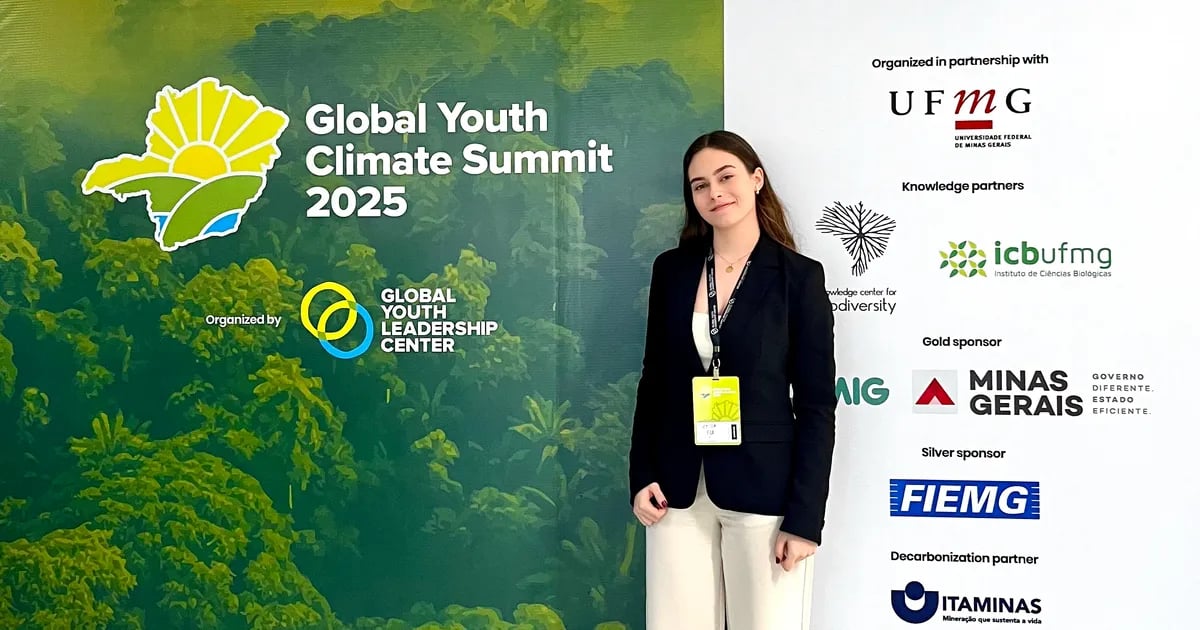
Beyond internships, I also participated in broader initiatives. I served as a Brazilian delegate at the Global Youth Climate Summit, where over 200 young leaders drafted policy recommendations related to climate, health and social justice. Additionally, I helped organize the Women’s Biology Olympiad, an initiative aimed at expanding access to science competitions for girls, particularly those in rural and underserved regions. The project reached over 1,300 participants across Brazil.
Taking a Gap Year & Reapplying
In my first application cycle, I was admitted to several colleges with merit scholarships. However, I felt that my application did not fully reflect my academic direction or long-term goals. After careful consideration, I decided to take a gap year and reapply.
This was not an easy decision. I already had affordable options. But I believed that with stronger experiences and improved essays my application could significantly improve.
When I decided to reapply, I focused on three major improvements:
- Gaining stronger research and clinical exposure
- Completely rewriting my personal statement
- Retaking standardized tests to strengthen my academic profile
So that is exactly what I did during my gap year in order to showcase an even better profile as an international student.

Essays & Application Strategy
I began writing my personal statement months before Common App opened. Starting early was one of the best decisions I made. The second half of the year became intense with supplemental essays and deadlines, so having the main essay drafted early reduced pressure significantly.
My personal statement centered around my neuroengineering internship and the patient interaction that shaped my perspective on neuroscience. I structured the essay creatively — inspired by the format of a scientific paper (introduction, methodology, discussion), but written in a reflective, narrative voice.
For Grinnell specifically, I submitted all optional materials. I wrote an additional essay connecting my Women’s Biology Olympiad initiative to Grinnell’s commitment to expanding access to science for underrepresented students. I also submitted a writing sample about neurorights — exploring ethical questions related to neurological data and patient autonomy, blending neuroscience with law and public policy.
Submitting optional materials allowed me to demonstrate intellectual depth beyond my main application.


Why Grinnell College?
Grinnell stood out to me for several reasons. First, its open curriculum allows students to explore multiple disciplines without strict distribution requirements. I knew I wanted to study neuroscience, but I also wanted the flexibility to pursue economics and potentially public health.
Second, Grinnell has a strong track record of placing graduates into top PhD programs. At this point, I am more inclined toward pursuing a PhD in health economics or epidemiology rather than attending medical school, and Grinnell’s academic environment supports that path.
Finally, Grinnell is known for being generous with financial aid for international students, which was essential for me.

Financial Aid as an International Student
As an international applicant requiring financial aid, I understood that the process would be competitive. I submitted the CSS Profile, and Grinnell awarded me approximately $76,000 per year out of a total cost of about $96,000. My expected family contribution is around $20,000 annually, and part of the package includes work-study.
Applying for financial aid as an international student adds another layer of competitiveness. However, careful research( including analyzing each college’s Common Data Set ) helped me build a strategic college list focused on generous institutions with a history of supporting international students financially.
Managing Doubt & Comparison
One of the hardest parts of the process was comparison. It is almost impossible not to compare yourself to other applicants, especially when you see profiles online that seem extraordinary.
What helped me stay confident was understanding that admissions decisions are not based solely on statistics. Fit, narrative and institutional priorities also matter a lot. An application is not just a list of achievements; it is a cohesive story about you.
Another difficult stage was the waiting period after submitting applications. Once everything is sent, there is nothing more you can control or add in your CommonApp. Staying busy and focusing on daily routines really help in maintaining balance.
Advice for International Applicants
If I had to give honest advice to international students, it would be:
- Start early, because strong applications take years to build
- Excel within your available context, not someone else’s
- Build depth in areas that genuinely interest you
- Maintain strong relationships with teachers for meaningful recommendations
- Don’t be afraid to take a gap year if you believe your profile can grow
The U.S. application process is demanding, especially for international students requiring financial aid. But with thorough preparation and self-reflection, it is possible to turn uncertainty into life-changing opportunity.