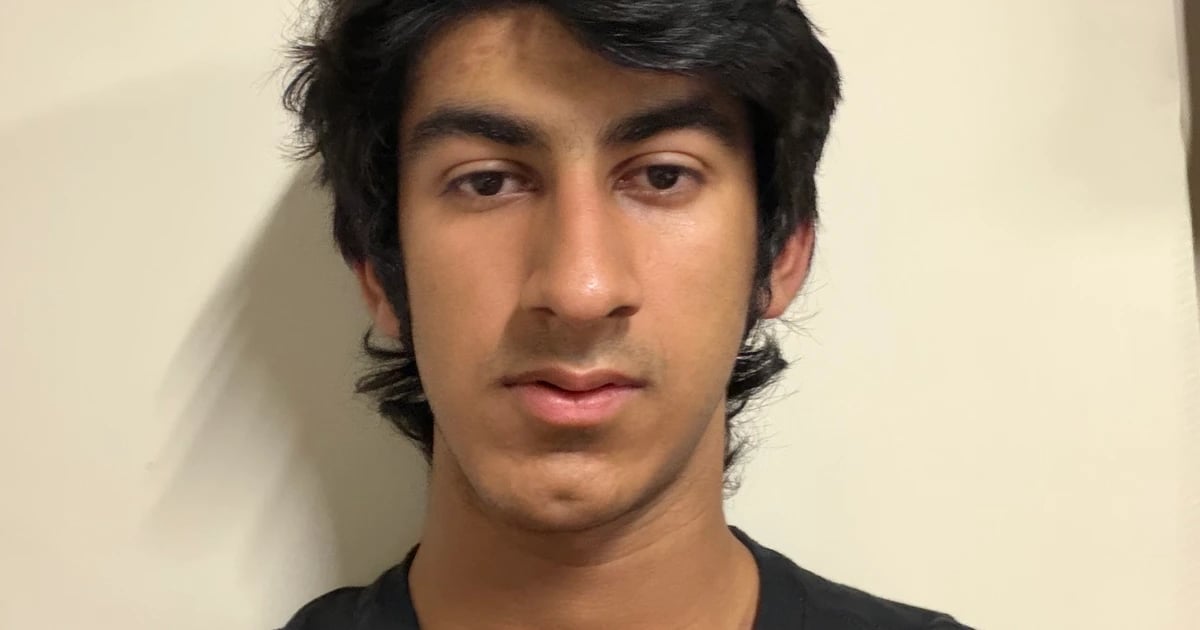

Hey, I’m Jayveer Kochhar, from Mumbai. I completed my IB Diploma at Dhirubhai Ambani International School, and I’m heading to Stanford University to study Computer Science and Mathematics, with a concurrent offer from Cambridge for Engineering.
I know that sounds like a lot. But I want to be upfront: this isn’t a flex. It’s an honest account of what worked, what didn’t, why I got rejected from MIT and Harvard, why I got waitlisted by Columbia despite getting into Stanford, and what any student, with or without resources, can take from my journey.
Whether you’re a CBSE student, an IB student, someone with access to every resource, or someone with just a laptop and a dream, I hope something here is useful to you.

A quick look into my profile
My test scores have been listed below-• SAT: 1550• IBDP Predicted Score: 44 / 45• ESAT (Cambridge & Imperial Engineering admissions test): 6.7 / 6.8• 6 published research papers (3 in a cascading biomedical engineering series) • 1 patent in India for a low-cost respiratory diagnostic device
I also qualified for JEE Advanced, though I couldn’t sit the exam because I was at ISEF in the US at the time. I mention this to address and debunk the myth that students who apply abroad are afraid of competitive exams like JEE - I wasn’t - I had a scheduling conflict between two of my commitments.
I gave the JEE mains and I qualified for Advance. I could not give Advance because I was in ISEF at that time. It’s definitely not true that people are scared.
The Project That Started It All
I started doing research seriously in 9th grade. By the time I was applying to university, I’d written six papers; three of which were a cascading series on biomedical engineering, each one building on the last.
The centrepiece: a low-cost device that could diagnose respiratory disorders in five minutes, non-invasively, without needles or a lab. In India, millions of people simply cannot afford conventional respiratory testing. This was designed for them.
It was a low cost device that could help diagnose all kinds of respiratory disorders and this is extremely pertinent in places like India where people can’t afford expensive blood tests. My test was a 5 minute non-invasive test and it was extremely cheap.
I worked closely with my orthopedic doctor, Dr. Joshi, who gave me invaluable guidance on taking the research forward. Later, I collaborated with a PhD researcher at Cornell, someone I reached out to with a completely cold email. Not a connection. Not an introduction. Just an email.
That culture of openness toward students simply doesn’t exist in India the way it does abroad, and that’s something worth being honest about.
If I were to email an IIT professor asking to work in their lab, I would definitely be ignored, they would just ignore my email thinking I’m some random child. But in the US, it’s not like that at all.
And the resources? I started with just a laptop. Everything I learned about PyTorch, TensorFlow, and NumPy came from YouTube and official documentation.
A lot of especially computing, computer science research, there’s so much you can do with just a laptop. YouTube is like the best place to learn.
What Actually Made the Application Stand Out
After building the device, I didn’t stop. I filed a patent. Launched a startup. Published multiple papers. Took it to ISEF, twice. The combination of all of those things, including hypothesis, prototype, patent, startup, published research, and real-world impact, is what Stanford responded to. Not any single achievement.
I also have a patent in India for this and I also launched a startup business for this as well… it has a real world impact. I would say that was really what made my application stand out.
I also travelled to the US five times before starting university, twice for ISEF, once for the FRC World Championship, where my school became the first Indian team to ever win a regional in the FIRST Robotics Competition.
Two Applications, Two Completely Different Mindsets
Applying to Cambridge and Stanford at the same time felt like preparing for two completely different sports. The strategies, the writing, the mindset - almost nothing overlapped.
Cambridge: Depth over anything and everything
Cambridge was almost entirely objective. No extracurricular essays, no personality questions. Just the ESAT, a maths and physics test, and a rigorous technical interview where they asked me to solve problems on the spot.
For Cambridge my interview, I was only studying for the math and physics. My personal statement also I mainly focused on my school subjects and like what I was doing in school, how my subjects led to my interest in engineering. It was very straightforward and no sort of stylistic writing.
Stanford: The whole person
Stanford was the complete opposite. The essays weren’t asking what I knew; they were asking who I was. I barely mentioned my grades. I focused on the parts of me that weren’t already visible in my transcript.
Stanford my essay was a lot more stylistic, it was more unique. I focused less on the academic side of things and more like on me as a person, my extracurriculars… it was a bit different.
The Essay Game: Stop Listing Your Achievements
Here’s something that surprised people when I told them: I didn’t write about my achievements in my Stanford essays. No ISEF. No patent. No startup. Not directly, anyway. The admissions officer could already see all of that. What they couldn’t see and what no spreadsheet or activity list could show was me as a person. My curiosity. My sense of humour. How I actually thought about things.
You are already going to see all my grades which are quite good, you are going to see my research and stuff - so I thought I should highlight a part of my personality that I don’t presently highlight in the rest of my application.
The hardest part of the whole application? The writing, actually. Not the ESAT, not the interviews. But the essays.
The most challenging part was actually writing essays and filling out the application. I had so much stuff to write about that it was hard to fit everything in a good manner, in a well organised manner that the admissions officer could also understand.
My approach: figure out what your profile already communicates, then use the essays to fill in the gaps. For me, research and robotics were already front and centre. The essays became the space to show everything else: the kid who played Taekwondo, went down YouTube rabbit holes, and cared about healthcare in India personally.

Let’s Talk About the Rejections
Honestly? The rejections might be more useful to read about than the acceptances. So let’s go through them one by one.
MIT - Rejected
I’d expected it. MIT, at least from what I observed this cycle, strongly favours students who have won international academic Olympiads- Maths Olympiad, Physics Olympiad, that tier. I chose research over Olympiad prep. I don’t regret it. But it’s a real trade-off.
MIT has a relatively clear criteria of admission, all of the students that were accepted this year, they have participated in international Olympiads of math or physics. Either I could choose to work on things like research or I could study hard for academic olympiads. I think that personally I definitely enjoy research more.
Harvard - Rejected
Harvard had already accepted someone from my school in the early round, which limits the spots available.
Princeton - Rejected
This one hurt a little more. I hadn’t heard of anyone from my school getting in early, so I was genuinely hopeful. But the very next morning, Stanford came through. That changed things quickly.
Princeton was like I was hoping that I would get in and that part was like a little bit sad for me… but yeah I guess it was fine because then the next day I got into Stanford.
Columbia - Waitlisted (and Why That’s Weird)
This is the one people find strangest. Stanford accepted me. Columbia waitlisted me. Stanford is objectively stronger for CS and Math. So what happened? I applied to Stanford early. Columbia’s international IB spots in my cohort had largely been filled during the early round - students from my own school among them.
Everyone would agree that Stanford is a much better school for computer science and math than Columbia, sometimes you get to a better place, you won’t get to the worst places. Don’t take individual rejections too personally.
The Morning Everything Changed
Stanford decisions land at 5:30 AM in India. I’d been deferred in the early round, and Ivy Day the night before had brought a Harvard rejection. I went to sleep not knowing what the morning would bring.
Stanford was like the last big college for me - and I was quite happy when I saw that I had been accepted. For Cambridge, I was anyway expecting an acceptance because the process is more objective - and I had done well on the interview as well.The happiness of getting into Stanford outweighed the sadness of all the rejections - definitely.
How I Actually Kept It Together
The process is long. The self-doubt is real. Here’s what helped me most.Friends are a big part of it - especially supportive friends. Talking to other people helps you relax and not be stressed about competitions, academics, and universities all the time. Secondly, I would say that sports and the gym also helped me.I played basketball and Taekwondo. I went to the gym. Getting off the screen and doing something physical is non-negotiable during long stretches of essay-writing and waiting. Your brain genuinely needs it. One thing I’d do differently? Spend less time on scattered, unrelated competitions.
I spent a lot of time doing some somewhat random stuff like some random competitions , if I wouldn’t have done those I could have focused more on my research and the bigger projects - those small random things weren’t actually giving me any benefits.
What I’d Tell Every Student in India Right Now
Whether you go to a well-resourced school in a big city, or you’re studying hard with just a laptop in a small town, here’s what I genuinely believe:
- Make your application coherent, not just impressive. Your application should be coherent. You can’t have one extracurricular about biology and then another extracurricular about economics. Everything has to be related to each other, has to make sense, has to show that you have a clear, strong interest.
- Academics are non-negotiable, for both the UK and the US. Focus on academics first for sure; that’s a common thing for both of the continents.
- Go beyond your curriculum, especially CBSE students: Learning to import a pandas library in class is a starting point, not a skill set. The gap between classroom coding and real-world work is enormous, and you have to bridge it yourself. The resources are out there, and most of them are completely free: • MIT OpenCourseWare - full video lectures from actual MIT classes • 3Blue1Brown (“Blue Blue and Drum”) on YouTube for maths • Official PyTorch, TensorFlow, NumPy documentation • Books like Rudin or Hungerford for deeper mathematics
- It’s not entirely in your control - and that is okay. Don’t take everything so much to heart. Even if you do get to that place, you’ll get somewhere. Somewhere or the other, you will get to it, which is good.
The People Who Made It Possible
I think it’s easy to look at a profile like mine and assume I figured it all out on my own. And honestly, by the time I was deep into research, competing at ISEF, and writing applications across two continents, yes, the drive was mine. But it didn’t start that way, and I’d be doing a disservice to a lot of people if I didn’t talk about that.
My Parents
Neither of them handed me a roadmap to Stanford. What they gave me was something more important: a foundation, especially early on. In my early stages of life, they focused on my academics and encouraged me to study a lot. They pushed me toward academics before I had the maturity to push myself. That early scaffolding, the habit of studying, the expectation of effort, is what made the later self-direction possible. By the time I was running my own research projects and making my own decisions about what to pursue, the discipline was already there. They planted it.
My Community
Beyond my parents, my community showed up in ways I didn’t always expect. The most memorable example is my orthopedic doctor, Dr. Joshi. He became an unlikely but genuinely important collaborator on my biomedical research project, someone I could consult for guidance on how to take the science forward in a medically meaningful direction.
My friends were there too as company. Talking to people going through the same process, feeling less alone in the waiting and the uncertainty, that mattered more than I expected it to.
My School
I only joined Dhirubhai Ambani International School in 11th grade - late, by any measure. I was the new kid walking into an established community with two years to go. But the school wrapped around me in a way I’m genuinely grateful for. They have been very supportive during the whole process.
That kind of institutional flexibility is rarer than it should be, and I know it. A lot of what I was able to do in those two years - the competitions, the travel, the research- happened because my school made space for it instead of putting up walls. The version of me that got into Stanford was self-driven, yes. But I was self-driven within a web of people who believed in me and moved things around so I could keep going.
Start with the laptop. Start with one question you genuinely want to answer. Every real research project begins with curiosity.