
Hi, I’m Azra, a Turkish student currently in my third year at Colby College in Maine, where I study neuroscience. I came to the U.S. with a lot of questions about what I wanted to study, where I wanted to live, and what kind of future I wanted to build. Today, around 95% of my college costs are covered through a combination of need-based and merit-based financial aid.
My journey here was far from straightforward. I spent years playing volleyball before discovering my interest in neuroscience. I applied to around 20 universities and, for a while, even wondered if I would have to take a gap year. Instead, I ended up at Colby, where I have had the chance to do neuroscience research at MIT and volunteer in Panama. Looking back, none of these experiences were things I could have predicted when I started applying to college. But each one has shaped the way I see myself and what I think is possible for my future.
The Unplanned Path to Neuroscience
I graduated from Robert College in Istanbul in 2024, and when I look back on high school, what I remember most is how social it was. Many of my friends came from different parts of Türkiye and lived in the school dormitory, so I was constantly meeting people with different backgrounds and stories. I also traveled to different cities through the community service projects required for graduation. Looking back, I think those friendships and experiences were a big part of what made my high school years so meaningful.
Another big part of my life during those years was volleyball. I played for around seven or eight years, all the way until I got injured in 12th grade. I didn’t end up applying to college as a student-athlete, but volleyball ended up shaping my interests in a way I did not expect.
As an athlete, I became really interested in sports psychology, especially because I wanted to understand how I could improve my own performance. The more I learned about psychology, though, the more questions I started having about what was happening underneath it.
I became curious about the biological side of psychology. Why does the brain respond in certain ways? What is happening biologically when we experience something psychologically? I started with sports psychology, but my curiosity kept taking me one step further until I became interested in neuroscience.
I wanted to explore that interest beyond the classroom, so I started looking for experiences that would let me see different sides of the field. I worked with sports psychologists, interned at a neuropsychology clinic at Istanbul University’s Faculty of Medicine, one of Türkiye’s major teaching hospitals, in Çapa, and later worked in a molecular biology laboratory at Istanbul Technical University. I also conducted psychological research through the Pioneer Academics program.
None of these experiences was something I had planned as part of a perfect, predetermined path. One interest simply led to another. When I look back now, my extracurriculars may seem like they were all pointing toward neuroscience from the beginning, but at the time, I was mostly following questions that I genuinely wanted answers to.
That curiosity eventually became the reason I decided I wanted to study neuroscience as an undergraduate.

Chasing Flexibility, Not Just a Major
By 11th grade, I knew that I wanted to study university abroad. At Robert College, students had to decide whether they wanted to continue their education in Türkiye or apply abroad as they approached 12th grade, so I had to start thinking seriously about where I wanted to go.
The biggest reason was simple: I wanted to study neuroscience as an undergraduate, but there was no direct undergraduate neuroscience program in Türkiye. There were graduate programs in the field, but students usually studied something like psychology or biology for their bachelor’s degree before moving into neuroscience. I wanted to start with neuroscience from the beginning rather than wait until graduate school to specialize.
There was also a more personal reason I wanted to go abroad. I had always wanted to experience living in another country and building a life somewhere completely new. At one point, I remember thinking, “When am I going to live in the U.S. again?” University felt like the perfect opportunity to do it.
I eventually focused mostly on the United States because of how flexible its university system is. I have always been someone who wants to try many different things. Even when I knew I loved neuroscience, I could still find myself wondering whether astronomy or computer science might be interesting too. The idea that I could start in one field and later change my major if my interests changed was really reassuring to me.
That flexibility felt much harder to find in Türkiye and, in some ways, in Europe. I did not want to feel like I had to have my entire academic future figured out at 18. I wanted university to be a place where I could explore.
The Netherlands was another option I considered. At the time, I was also interested in psychology, and I knew that Dutch universities had strong programs in the field. I ended up applying to a couple of universities there as well, but the United States remained my main focus.
More than anything, I wanted a university system that would give me room to follow my curiosity—even if I did not yet know exactly where it would take me.
The Long Wait That Led Me to Colby
Once I decided to apply to universities in the United States, I knew I had to build an application that represented both my academic interests and the things I had explored outside the classroom.
Academically, my profile had changed a lot over high school. In Türkiye, grades are given on a 100-point scale, and my GPA started around 80 in my preparatory year. It gradually increased to the 90s and eventually, even reached 99 in my final years of high school, with an overall average of 95. I also took a demanding course load, including AP Biology, Psychology, Math, Literature, Language, and Statistics. I scored 5s on all of my AP exams except Biology and Literature, where I received 4s. I also scored 1530 on the SAT after four attempts, and my IELTS score was 8.
But I did not feel that my application could be defined by test scores or grades alone. My extracurriculars were not built around one huge achievement either. Instead, they came from different questions I had about neuroscience and psychology. I played volleyball for seven or eight years, and that experience first made me curious about sports psychology. I later interned with sports psychologists, worked at a neuropsychology clinic at Istanbul University’s Faculty of Medicine, and spent time in a molecular biology laboratory at Istanbul Technical University.
I also participated in Pioneer Academics, where I conducted psychology research with a professor from Williams College. Community service was another important part of my high school experience. I participated in many different community service programs and worked with kids of various age groups, eventually organizing and leading a community outreach program of my own at an elementary school in my hometown, İzmir, where both my mom and grandma had also gone to school.
Looking back, I think these experiences mattered because they showed a pattern rather than a single accomplishment. I kept finding different ways to explore the same curiosity, while also allowing myself to discover new interests along the way.
I ended up applying to around 20 universities in the United States and two in the Netherlands. Because I needed a significant amount of financial aid as an international student, the process felt even more uncertain. I could not simply ask myself where I wanted to go; I also had to consider whether a university would be able and willing to support me financially.
And then came the waiting.
I applied Early Decision to Yale, but was not accepted. I also received rejections from several highly selective universities, including Ivies. At the same time, I was waitlisted by Amherst, the University of Richmond, and Tufts. With every decision, I found myself going back to my essays and wondering whether there was something I could have done differently.
Then there was Colby.
At that point, I had not even known much about the college.In fact, I only added it to my list near the end of the application process after my counselor suggested it.
I applied, almost as one of the last additions to my list. I did not know then that this school I had barely considered would eventually become the place I chose to call home.

Colby Found Me Before I Was Looking
Colby was almost an afterthought, but it ended up changing the direction of my life.
When I was finalizing my college list, I was trying to reach around 20 universities in the United States. I still had a few spots left, and my counselor suggested that I add Colby to the list. At that point, I honestly knew almost nothing about the college. It was not a school I had been dreaming about or researching for months. It was simply one of the last schools I added to my application.
So when I received my acceptance, it was completely unexpected.
By that point, I had already received a number of rejections and was still waiting on other decisions. I had started to think seriously about what I would do if none of my applications worked out the way I hoped. Colby was one of the few schools that said yes, and suddenly this college I had barely known existed became a real possibility.
Looking back, I think one of the reasons the decision felt so surprising was that I had not gone into the application thinking, “I need to get into Colby.”I had simply applied because someone I trusted thought it could be a good fit for me.
And I am so glad I did.
What started as one of the last additions to my college list eventually became the place where I would spend the next four years. More importantly, coming to Colby changed what I thought was possible for me. It gave me opportunities I could not have imagined while I was still in Türkiye, and it pushed me to step outside the life I had always known.
In a way, Colby found me before I even knew I was looking for it.

The Essay on My Wall
Writing my college essays was one of the first times I really had to stop and think about who I was beyond my grades and activities.
For my Common App essay, I decided not to write about one major achievement or a life-changing moment. Instead, I wrote about an ordinary morning in my room. I described the photos on my walls, the things around me, and the sounds coming from outside and from different parts of my house. It was a more artistic and personal essay, taking the reader through a day in my life, focusing on the small things and memories that had shaped me into the person I am today.
At first, I was not sure whether an essay about something so ordinary would be strong enough. But that was actually the point.I wanted to show how much meaning I found in small moments and how the places and memories around me had become part of who I was.
My supplemental essays gave me more space to explore other parts of my story. I wrote about my family and how growing up around medicine and science had influenced my interests. My grandfather was a pharmacist, while my parents are veterinarians, so clinics, animals, and conversations about science had always been part of my life. I also wrote about my grandfather’s farm and what I had learned from spending time there, as well as my experiences working with children and why I wanted to continue doing that.
What surprised me most was that the essays were not only helping universities understand me. They were helping me understand myself.
Before the application process, I had never really sat down and asked myself why certain memories mattered to me, what experiences had shaped my interests, or what values kept appearing in different parts of my life. Writing about them made me connect things that I had never connected before.
Then I submitted everything.
And suddenly, there was nothing left to edit, rewrite, or control. All I could do was wait.
What Became Possible Once I Started Asking
One of the biggest things Colby gave me was confidence—not just in what I could achieve academically, but in what I could actually try.
Coming to college and meeting people from all over the world also changed the way I saw things. I made friends from the United States and from countries I had never visited, and hearing about their experiences made me realize how many different ways there are to look at the same question or situation. Being an international student in a small college community made those connections feel even more meaningful.
Colby also made opportunities much more accessible than I had imagined. There are different funds that support students financially, including the Success Fund and career-related funding. If you have a project, internship, or opportunity you want to pursue, you can often ask for support rather than having to give up because of the cost.
My own financial aid package is a combination of need-based and merit-based support. My scholarship covers my full tuition, although it does not cover my dorm expenses. When I first came to the United States, Colby also covered my first flight to the U.S. My package includes the Presidential Scholars award, which is merit-based and provides funding for projects I pursue outside of campus, with around $3,000 available for those opportunities. It can also support things like music lessons, so I have been able to take piano lessons through it.
One of the most interesting parts of Colby is the January Plan. Instead of having only a fall and spring semester, students have a January term between them. During that month, you can take a course on campus, do an internship, or participate in a volunteer program, and Colby funds these experiences. My first January Plan was actually a dance class, but I later started using these opportunities to explore things outside the classroom.
The clearest example of how different college felt from high school was my internship at MIT.
I had visited MIT before for a coding competition and spent several days there. While I was on campus, I got to see some of the neuroscience buildings, and I remember thinking that it would be amazing to do research there one day. Back then, though, an MIT research internship still felt like something that was probably out of reach for me.
Instead of assuming it was impossible, I decided to try.
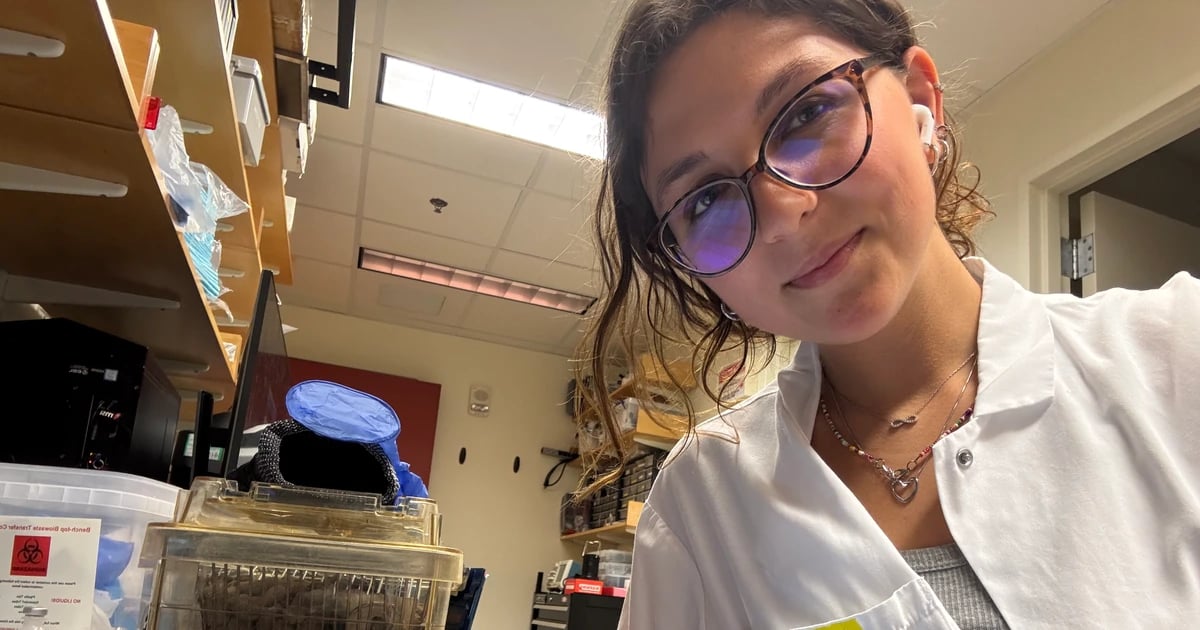
I cold-emailed around 30 or 40 professors at MIT, introducing myself and asking whether they might have an opportunity for me to work in their labs. Eventually, I found a professor whose research matched my interests, and I spent two months working in a neuroscience lab.
I worked on several projects, including research related to epilepsy and nociception. One of the projects I worked on looked at whether there were patterns that appeared before epileptic seizures and whether those patterns could potentially help researchers understand or prevent seizures. A lot of the work involved analyzing existing epilepsy data and working with computers. I also worked on a neuroscience project about where nociception is represented in the brain and how different variables affected the experiments.
What made the experience possible was not only finding the internship. Colby also helped cover my accommodation and transportation costs, which meant I could actually accept the opportunity.
When I think about it now, the biggest difference between high school and college is how real these opportunities started to feel. As a high school student in Türkiye, I would never have imagined that I could simply email professors at MIT and end up spending two months doing neuroscience research there.
I think part of it was learning to believe that I was allowed to try. Once I started asking, searching, and saying yes to opportunities, things that had once seemed unrealistic became possible.
A Different Kind of Education in Panama
My experience in Panama started with a question from my roommate: “Wouldn’t it be crazy if we went to Panama?”
She had found a volunteer opportunity through one of Colby’s partner organizations and brought up the idea almost casually. The more we talked about it, the more I wanted to go. I have always enjoyed working with children, so when I saw that the program involved working with schools and children, I knew I wanted to say yes.
Through Colby’s January Plan, I ended up spending a month in Panama. It was very different from anything I had experienced before. I was living on an island in Central America, surrounded by a culture and way of life that were completely new to me. At times, I remember looking around and thinking, “What am I doing here?” But that feeling was also part of what made the experience so meaningful.
The biggest thing I took away from Panama was seeing how different people’s everyday realities can be. I had always known that access to education could vary depending on where someone lives, but seeing it firsthandmade the issue much more concrete for me.
On some of the islands, there were very limited educational resources. Some schools had only one teacher, and teachers could struggle with basic challenges such as finding housing on the islands or receiving enough support. Weather conditions could also make it difficult for teachers and students to travel or maintain regular school routines. The organization I worked with was trying to help fill some of these gaps by supporting schools and children in communities that were harder for the government to reach.
Being there made me think differently about what it means to work with children. It was no longer just something I enjoyed doing. I started thinking more seriously about the conditions that shape a child’s education and how much a child’s opportunities can depend on where they happen to grow up.
That was probably the biggest difference between my experience at MIT and my experience in Panama. At MIT, I was following an academic curiosity and asking questions about the brain. In Panama, I was asking a different kind of question: What can I do when I see that someone’s opportunities are shaped by circumstances they cannot control?
I came back with a much broader perspective. I learned that making an impact does not always mean doing something huge. Sometimes, it starts with going somewhere unfamiliar, listening to people’s experiences, and realizing that there are problems in the world you had never truly understood before.
Learning to Walk Without Seeing the Road
There are still many moments at Colby when I stop and think, “I’m lucky to be here.”
Sometimes it is something as simple as sitting with friends from different parts of the world and realizing how unlikely it would have been for all of us to meet anywhere else. There is also a small Turkish community on campus, which makes being so far from home feel a little less far. Sometimes it is skiing or snowboarding in Maine, something I had never imagined myself doing before college. And sometimes it is simply having the chance to spend a January exploring something completely different through the January Plan.

A lot of this confidence came from learning how to leave my comfort zone. One of the biggest changes was leaving volleyball after playing for seven or eight years. For a long time, volleyball had been one of the most familiar parts of my life. Letting it go was difficult, but it also forced me to try things I had never tried before. I realized that being a beginner at something was not as scary as I had thought.
Now, as I am about to enter my third year at Colby, I still do not have a clear plan for what comes next.
I want to spend one semester abroad through an exchange program. I want to continue doing research and make the most of the two years I have left at Colby. But if you ask me what I want to do after graduation, my honest answer is still: “I don’t know!”
And I think I am finally okay with that.
When I was applying to college, not knowing where I would end up was one of the hardest parts of the process. I wanted to know which school would accept me, where I would live, what I would study, and what my future would look like. Now, after everything I have experienced, I have started to see uncertainty differently.
During my MIT internship, one of my professors told me something that has stayed with me:“The road ahead becomes visible as you walk. All you have to do is keep walking.”
I think that is what I have been learning since I left Türkiye.
I do not need to see the entire road yet. I just need to keep walking, stay curious, and be willing to take the next step when it appears.
Maybe I did not know where I would end up when I started this journey. I still do not know where it will take me. But now, instead of being afraid of that, I see it as part of the journey.
A Few Words for Future Applicants
Looking back on everything, I keep coming back to a few things I wish someone had told me before I started.
If I had to give advice to students who are going through the U.S. college application process, the first thing I would say is to craft your application in such a way that it truly reflects how much you love what you would like to do and everything you have done. Everyone has a unique story, and even if you think the things you have done do not connect with one another,they all tell a story about you that is waiting to be heard. Colleges want to see who you are, what you care about the most, and what you have done about it. You should be able to show that you have genuinely put effort into pursuing what matters to you and that you would be happy to be there — not just that you want to get accepted.
I also do not think activities should be something you do just to make your resume look better. Admissions officers can often tell when an activity was only done for an application. It is not enough to say, "I did this." I think the more important question is, "Why did I do this?" If you are interested in a particular field, explore it as much as you can. Try different things, ask questions, and give yourself the chance to discover whether you really enjoy it. Both high school and college can be great places to figure out who you are and what you care about.
And apply anyway. This is something I would say for almost any opportunity. Do not decide for yourself that a university will reject you and therefore never apply. You might be surprised. There is no harm in giving yourself the chance to hear yes.
Finally, start your essays early. Coming up with a good idea can take a lot of time, and writing about yourself can take even more psychological energy than you expect. When you try to fit everything into a short period of time, the quality of your writing can suffer. Giving yourself enough time means you can let your ideas develop instead of forcing them into a deadline. You got this!